
Quick Answer: Which UGREEN Charging Technology Fits Your Needs?
Selecting the right UGREEN car charger depends on your devices, daily commute, and cable preferences. Matching the charger to your specific vehicle setup ensures optimal performance and safety on the road.
Choose a USB-A car charger if you need to power low-draw legacy devices, older smartphone models, or dedicated accessories like a dashcam. This option is budget-friendly and highly reliable, though it lacks the speed required for modern high-capacity electronics.
Choose a USB-C Power Delivery (PD) car charger if you carry modern smartphones, tablets, or laptops that support rapid charging. USB-C PD is the current industry standard, offering high-wattage output that can quickly replenish a battery during short commutes.
Products mentioned in this guide
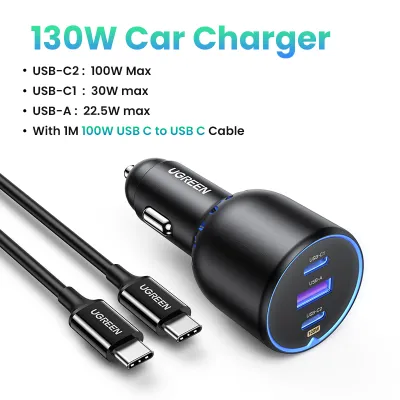
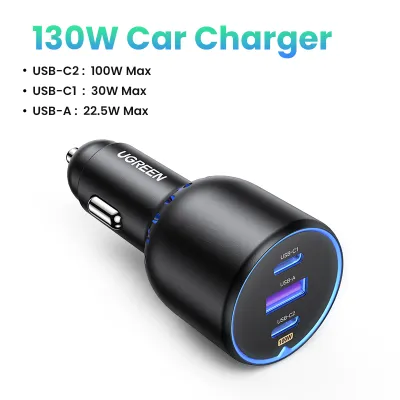
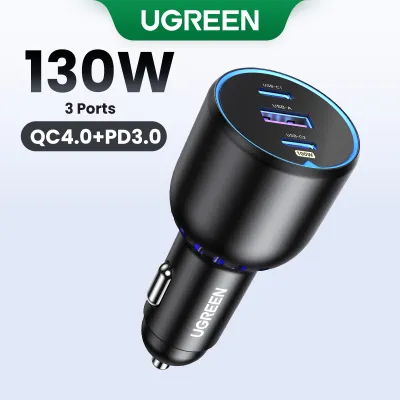
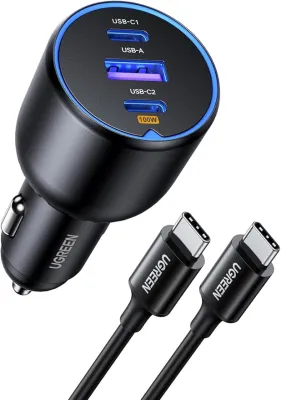
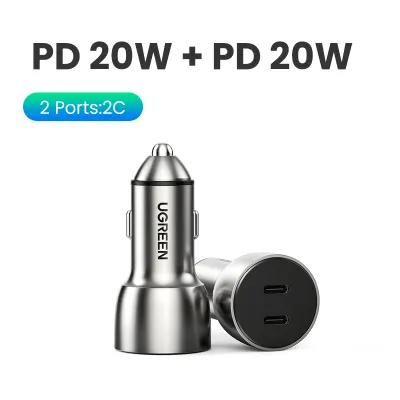
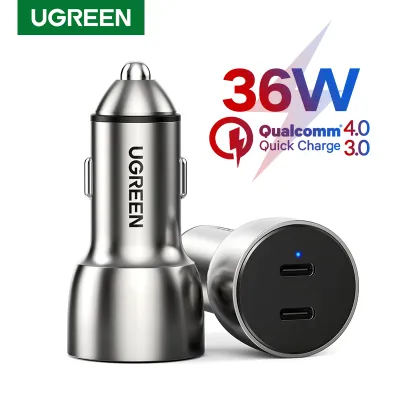
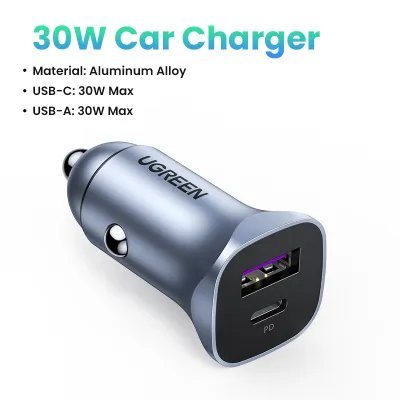
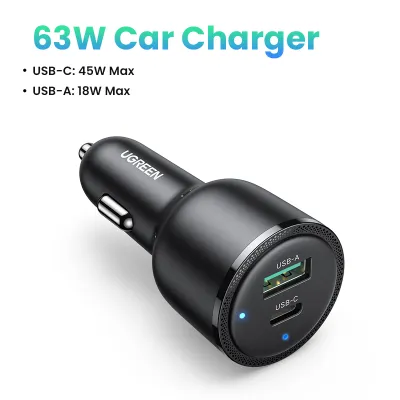
Prices are valid at publication and may change. Please refer to the product page for the latest price.
Choose a Wireless car charger if you prioritize a clean, cable-free dashboard and want the convenience of dropping your phone onto a mount without manual plugging. Note that wireless charging operates at lower speeds and generates more heat, making it best suited for maintaining battery levels rather than rapid top-ups.
For the most versatile setup, a hybrid car charger featuring both USB-C and USB-A ports offers the best of both worlds, letting you power a dashcam continuously while fast-charging your phone.
Core Differences: USB-A, USB-C PD, and Wireless Chargers
Understanding the underlying technology of each charger type helps you make an informed decision for your vehicle. The physical port shape is only the starting point; the communication protocols running behind those ports determine how safely and quickly your devices charge.

USB-A represents the legacy connector standard that has powered consumer electronics for decades. These ports deliver a fixed voltage (typically 5V) and rely on older fast-charging standards like Quick Charge (QC) to increase output. Because USB-A lacks the smart communication pins found in newer interfaces, it cannot dynamically negotiate high-power demands, making it unsuitable for power-hungry devices like modern tablets or laptops.
USB-C Power Delivery (PD) is a modern, intelligent protocol designed to handle significantly higher power levels. Unlike older standards, USB-C PD features dedicated communication lines that allow the charger and the connected device to negotiate the optimal voltage and current dynamically. This smart handshake ensures that a smartphone receives exactly the power it needs without risking damage to the battery, enabling charging speeds that far exceed legacy USB-A limits.
Wireless car chargers rely on electromagnetic induction to transfer energy without a direct cable connection to the phone. Typically utilizing the Qi or Qi2 standard, these chargers feature an induction coil that creates an alternating electromagnetic field, which a corresponding coil inside your smartphone converts back into electrical energy. While incredibly convenient, this inductive coupling is inherently less efficient than a physical wire, as energy is lost as heat across the physical gap between the coils.
When shopping for a UGREEN car charger, always check the product packaging and technical specifications for certified protocol support, such as Power Delivery (PD), Quick Charge (QC), or Qi wireless certification. Do not rely solely on the physical shape of the ports, as some budget cables or ports may lack the internal circuitry required to support fast-charging protocols.
Charging Speed and Power Delivery Capabilities
The difference in charging speed between these three technologies is substantial and directly impacts how much battery life you can recover during a typical drive. A short drive across town requires an efficient delivery system to make a meaningful difference in your device’s battery percentage.
USB-C PD chargers offer the fastest charging speeds available in a vehicle. UGREEN’s high-wattage USB-C PD car chargers can deliver anywhere from 20W to over 100W of power. This massive output allows you to fast-charge modern smartphones to 50% capacity in approximately 30 minutes, and even power demanding devices like a MacBook Pro or an iPad Pro directly from your vehicle’s 12V accessory socket.
In contrast, standard USB-A ports are generally limited to 12W or 18W of power. While an 18W Quick Charge USB-A port can provide decent charging speeds for older Android devices, it cannot match the rapid charging capabilities of USB-C PD. For modern devices, charging via a standard USB-A port will feel noticeably slower, often taking several hours to fully replenish a depleted battery.
Wireless charging is the slowest of the three methods, typically capped at 7.5W for standard iPhones and up to 15W for compatible Android devices or Qi2-enabled phones. Because wireless charging relies on magnetic fields, any misalignment between the coils in the charger and the phone will result in significant efficiency loss. This lost energy is dissipated as heat, which can cause the phone to warm up and trigger thermal throttling, slowing the charging speed even further to protect the battery.
To avoid performance bottlenecks, always match the charger’s labeled output specifications with your device’s maximum input rating. For example, plugging an iPhone that supports a maximum of 27W into a 100W USB-C PD port is perfectly safe, but the phone will only draw its maximum supported 27W. Conversely, plugging a laptop that requires 65W into a 20W port will result in extremely slow charging or no charge at all.
Additionally, keep in mind that multi-port UGREEN car chargers share their total wattage across all active ports. A charger labeled as “130W” might allocate 100W to the primary USB-C port, 30W to the secondary USB-C port, and share that power dynamically when a USB-A port is also in use. Always review the manufacturer’s power distribution matrix to understand how the wattage splits when multiple devices are connected simultaneously.
Device Compatibility and Everyday Convenience
Your choice of car charger must align with the devices you carry daily and how you use your vehicle. A charger that delivers high speeds is of little use if it does not connect seamlessly with your hardware or fit your driving habits.
USB-A chargers excel in compatibility with legacy electronics and dedicated car accessories. Devices such as older dashcams, GPS navigators, and older smartphone models frequently ship with USB-A cables. If your primary goal is to keep a dashcam powered continuously while providing a basic charging option for passengers, a standard USB-A port is highly reliable and eliminates the need for expensive cable upgrades.
USB-C chargers are essential for modern tech ecosystems. Newer smartphones, including the iPhone 15 and 16 series, modern Samsung Galaxy devices, and almost all contemporary tablets and laptops, utilize USB-C as their primary interface. To take advantage of fast charging on these devices, you must use a USB-C to USB-C cable paired with a USB-C PD charger, making this setup the most future-proof choice for tech-focused drivers.
Wireless charging mounts offer unmatched convenience for short commutes and frequent stops. Instead of fumbling with cables every time you enter or exit your vehicle, you simply place your phone into the cradle. However, wireless charging requires a Qi-compatible smartphone. Furthermore, physical barriers such as thick phone cases (greater than 3mm to 5mm), metal plates used for magnetic mounts, or non-compatible magnetic rings can completely block inductive charging or cause dangerous heat buildup, requiring you to remove the case before charging.
For short city drives where you frequently hop in and out of the car, the drop-and-go convenience of a wireless mount is highly practical. For long-distance road trips or professional driving, a wired USB-C connection is far superior, providing a stable, high-speed charge that is unaffected by road vibrations, case thickness, or thermal limitations.
Installation, Cable Management, and Dashboard Setup
The physical presence of a charger and its associated cables can significantly alter the look, feel, and safety of your vehicle’s cabin. Managing clutter is essential for maintaining a clean dashboard and ensuring that your controls remain easily accessible.
Standard plug-in USB-A and USB-C chargers are incredibly compact, often sitting nearly flush with your vehicle’s 12V accessory socket. This minimalist design keeps the center console clean and unobtrusive. However, because these chargers do not hold your phone, you must run a physical cable from the socket to a separate phone mount or to the passenger seat, which can result in loose cables draping over your gear shifter or climate controls.
Wireless car chargers double as phone mounts and are typically secured using vent clips, suction cups, or adhesive dashboard mounts. While this setup eliminates the need to plug a cable directly into your phone, the wireless mount itself still requires a constant wired power connection to the 12V socket. This means you must still route a cable from the socket to the mount, which can obstruct air vents, block dashboard screens, or interfere with your driving sightlines if not routed neatly.
When planning your dashboard setup, consider the layout of your vehicle’s cabin. Some drivers prefer using adhesive cable clips to route a long USB-C cable discreetly along the seams of the dashboard, keeping the cabin tidy. Others prefer the simplicity of a high-quality wireless vent mount that keeps the phone positioned perfectly for navigation while charging, accepting the trade-off of a slightly obstructed air vent.
Safety, Compatibility Checks, and Vehicle Limits
Modifying or adding electronics to your vehicle requires careful attention to electrical limits and physical safety boundaries. Before purchasing or operating any aftermarket car electronics, check your vehicle’s owner manual and the product’s official documentation to ensure compatibility.
First, verify your vehicle’s 12V accessory socket (cigarette lighter) fuse rating. Most standard passenger vehicles fuse this socket at 10A or 15A, which translates to a maximum power capacity of 120W to 180W at a standard 12V output. If you plug in a high-power multi-port UGREEN charger capable of delivering 130W or more, ensure that the total draw of your connected devices does not exceed your vehicle’s fuse limit, as overloading the circuit will blow the fuse and cut power to the socket.
Heat management is another critical safety consideration, particularly in warm climates like Singapore, where parked cars can reach extreme internal temperatures. Inductive wireless charging naturally generates more heat than wired charging. When combined with direct sunlight streaming through the windshield, a phone mounted on a wireless charger can quickly overheat, triggering its internal thermal protection to throttle charging speeds or shut down entirely to protect the battery from permanent degradation.
Physical placement of your charger and mount is vital for safety on the road. Never mount a wireless charger or route cables in a location that blocks airbag deployment zones, obstructs your clear view of the road, or interferes with critical vehicle controls like the steering wheel, gear selector, or wiper stalks. A loose cable dangling near the driver’s feet can pose a severe safety hazard if it becomes entangled with the pedals.
Finally, always check UGREEN product labels and documentation for built-in safety protections. Reputable car chargers feature integrated protection systems designed to guard against over-current, over-voltage, short-circuits, and extreme temperatures. These safety chips actively monitor the electrical flow and will automatically shut down or reduce power output if an anomaly is detected, protecting both your vehicle’s electrical system and your mobile devices.
Final Decision Framework: Choose Based on Your Driving Habits
To select the ideal UGREEN car charger, evaluate your typical driving patterns, the devices you need to power, and your tolerance for cable clutter.
Use this quick checklist to guide your purchase:
- The Short-Distance Commuter: If your daily drives consist of short trips where you frequently get in and out of the car, choose a UGREEN wireless charging mount. The convenience of automatic clamping and cable-free mounting outweighs the slower charging speeds.
- The Long-Distance Road Tripper: If you regularly drive long distances where GPS navigation runs continuously, choose a UGREEN USB-C PD charger. The stable, high-speed connection ensures your phone stays fully charged even under heavy navigation and screen usage.
- The Multi-Device Driver: If you need to power a dashcam continuously while keeping your smartphone fast-charged, opt for a hybrid UGREEN charger featuring at least one USB-C PD port and one USB-A port. This configuration allows you to run legacy accessories and modern fast-charging devices simultaneously without compromise.
Before finalizing your purchase, verify the exact specifications, mounting mechanism, and included accessories on the official UGREEN store or through an authorized retailer. Ensure the charger’s physical dimensions fit your vehicle’s socket area and that you have the correct, high-quality cables required to support your chosen charging standard.
Frequently Asked Questions (FAQ)
Will a high-wattage USB-C PD car charger blow my vehicle's fuse?
No, a high-wattage USB-C PD car charger will not automatically blow your vehicle’s fuse. Modern smart chargers only draw the amount of power requested by the connected devices. However, to ensure safety, check your vehicle’s owner manual for the exact fuse rating of your 12V accessory socket (typically 10A to 15A, or 120W to 180W). Ensure that the combined maximum wattage of all devices you plug in simultaneously does not exceed this limit.
Can I use a UGREEN wireless car charger with a thick or magnetic phone case?
Standard Qi wireless car chargers generally struggle to transfer power through cases thicker than 3mm to 5mm. Additionally, any metal plates, credit cards, or non-compatible magnetic rings embedded in your case will block the inductive electromagnetic fields and can generate dangerous heat. For safe and efficient wireless charging, use a slim plastic or silicone case, or opt for a case specifically designed with magnetic alignment compatibility.
Community discussion
Share your experience or ask a question. Comments are reviewed before publication.