
To find the right tyre repair sealant, you must match the formulation to your tire’s construction, its physical volume, and the specific type of puncture you need to address. Not all sealants are created equal; some are designed to prevent punctures before they happen, while others serve as temporary emergency fixes to get you to a workshop. Selecting the wrong product can lead to failed repairs, wheel imbalance, or damage to your vehicle’s tire pressure sensors.
To begin, look at your vehicle’s tire setup. Most modern passenger cars use tubeless tires, whereas many motorcycles, classic cars, and bicycles utilize tube-type tires. Run-flat tires have reinforced sidewalls that require specific manufacturer-approved repair protocols, and solid tires do not use air or sealant at all.
Next, determine your goal. Pre-puncture preventatives are liquid formulas injected into the tire beforehand to seal holes instantly as they occur. Post-puncture emergency sealants, often sold in pressurized aerosol cans or as part of a compressor kit, are applied immediately after a flat occurs to temporarily seal the leak and reinflate the tire. Knowing this distinction prevents you from buying a preventative formula when you are stranded on the side of the road needing an immediate inflation solution.
Products mentioned in this guide
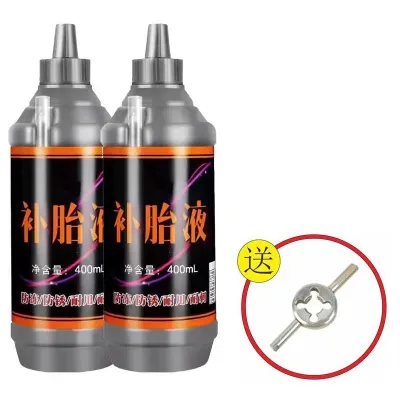
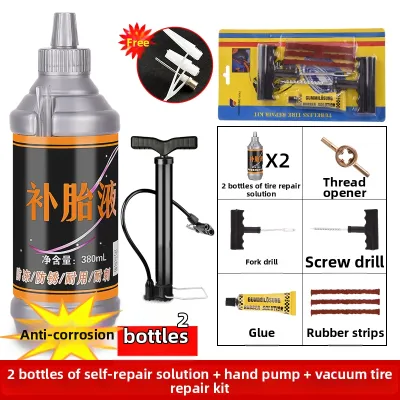
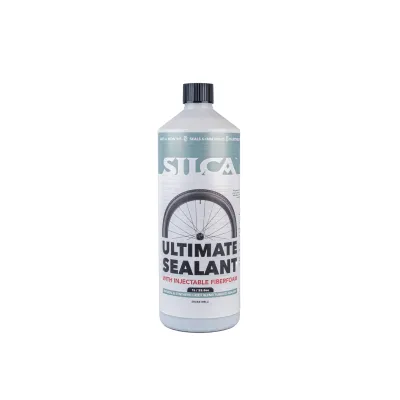
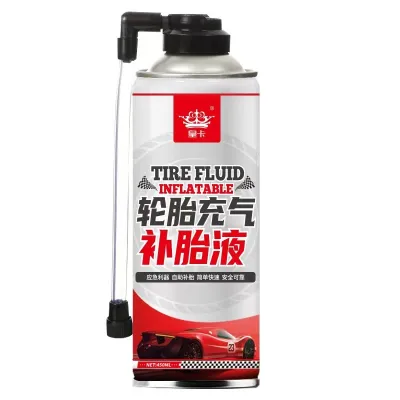
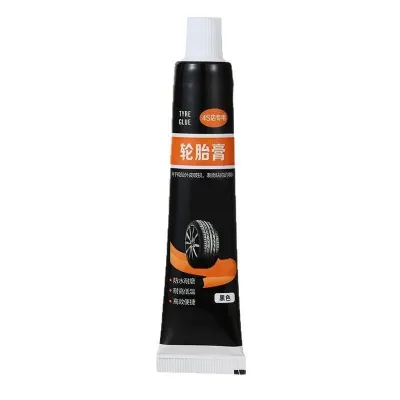
Prices are valid at publication and may change. Please refer to the product page for the latest price.
Tubeless vs. Tube-Type: Verifying Your Tire Construction
Before purchasing any tyre repair sealant, you must verify whether your tire contains an inner tube or is entirely tubeless. To check this visually, inspect the valve stem where it emerges from the wheel rim. On a tubeless tire, the valve stem is sealed directly against the metal rim, often secured by a rubber base or a metal locking nut that sits flush against the wheel. If you wiggle the stem gently, it should feel firmly anchored to the rim itself.
On a tube-type tire, the valve stem is an extension of the inner rubber tube; it passes through a hole in the rim and may move more freely or show a threaded shaft with a lock ring that does not seal directly against the outer wheel surface. You can also look for the word “Tubeless” or “Tube Type” molded directly into the tire’s sidewall.
The chemical formulations for these two setups differ fundamentally because of how they operate inside the tire. Tubeless sealants are designed to coat the entire inner liner of the tire and seal the bead—the critical contact point where the tire rubber meets the metal wheel rim. These formulas often contain binding agents, fibers, or latex particles that cure when exposed to escaping air, forming a flexible plug within the tire casing.
Conversely, tube-type sealants must remain liquid and highly flexible inside a thin, elastic rubber tube. Because an inner tube stretches and flexes constantly during rotation, a tube sealant must seal the puncture without bonding the tube to the inside of the outer tire casing.
Using the wrong formulation carries significant risks. If you inject a tubeless sealant into an inner tube, the formula may fail to seal the puncture because it cannot cure properly within the confined, highly elastic space of a tube, or it may cause the tube to stick to the tire carcass, making future tire changes extremely difficult. Conversely, using a tube sealant in a tubeless tire can result in the liquid pooling at the bottom of the tire without coating the inner liner or sealing the bead, leading to persistent slow leaks and severe wheel imbalance.
Sizing and Volume: Matching Sealant to Your Tire Dimensions
Once you have identified your tire construction, you must determine the exact volume of sealant required for your specific tire dimensions. To do this, read the standard metric markings on your tire’s sidewall, which typically look like “205/55 R16”. The first number (205) represents the tire width in millimeters, the second (55) is the aspect ratio (the height of the sidewall as a percentage of the width), and the final number (16) is the rim diameter in inches. These three dimensions dictate the internal surface area and air volume of your tire.

Always check the sealant manufacturer’s application chart—usually printed on the back of the bottle or available on their official website—to match these sidewall numbers with the recommended fluid ounces or milliliters. A compact hatchback tire requires significantly less sealant than a large SUV or light truck tire. For example, a standard passenger car tire might require around 300ml to 500ml of sealant, whereas a large off-road tire could require 900ml or more to ensure complete coverage of the inner tread area.
Adhering strictly to these volume recommendations is critical for safety and performance. Under-dosing your tire means there will not be enough liquid to coat the entire inner surface evenly, leaving punctures unsealed when air escapes. Over-dosing, on the other hand, causes excess liquid to pool at the bottom of the tire when stationary.
When you accelerate, this heavy pool of liquid cannot distribute quickly enough, leading to severe wheel imbalance, steering wheel vibration, and uneven tire wear. In extreme cases, this imbalance can compromise your vehicle’s handling and suspension components over time.
Puncture Limits and Tread Patterns: What Sealants Can Actually Fix
Tyre repair sealants are designed as temporary, emergency measures and have strict physical limitations regarding the types of damage they can repair. Before attempting a repair, locate the puncture. Sealants are only effective for punctures located within the main tread area—the flat surface of the tire that makes direct contact with the road. If the puncture is located on the tire’s shoulder or sidewall, do not attempt to use a sealant.
The sidewall experiences intense flexing and load-bearing stress during driving, which prevents the sealant from forming a stable, permanent plug. Sidewall damage is structurally unsafe and requires immediate professional tire replacement.
You must also check the product packaging for the maximum puncture diameter the formula is rated to seal. Most consumer-grade emergency sealants are rated to seal punctures caused by nails, screws, or sharp debris up to 6mm (approximately a quarter of an inch) in diameter. If the puncture is larger, or if the tire has suffered a gash, tear, or blowout, the sealant will simply spray out of the hole without curing, leaving you stranded and wasting the product.
Your tire’s tread pattern also plays a role in how the sealant behaves. Tires with aggressive off-road tread patterns, deep sipes, or heavy block designs require careful consideration. The deep grooves and thick rubber blocks can mask the exact location of a puncture, making it harder to verify if the sealant has successfully cured. Additionally, the heavy construction of off-road tires can slow down the centrifugal distribution of the sealant inside the tire, requiring you to drive at a slow, steady speed for a longer distance immediately after application to ensure the formula coats the entire inner surface evenly.
Safety Boundaries: TPMS Compatibility, Speed Limits, and Stop Conditions
Operating a vehicle with a temporarily sealed tire requires strict adherence to safety boundaries to prevent accidents and avoid costly mechanical damage. First, verify if your vehicle is equipped with a Tire Pressure Monitoring System (TPMS). Many modern vehicles use direct TPMS sensors mounted inside the wheel assembly on the valve stem. If you use a standard, non-compatible sealant, the sticky liquid can clog the sensor’s delicate pressure port, ruining the electronics and requiring an expensive replacement. Always look for a clear “TPMS Safe” or “Sensor Safe” label on the sealant bottle before injecting any product into your tire.
Second, understand that any emergency sealant repair is strictly temporary. Once applied, you must follow the manufacturer’s stated speed and distance limits. Most emergency sealants restrict your driving speed to a maximum of 80 km/h (approximately 50 mph) and a total distance of no more than 100 to 200 kilometers. This limit is designed to get you safely to the nearest professional tire workshop, not to allow continued daily commuting. Driving at high speeds or over long distances can cause the temporary seal to fail catastrophically due to heat buildup and centrifugal forces.
Finally, you must recognize clear stop-conditions where a sealant should never be used. If the tire has completely unseated from the wheel rim (bead unseating), if the wheel rim itself is bent or cracked, or if the tire shows signs of running flat for an extended period (such as dark rings, creasing, or structural softening of the sidewall), do not use a sealant. In these scenarios, the tire’s structural integrity is compromised.
Attempting to inflate or seal the tire could lead to a dangerous blowout. Instead, stop immediately, secure your vehicle in a safe location, and call for professional towing or perform a spare tire swap. Always consult a qualified tire professional to inspect and permanently repair or replace the tire as soon as possible.
Frequently Asked Questions (FAQ)
Does tyre repair sealant expire if left in the bottle?
Yes, tyre repair sealants have a finite shelf life, typically ranging from two to five years from the manufacture date. Over time, the active chemical agents, latex, or binding fibers can separate, dry out, or clump together inside the bottle, rendering the formula useless when you need it most. Always check the packaging for an expiration date or batch code. If you store the sealant in your vehicle’s boot, expose it to extreme tropical heat, or notice that the liquid has separated or hardened when inspected, replace the bottle immediately to ensure it remains reliable in an emergency.
Will the sealant ruin my tire or wheel permanently?
Most modern emergency sealants are formulated to be water-soluble, allowing a professional technician to wash the residue out of the tire and off the wheel rim during a permanent repair. However, some latex-based or adhesive formulas can cure into a sticky, stubborn film that is difficult to remove. To prevent permanent damage, inform the tire technician that you have used a sealant before they dismount the tire. They will need to thoroughly clean the inner tire liner, the wheel rim, and the TPMS sensor to ensure a proper seal for the permanent patch or replacement tire.
Can I use a car tyre sealant on a motorcycle or bicycle?
You should avoid using automotive tyre sealants on motorcycles or bicycles unless the product label explicitly states it is compatible. Automotive formulas are optimized for the high air volume, specific centrifugal forces, and larger valve stems of passenger cars. Using them on smaller wheels can lead to poor distribution, clogged valves, or severe handling imbalances that are highly dangerous on two-wheeled vehicles. Always select a dedicated motorcycle or bicycle sealant designed for those specific tire volumes and valve types.
Community discussion
Share your experience or ask a question. Comments are reviewed before publication.