
Selecting the right tyre patch kit depends on your vehicle type, tyre construction, and whether you need an immediate roadside rescue or a permanent, structurally sound repair. For quick, temporary roadside emergencies on tubeless tyres, an external string plug kit is the standard choice. For a permanent, road-legal repair that seals the inner liner and fills the puncture path, you require an internal patch or a combination mushroom plug kit, both of which require demounting the tyre from the wheel.
Your driving environment also dictates the level of durability required from your repair tools and materials. In Singapore, frequent stop-start traffic, high humidity, and heavy downpours place significant stress on tyres, making a reliable repair critical for safety. Before purchasing any kit, you must verify your vehicle’s tyre specifications, load index, and speed rating to ensure compatibility with the repair materials.
Understanding the Main Types of Tyre Repair Methods
To choose the right kit, you must first understand the three primary tyre repair methods available on the market. Each method serves a distinct purpose, ranging from emergency roadside assistance to permanent workshop-grade restoration.
Products mentioned in this guide
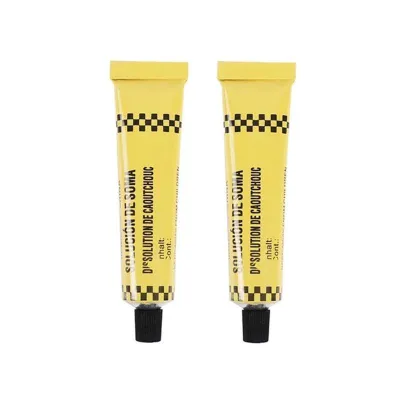
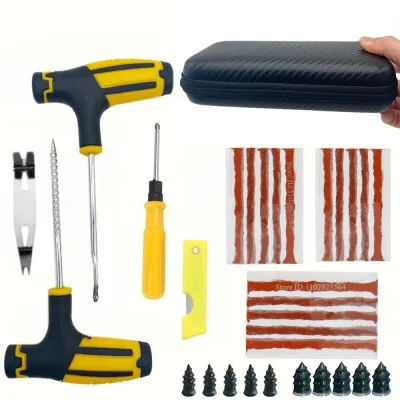
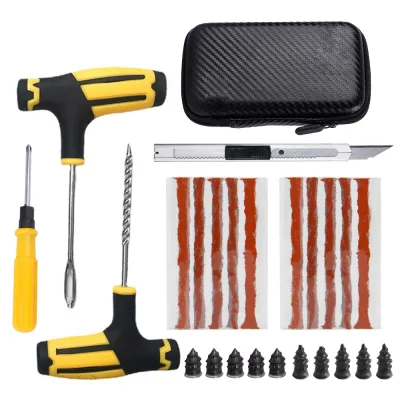
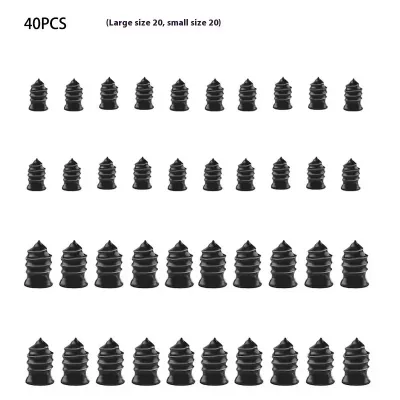
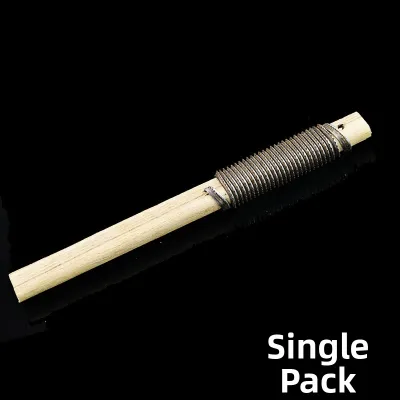
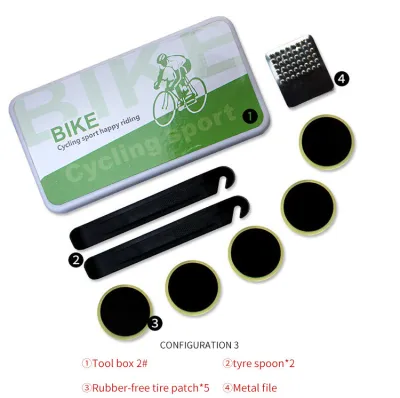
Prices are valid at publication and may change. Please refer to the product page for the latest price.
External string plugs, often referred to as sticky strings or bacon strips, are designed for rapid, temporary roadside repairs. These plugs consist of fibrous cords heavily impregnated with an uncured rubber compound. Using a specialized insertion needle, you force the string directly into the puncture from the outside of the tyre without removing the wheel. The plug relies on mechanical compression and friction within the puncture channel to block air loss. While highly convenient, string plugs are temporary fixes because they do not seal the inner liner and can allow moisture to seep into the tyre’s steel belts over time, leading to rust and structural degradation.
Internal patches are flat rubber discs or squares that must be applied directly to the inner liner of the tyre. This method requires you to remove the wheel from the vehicle, demount the tyre from the rim, and thoroughly clean and buff the inner surface. You then apply a chemical vulcanizing fluid, which reacts with the patch backing to create a cold-vulcanized, airtight seal over the injury. While an internal patch effectively prevents air from escaping, it does not fill the physical hole left by the puncturing object. This leaves the steel belts vulnerable to moisture and road debris entering from the outside tread.
Combination mushroom plugs, also known as patch-plugs, represent the gold standard for permanent tyre repairs. These components feature a rubber stem attached to a flat patch base, resembling a mushroom. Installing a mushroom plug requires demounting the tyre, preparing the inner liner, and pulling the stem through the puncture channel from the inside out until the patch base seals flat against the inner liner. This dual-action design simultaneously seals the inner liner and fills the puncture path, completely protecting the internal steel belts from moisture while ensuring a permanent, airtight seal.
Matching the Kit to Your Vehicle and Tyre Construction
Tyre construction, operating pressures, and space limitations vary significantly across different vehicle classes. Selecting a kit tailored to your specific vehicle type ensures that the tools are strong enough and the patches are sized correctly for the job.

Motorcycles and scooters require careful consideration due to the variety of tyre designs in use. Many modern street bikes utilize tubeless radial tyres, which can be temporarily repaired using compact string plug kits or pocket-sized mechanical pluggers. However, classic motorcycles, dirt bikes, and some smaller scooters use tubed tyres. For these, a standard tubeless plug kit is useless; you must purchase a tube patch kit containing thin, highly flexible cold patches and vulcanizing cement to repair the inner tube itself. Because storage space is limited on a motorcycle, look for kits that feature lightweight, compact tools and include CO2 inflation canisters to reinflate the tyre on the go.
Passenger cars typically run on steel-belted radial tyres that operate at pressures between 30 and 35 PSI. To repair these tyres, your kit must feature robust tools capable of penetrating tough steel belts without bending or breaking. Standard passenger car kits include medium-sized reamers and split-eye insertion needles designed to handle common puncture sizes caused by road debris like nails and screws. The repair materials in these kits are formulated to withstand the heat and centrifugal forces generated during daily commuting and highway driving.
Commercial and heavy-duty vehicles, such as light commercial vans, trucks, and trailers, operate under much higher tyre pressures and carry heavy loads. These vehicles feature multi-ply tyres with dense steel casing layers. Attempting to use a cheap, consumer-grade plastic-handled tool on a commercial tyre is highly dangerous, as the tool can easily snap under pressure. Heavy-duty kits feature solid steel T-handle tools, extra-thick vulcanizing strings, and heavy-duty patches designed to withstand extreme structural loads and high operating inflation pressures.
Evaluating Kit Components and Quality Indicators
Not all tyre patch kits are built to the same standard. Evaluating the quality of the individual components within a kit before purchase prevents tool failure and ensures a reliable, airtight seal.
Tool durability is the most critical factor when choosing a kit. Cheap kits often feature plastic handles or thin, cast-metal shafts that can bend or snap when pushing through steel belts. Look for heavy-duty, solid steel or zinc-alloy T-handles. A T-handle provides the necessary leverage and grip to safely force the reamer and needle through the tough tread. The reamer should have a spiral design to clean and roughen the puncture channel effectively, while the insertion needle should have a smooth, polished split-eye to release the plug easily without pulling it back out.
Consumable quality directly affects the longevity of the repair. The rubber plugs or patches must be fresh and pliable. Over time, rubber can dry out and lose its self-vulcanizing properties. Check the chemical vulcanizing cement; it must be fresh, as opened or expired tubes will dry up, rendering the kit useless in an emergency. Look for kits that package consumables in airtight, resealable bags or individual foil wraps to extend their shelf life.
Additionally, a complete kit should include essential accessories that facilitate a safe and efficient repair process. Pliers are necessary to extract the puncturing object from the tread. A valve core tool, spare valve cores, and valve caps are highly useful if you need to replace a damaged valve stem or quickly deflate the tyre. Finally, a reliable tyre pressure gauge and a piece of marking chalk or crayon will help you locate the puncture and verify that the tyre is safely inflated before you resume driving.
Safety Boundaries: When to Repair and When to Replace
While tyre patch kits are invaluable tools, they have strict safety limits. Understanding when a tyre can be safely repaired and when it must be replaced is crucial for your safety on the road.
Tyre repairs are strictly limited to the central tread area, often referred to as the repairable zone. This zone typically covers the middle 60% to 70% of the tread width. You must never attempt to repair a puncture located in the tyre shoulder or sidewall. The sidewall undergoes constant flexing and extreme stress during cornering and braking; a patch or plug applied to this area will inevitably fail, risking a sudden, catastrophic blowout. Additionally, the maximum safe puncture diameter for a standard repair is 6mm. Any puncture larger than this, or any jagged tears and cuts, cannot be safely repaired and requires immediate tyre replacement.
Run-flat tyres require special caution. These tyres feature heavily reinforced sidewalls designed to support the vehicle’s weight after a complete loss of air pressure. Most tyre manufacturers advise against repairing run-flat tyres once they have been driven on while deflated, as the internal structure may be severely compromised without showing external signs of damage. Always consult your vehicle’s original tyre documentation and manufacturer guidelines before attempting any repair on a run-flat tyre.
Always remember that any DIY roadside repair is a temporary measure designed solely to get you to a safe location. For a permanent, road-legal repair, you must visit a qualified professional tyre shop. A professional technician will demount the tyre from the rim to inspect the inner liner for hidden damage, such as creasing, scorching, or structural separation caused by driving underinflated. If you observe any bulging, cracking, exposed steel cords, or uneven wear on your tyre, do not attempt to use a patch kit; replace the tyre immediately to ensure road safety.
Frequently Asked Questions (FAQ)
Is a string plug kit safe for long-term driving?
No, external string plugs are not considered safe for long-term driving. They are temporary emergency fixes designed to help you reach a professional repair facility. Because they do not seal the inner liner of the tyre, they can slowly leak air and allow moisture to enter the tyre casing, which rusts the internal steel belts over time. For a permanent and roadworthy repair, the tyre must be demounted and repaired from the inside using a combination patch-plug.
Can I use a car tyre patch kit on a motorcycle?
It is not recommended to use a standard passenger car tyre patch kit on a motorcycle. Car tyre repair tools, such as the reamer and insertion needle, are typically much larger and can damage the delicate carcass of a motorcycle tyre or widen the puncture hole unnecessarily. Additionally, motorcycle tyres have unique profiles and construction characteristics. You should always use a dedicated motorcycle tyre repair kit that features appropriately sized tools and compact inflation accessories.
Do I need to remove the tyre from the rim to use a patch kit?
Whether you need to remove the tyre depends entirely on the type of patch kit you are using. External string plug kits do not require you to remove the tyre from the rim, making them ideal for quick, roadside emergency repairs. However, permanent repairs using internal flat patches or combination mushroom plugs absolutely require you to demount the tyre from the wheel. This allows for a thorough inspection of the inner liner and proper chemical vulcanization of the patch.
Community discussion
Share your experience or ask a question. Comments are reviewed before publication.