
To protect your Tesla’s interior from intense solar heat and ultraviolet (UV) damage, finding the right tesla sunshade setup requires matching the unique glass architecture of your vehicle with your daily parking habits. For the front windshield, a custom-fit foldable or rigid shade is generally the most effective option because it covers the massive glass expanse without sagging. For the side windows, the choice depends heavily on Tesla’s frameless door design, where tension-fit mesh or clip-on shades that secure to the inner window channel are superior to universal sleeves that slip over a traditional door frame. Choosing the correct type ensures maximum heat rejection while preventing damage to your vehicle’s sensitive electronics and glass panels.
Assess Your Parking Environment and Daily Routine
Before evaluating specific sunshade designs, you must analyze where your vehicle spends most of its day and how often you drive it. In Singapore’s tropical climate, vehicles parked in open-air lots face relentless, direct midday sun. This intense solar radiation can easily drive cabin temperatures above 60°C, causing the dashboard and seats to absorb massive amounts of heat. Under these conditions, your Tesla’s Cabin Overheat Protection (COP) feature will trigger frequently, running the air conditioning or fan to keep the interior below a set threshold. While COP protects the cabin materials, it also drains the high-voltage battery. A high-performance sunshade acts as a physical barrier, significantly reducing the frequency of COP activation and preserving your battery charge.
Conversely, if your daily routine involves parking primarily in sheltered multi-story car parks, such as HDB MSCPs, or basement parking structures, your exposure to direct thermal radiation is limited. In this scenario, your primary need might be quick glare reduction during occasional outdoor parking or UV protection for short daytime commutes. For these drivers, a lightweight, highly portable shade is often more practical than a heavy-duty thermal barrier.
Products mentioned in this guide
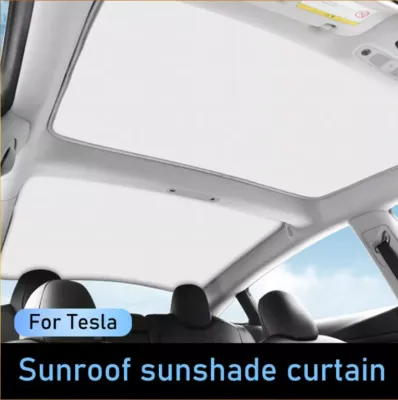
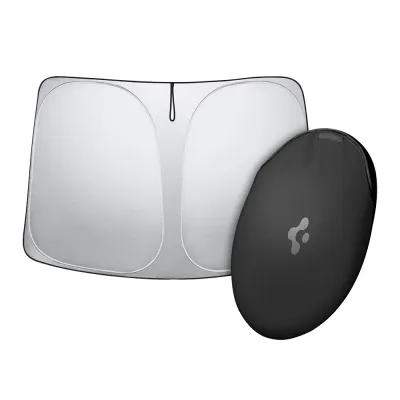
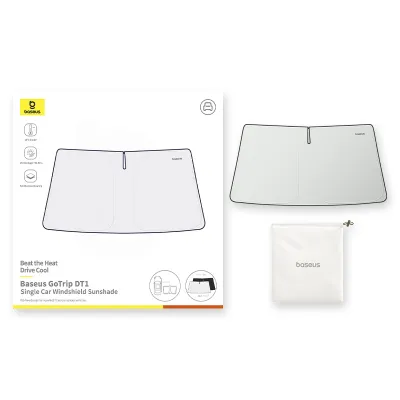
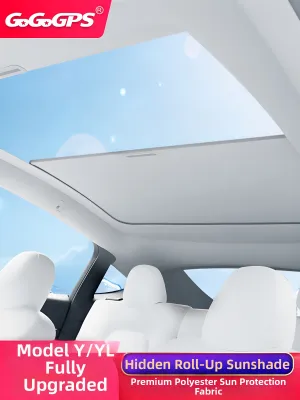
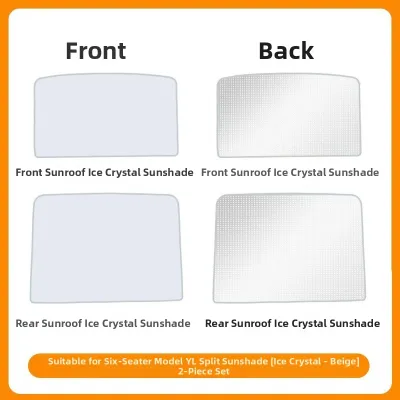
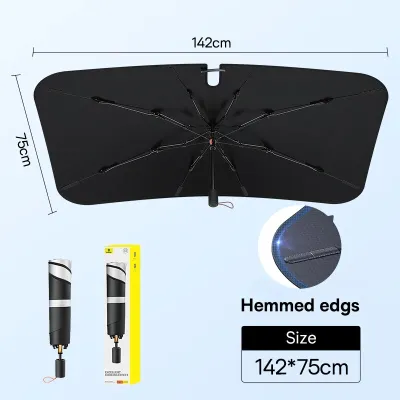
Prices are valid at publication and may change. Please refer to the product page for the latest price.
Usage frequency and storage constraints are equally critical factors in your decision. Daily commuters need a sunshade that can be deployed and packed away in seconds. If a shade is too cumbersome to fold, you are far more likely to leave it in the trunk, defeating its purpose. Tesla vehicles offer excellent storage options, including the frunk (front trunk) and the deep sub-trunk, but accessing these areas every time you park can quickly become tedious. Foldable wire-ring shades can twist down into compact discs that slide easily into the door pockets or seatback compartments, whereas rigid multi-layered panels must be laid flat across the rear seats or stored in the trunk. Ultimately, the best sunshade is the one that aligns with your willingness to install it consistently.
Front Windshield Options: Matching Shade Types to Your Routine
The front windshield of a Tesla is exceptionally large and steeply raked, creating a massive greenhouse effect inside the cabin. To combat this, manufacturers offer several distinct sunshade designs, each with its own set of trade-offs.

Custom-Fit Rigid Panels
Custom-fit rigid panels are constructed from dense, multi-layered boards featuring a highly reflective outer face and a structured core. These panels offer the absolute best edge-to-edge coverage and do not sag in the middle, even under prolonged exposure to high temperatures. By fitting tightly against the windshield pillars, they eliminate almost all light leaks. The primary drawback is their physical bulk. Because they do not roll or fold into a small footprint, handling them inside the cabin can be awkward, particularly if you have passengers. They are best suited for drivers who park outdoors for long periods and prioritize maximum thermal protection over convenience. Broad price bands for these premium rigid panels typically range from S$60 to S$120.
Foldable Accordion and Wire-Ring Shades
Foldable shades offer a highly practical middle ground. Wire-ring models use a flexible metal frame covered in reflective fabric that twists and folds into a small circular shape. Accordion models fold along pre-creased lines. When shopping for these, it is vital to verify that the shade includes a dedicated cutout at the top to accommodate the large Autopilot camera and sensor housing behind the rearview mirror. Without this cutout, the shade will press directly against the plastic housing, which can misalign the cameras or damage the mounting clips. These shades are highly recommended for daily commuters who need a balance of rapid deployment and compact cabin storage. They are widely available on online marketplaces for approximately S$30 to S$70.
Retractable Roller Shades
Retractable shades mount permanently to the windshield pillars or the bottom of the glass, allowing you to pull the shade across with a single motion. While they offer unmatched convenience, they present serious compatibility and safety concerns for Tesla owners. The mounting brackets or suction cups can block the driver’s forward visibility or interfere with the interior cabin-facing camera. Furthermore, any permanent adhesive or mechanical mounting must be verified so it does not damage the delicate interior trim or interfere with the deployment of the A-pillar side airbags.
Side Window Solutions: Balancing Passenger Comfort and Convenience
Tesla’s frameless side doors require a completely different approach to sunshade selection than traditional vehicles. Because there is no upper metal frame around the glass, standard slip-over mesh sleeves are entirely incompatible.
Custom-Fit Tension and Magnetic Panels
Custom-fit tension panels are designed to press-fit tightly into the rubber run channels of the window frame, while some magnetic versions use small, adhesive-backed metal clips attached to the plastic door trim. These shades provide excellent coverage, blocking direct side glare for rear passengers and protecting young children in car seats. However, you must exercise extreme caution regarding window operation. Because Tesla windows feature a “short-drop” mechanism—where the glass automatically lowers slightly when you pull the door handle to clear the brightwork trim—any shade that clips directly to the glass or tightly hugs the run channel can interfere with this movement. If the window cannot drop, opening the door can scratch the trim or damage the window regulator motor. Always verify that the product documentation explicitly states compatibility with the frameless door operation.
Retractable Side Shades
These shades mount to the top of the door panel and roll up or down as needed. While convenient, the suction cups or mounting tracks must be checked carefully. If the suction cups lose grip under high heat, the shade can snap back violently, potentially distracting the driver. Additionally, mounting brackets that clip over the door trim can rub against the delicate interior weatherstripping, leading to wind noise or water leaks during heavy rain.
Universal Mesh Sleeves
These budget-friendly sleeves are designed to slide over the entire door frame like a pillowcase. Because Tesla doors lack an upper frame, these sleeves cannot be secured and are completely unusable. Avoid purchasing these generic options for your Tesla.
Verifying Material Specs and Heat Rejection Claims
When shopping for a tesla sunshade, do not rely on generic marketing buzzwords like “space-grade insulation.” Instead, look for specific material specifications and verified performance ratings.
A high-performance sunshade should feature a multi-layer construction. The outermost layer should be highly reflective—typically a silver-coated polyester or aluminum foil layer—to bounce solar radiation back through the glass before it can turn into ambient heat. The inner layers should consist of a thermal barrier, such as closed-cell foam, and a dark, non-reflective fabric backing to absorb any residual heat and prevent glare inside the cabin.
Look for an official UPF (Ultraviolet Protection Factor) rating of 50+, which indicates that the material blocks 98% or more of harmful UV rays. Some premium manufacturers also provide verified Infrared (IR) rejection metrics. Because infrared radiation is the primary driver of cabin heat, a higher IR rejection rate translates directly to a cooler interior.
Additionally, inspect the structural integrity of the shade. Cheap options often use thin wire frames that warp under high heat, causing the shade to sag and leave large gaps. A sturdy, double-stitched border and a thick core prevent sagging, ensuring the shade remains flush against the glass to maintain its thermal barrier. Remember that no sunshade can completely eliminate heat buildup over several hours in a closed vehicle; the goal is to protect interior surfaces from UV degradation and reduce the initial cooling load on your air conditioning system.
Safe Installation and Interior Protection
Proper installation is critical to prevent damage to your Tesla’s interior components and advanced driver-assistance systems.
The area surrounding the rearview mirror houses the front Autopilot cameras, rain sensors, and the cabin camera. When installing a front windshield sunshade, never force the material against this housing. Pushing or bending a rigid shade tightly against the camera housing can damage the plastic clips or shift the camera alignment, which may disable driver-assist features or require a professional recalibration.
Be gentle when wedging rigid panels into place. The metal edges of low-quality shades can easily scratch the soft-touch dashboard material or tear the delicate Alcantara or leatherette trim on the A-pillars. Always tuck the edges carefully and secure the shade using the vehicle’s built-in sun visors to hold it in place.
If a sunshade does not fit easily, requires excessive force to bend into place, blocks your view of the side mirrors, or interferes with the physical operation of the steering wheel or gear selector, stop using it immediately. Consult the manufacturer’s fitment guide to ensure you have the correct model-year version, as Tesla has made subtle changes to windshield dimensions across different production years of the Model 3 and Model Y.
Frequently Asked Questions (FAQ)
Is it safe to drive with a sunshade partially covering the windshield?
No, it is highly unsafe and illegal. Sunshades are strictly designed for use while the vehicle is parked. Driving with any portion of a sunshade installed obstructs your field of vision, blocks critical Autopilot cameras, and compromises road safety. Always fully remove, fold, and securely stow the sunshade before shifting the vehicle out of Park.
Does the factory-tinted glass roof require an additional sunshade?
Yes, especially in hot tropical climates like Singapore. While Tesla’s factory glass roof is highly effective at blocking UV radiation, it still allows infrared heat to radiate into the cabin during prolonged exposure to direct midday sun. Adding a dedicated clip-on mesh roof sunshade creates an insulating air gap that significantly reduces the radiant heat felt by passengers’ heads, improving overall cabin comfort and reducing air conditioning energy consumption.
Community discussion
Share your experience or ask a question. Comments are reviewed before publication.