
Choosing the right Steelmate tire pressure monitoring system (TPMS) requires matching the sensor hardware to your vehicle’s wheel configuration, your willingness to perform manual maintenance, and the specific demands of your daily driving environment. Maintaining correct tire pressure is essential for vehicle safety, handling precision, and fuel efficiency. An aftermarket direct TPMS provides real-time, localized pressure and temperature data, giving you immediate warnings before a slow leak escalates into a dangerous highway blowout.
To make an informed purchase, you must first evaluate the physical differences between internal and external sensor architectures. From there, you can narrow down your choices based on your vehicle’s specific layout, whether you drive a compact hatchback, a family multi-purpose vehicle (MPV), or a heavy-duty commercial truck. Incorporating these practical considerations ensures your chosen system remains reliable over years of daily operation.
External vs. Internal Sensors: Choosing the Right Hardware
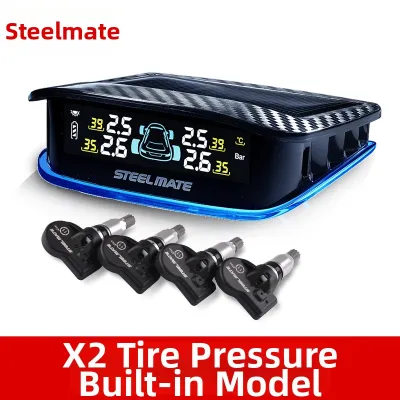
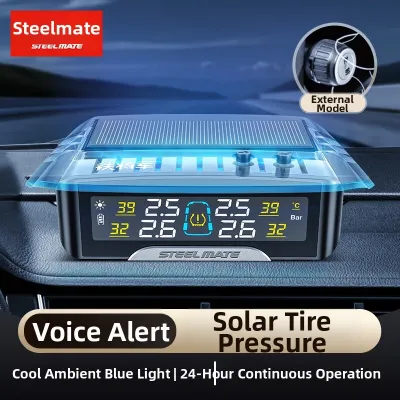
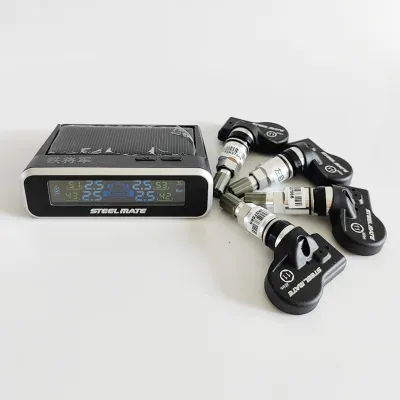
External valve-cap sensors represent the most accessible entry point for aftermarket tire pressure monitoring. These compact units screw directly onto your existing tire valve stems, depressing the Schrader valve core to measure internal air pressure. Because they require no specialized tools or tire demounting, they are highly suitable for drivers who want a straightforward, do-it-yourself installation. They are also an excellent option for motorists who frequently swap wheel sets or require a temporary monitoring solution that can be easily transferred to another vehicle.
Products mentioned in this guide

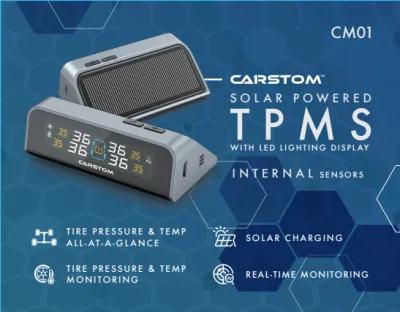
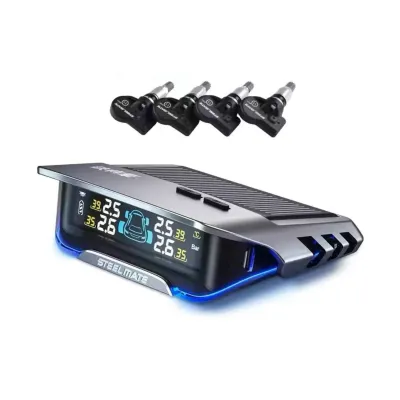
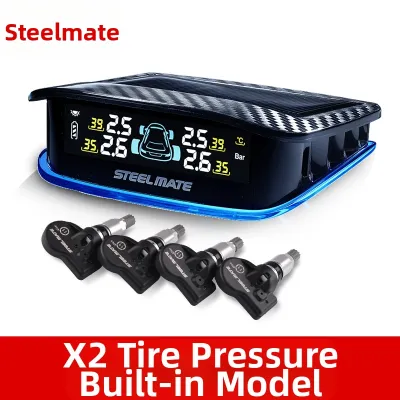
Prices are valid at publication and may change. Please refer to the product page for the latest price.
However, external sensors come with distinct physical trade-offs due to their exposed mounting position. Sitting on the exterior of the wheel assembly, they are constantly subjected to road debris, brake dust, and harsh weather conditions. They are also more vulnerable to opportunistic theft, although manufacturers mitigate this by including specialized locknuts. Furthermore, because they are positioned outside the tire carcass, they are cooled by ambient airflow, which slightly reduces the accuracy of their temperature readings compared to internal units.
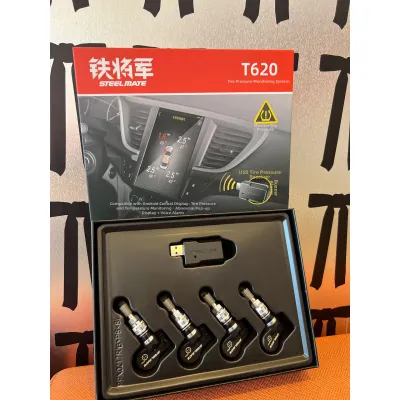
Internal sensors are installed directly inside the tire cavity, replacing your vehicle’s original rubber or metal valve stems. The sensor body is secured flat against the drop center of the wheel rim, completely protected from external physical hazards, road grime, and theft. Because the sensor is fully immersed within the tire’s pressurized air volume, it provides highly accurate, real-time temperature measurements. This internal positioning also allows for a larger, heavier battery, resulting in a significantly longer operating lifespan than external alternatives.
When using external sensors, you must consider the physical forces acting on your valve stems. External units add physical mass to the very tip of the stem. At high speeds, the resulting centrifugal force pulls this mass outward, which can cause flexible rubber valve stems to bend, fatigue, and eventually crack at the base. To prevent sudden air loss and ensure road safety, it is highly recommended to replace flexible rubber valve stems with rigid metal stems if you choose an external TPMS configuration.
Singapore’s tropical environment introduces unique operating challenges that influence your hardware choice. The combination of intense solar radiation, high ambient humidity, and sudden, heavy downpours can accelerate the aging of rubber seals on external sensors. Additionally, solar-powered dashboard displays are subjected to extreme greenhouse temperatures when vehicles are parked in open-air carparks. To ensure long-term reliability, look for systems that feature high thermal resistance and robust waterproofing ratings for all exterior components.
Matching TPMS Configurations to Your Vehicle Type
Sedans and Compact Hatchbacks
Standard passenger cars, such as sedans and compact hatchbacks, operate on a traditional four-wheel configuration. These vehicles typically require cold inflation pressures ranging between 2.0 and 2.5 Bar (approximately 29 to 36 PSI). For these applications, Steelmate offers highly compact four-wheel monitoring systems. These units feature small, solar-powered dashboard displays that fit neatly into the cabin without obstructing the driver’s forward field of view.

Alternatively, drivers can opt for ultra-low-profile cigarette-lighter plug-in displays or OBD-II integrated systems. OBD-II models connect directly to the vehicle’s CAN-bus network, allowing pressure data to be displayed on existing aftermarket screens or smartphone applications. These passenger-car models are pre-programmed with standard alarm thresholds optimized for everyday commuting, providing instant visual and audible alerts if a tire experiences rapid deflation or a slow, insidious pressure drop.
Before finalizing your purchase, always verify your vehicle’s specific wheel clearance and rim profile. Some compact hatchbacks feature tight brake caliper clearances or unique aftermarket wheel designs that may interfere with the physical profile of internal sensors. Checking your vehicle’s documentation and consulting with a tire specialist ensures that your chosen sensor model will mount cleanly without contacting any suspension or braking components.
SUVs, MPVs, and Light Trucks
Larger passenger vehicles, such as multi-purpose vehicles (MPVs) and sport utility vehicles (SUVs), demand a more adaptable monitoring setup. Because these vehicles are designed to carry heavy passenger loads or cargo, their weight distribution changes significantly when fully loaded. This load variation requires different cold inflation pressures for the front and rear axles, often reaching up to 3.0 Bar (approximately 44 PSI) or higher on the rear tires as specified by the manufacturer.
To accommodate these variations, you should select a Steelmate model that allows you to customize the high and low pressure alarm thresholds independently for each axle. This prevents annoying false alarms when the rear tires are intentionally inflated to a higher pressure for heavy loads. Furthermore, larger vehicles feature longer wheelbases and denser body structures, requiring a TPMS with strong wireless signal transmission to prevent data dropout between the rear wheels and the dashboard display.
Many SUVs and light trucks also carry a full-size spare tire mounted on the rear door or underneath the chassis. A standard four-wheel TPMS cannot monitor this spare, leaving you vulnerable to discovering a flat spare tire during a roadside emergency. Selecting a five-wheel compatible Steelmate system allows you to actively monitor the spare tire’s pressure, ensuring it remains fully inflated and ready for immediate deployment when needed.
Commercial Vehicles and Multi-Axle Trucks
Commercial trucks, vans, and multi-axle transport vehicles operate under severe mechanical loads and require much higher tire inflation pressures. These heavy-duty tires typically run at pressures ranging from 5.0 Bar to over 8.0 Bar (approximately 72 to 116 PSI). Standard passenger-car TPMS sensors are physically incapable of measuring these high pressures and will fail under such extreme operating conditions.
Steelmate’s commercial-grade TPMS models are engineered with heavy-duty sensors designed specifically to withstand high-pressure environments. These systems support configurations ranging from 6 to 12 or more wheels, making them suitable for dual-rear-wheel (dually) setups and multi-axle trailers. The sensors are built with robust housings to resist the heavy vibrations and high operating temperatures common in commercial transport.
Due to the extreme physical length of commercial vehicles, radio-frequency (RF) signals can suffer from severe attenuation as they travel from the rear axles to the driver’s cab. To guarantee a stable, uninterrupted connection, commercial TPMS kits utilize external signal repeaters or boosters. These boosters are mounted along the vehicle’s chassis to receive, amplify, and retransmit the sensor signals, ensuring the driver receives reliable, real-time tire data at all times.
Essential Features and Specifications to Verify
When comparing different Steelmate models, the ability to customize alarm thresholds is a critical safety feature. A quality TPMS must allow you to manually adjust the low-pressure, high-pressure, and high-temperature warning limits. These limits must be set in strict accordance with your vehicle manufacturer’s recommended tire pressure placard, which is typically located on the driver’s door jamb or inside the fuel filler flap.
Evaluating how the receiver unit is powered is equally important for daily convenience. While solar-powered dashboard displays offer a clean, wire-free installation, their charging efficiency can be severely degraded by high-performance solar window films. In regions where drivers install heavy window tints to reject tropical heat, these films can block the specific light spectrum required to charge the solar panel. If your vehicle has heavy window tinting, ensure the receiver includes a backup USB charging port or opt for a hardwired OBD-II model.
Security and environmental durability specifications should never be overlooked. For external sensors, verify that the kit includes robust anti-theft hex locknuts and the corresponding installation spanner to prevent opportunistic theft. For all sensor types, look for an ingress protection rating of IP67 or IP69K. This rating ensures the electronic components remain completely sealed against dust and water, allowing them to survive deep road puddles during monsoon seasons and high-pressure water jets at commercial car washes.
Finally, consider the ease of sensor pairing and reprogramming. Tire rotation is a vital maintenance practice to ensure even tread wear across all four wheels. When tires are rotated, their physical positions change. Your TPMS must allow you to easily reassign the sensor locations on the display unit, either through an automatic learning mode or a simple manual button sequence, without requiring you to physically remove and reinstall the sensors.
Installation Requirements and Ongoing Maintenance
Installing internal TPMS sensors is a complex, high-precision task that must be performed by a professional tire technician. The process requires deflating the tire completely, breaking the tire bead away from the wheel rim, removing the original valve stem, and mounting the internal sensor securely to the rim. Improper installation can damage the sensor’s delicate pressure transducer or result in persistent air leaks around the valve seat.
To ensure safety and maintain your vehicle’s warranty, always have internal sensors fitted at a qualified tire workshop. The technician will ensure the sensor is positioned at the correct angle to avoid contact with tire mounting machines during future tire changes. Additionally, because internal sensors add physical mass to the wheel rim, professional dynamic wheel balancing is absolutely mandatory immediately after installation to prevent high-speed wheel vibrations.
External sensors are designed for straightforward, do-it-yourself installation. Begin by thoroughly cleaning your tire’s valve stem threads to remove any accumulated dirt, road grime, or corrosion. Thread the provided anti-theft hex nut onto the valve stem, followed by the external sensor unit. Once the sensor is screwed down firmly and you hear a brief hiss of air escape before it seals, use the provided spanner to back the hex nut tightly against the sensor base to lock it in place.
After installing external sensors, you must verify that the seal is completely airtight. Spray a mild solution of soapy water directly onto the valve stem and around the base of the sensor. Watch closely for several minutes; the appearance of expanding bubbles indicates a micro-leak, which requires you to loosen, realign, and retighten the sensor. Regular visual inspections of these seals are highly recommended to prevent gradual pressure loss.
Maintaining your TPMS also involves managing the sensor batteries over their operational lifespan. External sensors utilize small, user-replaceable button-cell batteries (typically CR1632) that generally last between 1 and 2 years. Replacing these batteries is a simple task that can be completed at home using the battery-replacement tool included in the kit. Always ensure the rubber O-ring seal is properly seated when reassembling the sensor housing to maintain its waterproof integrity.
Internal sensors feature completely sealed, non-replaceable batteries designed to optimize weight and maximize water resistance. These specialized batteries typically last between 3 and 5 years, depending on your daily mileage and driving conditions. Once an internal sensor’s battery is depleted, the entire sensor unit must be replaced. This replacement requires a visit to a professional tire workshop to safely demount the tire, install the new sensor, and rebalance the wheel assembly.
Frequently Asked Questions (FAQ)
Do I need to rebalance my wheels after installing internal TPMS sensors?
Yes, dynamic wheel balancing is absolutely mandatory after installing internal TPMS sensors. An internal sensor typically weighs between 20 and 40 grams, which is more than enough to disrupt the weight distribution of a rotating wheel assembly. Failing to balance the wheel after installation will lead to noticeable steering wheel vibrations, especially at highway speeds. Over time, this imbalance can cause premature suspension wear and uneven tire tread degradation.
Will a standard 4-wheel TPMS work if I have a full-size spare tire?
No, a standard 4-wheel TPMS receiver is programmed to monitor and display data for exactly four active sensors. If your vehicle is equipped with a full-size spare tire, it will remain completely unmonitored by a standard four-wheel system. For vehicles where the spare tire is critical, such as off-road SUVs or utility vehicles, you should purchase a dedicated 5-wheel Steelmate system. This setup includes a fifth sensor for the spare, ensuring it is kept at the correct operating pressure and is fully ready for emergency use.
Community discussion
Share your experience or ask a question. Comments are reviewed before publication.