
The best small car mirror for eliminating blind spots depends on your specific driving environment and visibility gaps. For most drivers navigating tight multi-lane roads or crowded parking structures, a small convex mirror offers the widest field of view to spot adjacent vehicles. However, if you struggle with accurate distance judgment during high-speed lane changes, a flat or aspheric mirror might serve you better by preserving realistic depth perception.
Choosing the right auxiliary mirror requires mapping your vehicle’s physical blind spots, understanding how different lens shapes distort or clarify your view, and mounting them correctly to avoid blocking your primary glass. By matching the mirror type to your daily driving challenges, you can significantly improve your situational awareness on the road.
Identify Your Specific Blind Spot Zones
Every vehicle has distinct structural pillars that block your natural line of sight. The most common blind spots occur around the rear quarter panels, where adjacent vehicles can easily disappear from both your rearview and side mirrors. Low-lying obstacles, such as short concrete pillars in multi-storey car parks or low curbs, also present significant hazards near the rear bumpers that standard mirrors often miss.
Products mentioned in this guide
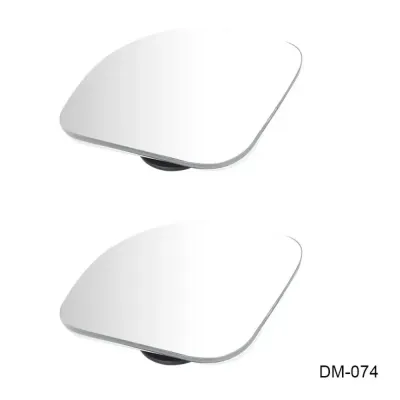
![[SG SELLER] [FREE SHIPPING] Car Blind Spot Mirror (Type B) Side View Mirror Wide Angle Drive Easy Small Round 360 View](https://img.lazcdn.com/g/ff/kf/Sd99de54ea15a4ae795d468f33154d0dcJ.jpg_400x400q80.jpg_.webp)
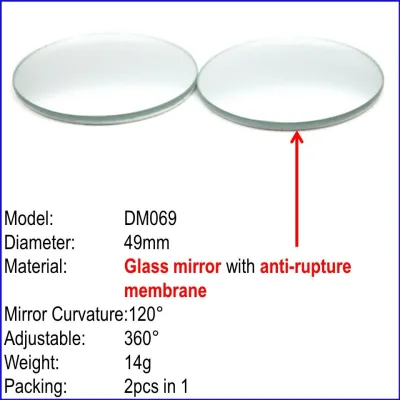
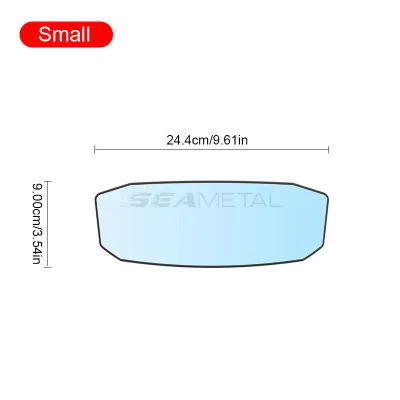
Prices are valid at publication and may change. Please refer to the product page for the latest price.
To identify your specific visibility gaps, perform a quick physical check from the driver’s seat. Sit in your normal driving position and have a helper walk slowly around your stationary vehicle. Note the exact moments their body disappears from your side mirrors and your peripheral vision, as this exercise maps your vehicle’s unique blind zones and highlights where you need optical assistance.
Your typical driving environment dictates the type of blind spot assistance you need. High-speed driving on expressways requires early detection of fast-approaching vehicles in adjacent lanes, where depth perception is critical. Conversely, low-speed maneuvering in tight urban spaces or parallel parking requires a downward-facing view to monitor curbs and low obstacles near your wheels.
Compare Auxiliary Mirror Types for Blind Spot Coverage
Convex auxiliary mirrors feature a curved surface that bends light outward, significantly expanding your field of view. This design is highly effective for detecting the presence of vehicles in your immediate blind spots on multi-lane roads. The trade-off is distance distortion; objects in a convex mirror appear much smaller and farther away than they actually are, requiring cautious judgment before changing lanes.

Flat auxiliary mirrors use a straight, uncurved surface to reflect images exactly as they appear. They offer true distance perception and zero distortion, making it easy to judge the speed and proximity of trailing vehicles. However, because they do not bend light, their field of view is narrow, meaning they must be precisely targeted at a very specific, small blind spot zone to be useful.
Wide-angle or aspheric mirrors combine a flat inner section with a progressively curved outer edge, often separated by a subtle vertical transition line. This hybrid design attempts to balance realistic distance tracking in the center with an expanded wide-angle view at the outer edge. They are highly versatile but can take some time for your eyes to adjust to the split perspective.
Choosing between these types involves balancing field width against depth accuracy. A highly curved convex mirror maximizes your coverage but sacrifices your ability to judge gaps safely at high speeds. A flat mirror keeps your depth perception intact but requires precise alignment and offers limited coverage, making it less effective for broad lane-monitoring needs.
Placement and Adjustment for Maximum Effectiveness
Where you stick your small car mirror on the primary side mirror glass greatly affects your overall visibility. Mounting the auxiliary mirror on the outer lower corner is a popular choice because it captures the adjacent lane without blocking your view of the horizon. Alternatively, placing it in the inner upper corner can keep the main glass clear for standard tracking, though it may limit the downward angle needed for parking.
To calibrate your new mirror, park your car next to a stationary object, such as a parked vehicle or a wall, that sits in your known blind spot. Sit in your normal driving posture and adjust the auxiliary mirror until the object is clearly visible in the small glass just as it begins to fade from your primary mirror. This seamless transition ensures there are no visual gaps between the two reflections.
Before driving, verify that the auxiliary mirror does not block critical areas of your primary side mirror. You must still be able to see the side of your own vehicle and the road stretching behind you in the main glass. If the small mirror obstructs your view of distant traffic or makes the primary mirror feel cluttered, reposition it immediately to maintain safe situational awareness.
Always consult your vehicle’s documentation before mounting aftermarket accessories. Some side mirrors feature auto-dimming coatings, built-in heating elements, or integrated turn signals that can be damaged or obstructed by adhesive auxiliary mirrors. Ensuring compatibility with your specific mirror housing prevents costly damage.
When You Might Not Need an Auxiliary Mirror
Many drivers can eliminate their blind spots simply by adjusting their existing side mirrors outward. If you set your side mirrors so that you cannot see the sides of your own car unless you tilt your head, you significantly widen your field of view. This method, often called the blind spot mirror adjustment, can make physical add-on mirrors redundant.
Modern vehicles equipped with electronic blind spot monitoring systems or 360-degree camera arrays rarely benefit from stick-on mirrors. These active safety features provide real-time visual or audible alerts when a vehicle enters your blind zone, rendering small physical mirrors unnecessary. Relying on clean, unobstructed factory glass is often safer than adding physical clutter.
Adding an auxiliary mirror can introduce unwanted complications to your daily drive. Stick-on mirrors can create distracting glare from headlights at night and reduce the usable surface area of your primary glass. Furthermore, the strong adhesives used to mount these mirrors can damage the delicate heating elements or anti-glare coatings on premium side mirrors if you ever decide to remove them.
Frequently Asked Questions (FAQ)
Are small car mirrors legal to use on public roads in Singapore?
Yes, small auxiliary mirrors are generally legal to use on public roads in Singapore, provided they do not compromise your primary view or create a safety hazard. The Land Transport Authority (LTA) regulates vehicle modifications to ensure safety, meaning any aftermarket accessory must not protrude excessively from the vehicle’s body or obstruct the driver’s clear line of sight. It is always best to ensure your auxiliary mirrors are securely mounted to the existing mirror housing or glass and do not interfere with the folding mechanism of your side mirrors.
How do I remove the adhesive residue without damaging the mirror?
To remove a stick-on mirror safely, start by applying gentle heat with a hair dryer to soften the adhesive backing. Once the glue is warm, carefully slide a piece of dental floss or a plastic trim tool behind the auxiliary mirror to slice through the softened foam tape. Clean any remaining sticky residue using a mild adhesive remover according to its label instructions, using a soft microfiber cloth to avoid scratching the primary glass or damaging built-in heating elements.
Community discussion
Share your experience or ask a question. Comments are reviewed before publication.