
Finding the right scooter engine oil viscosity is crucial for keeping your automatic two-wheeler running smoothly, especially under the demanding riding conditions of Singapore. To determine the correct viscosity grade, your primary reference must always be your scooter manufacturer’s owner’s manual. For most modern scooters operating in tropical climates, viscosity grades like 10W-30 or 10W-40 are the standard recommendations.
Using the correct oil viscosity ensures that your engine components receive adequate lubrication immediately upon starting and remain protected under high thermal stress. Because scooters feature compact, high-revving engines that are often fully enclosed by plastic bodywork, they run significantly hotter than standard motorcycles. Selecting an oil that matches your engine’s design tolerances is the single most effective way to prevent premature wear, maintain fuel efficiency, and extend the lifespan of your machine.
Decoding Scooter Engine Oil Viscosity Grades
When shopping for scooter engine oil, the most prominent detail on the bottle is the SAE (Society of Automotive Engineers) viscosity grade, such as 10W-40 or 10W-30. This multi-grade rating system tells you how the oil flows at both low and high temperatures. Understanding these numbers allows you to make an informed decision rather than relying on guesswork at the workshop.
Products mentioned in this guide
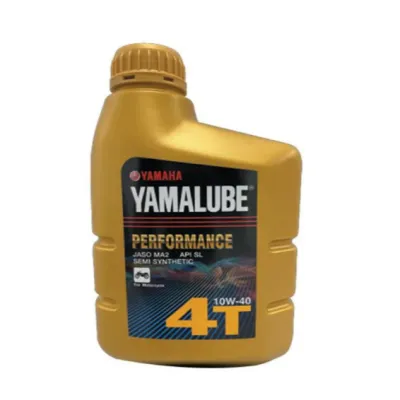
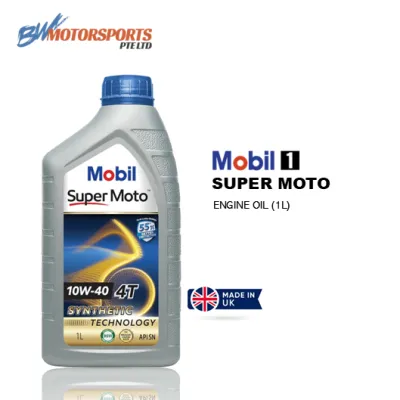
Prices are valid at publication and may change. Please refer to the product page for the latest price.
The first number, followed by the letter “W,” stands for the winter rating. This indicates the oil’s flow characteristics and resistance to thickening in cold temperatures. A lower number before the “W” means the oil remains more fluid in freezing conditions, allowing for easier starting and quicker lubrication in cold climates.
The second number represents the oil’s viscosity, or thickness, at normal engine operating temperatures, measured at 100°C. A higher second number indicates a thicker oil film that provides more robust protection under extreme heat and heavy engine loads.
In Singapore’s consistently warm, tropical climate, ambient temperatures rarely drop below 24°C. Because local riders never experience freezing winter conditions, the cold-start rating (whether it is 5W or 10W) is largely irrelevant to daily operation. Instead, the high-temperature viscosity rating—the second number—is the critical factor you must focus on, as it dictates how well the oil protects your engine during hot midday commutes and prolonged idling in stop-and-go traffic.
Matching Viscosity to Your Scooter and Riding Style
While understanding viscosity ratings is helpful, you should never choose an oil grade based on assumption alone. The golden rule of scooter maintenance is to consult your vehicle’s owner’s manual first. Scooter manufacturers design their oil pumps, oil galleries, and internal engine clearances to work with a highly specific oil thickness, and deviating from this can compromise engine health.

Different scooter models and riding habits require different viscosity profiles to balance protection with performance. The two most common grades you will encounter in Singapore are 10W-30 and 10W-40, each serving distinct operational needs.
10W-30 vs. 10W-40
- 10W-30: This grade is highly recommended for modern, fuel-efficient scooters with tight internal engine clearances. Because 10W-30 is thinner at operating temperatures, it reduces internal hydrodynamic drag within the engine. This allows the engine to rev more freely, improves throttle response, and optimizes fuel economy, making it ideal for daily city commuting.
- 10W-40: This grade provides a slightly thicker protective film when the engine reaches its full operating temperature. It is often the preferred choice for older scooters with higher mileage, where natural wear has slightly widened the clearances between moving parts. It is also highly beneficial for scooters that carry heavy pillion loads or those frequently ridden at sustained high speeds along expressways like the PIE or CTE.
A common misconception among some riders is that “thicker is always better” for engine protection in hot weather. However, using an excessively thick oil, such as a 20W-50, in a modern engine designed specifically for 10W-30 can cause severe issues. Thick oil increases internal drag, which lowers your fuel economy and causes the engine to run hotter. Furthermore, an overly viscous oil may not flow quickly enough through narrow oil passages during startup, straining the oil pump and causing temporary oil starvation in critical areas like the valvetrain.
Beyond Viscosity: Why JASO MB and API Ratings Matter
Selecting the correct viscosity is only half the battle; you must also ensure the oil meets the correct friction and quality standards. Scooter engines operate differently from manual motorcycle engines, and using the wrong category of oil can lead to mechanical inefficiency or component damage.
The most critical standard to look for on a bottle of scooter engine oil is the JASO (Japanese Automotive Standards Organization) MB rating. Unlike manual motorcycles that feature a wet clutch bathed in engine oil, modern automatic scooters utilize a Continuously Variable Transmission (CVT) with a dry clutch system. Because the engine oil does not come into contact with the clutch, scooter engines do not require high-friction fluids. JASO MB oils are specifically formulated with friction-reducing additives to minimize internal drag, maximizing fuel efficiency and power output in dry-clutch scooter engines.
You must avoid using JASO MA or MA2 oils in a scooter that specifies JASO MB. JASO MA oils are formulated with high-friction properties designed to prevent wet clutches from slipping in manual motorcycles. If used in a scooter engine, the higher friction levels can reduce fuel efficiency, increase operating temperatures, and cause unnecessary drag.
In addition to the JASO rating, pay attention to the API (American Petroleum Institute) service classification on the bottle, which is represented by two letters such as SL, SN, or SP. These ratings indicate the oil’s overall quality, deposit control, and wear protection standards. The second letter progresses alphabetically, meaning an API SP oil represents a more advanced formulation with superior oxidation resistance and sludge prevention compared to an older API SL oil.
Practical Steps for Checking and Changing Scooter Oil
Maintaining the correct oil level is just as important as choosing the right grade. Because scooter engines hold a relatively small volume of oil—often less than one liter—even a minor loss of fluid can drastically accelerate engine wear and heat buildup.
To check your oil level accurately, park your scooter on its center stand on a flat, level surface. Start the engine and let it idle for a few minutes to reach operating temperature, then turn it off and wait a minute to allow the oil to settle back into the oil pan. Unscrew the dipstick, wipe it clean with a lint-free cloth, insert it back into the fill hole without screwing it in, and pull it out to read the level. The oil level should sit comfortably between the minimum and maximum marks.
Always follow the manufacturer’s recommended drain intervals specified in your owner’s manual. Do not rely on visual inspection alone to determine if your oil needs changing, as modern oils contain additives that degrade and lose their protective qualities long before the oil looks dirty.
Before purchasing or applying any care products or fluids, always verify your scooter’s specific model year, engine type, and manufacturer instructions to confirm compatibility. If your engine sounds unusually noisy, consumes oil rapidly, or if you do not have access to the owner’s manual, stop operating the vehicle and consult an authorized service center or a qualified mechanic rather than guessing the correct oil grade.
Frequently Asked Questions (FAQ)
Can I use car engine oil in my scooter?
No, you should not use car engine oil in your scooter. Although some automotive oils share the same viscosity grades, such as 10W-40, they are engineered for very different operating environments. Car engines typically run at lower RPMs and operate at lower relative temperatures compared to high-revving, air-cooled or compact liquid-cooled scooter engines. Furthermore, car oils often contain specific friction modifiers or lack the high-temperature shear stability required to protect a scooter’s compact engine internals. For optimal performance and safety, always use oil explicitly labeled for scooters that meets the JASO MB standard.
Community discussion
Share your experience or ask a question. Comments are reviewed before publication.