
Finding the correct rearview mirror cover for your Honda Civic requires knowing your exact chassis code, as covers for the FK, FC, and FE generations are not interchangeable. While they all carry the Civic nameplate, Honda redesigned the side mirrors significantly between the tenth and eleventh generations, and even split the designs between sedan and hatchback body styles within the same generation. Purchasing a cover based solely on the model year often leads to fitment issues, loose covers, or blocked safety sensors. This guide helps you identify your exact Civic model and verify compatibility to ensure a proper fit before purchasing.
Identifying Your Civic Chassis Code: FK, FC, or FE?
To ensure a precise fit, you must first identify whether your Civic is an FK, FC, or FE chassis. The FC chassis code typically designates the tenth-generation Civic Sedan, produced globally from 2016 to 2021. The FK chassis code generally refers to the tenth-generation Civic Hatchback, including the high-performance Type R (FK8), though some ninth-generation hatchbacks in specific global markets also use the FK prefix. The FE chassis code represents the eleventh-generation Civic Sedan, introduced around 2021.
Locating this code is straightforward. You can find your exact chassis designation on your vehicle registration documents, the manufacturer’s label on the driver-side door jamb, or the metal Vehicle Identification Number (VIN) plate visible through the bottom of the windshield. The fourth through sixth characters of your VIN typically reveal the chassis code.
Products mentioned in this guide
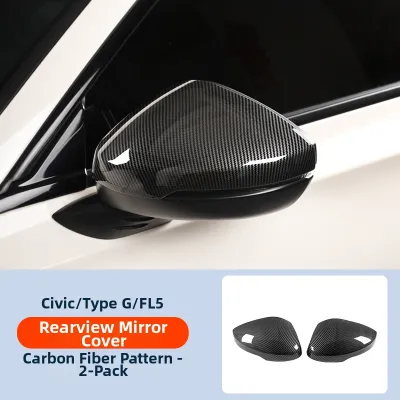
![[Aurora Parts] for 2016 - 2020 Honda Civic FC Side Review Mirror Full Cover Bull Shape Carbon Fiber Design](https://img.lazcdn.com/g/p/2968e2a005acfbf4ffad1c169f666695.jpg_400x400q80.jpg_.webp)
Prices are valid at publication and may change. Please refer to the product page for the latest price.
It is a common mistake to assume that all tenth-generation Civics share the same side mirrors. The FC Sedan and FK Hatchback feature distinct mirror housing geometries due to their different aerodynamic profiles and assembly origins. Always verify the physical shape of your mirror housing alongside the chassis code before making a purchase.
Key Fitment Differences Between FK, FC, and FE Mirrors
The structural differences between these mirror housings are subtle but critical. For instance, the tenth-generation FC Sedan mirror cover features a slightly different curvature and mounting clip layout compared to the FK Hatchback cover. Attempting to force an FC cover onto an FK mirror housing will likely snap the internal plastic clips or leave a noticeable gap that catches wind at high speeds.

When Honda transitioned from the tenth generation (FC/FK) to the eleventh generation (FE), the exterior design language shifted toward a more refined, streamlined aesthetic. The FE mirror housings are more elongated and sit at a slightly different angle relative to the A-pillar. Consequently, tenth-generation covers will not align with eleventh-generation mounting points.
The internal mounting clip configurations also evolved. Tenth-generation mirrors rely on a specific arrangement of interlocking tabs that slide into the inner motor housing. The eleventh-generation FE mirrors use a revised tab pattern designed to improve wind noise reduction and structural stability.
Relying purely on visual similarity can be highly misleading. From a distance, a tenth-generation mirror might look identical to an eleventh-generation mirror, but even a millimeter of variance in the clip placement or housing depth will prevent a secure installation.
How to Verify Mirror Cover Compatibility Before Ordering
Before placing an order on any automotive accessory site or online marketplace, perform a thorough visual inspection of your current side mirrors. Note the presence of integrated LED turn signal indicators, as mirror covers are manufactured in two distinct styles: one with a cutout for the indicator lens and one solid piece for trims without integrated signals.
Look closely at the underside of the mirror housing. Some models feature a small camera pod on the passenger side for the Honda LaneWatch system, or sensors underneath for ambient temperature. Ensure the replacement cover or overlay is designed to accommodate these specific features without obstruction.
Do not rely on generic e-commerce listing titles such as “Fits Honda Civic 2016-2022.” Because this range spans two different generations and multiple body styles, such titles are often inaccurate. Instead, cross-reference the manufacturer’s fitment chart or look up the Original Equipment Manufacturer (OEM) part number for your specific trim.
You must also decide between a full snap-on replacement shell and an adhesive overlay cover. Snap-on replacements require you to pop off the original painted cover and snap the new one directly onto the mirror frame. Adhesive overlays, often styled in carbon fiber or gloss black, stick directly over your existing painted cover using double-sided automotive tape. Each type has distinct clearance requirements and installation steps.
Installation Precautions and Sensor Clearance
Working on exterior mirrors involves delicate plastic components and, in many cases, integrated electrical wiring for turn signals, heating elements, and blind-spot sensors. Always refer to your original vehicle owner’s manual before attempting disassembly. If you are uncomfortable working with plastic pry tools or handling electrical connectors, seek assistance from a qualified automotive technician.
To safely remove an existing snap-on cover, use a non-marring plastic trim removal tool. Gently insert the tool into the seam between the painted cover and the black textured mirror bezel. Slowly work your way around the perimeter, applying light outward pressure to release the internal plastic tabs one by one. Avoid using metal screwdrivers, which can easily scratch the paint or crack the mirror glass.
Be extremely mindful of integrated electronics. If your Civic is equipped with blind-spot monitoring, the sensor indicator is typically located on the mirror glass itself, but the wiring runs directly through the housing. Ensure that no wires are pinched or stretched during the removal or installation of the cover.
If you notice that the replacement cover does not line up perfectly with the mounting slots, do not force it. Forcing a mismatched cover can break the fragile mounting tabs on the mirror motor assembly, requiring an expensive replacement of the entire mirror unit. If the clips do not align naturally, double-check your chassis code and the product’s compatibility list.
Which Rearview Mirror Cover Should You Choose?
To simplify your decision, follow a strict condition-based selection process. If your vehicle registration or door jamb sticker confirms you drive an FK chassis (such as the 10th Gen Hatchback or Type R), restrict your search exclusively to FK-compatible covers.
If you drive a tenth-generation FC Sedan, select covers explicitly labeled for the FC chassis. Do not purchase “FK/FC universal” covers unless the manufacturer explicitly details how the product adapts to both shapes, as true universal fitment is rare for these distinct body styles.
For eleventh-generation Civic owners, look only for FE-specific covers. These mirrors are designed for the newer body shape and will not accept parts designed for the older FC or FK platforms.
Finally, check if your vehicle has any aftermarket modifications. If a previous owner replaced the entire side mirror assembly with an aftermarket unit, standard OEM-spec covers may no longer fit. If you are unsure of your vehicle’s history or cannot locate the chassis code, consult a local Honda specialist or dealership parts counter to verify your mirror configuration before ordering.
Frequently Asked Questions (FAQ)
Can I use adhesive mirror covers instead of snap-on replacements?
Adhesive overlay covers are a popular, non-invasive option for customizing your Civic’s appearance. They are generally easier to install because they simply stick over your existing painted mirror caps using automotive-grade double-sided tape. This makes them highly reversible if you want to return the car to its stock look later.
However, adhesive covers add a small amount of bulk to the mirror housing, which can sometimes create a slight lip or gap where dirt and moisture can accumulate. In hot, tropical climates like Singapore, the constant exposure to intense sun and heavy rain can degrade the adhesive over time, potentially causing the cover to peel or fly off at highway speeds. Snap-on replacements offer a more seamless, flush fit and superior long-term durability, but they require a more careful installation process to avoid breaking the mounting tabs.
Will aftermarket mirror covers affect my blind-spot monitoring system?
Standard aftermarket mirror covers should not interfere with your blind-spot monitoring system, provided they are designed correctly for your specific trim. The actual radar sensors that detect vehicles in your blind spot are located inside the rear bumper corners, not within the side mirrors themselves. The mirror housing only contains the wiring and the LED indicator light on the glass.
However, if your cover is poorly fitted or lacks the proper cutouts for integrated turn signals or side-view cameras (such as Honda LaneWatch), it can obstruct your visibility and compromise safety. Always verify that the cover you choose matches your mirror’s specific technological features, such as camera cutouts or signal indicators, to ensure all driver-assist systems remain fully functional.
Community discussion
Share your experience or ask a question. Comments are reviewed before publication.