
Choosing the right rear mirror car accessory is not just about replacing a broken piece of glass; it is a fundamental safety decision that directly impacts your situational awareness on the road. The ideal rear mirror for your vehicle depends on your daily driving environment, your vehicle’s physical dimensions, and how you personally handle hazards like night-time headlight glare or blind spots. By matching your specific driving habits with the correct mirror technology, you can significantly reduce driving fatigue and prevent costly collisions.
Diagnose Your Visibility Issues and Driving Environment
Before browsing online marketplaces or visiting an automotive workshop, you must evaluate the limitations of your current setup. Start by observing your daily commute and noting where your visibility falls short. If you frequently find yourself squinting or adjusting your position because of the blinding high-beams of trailing vehicles, glare is your primary issue. This is especially common during late-night drives along poorly lit expressways or during heavy downpours when light scatters across wet glass surfaces.
Alternatively, your vehicle’s physical design might be the main source of your frustration. Modern aerodynamic car designs often feature thick rear pillars (C-pillars) and high waistlines, which severely restrict your over-the-shoulder view. If you drive a compact hatchback, a larger SUV, or a multi-purpose vehicle (MPV), you might find that your standard factory-installed mirror leaves massive blind spots on either side of your car. This makes simple maneuvers like merging onto a busy expressway highly stressful.
Products mentioned in this guide
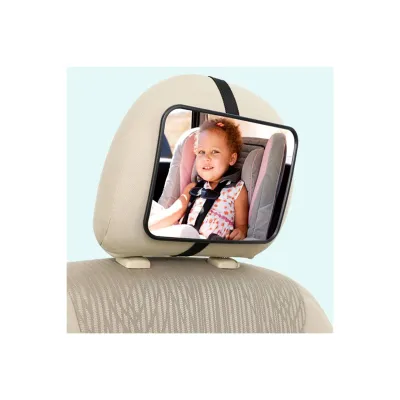
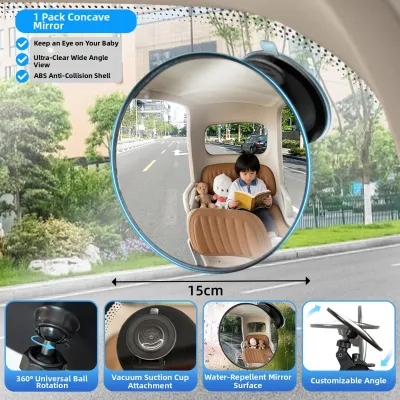
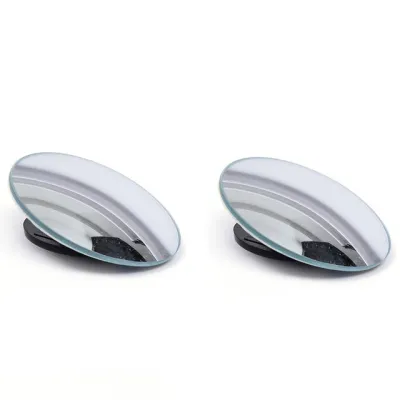
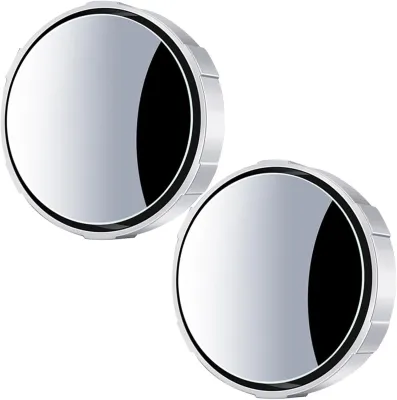
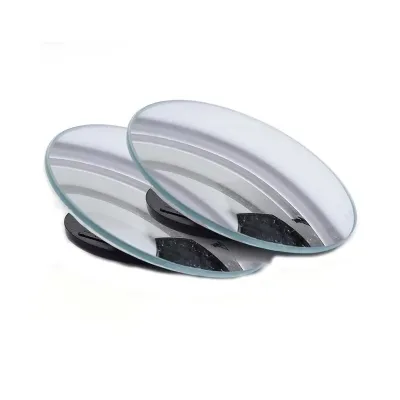
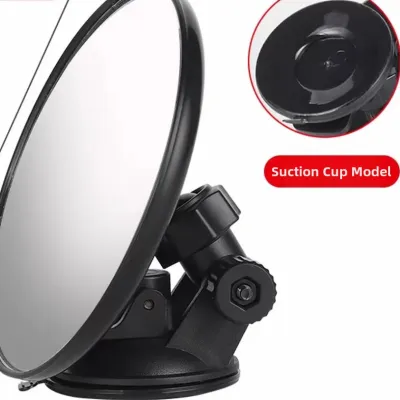
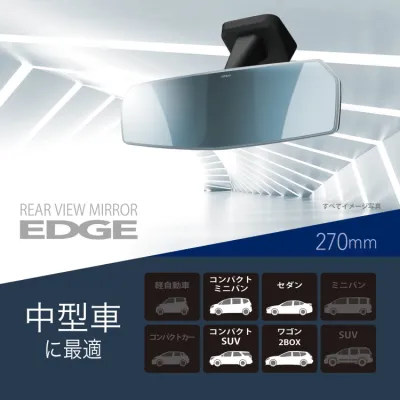
Prices are valid at publication and may change. Please refer to the product page for the latest price.
Your typical driving environment should dictate your mirror requirements. Navigating dense, fast-paced urban traffic requires rapid lane changes and constant awareness of motorcyclists filtering between lanes. If you primarily drive during the day in light traffic, a standard, well-adjusted factory mirror is usually sufficient. However, if your routine involves navigating tight multi-storey carparks, squeezing through narrow urban lanes, or driving extensively after dark, upgrading to a specialized mirror can provide a substantial safety advantage.
Compare Rear Mirror Types: From Standard to Blind-Spot Integrated
Understanding the distinct technologies behind different rear mirrors is crucial to making an informed purchase. Rear mirrors are generally categorized into three main types, each designed to address specific driving challenges and optical preferences.

Standard and Manual Day/Night Mirrors
The standard manual day/night mirror is the baseline equipment found in the vast majority of vehicles. This mirror utilizes a clever wedge-shaped prism glass design rather than a flat piece of reflective material. When you flip the small plastic tab at the bottom of the mirror housing, you alter the angle of the prism. In the “day” position, you see a direct, highly reflective image off the silvered back surface of the glass. In the “night” position, the mirror tilts slightly, directing the bright reflection away from your eyes while allowing you to see a dimmer, secondary reflection off the front surface of the un-silvered glass.
The primary benefit of a manual day/night mirror is its absolute reliability. Because it relies entirely on physical mechanics, there are no electrical components to fail, no wiring to route, and no risk of draining your car’s battery. It is also the most cost-effective option, making it an easy and inexpensive replacement if your original mirror becomes damaged.
However, manual mirrors have notable limitations. They require physical intervention every time a vehicle with bright headlights approaches from behind, which can temporarily distract you from the road. Furthermore, the dimmed “night” reflection can sometimes be too dark, making it difficult to discern the exact distance or speed of trailing vehicles in low-light environments.
Auto-Dimming Mirrors for Night Driving
Auto-dimming mirrors, also known as electrochromic mirrors, offer a high-tech solution to the problem of night-time glare. These mirrors feature forward-facing and rear-facing light sensors connected to an internal electronic control circuit. When the rear sensor detects a high level of light (such as the high-beams of a tailgating vehicle) while the forward sensor detects low ambient light, the mirror automatically initiates a chemical reaction.
This reaction occurs within a thin layer of electrochromic gel sandwiched between two layers of glass. An electric current passes through the gel, causing it to darken and absorb light, thereby reducing the intensity of the reflected glare. Once the trailing vehicle turns away or dims its lights, the electrical current stops, and the mirror returns to its fully clear state.
This automatic adjustment is exceptionally beneficial for drivers who experience eye strain or temporary blindness from modern LED and HID headlights. Many advanced auto-dimming mirrors can also be integrated with your vehicle’s reverse gear. When you shift into reverse, the mirror automatically disables the dimming function, ensuring you have maximum visibility when backing into a parking space. The main trade-offs are the higher initial cost and the necessity of a stable 12-volt electrical connection.
Wide-Angle and Blind-Spot Mirrors for City Traffic
Wide-angle and blind-spot mirrors are specifically engineered to expand your lateral field of view. These options range from full-sized, clip-on panoramic mirrors that attach directly over your existing interior mirror, to small, convex adhesive mirrors that stick onto your side mirrors. Some manufacturers also offer complete replacement mirror glass assemblies that feature a flat inner section and a curved, convex outer edge to eliminate blind spots.
By utilizing a curved or convex glass surface, these mirrors bend light to capture a much wider angle of the road behind and beside you. This is incredibly helpful when driving in dense city traffic, as it allows you to spot lane-splitting motorcycles and vehicles in your blind spots without having to perform dramatic head checks. They are also highly useful when parallel parking or maneuvering through tight spaces.
The primary drawback of any wide-angle or convex mirror is optical distortion. Because the glass is curved, objects will always appear smaller and significantly further away than they actually are. Drivers must undergo a period of adaptation to learn how to judge distances accurately using these mirrors. Relying solely on a wide-angle mirror for lane changes without cross-referencing your standard mirrors can lead to dangerous misjudgments.
Check Vehicle Compatibility and Local Road Regulations
Before purchasing any aftermarket rear mirror, you must perform several critical compatibility checks to ensure the product can be safely installed and legally operated on your vehicle.
Mounting and Dimensions: First, inspect the physical mounting mechanism of your current interior mirror. Most vehicles utilize a metal or plastic “button” glued directly to the windshield, onto which the mirror bracket slides and locks. Common mount types include wedge mounts, cam-lock mounts, and screw-on brackets. You must verify that the replacement mirror’s mounting arm is directly compatible with your vehicle’s existing windshield button. Attempting to force an incompatible mount can crack your windshield. Additionally, ensure the weight of the new mirror—especially heavy electronic or wide-angle models—does not exceed the load capacity of the windshield adhesive, and that its dimensions do not block your sun visors.
Electrical Integration: If you are upgrading to an auto-dimming mirror, you must assess your vehicle’s electrical system. These mirrors require a dedicated 12-volt ignition-switched power source and a solid ground connection. You will need to consult your vehicle’s official service manual to identify a suitable fuse in the passenger compartment fuse box. Running wires up the A-pillar and across the headliner must be done with extreme care to avoid interfering with side-curtain airbags. If your vehicle features a complex CAN-bus electrical system, tapping into the wrong wire can trigger dashboard warning lights or disable other electronic components.
Safety and Compliance in Singapore: For drivers in Singapore, strict adherence to Land Transport Authority (LTA) regulations is mandatory. Any aftermarket rear mirror must not obstruct your forward view through the windshield. Furthermore, many modern cars feature advanced driver assistance systems (ADAS), such as lane-departure warning cameras, rain sensors, and automatic emergency braking sensors, housed in a plastic console directly behind or around the rearview mirror mount. Installing an oversized clip-on mirror or a heavy replacement unit can block these sensors, causing critical safety systems to fail. Always ensure that any modification you make complies with local visibility standards and does not compromise the structural integrity of your windshield or the functionality of your vehicle’s safety sensors. If in doubt, consult a professional automotive technician who is familiar with Singapore’s vehicle inspection standards.
Decision Matrix: Which Mirror Should You Choose?
To help you finalize your decision, consider the following scenarios to match your specific driving profile with the correct mirror type:
- Stick with Standard: If you primarily drive during daylight hours, rarely experience discomfort from trailing headlights, and your current mirror is fully intact, there is no pressing need to upgrade. A standard manual mirror offers unmatched reliability and zero electrical complexity.
- Upgrade to Auto-Dimming: If you frequently drive at night, suffer from eye fatigue due to bright LED headlights, or regularly commute on long, dark expressways, an auto-dimming mirror is highly recommended. It provides seamless, hands-free glare reduction that significantly improves night-time driving comfort.
- Choose Wide-Angle or Blind-Spot: If your vehicle has poor rear visibility due to its structural design, or if you regularly navigate heavy, multi-lane city traffic with frequent lane changes, a wide-angle or integrated blind-spot mirror is the ideal choice. Just be prepared to adapt to the minor distance distortion.
- When to Seek Professional Advice: If your desired upgrade involves tapping into your car's electrical wiring, routing cables near side-curtain airbags, or working around complex windshield-mounted ADAS sensors, do not attempt a DIY installation. Visit a qualified automotive workshop to ensure the installation is safe, secure, and legally compliant.
Installation Safety and Routine Maintenance
Maintaining your rear mirrors is essential for preserving clear visibility and ensuring long-term functionality. For basic upgrades, such as attaching small, adhesive convex blind-spot mirrors to your side mirrors or installing simple clip-on panoramic mirrors, a DIY approach is perfectly safe. Always clean the mounting surface thoroughly with rubbing alcohol before applying adhesive to ensure a strong, weather-resistant bond.
However, replacing the main interior rearview mirror assembly involves significant safety boundaries. If the installation requires removing the windshield button, working near airbag deployment zones, or splicing into the vehicle’s electrical harness, you must refer to your vehicle manufacturer’s instructions. Incorrect installation can result in a cracked windshield, electrical short circuits, or even accidental airbag deployment. When in doubt, always delegate this work to a certified professional.
When cleaning your mirrors, use only high-quality, automotive-specific glass cleaners and clean microfiber cloths. Avoid spraying liquid cleaner directly onto the mirror housing, especially on auto-dimming models. Liquid can seep behind the glass and damage the sensitive electrochromic gel or damage the ambient light sensors. Instead, spray the cleaner onto the microfiber cloth first, then gently wipe the glass surface. Never use harsh chemical solvents, abrasive pads, or ammonia-based cleaners, as these can permanently strip away anti-glare coatings and ruin sensor lenses.
Frequently Asked Questions (FAQ)
Can I retrofit an auto-dimming mirror in an older car?
Yes, you can retrofit an auto-dimming mirror into an older vehicle, provided you can secure a compatible mounting bracket and a reliable 12-volt power source. Most universal retrofit kits require you to route a power wire and a ground wire from the mirror, down the windshield pillar, and into your car’s fuse box. While this is a highly feasible upgrade, it is strongly recommended to have a professional auto electrician perform the installation to prevent electrical faults, trim damage, or interference with existing wiring.
Do wide-angle mirrors distort distance perception?
Yes, wide-angle and convex mirrors inherently distort distance perception. Because the glass surface is curved outward, it compresses the reflected image, making objects and trailing vehicles appear smaller and significantly further away than they actually are in reality. To drive safely, you should use wide-angle mirrors primarily to detect the presence of vehicles or hazards in your blind spots, and always cross-reference with your flat, standard rearview mirror to accurately judge the actual distance and speed of trailing traffic before making a maneuver.
Community discussion
Share your experience or ask a question. Comments are reviewed before publication.