
When navigating Singapore’s tropical heat, keeping a cold drink within arm’s reach inside your car is a daily necessity. The Owala FreeSip has rapidly become a favorite insulated bottle for local commuters and road-trippers alike, thanks to its innovative dual-sip lid and excellent thermal retention. However, before you invest in one of these popular flasks for your daily commute along the PIE or a weekend road trip across the Causeway, you need to address a critical practical question: which Owala bottle sizes will actually fit into your car’s cup holders?
The short answer is that the 19oz and 24oz Owala FreeSip models are highly compatible with the vast majority of standard car cup holders found in Singapore vehicles. In contrast, the larger 32oz and 40oz sizes feature significantly wider bases that exceed the physical limits of standard console designs. These larger models require alternative cabin storage or aftermarket accessories to secure safely. Understanding how these bottle dimensions interact with common vehicle interiors will help you avoid spills, distractions, and purchasing a bottle that ends up rolling around on your passenger seat.
Owala Bottle Dimensions vs. Singapore Car Cup Holder Limits
To make an informed decision, you must first understand the physical dimensions of the Owala FreeSip lineup and how they compare to typical automotive interiors. The lineup progresses in both height and base diameter as capacity increases. The compact 19oz model features a base diameter of approximately 7.0 cm and a height of 25 cm, making it exceptionally pocket-friendly. The highly popular 24oz version steps up slightly to a base diameter of roughly 7.3 cm and a height of 27 cm. When you move up to the heavy-duty 32oz and 40oz capacities, the base diameter swells to approximately 8.7 cm and 9.1 cm respectively, with heights reaching up to 32 cm.
Products mentioned in this guide
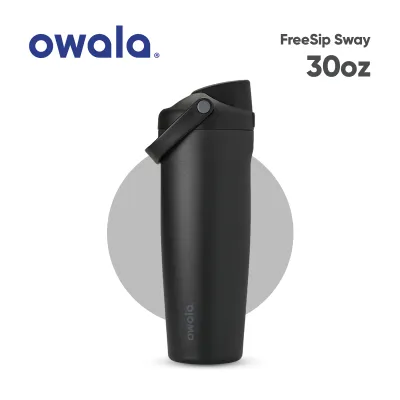
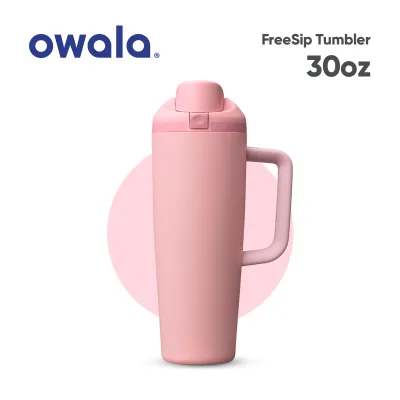
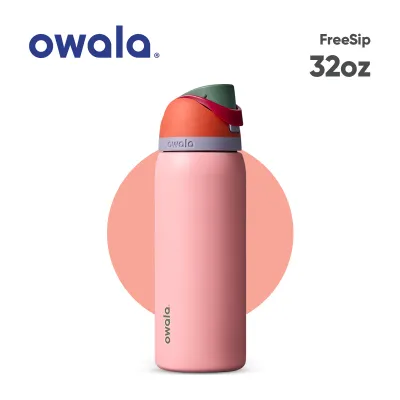
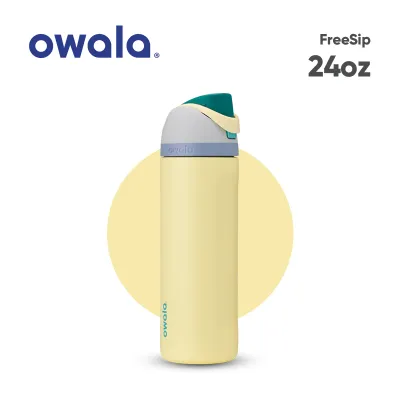
Prices are valid at publication and may change. Please refer to the product page for the latest price.
These dimensions present a challenge when matched against the typical car cup holder designs found in Singapore’s unique vehicle mix. The local car market is dominated by compact hatchbacks, Japanese sedans, and compact SUVs, such as the Honda Jazz, Toyota Corolla Altis, and Mazda CX-30. Historically, these vehicles are engineered around domestic Asian and European packaging standards, where cup holders are optimized for standard 320ml beverage cans or slim 500ml to 600ml plastic water bottles. These standard holders generally feature an internal diameter ranging from 6.8 cm to 7.5 cm, meaning they will snugly accommodate a 19oz or 24oz Owala, but will completely reject the wider 32oz and 40oz models.
Even in modern electric vehicles (EVs) and larger family multi-purpose vehicles (MPVs) like the BYD Atto 3, Tesla Model Y, or Toyota Alphard, cup holder dimensions can be surprisingly restrictive. While some of these newer models feature modular center consoles with retractable dividers or adjustable grips, they are rarely designed to handle a base diameter exceeding 8.5 cm. Consequently, relying solely on the liquid volume capacity of the bottle is a common mistake; a bottle’s physical footprint is the only metric that dictates whether it will sit securely in your center console.
Furthermore, you must consider how the overall height of the larger bottles impacts your cabin’s ergonomics. A tall 40oz bottle placed in a shallow center console cup holder can stand over 30 cm high, which often places it directly in the path of your physical gear shifter, electronic parking brake switch, or low-mounted infotainment touchscreen. Even if the base fits, the vertical bulk can interfere with your ability to rest your arm comfortably on the center armrest or reach your vehicle’s dashboard controls safely while driving.
How to Measure and Verify Fitment Before Purchasing
To ensure a seamless fit and avoid the hassle of returning a bottle, you should take precise physical measurements of your vehicle’s cabin before committing to a purchase. Start by measuring your car’s primary cup holders using a sliding caliper or a standard flexible measuring tape. When measuring, do not simply measure the top lip of the holder; many automotive cup holders feature a tapered design that narrows significantly toward the bottom. Measure the diameter at the very top, the midpoint, and the base of the holder to determine the true usable width.

Additionally, you must account for any integrated stabilization mechanisms inside the cup holder. Many modern Singapore vehicles are equipped with spring-loaded plastic tabs, rubber limiters, or removable silicone inserts designed to keep slim cans from rattling. While these features are highly convenient for standard drinks, they reduce the active diameter of the holder. If these tabs do not retract fully flush into the walls of the holder, they can shave up to 5 mm off the usable space, turning a potential fit for a 24oz Owala into a tight squeeze that could damage the bottle’s exterior finish or break the vehicle’s plastic tabs over time.
Once you have your car’s cup holder dimensions, cross-reference them with the official specifications of the Owala bottle you intend to buy. Keep in mind that while the base diameter is the most critical metric for the cup holder fit, you also need to verify the maximum width of the bottle’s lid assembly. The Owala FreeSip features a distinctive carry loop and a push-button lid mechanism that protrudes slightly past the cylindrical body of the bottle. Ensure that this upper bulk will clear any surrounding console trim or adjacent cup holders if you plan to carry two bottles side-by-side.
Finally, perform a quick height and clearance check within your vehicle’s cabin. Place a ruler vertically inside your cup holder to simulate the height of your chosen Owala bottle (ranging from 25 cm to 32 cm depending on the model). Observe whether this height obstructs your view of the reversing camera screen, blocks access to your USB ports, or prevents your center console lid from sliding forward. If you do not have a ruler handy, you can use the “test fit” rule by finding a common household object of a similar diameter—such as a large protein shaker cup or a rolled-up bath towel secured with rubber bands to a diameter of 8.7 cm—and placing it in your cup holder to visualize the spatial layout.
Space-Saving Alternatives for Tight Car Cabins
If your hydration needs dictate a larger 32oz or 40oz Owala bottle for long road trips, but your vehicle’s built-in cup holders are too small, you do not have to compromise on your fluid intake. A highly popular solution is the use of an aftermarket cup holder expander. These clever accessories feature an adjustable base that twists to expand and lock securely into your car’s existing standard cup holder, while the upper portion features a much wider receptacle designed to hold large insulated flasks. However, safety must remain your top priority when using these expanders: always verify that the accessory is fully tightened and does not wobble, and ensure that its elevated position does not interfere with your gear selector, handbrake, or any active airbag deployment zones.
Another practical option is to look beyond the center console for alternative storage spots within your cabin. Many modern vehicles feature deep, molded bottle bins in the door panels. While these door pockets are often wide enough to accommodate larger bottles, you must check that the bottle fits securely without rattling or sliding back and forth when you open and close the door. Alternatively, if you drive a modern EV with a flat-floor architecture, you can take advantage of the floating lower storage consoles or open floor trays situated between the front seats, which are perfect for keeping larger items within arm’s reach.
For those planning long National Day weekend drives up north or round-island road trips, utilizing the Owala’s built-in carry loop is an excellent space-saving strategy. By attaching a heavy-duty carabiner to the loop, you can hang the bottle from a dedicated headrest hook mounted behind the front passenger seat. This keeps the bottle upright, prevents it from rolling around the footwell under heavy braking, and makes it easily accessible to rear-seat passengers without occupying valuable center console space.
If you prefer to keep your cabin completely clutter-free, a highly effective downsizing strategy is to adopt a “hub-and-spoke” hydration system. Under this approach, you keep a highly compatible 24oz Owala bottle in your center cup holder for effortless, one-handed sipping while driving. You then store a larger 40oz Owala or a high-capacity insulated water jug in your boot space or the rear footwell. During rest stops or driver swaps, you can quickly refill your smaller cabin bottle from the larger reservoir, ensuring you always have ice-cold water on hand without compromising your front-seat space.
Common Sizing and Placement Mistakes to Avoid
When integrating a premium insulated bottle into your daily drive, avoiding a few common mistakes can save you from unnecessary frustration and potential safety hazards on the road. The first major mistake is assuming that “standard” cup holders are universal across all car makes and models. Many drivers purchase a 32oz or 40oz Owala assuming it will fit because their car is classified as an SUV or a family sedan. In reality, many vehicles sold in Singapore are optimized for international markets where standard beverage sizes are much smaller, and their cup holders rarely exceed a strict 7.5 cm limit.
Another critical error is ignoring how a bottle’s center of gravity changes when it is fully filled. A 40oz Owala bottle filled with water and ice can easily weigh over 1.5 kilograms. If you force this heavy, top-heavy bottle into a shallow cup holder that only supports the bottom few centimeters of the base, you create a highly unstable pivot point. During sharp cornering on Singapore’s winding expressways or during sudden emergency braking, the bottle is highly likely to tip over. This can cause the bottle to crash into the footwell, potentially rolling under your brake pedal and creating an extremely dangerous driving hazard.
Furthermore, many owners overlook the physical impact of aftermarket protective accessories. Adding a third-party silicone boot or protective sleeve to the bottom of your Owala is a great way to prevent dents and scratches, but it also increases the bottle’s base diameter by several millimeters. Additionally, the high-friction nature of silicone makes it stick to the plastic walls of your cup holder. This can cause the bottle to wedge tightly inside the holder, requiring two hands to pry it loose—a highly distracting and unsafe action to attempt while navigating active traffic.
Finally, be cautious about placing tall bottles in cup holders located directly in front of or beneath your vehicle’s central air conditioning vents. While it might seem like a good idea to let the AC airflow keep your bottle cool, a tall bottle will completely block the cool air from reaching the driver or passenger. More importantly, the temperature differential can cause excessive condensation to form on the exterior metal parts of the bottle’s lid, which can then drip down into your vehicle’s sensitive center console electronics, USB ports, or physical control buttons.
Frequently Asked Questions (FAQ)
Can a 40oz Owala FreeSip fit in a standard compact car cup holder?
No, a 40oz Owala FreeSip will not fit in a standard compact car cup holder. With a base diameter of approximately 9.1 cm, the 40oz model is far too wide for the standard 7.0 cm to 7.5 cm cup holders typical of compact hatchbacks, Japanese sedans, and older vehicle models in Singapore. To carry a 40oz bottle in a compact car, you will need to utilize an aftermarket cup holder expander, place it in a wide door pocket, secure it in the boot, or hang it from a headrest hook using a carabiner.
Will the Owala bottle leak in the car if it tips over during a turn?
The Owala FreeSip is designed to be completely leakproof when the lid is fully closed, latched, and the metal safety lock is engaged. If the bottle tips over onto the passenger seat or footwell during a sharp turn, it will not spill a drop of water. However, if you leave the flip lid open or unlocked for quick sipping while driving, a tip-over will result in immediate spills through the built-in straw and spout. For maximum safety, always keep the lid locked when the bottle is not in a secure, upright holder.
Are there specific car models in Singapore with larger cup holders?
Yes, certain vehicle categories in Singapore are much more accommodating to larger insulated bottles. Large family multi-purpose vehicles (MPVs) like the Toyota Alphard or Honda Odyssey, full-size SUVs, and modern electric vehicles (such as the Tesla Model Y or BYD M3) often feature modular center consoles, deeper storage wells, or adjustable cup holders that can accommodate wider bottles. However, because cup holder designs can change significantly with minor facelifts and model years, you should always physically measure your specific vehicle’s holders or consult the owner’s manual before purchasing a large Owala bottle.
Community discussion
Share your experience or ask a question. Comments are reviewed before publication.