
Selecting the right JBL car subwoofer requires balancing your vehicle’s physical cabin constraints with your personal acoustic preferences. To achieve the ideal sound upgrade, you must match the physical dimensions of your trunk, hatch, or under-seat area to the subwoofer’s enclosure type while ensuring your vehicle’s electrical system and amplifier can safely support the power requirements. By understanding how different subwoofer designs interact with your car’s interior acoustics, you can make an informed decision that enhances your daily drive without compromising vehicle utility or safety.
Assessing Your Bass Goals and Cabin Space
Before browsing specific models, you must define what you want your upgraded audio system to achieve. Bass preferences generally fall into three distinct categories: subtle low-end fill, balanced acoustic output, and high-impact bass. Subtle low-end fill is designed to round out your factory speakers, adding warmth to acoustic tracks, jazz, and daily news broadcasts without overpowering the cabin. Balanced output provides a more pronounced kick, blending seamlessly with rock, pop, and classical music to replicate a live performance feel. High-impact bass is tailored for genres like electronic dance music, hip-hop, and reggae, where deep, physical vibrations are a core part of the listening experience.
Once you identify your listening style, you must measure your vehicle’s available space. Physical volume strictly limits the maximum subwoofer size and enclosure type you can install. In compact sedans or hatchbacks, cargo space is often at a premium, meaning a massive dual-driver enclosure will severely limit your daily utility. Use a flexible measuring tape to record the depth, width, and height of your intended mounting location, whether that is the trunk floor, the space behind a truck seat, or the cavity beneath the driver’s seat.
Products mentioned in this guide


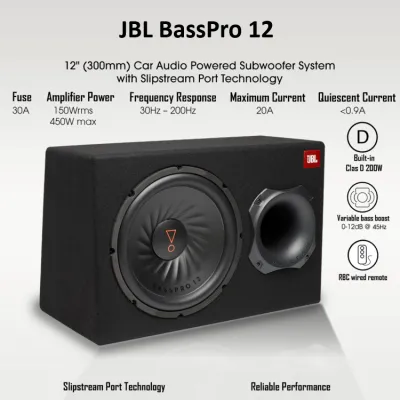


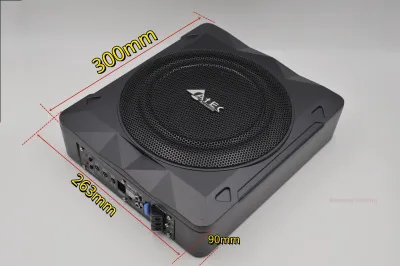
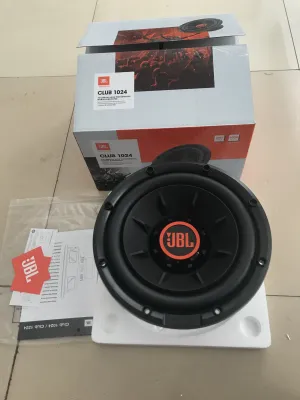

Prices are valid at publication and may change. Please refer to the product page for the latest price.
Every car audio upgrade involves a direct trade-off between sacrificing cargo space and retaining daily utility. A larger, ported enclosure will deliver higher volume levels and deeper low-frequency extension, but it requires a significant portion of your trunk. Conversely, a compact, sealed enclosure or an under-seat active system preserves your boot space for groceries, luggage, or strollers, but it cannot move the same volume of air. For drivers navigating urban environments where vehicle utility is paramount, choosing a space-saving form factor is often the most practical compromise.
Matching JBL Subwoofer Categories to Your Vehicle
To narrow down your search, you can map JBL’s general subwoofer form factors to your specific vehicle type and space constraints. Component subwoofers, which consist of the raw speaker driver without a box, are best suited for custom installations. These are highly favored by enthusiasts who own larger vehicles like SUVs, station wagons, or trucks, where there is ample room to build or mount a custom-tuned enclosure. Component drivers allow you to choose between sealed, ported, or bandpass boxes to achieve a highly specific acoustic response, but they require advanced installation knowledge or professional fabrication.

Pre-enclosed, or loaded, subwoofers feature a factory-matched driver pre-installed in a tuned box. These systems are ideal for sedans and hatchbacks because they offer a plug-and-play balance of performance and convenience. Because the manufacturer has already calculated the exact internal volume and port tuning required for the driver, you avoid the risk of acoustic cancellation or mechanical damage caused by an improperly sized box. These enclosures can be secured in the trunk and easily disconnected if you ever need to reclaim your full cargo capacity for a road trip.
Shallow-mount and under-seat subwoofers are engineered specifically for compact cars, sports cars, or daily drivers where cargo space cannot be compromised. These low-profile units utilize specialized slim drivers that require minimal mounting depth. Under-seat models often feature integrated amplifiers, creating an all-in-one active system that slips completely out of sight. While they do not produce the earth-shaking rumble of a large trunk-mounted box, they excel at delivering clean, punchy bass directly into the cabin while leaving your trunk completely untouched.
When selecting a form factor, always cross-reference the enclosure design with your vehicle’s body style. Installing a large ported box in a small, sealed sedan trunk can lead to disappointing results, as the high-frequency bass notes may struggle to penetrate the rear seats, resulting in a muffled sound. In contrast, hatchbacks and SUVs share their cabin air with the cargo area, meaning even a modest, compact subwoofer will sound remarkably powerful due to natural acoustic coupling.
Essential Specifications to Verify on the Product Label
When evaluating any subwoofer model in-store or online, you must look past marketing headlines and verify the technical metrics on the product label. The most critical power metric is the RMS (Root Mean Square) power handling, which indicates the continuous power the subwoofer can safely handle over long periods. Peak power ratings, which are often printed in large, bold fonts on the packaging, only represent the absolute maximum wattage the speaker can handle for a fraction of a second. Always match your amplifier’s output to the subwoofer’s RMS rating, not its peak rating, to prevent overheating and permanent voice coil damage.
Impedance, measured in ohms, determines the electrical resistance the subwoofer presents to your amplifier. Most car subwoofers are rated at 2 ohms or 4 ohms, and they can feature either a single voice coil (SVC) or a dual voice coil (DVC) configuration. Dual voice coils provide greater wiring flexibility, allowing you to wire the coils in parallel to lower the impedance and draw more power from your amplifier, or in series to keep the load stable. You must verify that your amplifier is rated to run safely at the final impedance of your wired subwoofer configuration; running an amplifier at an impedance lower than its rating will cause it to overheat and enter protect mode.
Sensitivity and frequency response describe how efficiently the subwoofer converts power into sound and how low it can play. A higher sensitivity rating (expressed in decibels, such as 90 dB at 1 watt/1 meter) means the subwoofer requires less amplifier power to reach a specific volume level. The frequency response indicates the range of sounds the speaker can reproduce; for a subwoofer, look for a low-end limit that extends down to 20 Hz or 30 Hz to ensure it can reproduce the deepest sub-bass notes in your music.
Finally, never purchase a subwoofer without verifying its physical mounting depth and cutout diameter against your vehicle’s available space or your enclosure plans. Even a minor discrepancy of a few millimeters can prevent a component driver from seating properly in its mounting ring or cause the magnet assembly to strike the back of the enclosure. Always consult the manufacturer’s official specification sheet for these precise physical dimensions before making a purchase.
Amplifier Matching and Installation Boundaries
To ensure your new subwoofer performs reliably without damaging your vehicle’s electrical system, you must follow strict amplifier matching and installation guidelines. As a general rule of thumb, select an amplifier that can deliver between 75% and 150% of the subwoofer’s total RMS power rating at your target impedance. Underpowering a subwoofer with an weak amplifier often leads to clipping, a phenomenon where the amplifier sends a distorted, square-wave signal that rapidly overheats and destroys the speaker’s voice coil. Conversely, moderate overpowering provides clean headroom, provided you set the amplifier’s gain control correctly using a digital multimeter or oscilloscope.
High-power car audio systems place a significant demand on your vehicle’s electrical system. Before installing an amplifier rated above 500 watts RMS, check your vehicle’s alternator capacity and battery health. If you notice your headlights dimming when the bass hits, your electrical system is struggling to maintain voltage. While adding a stiffening capacitor can help smooth out minor voltage dips, high-draw setups may require upgrading to an Absorbent Glass Mat (AGM) battery or installing a high-output alternator to prevent premature wear on your vehicle’s charging system.
Safety must be your primary concern during any electrical modification. Always disconnect the negative battery terminal before touching any wiring, and install an inline fuse on the main power cable within 18 inches of the battery terminal to protect the vehicle from electrical fires in the event of a short circuit. When routing the power cable from the engine bay into the cabin, always pass it through an existing rubber firewall grommet; running bare wire through sharp metal holes will eventually cut the insulation and cause a dangerous short.
Modern vehicles feature highly integrated electrical architectures that require extra caution. If your vehicle is equipped with a complex CAN bus system, active noise cancellation (ANC), or a hybrid/electric drivetrain, stop and consult a professional car audio installer before proceeding. Tapping into the wrong wire in a hybrid vehicle can damage high-voltage components, while active noise cancellation systems will interpret the subwoofer’s output as cabin noise and attempt to cancel it out, resulting in a continuous, unpleasant low-frequency drone.
Frequently Asked Questions (FAQ)
Can I install a JBL subwoofer without adding an external amplifier?
Raw component subwoofers and passive pre-enclosed subwoofers cannot function without an external amplifier, as they do not have the internal electronics to process or amplify audio signals. To run these models, you must purchase a separate monoblock or multi-channel amplifier and connect it to your vehicle’s head unit and battery. However, if you prefer a simpler setup, you can choose an active (powered) under-seat or trunk-mounted subwoofer, which features a built-in, factory-matched amplifier. These active systems can often tap directly into your factory speaker wires for signal, though they still require a dedicated power connection to your vehicle’s battery.
Does a larger JBL subwoofer always produce better bass?
A larger subwoofer cone does not automatically guarantee better bass quality or a more satisfying listening experience. While a larger driver (such as a 12-inch or 15-inch model) has more surface area to move air and reproduce ultra-low frequencies, the overall performance depends heavily on the enclosure design and power delivery. A smaller, high-quality 8-inch or 10-inch subwoofer installed in a properly engineered, sealed enclosure can deliver tighter, more accurate, and punchy bass than a larger driver mounted in a poorly constructed or incorrectly sized box. Additionally, cabin acoustics and vehicle size play a massive role in how bass frequencies propagate, meaning a smaller subwoofer is often more than enough to fill a compact car cabin.
How do I know if a JBL subwoofer will fit my car's factory subwoofer location?
To determine if an aftermarket subwoofer can serve as a direct replacement for a factory-installed unit, you must perform precise physical and electrical measurements. First, remove the factory speaker and measure its exact cutout diameter, mounting depth, and the bolt-hole pattern of the mounting bracket. Next, use a digital multimeter to measure the impedance of the factory speaker, as many OEM systems use non-standard impedances (such as 1 ohm or 8 ohms) that can damage standard aftermarket amplifiers or result in extremely low volume. Compare these measurements against the specification sheet of the replacement model, and avoid forcing a mismatched driver into a factory location without a proper adapter bracket.
Community discussion
Share your experience or ask a question. Comments are reviewed before publication.