
Selecting the correct Gulf engine oil viscosity for your motorcycle in Singapore requires matching your engine’s specific mechanical design with the demanding thermal conditions of local riding. While the brand offers a wide array of lubricants, the optimal viscosity grade depends entirely on your motorcycle manufacturer’s specifications, your engine’s cooling system, and the clutch configuration.
Singapore’s unique environment—characterized by high humidity, ambient temperatures frequently exceeding 32 degrees Celsius, and dense stop-and-go traffic along major expressways like the PIE or CTE—places significant thermal stress on motorcycle engines. To protect your investment and ensure optimal performance, you must understand how viscosity grades function under these conditions before purchasing or changing your oil.
How to Identify the Right Viscosity for Your Motorcycle
Your motorcycle manufacturer’s owner’s manual is the ultimate authority when selecting an engine oil viscosity grade and specification. Every engine is engineered with precise clearances between moving parts, such as the piston rings, cylinder walls, and bearings. The manufacturer determines the exact viscosity range required to maintain a protective hydrodynamic oil film within these clearances, and deviating from these recommendations can lead to accelerated engine wear, reduced fuel efficiency, or severe mechanical failure.
Products mentioned in this guide
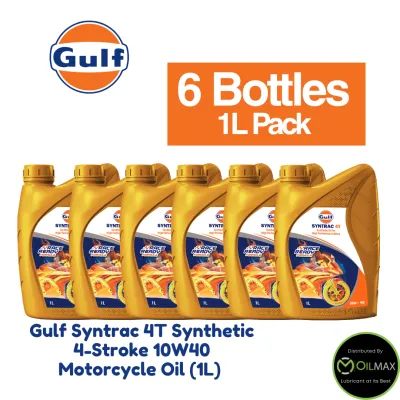
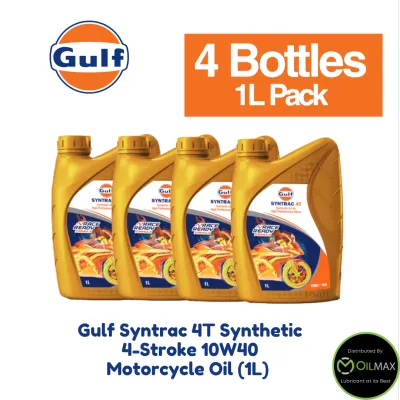
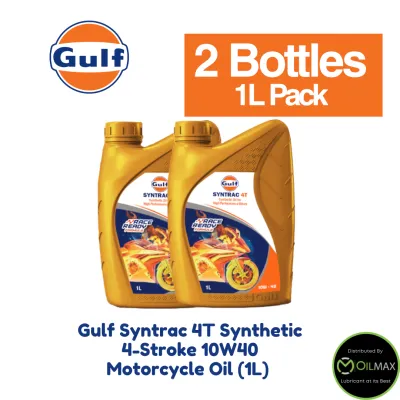
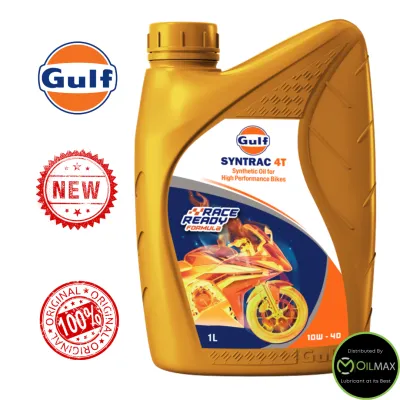
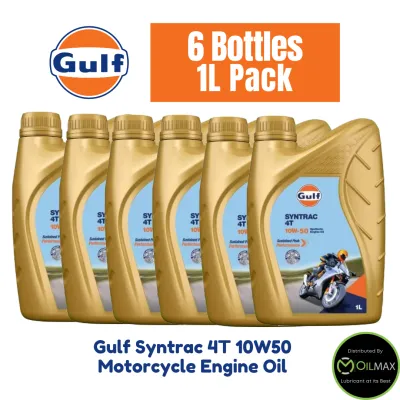
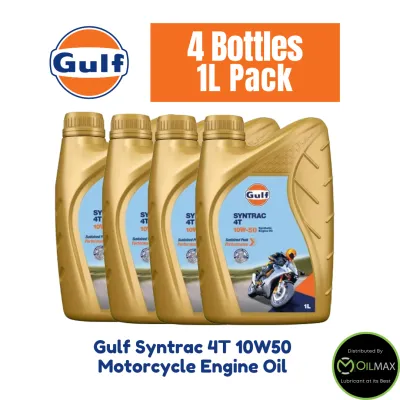
Prices are valid at publication and may change. Please refer to the product page for the latest price.
To read a viscosity grade, you must understand the Society of Automotive Engineers (SAE) grading system, which typically looks like “10W-40” or “20W-50”. The first number, followed by the letter “W” (which stands for Winter), represents the oil’s flow characteristics at cold temperatures. Although cold-start flow is less of a concern in Singapore’s tropical climate, the first number still indicates how easily the oil circulates when you first start the bike after it has been sitting idle.
The second number represents the oil’s kinematic viscosity at 100 degrees Celsius, which is the standard operating temperature for a warmed-up engine. This high-temperature rating indicates the oil’s thickness and resistance to flow when the engine is running hot. A higher second number means the oil remains thicker and provides a more robust protective barrier under extreme heat.
In Singapore’s tropical climate, where ambient temperatures remain high year-round, the high-temperature viscosity rating is exceptionally critical. When riding in heavy traffic, engine temperatures can spike rapidly, especially during prolonged idling or slow-moving commutes. Under these extreme thermal conditions, the oil must retain sufficient viscosity to prevent the oil film from shearing or thinning out, which would otherwise allow metal-to-metal contact.
Furthermore, you must distinguish between the lubrication needs of automatic scooters and manual transmission motorcycles. Scooter engines, which typically utilize a Continuously Variable Transmission (CVT) with a dry clutch, have fundamentally different requirements compared to manual motorcycles with wet clutch systems. In a manual motorcycle, the engine oil lubricates the engine, transmission gears, and clutch plates simultaneously, whereas a scooter’s engine oil only lubricates the engine itself.
Recommended Gulf Viscosity Grades by Riding Style and Engine Type
Gulf manufactures a diverse range of motorcycle lubricants designed to meet various performance demands. However, rather than selecting an oil based solely on marketing terms, you must evaluate the viscosity grade and the corresponding certifications. Always cross-reference the product label with your motorcycle’s manual to ensure compliance with API (American Petroleum Institute) and JASO (Japanese Automotive Standards Organization) standards.

10W-40 for Modern Liquid-Cooled and High-Revving Engines
Modern liquid-cooled engines, such as those found in contemporary sports bikes, naked bikes, and modern liquid-cooled scooters, are manufactured with tight tolerances. These engines rely on a lower-viscosity oil like 10W-40 to flow quickly through narrow oil passages, ensuring rapid heat dissipation and immediate lubrication upon startup. The liquid cooling system helps regulate engine temperatures within a narrow, controlled band, reducing the need for an exceptionally thick oil under normal riding conditions.
For daily commuting in Singapore, a Gulf 10W-40 oil provides an excellent balance. It flows easily during initial startup, minimizing wear when the engine is most vulnerable, and maintains a stable protective barrier when navigating stop-and-go city traffic or cruising at highway speeds. This viscosity grade helps optimize fuel efficiency while providing robust protection for high-revving multi-cylinder engines.
When choosing a Gulf 10W-40 oil, you must select the formulation that corresponds to your vehicle’s clutch type. For manual motorcycles with a wet clutch, look for a bottle carrying the JASO MA2 certification. For liquid-cooled scooters, ensure the product is certified as JASO MB. Using a JASO MB oil in a wet-clutch manual motorcycle will cause severe clutch slippage and damage.
15W-50 and 20W-50 for Air-Cooled, High-Mileage, or Heavy-Duty Bikes
Air-cooled and air/oil-cooled engines operate across a much wider temperature range than liquid-cooled systems. Because they rely on ambient air flow to dissipate heat, their internal temperatures can rise dramatically during traffic congestion on Singapore’s roads. To counteract this intense thermal load, these engines often require thicker viscosity grades like 15W-50 or 20W-50. The higher second number ensures that the oil maintains a robust, shear-resistant film even when the engine runs exceptionally hot.
Thicker viscosity grades are also highly beneficial for older or high-mileage motorcycles. Over tens of thousands of kilometers, the mechanical clearances between pistons, rings, and cylinder walls naturally widen due to gradual wear. A thicker oil like 20W-50 helps seal these larger clearances, maintaining optimal cylinder compression and reducing oil consumption caused by oil slipping past the piston rings into the combustion chamber. It also helps maintain adequate oil pressure within worn oil pumps and bearings.
Additionally, if you use your motorcycle for heavy-duty commercial purposes, such as food delivery or courier services involving constant stop-and-go riding under heavy loads, or if you frequently embark on long-distance touring up north, these heavier viscosity grades provide an extra margin of safety. However, you must verify that your manufacturer’s manual explicitly permits the use of 15W-50 or 20W-50 before making the switch, as running an excessively thick oil in an engine designed for thin oils can restrict oil flow and cause starvation.
Matching the Clutch Type: JASO MA2 vs. JASO MB
The Japanese Automotive Standards Organization (JASO) developed specific standards to address the unique lubrication requirements of modern motorcycles. Because many motorcycles share a single oil reservoir for the engine, gearbox, and wet clutch, the oil’s frictional properties are critical. Standard automotive oils often contain advanced friction modifiers designed to maximize fuel economy, but these additives are highly detrimental to motorcycle wet clutches.
Gulf oils formulated for manual transmission motorcycles carry the JASO MA or JASO MA2 specification. JASO MA2 represents the highest friction category, specifically engineered to deliver exceptional grip on wet clutch plates. This prevents clutch slippage under high torque loads, ensuring smooth power transfer and precise gear shifts. If your motorcycle features a wet clutch, utilizing a Gulf JASO MA2 certified oil is essential to maintain transmission performance and prevent premature clutch wear.
On the other hand, JASO MB oils are formulated with friction-reducing additives to optimize mechanical efficiency and fuel economy. These oils are strictly intended for automatic scooters equipped with dry clutches and continuously variable transmissions (CVTs). Because the clutch in a scooter operates in a dry housing separate from the engine oil, the engine lubricant can safely utilize friction modifiers to reduce drag. Never use a JASO MB oil in a wet-clutch motorcycle, as it will immediately cause the clutch plates to slip, leading to overheating, accelerated wear, and loss of drive.
Choosing the Right Base Oil: Mineral vs. Semi-Synthetic vs. Fully Synthetic
Once you have determined the correct viscosity grade and JASO certification for your motorcycle, you must choose the appropriate base oil technology. Gulf offers motorcycle oils across three primary categories: mineral, semi-synthetic, and fully synthetic. Your choice should balance your budget, your motorcycle’s performance characteristics, and your preferred maintenance intervals.
Mineral oil is refined directly from crude oil through a distillation process. It provides basic lubrication and is highly suitable for older, classic motorcycles or during the initial engine break-in period of a new motorcycle, where a certain amount of controlled friction is necessary for the piston rings to seat properly. However, mineral oils have lower thermal stability and are more prone to breaking down under high heat and shear forces. Consequently, if you choose a Gulf mineral oil, you must adhere to shorter, more frequent oil change intervals to prevent sludge buildup.
Semi-synthetic oil, often referred to as a synthetic blend, is a mixture of mineral and synthetic base oils. This formulation is the most popular choice for everyday commuters in Singapore. It offers a practical, cost-effective compromise, providing significantly better thermal stability, oxidation resistance, and shear protection than pure mineral oil, while remaining more affordable than a fully synthetic alternative. It is highly capable of handling the daily grind of city commuting and standard highway riding.
Fully synthetic oil is formulated from chemically engineered base stocks, offering the highest level of performance and protection. Fully synthetic Gulf oils exhibit exceptional thermal stability, resisting breakdown even under the extreme operating temperatures of high-performance sportbikes or heavy-duty riding. They maintain their viscosity grade over extended periods, provide superior resistance to shear forces in the gearbox, and minimize engine deposits. While fully synthetic oils carry a higher initial cost, they offer maximum engine protection and allow for extended drain intervals, provided you remain within the limits specified by your motorcycle manufacturer.
| Base Oil Type | Thermal Stability | Shear Resistance | Recommended Riding Scenario | Relative Cost | Typical Change Interval |
|---|---|---|---|---|---|
| Mineral | Moderate | Low to Moderate | Vintage bikes, engine break-in, gentle riding | Low | Short (1,500 – 2,500 km) |
| Semi-Synthetic | High | Moderate to High | Daily commuting, mixed city and highway riding | Moderate | Medium (3,000 – 5,000 km) |
| Fully Synthetic | Very High | Excellent | High-performance engines, heavy-duty use, track days | Premium | Long (5,000 – 8,000+ km) |
Note on Change Intervals: The change intervals listed above are general guidelines. You must always prioritize the oil drain intervals specified in your motorcycle’s owner’s manual to preserve engine health and maintain any active manufacturer warranties.
Essential Checks Before Purchasing and Changing Your Oil
Before purchasing any Gulf engine oil, you must perform several critical verification checks to ensure safety and compatibility. First, inspect the oil bottle’s label carefully. Verify that both the viscosity grade (e.g., 10W-40) and the performance specifications—such as the API service category (e.g., SL, SM, SN, or SP) and the JASO standard (MA, MA2, or MB)—perfectly match the requirements detailed in your motorcycle’s owner’s manual. Never assume compatibility based on the brand or packaging design alone.
Next, determine the exact oil capacity of your engine. This information is typically stamped near the oil fill cap, printed on the engine casing, or detailed in the owner’s manual. Note that engine oil capacity usually varies depending on whether you are performing a standard oil change or if you are also replacing the oil filter. Overfilling your engine can lead to foaming, increased crankcase pressure, oil leaks, and power loss, while underfilling can cause oil starvation and severe mechanical damage.
When performing an oil change, always replace the oil filter and install a new crush washer on the drain plug. The oil filter traps contaminants and metal shavings; reusing an old filter can contaminate your fresh Gulf oil and restrict oil flow. The crush washer is a single-use safety component designed to deform and create a liquid-tight seal when the drain plug is torqued to specification. Reusing an old crush washer often results in slow oil leaks, which can drip onto your rear tire and create a severe safety hazard.
Finally, establish your safety and operational boundaries. If your motorcycle is currently covered under a manufacturer’s warranty, or if you lack the proper tools, torque wrench, and experience to safely drain and refill the oil, do not attempt to perform the service yourself. Incorrectly torquing the drain plug can strip the engine casing threads or cause the plug to back out while riding. If you are unsure about any part of the process, or if the manufacturer’s instructions conflict with the product label, stop immediately and consult a qualified mechanic at an authorized service center.
Frequently Asked Questions (FAQ)
Can I use standard car engine oil in my motorcycle?
No, you should never use standard car engine oil in a manual motorcycle. Modern passenger car oils are formulated with friction modifiers designed to maximize fuel economy, which will cause a motorcycle’s wet clutch to slip, overheat, and fail prematurely. Additionally, car oils are not engineered to withstand the extreme shearing forces generated by a motorcycle’s integrated gearbox.
Does Singapore's hot climate require a thicker oil than the manual suggests?
In almost all cases, no. Modern motorcycle manufacturers design their engines and specify viscosity ranges to accommodate global operating conditions, including tropical climates. You should strictly adhere to the viscosity grades recommended in your owner’s manual. Only consider a thicker viscosity grade if your engine is heavily modified, exhibits high mileage with significant oil consumption, or if the manufacturer’s manual explicitly recommends a thicker grade for high-ambient-temperature environments. Always consult a qualified mechanic before deviating from the factory specifications.
Community discussion
Share your experience or ask a question. Comments are reviewed before publication.