
Finding the right car tyre nut cap is a straightforward task once you understand that fitment depends entirely on the physical dimensions of your existing wheel nuts, rather than your vehicle’s make or model alone. To ensure a secure fit, you must match the cap’s inner width to the outer hex size of your lug nuts—most commonly 17mm, 19mm, or 21mm—and choose a cap length that accommodates the depth of your wheel studs. Relying solely on generic compatibility charts on online marketplaces can lead to incorrect purchases, especially if your vehicle has aftermarket wheels or non-standard lug nuts. Taking a few minutes to measure your hardware prevents loose caps from flying off on the road or tight caps from cracking during installation.
The Core Specifications: Hex Size and Cap Length
To select a cap that fits snugly, you must understand two primary dimensions: the hex size across the flats and the overall depth of the cap. These physical measurements dictate whether the cap can slide over the lug nut and remain securely in place under highway speeds and vibrations.
Hex Size (Across Flats) The hex size is the most critical dimension for any wheel nut cover. This measurement refers to the distance between two parallel flat sides of the hexagonal lug nut, often abbreviated as the “across flats” (AF) dimension. Standard passenger vehicles typically use lug nuts with hex sizes of 17mm, 19mm, or 21mm, though some larger sport utility vehicles (SUVs) or continental cars may use 22mm or other specialized sizes. The inner diameter of your chosen car tyre nut cap must match this hex size exactly; a 19mm cap is designed specifically for a 19mm nut and will not function on any other size.
Products mentioned in this guide

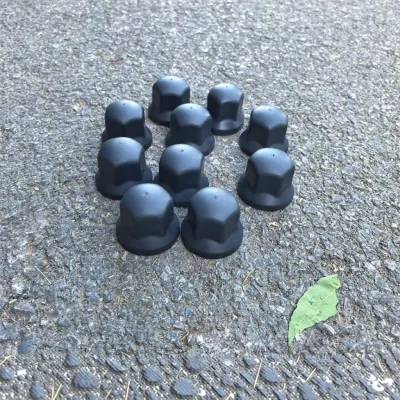
Prices are valid at publication and may change. Please refer to the product page for the latest price.
Cap Length and Depth Beyond the width, you must consider the depth or length of the cap. Standard-depth caps are designed to cover typical factory-installed lug nuts that sit relatively flush with the wheel face. However, if your vehicle is equipped with extended wheel studs, open-ended lug nuts, or aftermarket alloy wheels with deep-set lug holes, standard caps may not cover the entire exposed hardware. In these scenarios, extended or long-profile caps are necessary to provide complete coverage and prevent the tip of the stud from pushing the cap off.
Fitment Impact Choosing the wrong size has immediate practical consequences. An oversized cap will fail to grip the flats of the lug nut, resulting in annoying rattles, accumulation of abrasive brake dust, and the eventual loss of the cap while driving. Conversely, attempting to force an undersized cap onto a larger nut will split the plastic, strip the cap’s internal gripping splines, or prevent it from seating flush against the wheel surface, leaving a gap where moisture can pool.
How to Measure and Verify Your Wheel Nut Size
Determining your exact lug nut size does not require professional mechanical expertise. By using a few basic tools and cross-referencing your vehicle’s documentation, you can confidently identify the correct specifications before making a purchase.

Physical Measurement The most reliable way to find your hex size is to measure the physical lug nut directly. Use a digital vernier caliper to measure the distance between two opposing flat sides of a clean, bare lug nut. If you do not have a caliper, you can use standard socket wrenches or spanners from a garage tool kit. Try fitting a 17mm, 19mm, or 21mm socket over the nut; the socket that fits perfectly without slipping or wobbling indicates your exact hex size. Always clean off any dirt or road grime from the nut before measuring to ensure accuracy.
Documentation Check If you prefer not to measure manually, you can consult your vehicle’s official documentation. The owner’s manual typically lists the factory wheel lug nut dimensions, socket sizes, and torque specifications in the maintenance or emergency tyre-changing sections. Keep in mind that if a previous owner upgraded the wheels or installed aftermarket lock nuts, the factory manual specifications may no longer apply, making physical verification necessary.
The Single-Cap Fit Test If you are uncertain about the fitment or how a specific style will look on your alloy wheels, consider purchasing a single replacement cap or a small trial pack before committing to a full set of 16 or 20 covers. This allows you to test the snap-fit tension, verify that the cap sits flush against the wheel face, and ensure it can be easily removed with the extraction tool without scratching your wheel’s painted or polished finish.
Safety Boundary and Installation Before making any modifications to your wheel hardware or installing aftermarket accessories, always verify your vehicle’s specific model year, torque requirements, and mounting positions in the manufacturer’s documentation. Ensure that any cap installation does not interfere with the proper seating of the wheel or the torque of the lug nuts. If you are unsure about wheel safety, road legality, or fitment, consult a qualified tyre specialist before driving.
Thread Size and Pitch: Do They Matter for Nut Caps?
A frequent point of confusion for car owners is whether they need to match the thread size and thread pitch of their wheel studs when buying nut caps. Understanding the distinct roles of these components simplifies the buying process.
Nut vs. Cap Function It is essential to distinguish between the structural lug nut and the cosmetic cap. The lug nut is a critical safety component threaded directly onto the wheel stud to clamp the wheel assembly securely to the brake rotor and hub. The tyre nut cap, on the other hand, is a non-structural accessory that simply snaps or slides over the exterior of the installed lug nut to protect it from environmental elements and improve the wheel’s appearance.
Irrelevant Specs for Caps Because standard nut caps do not thread onto the wheel studs, technical thread specifications—such as M12 x 1.25, M12 x 1.5, or M14 x 1.5—are entirely irrelevant to the cap’s fitment. These thread callouts dictate how the lug nut screws onto the car’s hub, whereas the cap only cares about the outer hexagonal shape and dimensions of the nut. As long as the outer hex size and depth match, the cap will fit regardless of the underlying thread pattern.
Exceptions There are rare exceptions to this rule. Some specialized, heavy-duty utility vehicles or custom aftermarket wheels use threaded locking nut covers or spiked caps that screw directly onto the exposed portion of an extended wheel stud. For these specific products, you must match both the thread pitch of the stud and the hex size of the nut. However, for the vast majority of passenger cars on the road, standard snap-on caps remain the norm.
Matching the Cap Style to Your Wheel Setup
Selecting the right cap style involves balancing aesthetic preferences with practical protection, taking into account your driving habits and environmental conditions.
Standard Snap-On Caps Standard plastic snap-on caps are the most popular choice for daily drivers. They provide an effective physical barrier against road grime, salt, and corrosive brake dust, keeping your lug nuts clean and making future wheel removal easier. These are highly cost-effective and readily available in various finishes, such as chrome, gloss black, or matte grey, to match your wheel style.
Locking Wheel Nut Covers If your car is equipped with anti-theft locking wheel nuts, a standard symmetrical hexagonal cap will not fit over the uniquely shaped security nut. Many cap kits include specialized, rounded, or custom-shaped covers designed specifically to slip over these locking nuts. Ensure your kit includes these matching covers and the dedicated removal key tool, which must be kept in your glove box or boot for emergency tyre changes.
Material Considerations When choosing between ABS plastic and metal (such as aluminium or stainless steel) caps, consider the trade-offs. ABS plastic is lightweight, highly resistant to rust, and will not cause galvanic corrosion when in contact with steel lug nuts or alloy wheels. This is particularly relevant in Singapore’s humid, tropical climate, where trapped moisture can accelerate oxidation. Metal caps offer superior durability and a premium look but require careful installation; if moisture gets trapped between a metal cap and a steel nut, it can lead to galvanic corrosion, making the cap extremely difficult to remove.
Frequently Asked Questions (FAQ)
Can I use a 19mm nut cap on a 17mm wheel nut?
No, you should not use an oversized cap. A 19mm cap will not snap securely onto a 17mm nut, leaving too much clearance. The loose fit will cause the cap to rattle, allow water and abrasive brake dust to accumulate underneath, and ultimately result in the cap flying off while the vehicle is in motion.
Do tyre nut caps prevent wheel nuts from rusting?
Tyre nut caps provide a helpful physical barrier against direct water spray, mud, and road debris, which can slow down the onset of surface rust. However, they cannot stop corrosion if moisture is already trapped inside the cap or if the lug nut’s protective zinc or chrome plating is already damaged. In highly humid environments, it is wise to ensure the nuts are dry and clean before installing the caps.
How do I remove a stuck or melted tyre nut cap?
To remove a stubborn cap safely, always use the specialized plastic extraction tool or tweezers included in most cap kits. Avoid using metal screwdrivers, pliers, or harsh prying tools directly against the wheel, as these can easily scratch or chip the delicate clear coat and paint on your alloy rims. If a plastic cap has melted due to extreme brake heat, gently warm it with a hair dryer to soften the plastic before pulling it off with the removal tool.
Community discussion
Share your experience or ask a question. Comments are reviewed before publication.