
Choosing the right 2-stroke (2T) oil is fundamentally different from selecting 4-stroke motor oil. While 4-stroke engines require you to match specific SAE viscosity grades like 10W-40, 2-stroke engines prioritize performance specifications, clean-burning characteristics, and delivery methods over traditional viscosity ratings. To find the correct oil, you must look for international standards like JASO, ISO, or API, and match them to your engine manufacturer’s exact requirements.
Understanding how these specifications interact with your specific engine type ensures optimal performance and longevity. Selecting the wrong formulation can lead to rapid carbon buildup, spark plug issues, or severe mechanical failure.
The Golden Rule: Follow OEM Specifications Over Generic Viscosity
Unlike 4-stroke engines where oil remains in the crankcase, 2-stroke engines burn oil along with the fuel. Because the oil is consumed during combustion, its ability to mix, flow, and burn cleanly is far more critical than its cold-start viscosity rating. For this reason, standard SAE viscosity grades are rarely highlighted on 2T oil bottles.
Products mentioned in this guide
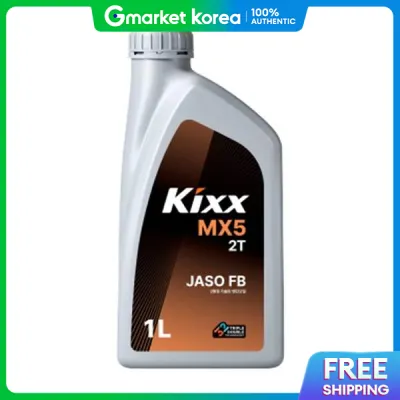
Prices are valid at publication and may change. Please refer to the product page for the latest price.
To select the correct oil, your primary reference must always be the original equipment manufacturer (OEM) manual. This document specifies the exact performance standard required, the approved base oil type, and the precise fuel-to-oil mixing ratio.
Ignoring these manufacturer guidelines carries significant mechanical risks. Using an incorrect oil type can lead to incomplete combustion, resulting in spark plug fouling, heavy carbon deposits in the exhaust port, and excessive blue smoke. In severe cases, insufficient lubrication at high operating temperatures can cause catastrophic engine seizure.
Decoding 2T Oil Labels: Performance Grades and Base Oils
When examining a bottle of 2T oil, you will find several international performance standards. These ratings indicate how well the oil protects against wear, prevents deposits, and limits exhaust smoke.

The Japanese Automotive Standards Organization (JASO) system is the most common classification:
- JASO FA: This is the legacy standard representing basic lubrication, which is largely obsolete for modern engines.
- JASO FB: This grade offers improved lubricity and exhaust smoke reduction compared to FA.
- JASO FC: A high-performance standard that enforces strict limits on exhaust smoke and engine deposits.
- JASO FD: The highest JASO standard, requiring superior detergency and cleanliness properties compared to FC.
You may also see European ISO standards, which closely mirror the JASO system:
- ISO-L-EGB: This grade is equivalent to the JASO FB standard.
- ISO-L-EGC: This grade is equivalent to the JASO FC standard.
- ISO-L-EGD: This represents the highest ISO standard, offering exceptional thermal stability and deposit control.
Additionally, the American Petroleum Institute (API) uses the API TC standard, which is designed for high-output land engines to prevent ring sticking and pre-ignition.
The base oil type also plays a critical role in how the oil performs:
- Mineral Oils: These are refined from crude oil and are suitable for older, low-RPM engines or during initial engine break-in periods. They offer basic lubrication but tend to produce more smoke and deposits.
- Semi-Synthetic Oils: A blend of mineral and synthetic bases, offering a balance of deposit control and reduced smoke for daily commuting and moderate-load equipment.
- Fully Synthetic Oils: Formulated with synthetic chemical compounds to provide outstanding high-temperature stability, minimal smoke, and exceptional film strength. These are ideal for high-RPM racing, heavy-duty landscaping tools, and demanding operating conditions.
Always verify that the chosen oil meets or exceeds the minimum performance standard required by your specific engine manufacturer.
How Operating Conditions Influence Your 2T Oil Choice
Environmental factors and engine loads directly affect how 2T oil performs inside the combustion chamber. In hot, tropical climates like Singapore, engines run at higher operating temperatures, which can thin out the lubricating film.
High ambient temperatures combined with heavy loads—such as continuous high-RPM operation in weed trimmers, chainsaws, or delivery scooters—demand oils with high-temperature stability. Under these conditions, a fully synthetic oil meeting JASO FD or ISO-L-EGD specifications is often recommended by manufacturers to maintain film strength and prevent piston scuffing.
The fuel-to-oil mix ratio is another critical factor. This ratio, such as 50:1 (50 parts petrol to 1 part oil), is carefully calibrated by the manufacturer to balance lubrication, cooling, and emissions.
You should never arbitrarily alter the mix ratio or switch to a different oil type without consulting the manufacturer’s manual or a qualified mechanic. Running a mixture that is too lean (too little oil) causes overheating and friction damage, while a mixture that is too rich (too much oil) leads to spark plug fouling and rapid carbon buildup in the exhaust system.
Pre-Mix vs. Oil Injection: Choosing the Right Formulation
Before purchasing 2T oil, you must identify how the oil is delivered to your engine. Two-stroke engines use either a pre-mix system or an oil injection system.
In a pre-mix system, you manually measure and mix the oil directly into the petrol tank. Pre-mix formulations are designed to blend easily with petrol and remain uniformly suspended without settling over time.
In an oil injection (or autolube) system, the engine features a separate oil reservoir. A mechanical or electronic pump automatically injects the oil into the intake tract or crankcase based on engine speed and throttle position.
Injection oils must have excellent low-temperature flow characteristics to prevent pump starvation. Using an oil formulated exclusively for pre-mix systems in an injection system can clog the pump lines, leading to dry running and engine failure. Conversely, many modern high-quality 2T oils are formulated to be dual-purpose, suitable for both systems.
To verify your equipment’s requirements, use this quick checklist:
- Consult the manual: Check the vehicle or equipment documentation for delivery system specifications.
- Inspect the hardware: Look for a separate oil filler cap or reservoir tank on your machine.
- Read the oil label: Ensure the bottle explicitly states compatibility, such as "Suitable for pre-mix and injection systems."
Frequently Asked Questions (FAQ)
Can I use 4-stroke motor oil in a 2-stroke engine?
No. Four-stroke motor oils are formulated to remain in the crankcase and contain metallic, ash-forming additives. When burned in a 2-stroke combustion chamber, these additives leave heavy ash deposits on the piston crown, spark plug, and exhaust ports. This leads to spark plug fouling, pre-ignition, and severe engine damage. Always use dedicated 2T oil designed to burn cleanly.
Does the color of the 2T oil indicate its quality or viscosity?
No. The color of 2T oil (often red, blue, or green) is simply a dye added by manufacturers. This dye serves two purposes: brand identification and visual confirmation that oil has been mixed into the petrol tank to prevent the accidental use of straight petrol. The color has no correlation with viscosity, quality grade, or synthetic content. Always rely on the JASO, API, or ISO specifications printed on the label.
Community discussion
Share your experience or ask a question. Comments are reviewed before publication.