
Selecting the right motorcycle security setup requires balancing physical protection, daily convenience, and your typical parking environment. There is no single “best” motorcycle lock, as the ideal choice depends on your parking environment, daily convenience, and budget. Use this conditional framework to guide your decision: Choose a disc lock for quick stops and high portability; choose a U-lock for high-risk street parking where you can secure the bike to a fixed anchor; choose a wheel clamp for long-term immobilization and steering lock reinforcement. Always verify physical compatibility with your specific motorcycle model before purchasing.
Understanding the Core Mechanisms and Physical Limits
To make an informed decision, you must first understand how each lock type physically secures your motorcycle and where its design limits lie. A wheel clamp functions by wrapping around the tire and wheel rim, physically blocking the wheel from rotating and preventing the steering column from being easily turned. Because of their sheer size and weight, wheel clamps serve as highly visible visual deterrents that signal to opportunistic thieves that the motorcycle cannot be easily wheeled away. However, their bulk makes them impractical for mobile use, meaning they are primarily restricted to stationary, long-term home parking.
A disc lock operates on a much more compact scale by clamping directly onto the brake rotor. A hardened steel pin passes through one of the rotor’s cooling holes, preventing the wheel from completing a full rotation if someone attempts to roll the motorcycle. While highly effective at stopping roll-away thefts, a disc lock does not secure the motorcycle to an external structure. This means a small team of thieves can still lift the entire motorcycle into the back of a van or onto a flatbed truck within seconds, bypassing the lock entirely until they reach a private location.
Products mentioned in this guide
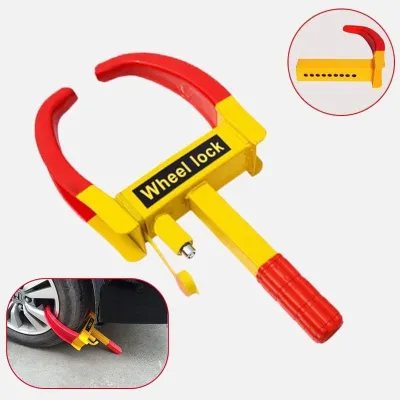
![[SG STOCK]Universal Car Wheel Lock – Heavy-Duty Anti-Theft Tire Clamp with Padlock Security](https://img.lazcdn.com/g/p/eb57028a86b32840159ef662bf4ab296.jpg_400x400q80.jpg_.webp)
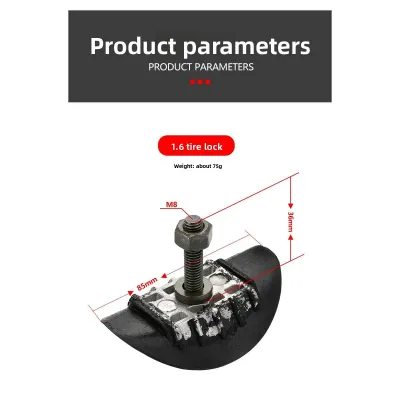
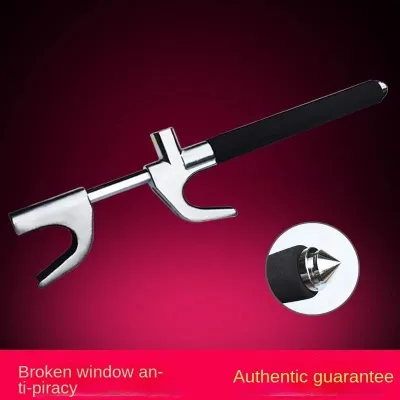
Prices are valid at publication and may change. Please refer to the product page for the latest price.
A U-lock, also known as a shackle lock, consists of a rigid, U-shaped steel bar that locks into a straight crossbar. This design allows you to loop the lock through the motorcycle’s wheel, frame, or swingarm and secure it directly to a solid, immovable object like a ground anchor, lamp post, or dedicated parking rail. By anchoring the motorcycle to the ground or a heavy structure, the U-lock directly addresses the lifting vulnerability associated with disc locks. However, its effectiveness is physically limited by the availability of suitable anchor points in your parking area.
Comparing Security Levels and Common Vulnerabilities
Evaluating how these locks perform against common theft methods requires looking at their physical dimensions, material properties, and placement. Physical attacks typically involve manual tools like bolt cutters and leverage bars, or power tools like portable angle grinders. The thickness and hardness of the lock’s shackle or pin play a critical role here. For instance, steel shackles with a diameter of 16mm or greater are generally highly resistant to manual bolt cutters, as the physical force required to shear them exceeds what a human can typically apply with standard hand tools.

Beyond brute force attacks, lock cylinders are vulnerable to picking, bumping, or drilling. When evaluating any lock, it is essential to check the lock cylinder grade and look for specific anti-pick features on the product label, such as disc-detainer mechanisms or anti-drill plates. Basic pin-tumbler locks are often easily bypassed by experienced thieves using simple picking tools, whereas high-security disc-detainer cylinders require specialized tools and significant time to manipulate, making them a much stronger deterrent.
The physical positioning of the lock during use also directly impacts its vulnerability to attack. If a lock is allowed to rest directly on the ground, a thief can place one handle of a heavy bolt cutter on the pavement and use their entire body weight to press down on the other handle, dramatically increasing their cutting force. Similarly, a ground-level lock provides a stable surface for a thief to steady an angle grinder. Keeping the lock elevated off the ground and tightly fitted around the motorcycle components minimizes the physical clearance available for tools, making attacks significantly more difficult and time-consuming.
Evaluating Portability and Daily Convenience
The level of security a lock offers is irrelevant if it is too cumbersome to use consistently. Portability and daily convenience represent the primary trade-offs when choosing between these three lock types. Disc locks are the undisputed leaders in portability, easily fitting into a jacket pocket, a small under-seat compartment, or a tank bag. This makes them highly convenient for daily commuters who make multiple short stops throughout the day and cannot afford to carry heavy, bulky equipment.
U-locks occupy a middle ground, requiring dedicated storage solutions due to their rigid shape and moderate weight. Some riders mount them to the motorcycle frame using specialized brackets, while others carry them in a backpack or top box. Carrying a heavy steel U-lock in a backpack can be fatiguing over long commutes and poses a safety risk to the rider’s spine in the event of a road accident. Wheel clamps, being the heaviest and most awkward of the three, are virtually impossible to transport on a motorcycle safely, limiting their utility strictly to permanent parking spaces.
Daily ergonomics and environmental factors also influence how often you will actually use your lock. In tropical climates, sudden downpours and high humidity can make installing a lock a wet, messy chore. A lock that is difficult to align or requires kneeling on wet asphalt may end up left in the storage box. Furthermore, disc locks carry a unique operational risk: ride-off accidents. Forgetting to remove a disc lock before starting the engine can result in severe damage to the brake caliper, front forks, and wheel rim, or cause the rider to lose balance and drop the bike. Using a bright, high-visibility reminder cable looped from the lock to the handlebar, or choosing a disc lock with a built-in motion alarm, is highly recommended to prevent these costly mistakes.
Matching the Lock to Your Parking Environment
Your choice of security device should align closely with where you park and the level of risk associated with that location. For high-risk public street parking, relying on a single device is rarely sufficient. A layered security strategy is the most effective approach. This involves using a high-security U-lock to anchor the motorcycle’s frame to a solid street fixture, combined with a disc lock on the front wheel to prevent rolling. This setup forces a thief to bring multiple types of tools and spend twice as much time attempting to bypass your security.
In contrast, secure indoor or gated parking environments, such as private condominium basements or multi-storey car parks (MSCPs) with active surveillance, present a different risk profile. While still vulnerable to targeted thefts, these areas generally benefit from higher foot traffic and security patrols. For daily parking in these semi-secure locations, a high-quality disc lock or a wheel clamp can provide an excellent balance of convenience and deterrence, discouraging opportunistic joyriders without requiring you to carry heavy anchoring equipment on every trip.
The duration of your stay also dictates the appropriate lock type. For quick commercial stops—such as popping into a shop for ten minutes—a fast-to-deploy disc lock is highly practical. For overnight or long-term storage, especially in unmonitored open-air lots, maximum physical security is paramount. In these scenarios, a heavy-duty wheel clamp that completely covers the wheel nuts and immobilizes the tire, paired with an anchored U-lock, provides the robust physical barrier needed to protect your investment over extended periods.
Key Specifications to Verify Before Purchasing
Before purchasing any motorcycle lock, you must verify its physical compatibility with your specific motorcycle model. For disc locks, do not assume a standard lock will fit your brake rotors. You must physically measure the diameter of the cooling holes in your brake disc and the thickness of the rotor itself. Compare these measurements against the lock’s pin diameter and throat depth specifications. If the pin is too thick, it will not fit through the rotor holes; if the throat is too shallow, the lock cannot slide far enough onto the disc to engage.
When selecting a U-lock, carefully check the inner dimensions of the shackle. You need to ensure the lock is wide and long enough to pass through your wheel spokes, around the tire, and still have enough clearance to loop around your intended anchor point or frame tube. A U-lock that is too small will be unusable, while one that is excessively large leaves too much open space, making it easier for a thief to insert hydraulic bottle jacks or leverage bars to pop the lock open.
For wheel clamps, verify the maximum tire width and fork clearance of your motorcycle. The clamp must adjust to fit snugly around your specific tire size without scratching the wheel rims or putting undue pressure on the brake lines and speed sensors. Additionally, look for recognized independent security testing labels, such as Sold Secure (Motorcycle Gold or Diamond ratings) or SBSC, on the product packaging. These certifications indicate the lock has undergone standardized physical attacks, providing a reliable benchmark of material hardness and lock cylinder quality far beyond unverified marketing claims. Always consult your original-vehicle documentation to ensure that any lock placement does not interfere with critical safety components, and seek qualified professional assistance if you plan to install permanent ground anchors.
Frequently Asked Questions (FAQ)
Can I use a disc lock on any motorcycle?
No, disc locks are not universally compatible. They require a disc brake system with cooling holes or slots large enough to accommodate the lock’s locking pin. Some vintage motorcycles, small-capacity scooters, and budget models utilize drum brakes on the front or rear wheels, which lack a brake rotor entirely. Always measure your rotor’s hole diameter and thickness to ensure a proper fit before purchasing.
Is a wheel clamp better than a U-lock for long-term parking?
A wheel clamp is highly effective for long-term parking because it provides a massive visual deterrent and physically prevents the wheel from rotating or being steered. However, unless the wheel clamp is physically anchored to the ground, it does not prevent thieves from lifting the motorcycle into a vehicle. For maximum long-term security, combining a wheel clamp with a U-lock secured to a solid ground anchor is the ideal approach.
Should I combine a physical lock with a GPS tracker?
Yes, combining physical locks with a GPS tracker is an excellent layered security strategy. Physical locks like U-locks, disc locks, and wheel clamps act as primary deterrents designed to delay or prevent the theft from occurring in the first place. In the event that professional thieves bypass these physical barriers, a hidden GPS tracker serves as a secondary recovery tool, allowing you to track the motorcycle’s location and assist law enforcement.
Community discussion
Share your experience or ask a question. Comments are reviewed before publication.