
A dead or failing motorcycle battery can leave you stranded at the worst possible moment. If your motorcycle uses a ytz10s battery, finding the right replacement involves more than simply picking a box with the same label off a retail shelf. The YTZ10S is a highly popular, Japanese Industrial Standards (JIS) compliant, sealed maintenance-free battery. It is commonly found in middleweight sportbikes, adventure motorcycles, and high-performance scooters. Because motorcycles rely on compact, tightly engineered electrical systems, installing an incorrect or poorly matched battery can damage your bike’s electronics, cause charging failures, or even present a serious safety hazard.
Before committing to a purchase, you must verify three non-negotiable parameters: physical dimensions, terminal layout, and electrical output. These factors dictate whether the battery will physically fit into your bike’s designated tray, connect safely to the existing wiring harness, and reliably start your engine. To establish a baseline, always locate your current battery’s specification label or consult your motorcycle’s owner’s manual. Having these original equipment manufacturer (OEM) specifications on hand ensures you can cross-reference them accurately against any aftermarket replacement options.
Verifying Physical Dimensions and Battery Box Clearance
While “YTZ10S” represents a standardized size class across the powersports industry, physical dimensions can still vary slightly between different battery brands and aftermarket manufacturers. A fraction of a millimeter in casing thickness or a slightly different top-cover design can make the difference between a clean drop-in installation and a battery that simply will not fit. Standard nominal dimensions for a YTZ10S battery are approximately 150 mm in length, 87 mm in width, and 93 mm in height. However, manufacturing tolerances can alter these dimensions just enough to cause fitment issues in tight battery compartments.
Products mentioned in this guide
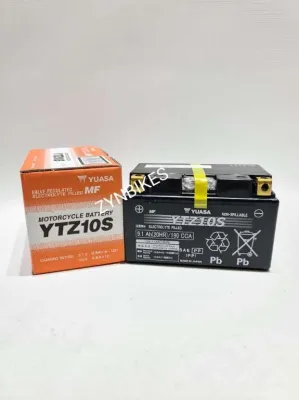
Prices are valid at publication and may change. Please refer to the product page for the latest price.
To avoid installation failures, use a vernier caliper or a standard measuring tape to measure the length, width, and height of your existing battery. Next, measure the internal dimensions of your motorcycle’s battery tray or box. Keep in mind that some motorcycles feature protective foam padding, rubber vibration-dampening mats, or plastic liners inside the tray. These elements are critical for protecting the battery casing from engine vibrations and road shocks, so you must ensure your new battery leaves enough clearance for these inserts to remain in place.
Beyond the basic box volume, pay close attention to the mounting hardware, hold-down clamps, rubber straps, and bracket clearance. A replacement battery with a slightly taller top cover or an unusual shoulder shape can prevent the hold-down bracket from fastening securely. If the bracket is loose, the battery will slide and bounce during rides, leading to cracked casings, internal plate damage, or loose terminal connections. Conversely, overtightening a bracket to force a slightly oversized battery into place can crush the plastic outer shell, causing acid leaks or internal short circuits.
Finally, take a moment to thoroughly inspect the empty battery box for any accumulated road debris, dirt, or corrosion before sliding the new unit in. Over time, road grime can build up at the bottom of the tray, creating an uneven surface that tilts the battery or prevents it from seating fully. If your motorcycle has undergone any aftermarket modifications—such as the installation of auxiliary fuse blocks, alarm systems, or custom wiring looms—verify that these additions have not encroached on the battery compartment’s space.
Checking Terminal Orientation and Cable Reach
One of the most common and frustrating mistakes riders make when purchasing a replacement battery is overlooking the terminal layout. Even if a battery matches the YTZ10S dimensions perfectly, having the positive and negative terminals reversed can lead to catastrophic electrical damage. If you attempt to connect a battery with reversed polarity, you risk blowing main fuses, destroying the motorcycle’s electronic control unit (ECU), or causing an electrical fire.

To identify the correct terminal orientation, position yourself so you are looking at the side of the battery where the front label is applied, with the terminals closest to you. For a standard YTZ10S battery, the positive (+) terminal is located on the left side, while the negative (-) terminal is situated on the right side. You must visually confirm this layout on your existing battery before placing an order. Do not rely solely on memory or generic online product photos, as some aftermarket manufacturers produce modified layouts for specific vehicle applications.
Ensuring correct cable reach is equally critical for a safe installation. Motorcycle wiring harnesses are designed with very tight tolerances; the positive and negative battery cables are often cut to the exact length required to reach their respective posts. If you purchase a battery with the wrong terminal layout, you may be tempted to pull, stretch, or twist the cables to make them reach. This is an extremely dangerous practice. Forcing cables tight puts continuous mechanical tension on the battery terminals, which can crack the plastic casing or cause the internal terminal welds to fail over time.
Additionally, stretched cables are highly susceptible to rubbing against the motorcycle’s frame or subframe. Over time, engine vibrations can wear away the cable’s protective insulation, leading to a direct short circuit, blown fuses, or a vehicle fire. Never attempt to use homemade extension wires or bend the battery’s terminal posts to accommodate a mismatched battery. Before finalizing your purchase, inspect the condition of your existing cable lugs. Ensure they are free of corrosion, cracks, or deformation, and verify that they will sit flush and secure against the terminal posts of the new YTZ10S battery.
Matching CCA and Ah Ratings to Your Motorcycle's Needs
When evaluating a replacement battery, you must understand the distinct roles played by Cold Cranking Amps (CCA) and Ampere-hours (Ah). CCA measures a battery’s ability to deliver a high burst of current to start the engine at low temperatures. A standard YTZ10S battery typically offers a CCA rating of around 190 amps. Ampere-hours, on the other hand, measure the battery’s capacity to deliver a steady electrical current over a sustained period. For a YTZ10S, the standard capacity is usually around 8.6 Ah.
In Singapore’s tropical climate, ambient temperatures remain consistently high throughout the year. While this warm weather reduces the initial physical effort required to crank a cold engine—meaning you do not need excessive CCA to overcome frozen engine oil—the intense heat introduces other severe challenges. High operating temperatures accelerate the internal chemical reactions within the battery. This speed-up leads to faster grid corrosion, accelerated active material shedding, and increased self-discharge rates. Therefore, you should always match or slightly exceed the OEM CCA rating to ensure the battery has enough internal structural robustness to withstand heat-induced degradation over its lifespan.
While matching or upgrading CCA is beneficial, you must exercise caution regarding the battery’s Ampere-hour (Ah) rating. It is a common misconception that installing a battery with a significantly higher Ah rating is always an upgrade. Your motorcycle’s charging system—consisting of the stator and the regulator-rectifier—is engineered to recharge a battery of a specific capacity range. If you install a battery with an excessively high Ah capacity, your bike’s charging system may struggle to fully replenish the charge during normal riding, especially on short commutes. This leads to chronic undercharging, which causes sulfation—a buildup of lead sulfate crystals on the battery plates that permanently reduces its capacity and shortens its service life.
To find your motorcycle’s baseline electrical requirements, clean the top and sides of your old battery and read the printed label. Look for the specific ratings labeled “CCA” and “Ah” (or “10HR” for the 10-hour rate capacity). If the label has faded or peeled off, refer to the technical specifications section of your owner’s manual. Always prioritize premium Absorbent Glass Mat (AGM) or factory-activated gel batteries that match these exact specifications to guarantee compatibility with your motorcycle’s charging profile.
Diagnosing If You Actually Need a Replacement
Before spending your hard-earned money on a new YTZ10S battery, it is vital to perform a systematic diagnosis to confirm that the battery is indeed the root cause of your starting issues. Quite often, riders replace a dead battery only to find that the new one drains and dies within a few days because the underlying problem lay elsewhere in the electrical system.
Start by observing the symptoms your motorcycle exhibits. Common signs of a failing battery include a sluggish or slow engine crank when pressing the starter button, clicking sounds from the starter relay, dimming headlights or instrument clusters at idle that brighten when you rev the engine, or a visibly swollen or bloated battery casing. A swollen casing is a clear indicator of severe overcharging or internal short circuits, and a battery in this condition must be replaced immediately to prevent acid leaks or thermal runaway.
If the casing looks normal, use a digital multimeter to run a series of basic diagnostic checks:
- Static Voltage Check: With the ignition off, measure the voltage across the battery terminals. A fully charged, healthy 12-volt AGM battery should read between 12.6V and 12.8V. If it reads below 12.0V, it is severely discharged and needs charging.
- Cranking Voltage Check: Connect the multimeter, turn the ignition on, and watch the voltage drop as you crank the engine. If the voltage drops below 9.6V during cranking, the battery lacks the capacity to hold a load and likely needs replacement.
- Charging System Check: Start the engine and rev it to around 3,000 to 4,000 RPM while monitoring the multimeter. The voltage should rise to between 13.5V and 14.5V. If the voltage remains low (under 13.0V) or climbs excessively high (over 15.0V), your regulator-rectifier or stator is faulty.
Additionally, check for parasitic drains by measuring the milliamp draw with the ignition off, and inspect the battery terminals to ensure they are clean, tight, and free of corrosion. If your diagnostic tests indicate a charging system failure rather than a worn-out battery, consult a qualified motorcycle mechanic. Installing a brand-new battery into a bike with a faulty regulator-rectifier can quickly overcharge and destroy the new unit, leaving you with another dead battery and unnecessary expenses.
Frequently Asked Questions (FAQ)
Can I use a YTZ10S battery in a bike that originally came with a different model?
While some motorcycle battery models share similar physical footprints, you should avoid swapping different battery models unless the manufacturer explicitly lists them as direct equivalents. Even minor differences in height, terminal orientation, or internal chemistry can prevent the battery from fitting securely or connecting safely. Furthermore, using a battery with inadequate Cold Cranking Amps (CCA) can strain your starter motor, while a mismatched capacity can overload your motorcycle’s charging system. Always stick to the exact OEM-specified battery model or a verified, manufacturer-approved equivalent to maintain vehicle safety and warranty compliance.
Do I need to charge a new YTZ10S battery before installing it?
Although many modern, factory-activated sealed AGM YTZ10S batteries are pre-charged at the factory, they can lose charge while sitting on retail shelves or in warehouses. It is highly recommended to check the battery’s open-circuit voltage with a digital multimeter before installation. If the reading is below 12.6V, you should top it off using a dedicated smart motorcycle battery charger. Avoid using high-amperage automotive chargers, as they can overheat and permanently damage small motorcycle batteries. Properly fully charging the battery before its first use ensures optimal chemical activation, maximum performance, and a longer overall service life.
Community discussion
Share your experience or ask a question. Comments are reviewed before publication.