
Selecting a reliable disposable car cover requires looking past vague marketing claims and focusing on verifiable material specifications. In tropical climates like Singapore, where intense ultraviolet radiation alternates with sudden, heavy downpours, a temporary cover must balance lightweight convenience with robust protection. The key to finding a cover that won’t tear, leak, or melt onto your paintwork lies in understanding base polymers, seam construction, and UV-blocking mechanisms.
Base Materials and Thickness: Understanding GSM and Microns
Disposable car covers are typically manufactured from synthetic polymers, with polyethylene (PE), low-density polyethylene (LDPE), and ethylene-vinyl acetate (EVA) being the most common. PE and LDPE offer excellent water barrier properties and are highly lightweight, making them easy to deploy quickly. EVA is generally more flexible and boasts higher puncture resistance, though it can be slightly heavier. Some temporary covers use non-woven composite materials, which bond synthetic fibers together to create a fabric-like feel that is gentler on vehicle paint.
To evaluate the strength of these materials, you must look at the thickness specifications. For thin plastic films, manufacturers measure thickness in microns (one-millionth of a meter) or mils (one-thousandth of an inch). A standard disposable cover usually ranges from 20 to 40 microns. While a thicker film offers better tear resistance, it also becomes stiffer and more difficult to fold. For non-woven composite layers, thickness is measured in GSM (grams per square meter). A higher GSM indicates a denser, more durable barrier, but for temporary or single-use scenarios, a moderate GSM is preferred to keep the cover compact.
Products mentioned in this guide
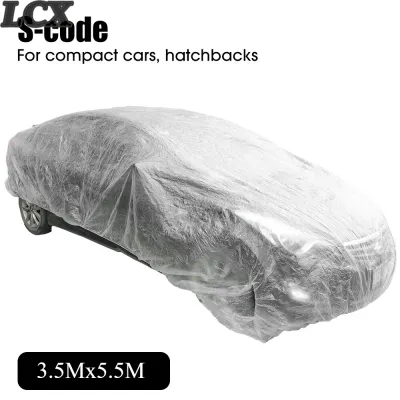
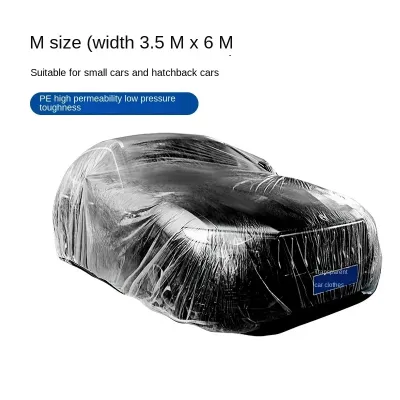
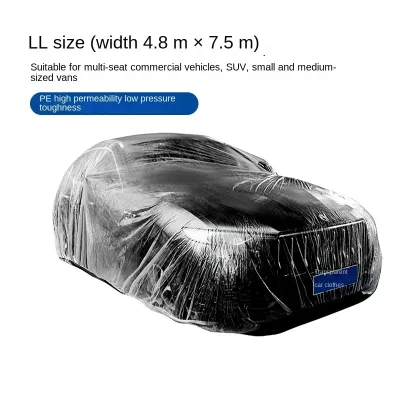
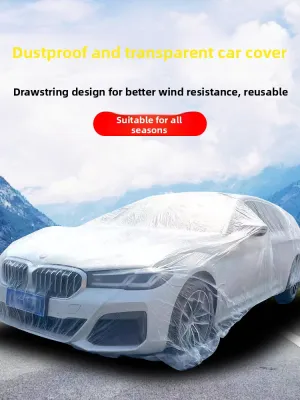
![[SG FREE ] S/M/L/LL Disposable Rainproof Car Cover - Universal Soft Scratch-Free Car Cover - Thickened Transparent Clot](https://img.lazcdn.com/g/p/ee61e520fc4d8aa7198861620b137d57.jpg_400x400q80.jpg_.webp)
Prices are valid at publication and may change. Please refer to the product page for the latest price.
In high-humidity environments, the trade-off between thickness and breathability becomes critical. Extremely thick, non-breathable plastic films can trap condensation underneath the cover if left on a damp vehicle in hot sun. This trapped moisture can damage the clear coat of your paint over time. Therefore, when using a thin plastic disposal car cover, it is best suited for dry vehicles during short-term storage or paint protection during home renovations.
Waterproofing Specs: Evaluating Coatings, Seams, and Membranes
True waterproofing is determined by how the cover handles seams and joints rather than just the face fabric. Many budget covers feature stitched seams, which create thousands of tiny needle holes. Under heavy rain, water easily penetrates these punctures, rendering the waterproof claim useless. For a disposable plastic cover, look for heat-welded or ultrasonically welded seams. These manufacturing processes melt the edges of the polymer sheets together, creating a continuous, leak-proof bond that matches the water resistance of the main body.

It is also important to distinguish between surface water repellency and full membrane waterproofing. Water-repellent coatings cause water to bead up and roll off the surface, but they can fail under the pressure of sustained downpours. A true waterproof membrane or solid polymer film physically blocks water from passing through, regardless of pressure.
While heavy-duty outdoor covers often list a hydrostatic head rating (measured in millimeters to show how much water pressure the fabric can withstand), disposable covers rarely feature these precise metrics. Instead, rely on the material type. A solid, unpunctured LDPE or EVA sheet is inherently waterproof. Your primary focus should remain on verifying that the seams are welded rather than stitched, as the seams are almost always the first point of water ingress.
UV Protection: Decoding UPF Ratings and Reflective Layers
Sun protection is vital for preserving your vehicle’s clear coat, paint depth, and interior plastics. When evaluating UV claims, look for an explicit Ultraviolet Protection Factor (UPF) rating. A UPF rating of 50+ indicates that the material blocks a significant portion of harmful UVA and UVB rays. However, because disposable covers are thin, achieving high UV resistance requires specific material treatments.
Manufacturers typically achieve UV protection through two methods: integrating UV-inhibitor additives directly into the polymer melt during extrusion, or applying a reflective outer coating. Reflective coatings, often silver or aluminum-colored, bounce solar radiation away from the vehicle, keeping the cabin temperature cooler. Integrated UV stabilizers, on the other hand, protect the plastic itself from breaking down and becoming brittle under constant sun exposure.
In intense tropical climates, thin reflective coatings can degrade rapidly. If the cover lacks UV stabilizers within the base polymer, the plastic will quickly become brittle, powdery, or prone to tearing after just a few days of direct exposure. Always check if the product specification mentions UV-treated polymers rather than just a shiny surface finish.
Specs to Deprioritize: Avoiding Marketing Fluff
When shopping on an online marketplace, you will encounter various technical-sounding specifications designed to make cheap covers seem premium. One common metric to ignore for disposable covers is the denier count. Denier measures the linear mass density of fibers in woven fabrics, such as heavy-duty Oxford polyester. Because high-quality disposable covers are made of extruded plastic films or non-woven webs rather than woven threads, denier ratings are completely irrelevant and usually indicate misleading marketing.
Similarly, multi-layer construction claims are often redundant for temporary use. While a 5-layer or 7-layer cover is excellent for long-term outdoor storage, it defeats the purpose of a lightweight, easily packable disposable cover. These multi-layer designs add unnecessary bulk, making the cover difficult to install by yourself and challenging to dispose of responsibly.
Be skeptical of vague, non-standardized terms like “all-weather protection,” “heavy-duty shield,” or “maximum stormproof” if they are not backed by specific material listings. Reliable manufacturers will state the exact polymer used and the thickness in microns rather than relying on sensationalized adjectives.
Pre-Purchase Checklist: Verifying Material Claims on the Label
Before purchasing a disposable car cover, use this practical checklist to ensure the product matches your environmental needs:
- Material Composition: Verify that the packaging explicitly lists "LDPE," "PE," or "EVA" rather than generic "plastic" or "synthetic fabric."
- Thickness Specification: Look for an explicit thickness rating (ideally between 30 to 40 microns for a good balance of tear resistance and flexibility).
- Seam Construction: Confirm the label specifies "heat-welded," "ultrasonic seams," or "seamless top construction" to prevent water leakage.
- UV Treatment: Ensure the product description mentions "UV-stabilized polymer" or "UV-inhibitor additives" rather than just a reflective color.
- Sizing and Securing Mechanisms: Check that the dimensions match your vehicle's length and width, and look for integrated elastic bands or tie-down points to prevent the lightweight cover from blowing away in high winds.
- Safety Warning: Always ensure the vehicle's engine and exhaust system have cooled completely before applying any plastic cover to prevent the material from melting onto hot metal surfaces.
Frequently Asked Questions (FAQ)
How long does the UV protection last on a disposable car cover?
Because disposable car covers are designed for temporary use, their UV protection is not permanent. Under continuous, intense tropical sunlight, the integrated UV inhibitors and reflective coatings will typically begin to degrade within a few weeks to a couple of months, depending on the thickness of the film.
You can identify material failure through clear visual and tactile signs. The plastic will lose its flexibility, feeling dry, stiff, or paper-like to the touch. You may also notice fine cracks, flaking of the silver reflective coating, or a powdery residue on the surface. Once these signs appear, the cover’s tear resistance is severely compromised, and it should be replaced.
For realistic expectations, a disposable cover is best utilized for short-term scenarios, such as protecting a clean car during a week-long vacation, shielding it from dust during home painting projects, or providing temporary cover during transit. For continuous, multi-month outdoor parking, a semi-permanent woven fabric cover is a more suitable investment.

Community discussion
Share your experience or ask a question. Comments are reviewed before publication.