
Choosing between VSYS and other aftermarket tire pressure monitoring systems (TPMS) requires a clear understanding of your vehicle’s specific requirements, your preferred installation method, and your daily driving conditions. While aftermarket TPMS kits offer an accessible way to monitor tire health in real time, selecting the right brand involves verifying physical product specifications, display configurations, and sensor designs rather than relying on generalized marketing claims. By focusing on verifiable hardware features and local compatibility, you can find a system that provides reliable data and enhances your road safety.
Core Decision Factors Before Comparing TPMS Brands
Before evaluating specific brands like VSYS, it is essential to understand how aftermarket tire pressure monitoring systems function and how they differ from factory-installed setups. Most vehicles utilize either a direct or an indirect TPMS. Direct systems use physical sensors mounted on each wheel to measure air pressure and temperature directly from inside or outside the tire. Indirect systems, on the other hand, do not use dedicated pressure sensors; instead, they rely on the vehicle’s Anti-lock Braking System (ABS) to monitor wheel rotational speeds, flag deviations, and estimate pressure loss. Because aftermarket kits are designed to add monitoring capabilities to vehicles that lack them or to provide more precise data, they are almost exclusively direct systems that require physical sensor installation.
When choosing a direct aftermarket TPMS, the primary decision lies between internal and external sensors. External sensors screw directly onto the existing tire valve stems, replacing the standard valve caps. They are highly favored for their straightforward, do-it-yourself installation and easy battery replacement. However, because they sit outside the wheel, they are exposed to harsh weather, road debris, and potential theft. Internal sensors are installed inside the tire cavity, replacing the entire valve stem assembly. While they are completely protected from external elements and maintain the clean aesthetic of your wheels, they require professional installation at a tire workshop, wheel rebalancing, and are more complex to service when the battery eventually fails.
Products mentioned in this guide
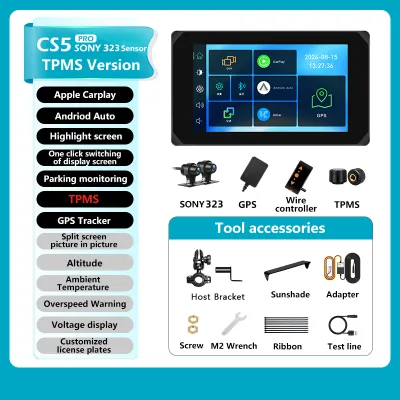
Prices are valid at publication and may change. Please refer to the product page for the latest price.
Additionally, you must check your vehicle’s existing configuration and dashboard integration limits. If your car already features a factory-installed TPMS, adding an aftermarket system will not integrate with your original dashboard screen. Instead, the aftermarket system will operate as a standalone unit with its own dedicated display console. Understanding these physical and functional boundaries beforehand prevents compatibility issues and ensures you select a system that fits seamlessly into your daily driving routine.
Evaluating VSYS TPMS: What to Verify on the Packaging
When considering a VSYS TPMS, you should carefully inspect the product packaging and the manufacturer’s official specifications rather than relying on unverified online descriptions. The first key element to verify is the display type and its power source. VSYS offers several display configurations, including solar-powered dashboard consoles, OBD-II plug-in modules, and systems that connect directly to smartphone applications via Bluetooth. If you opt for a solar-powered console, check the packaging to ensure it includes a secondary USB charging port. In tropical urban environments like Singapore, where vehicles are frequently parked in covered multi-storey car parks or basement garages, relying solely on solar energy may not keep the console sufficiently charged, making a physical backup power option necessary.

The second critical specification to verify is the sensor battery life rating and the replacement conditions detailed in the manual. External VSYS sensors typically use standard, user-replaceable button-cell batteries, such as the CR1632. The packaging should state the expected battery lifespan under normal driving conditions. Internal sensors, conversely, feature sealed batteries designed for longer operational life but cannot be replaced individually; once the battery dies, the entire internal sensor unit must be replaced. Confirming these details on the box helps you calculate the long-term maintenance costs and effort associated with the system.
Finally, look for information regarding customizable pressure and temperature alert thresholds. Tire pressure fluctuates with temperature changes, and driving on hot asphalt can cause pressure to rise. A reliable TPMS must allow you to program specific high-pressure, low-pressure, and high-temperature warning limits that match your vehicle manufacturer’s recommended tire specifications. Verifying that these thresholds are adjustable ensures you will not receive constant false alarms during hot afternoon drives or when tires naturally warm up on the highway.
Comparing VSYS to Other Aftermarket TPMS Options
When comparing VSYS to other aftermarket TPMS brands available in local automotive shops and online marketplaces, evaluating the price-to-feature ratio is a practical starting point. Entry-level aftermarket kits, which often range from S$30 to S$60, typically provide basic monochrome displays and standard external sensors. Mid-range systems, which can cost between S$80 and S$150, frequently introduce color screens, solar charging capabilities, and more robust sensor housing materials. Compare the retail price of the VSYS model you are considering against these market baselines to ensure you are paying a fair price for the included features.
Display visibility and mounting versatility are also major differentiators among competing brands. A dashboard-mounted console must remain clearly legible under intense sunlight without causing distracting glare or reflections on the windshield. Check whether the display utilizes high-contrast LCD or FSTN technology, which performs better in bright daylight. Furthermore, examine the mounting hardware included in the kit. Some brands provide flexible suction mounts for the windshield, while others rely on adhesive dashboard pads. Choose a mounting style that fits your vehicle’s dashboard layout without obstructing your view of the road.
Wireless signal reliability and the sensor pairing process are equally important. Aftermarket systems transmit data from the wheels to the receiver using radio frequencies, typically around 433.92 MHz. In larger vehicles, SUVs, or cars with heavily insulated cabins, signal interference can occasionally cause dropouts. Verify if the brand’s packaging or manual outlines a simple sensor pairing process. Some systems come pre-paired from the factory, while others require manual calibration, which may involve inflating or deflating the tires to trigger the sensor signal during setup.
Lastly, consider the warranty terms and the local availability of replacement parts. In Singapore, purchasing a TPMS with local distributor support is highly advantageous. If an external sensor is damaged by road debris, lost during a tire change, or stolen, you need to know if you can purchase a single replacement sensor and pair it with your existing console. Some budget brands do not sell individual replacement sensors, forcing you to buy an entirely new kit, whereas established brands with local representation usually offer individual spare parts and structured warranty coverage.
Vehicle Compatibility and Installation Safety
Ensuring vehicle compatibility and adhering to safety boundaries is paramount when installing any aftermarket TPMS. First, you must match the sensor valve stems to your specific wheel type. External sensors add physical weight (typically 9 to 12 grams per sensor) to the end of the valve stem. If your vehicle is equipped with older, flexible rubber valve stems, the centrifugal force generated at highway speeds can cause the stem to bend, potentially leading to rubber degradation, cracking, and sudden air loss. For external sensors, it is highly recommended to have a professional install rigid brass or aluminum valve stems. For internal sensors, verify that the sensor body shape is compatible with the drop-center profile of your alloy wheels, steel wheels, or custom rims to ensure a secure, airtight fit.
You must also consider the potential risks to existing vehicle systems and warranties. While aftermarket TPMS kits are generally safe, improper installation can interfere with original equipment manufacturer (OEM) electronic modules or affect tire warranties. If your vehicle is under a factory warranty, check if modifying the valve stems or adding aftermarket electronics impacts your coverage. Additionally, ensure that the placement of the display console does not block your view, interfere with airbag deployment zones, or violate local vehicle inspection standards.
The installation process itself dictates whether you can complete the task at home or require professional assistance. External cap sensors are designed for DIY installation and can be secured in minutes using the provided locknuts and wrench. However, internal sensors require specialized tire-changing equipment to break the tire bead, remove the old valve stem, install the sensor, and seat the tire correctly. This process must be performed at a professional tire shop, as improper handling can damage the tire bead or crush the sensitive internal sensor. Furthermore, any wheel fitted with an internal sensor must undergo precise wheel balancing to prevent vibrations at high speeds.
Decision Framework: Which TPMS Brand Fits Your Needs?
To finalize your decision, establish a clear framework based on your vehicle’s configuration, your budget, and your willingness to perform maintenance. You should choose VSYS if you find a model whose verified packaging specifications—such as display type, customizable alert thresholds, and battery replacement procedures—align perfectly with your daily driving habits. If you prefer a cost-effective, standalone system that does not require integration with your car’s existing infotainment screen and you are comfortable verifying the specifications on the box, VSYS offers a practical solution for everyday monitoring.
Conversely, you should look at alternative TPMS brands if your driving setup requires specialized features. For instance, if you want a system that integrates directly with an aftermarket Android head unit via a dedicated USB receiver and app, or if you require heavy-duty sensors designed for high-pressure commercial vehicle tires, other specialized brands may be more suitable. Additionally, if immediate, over-the-counter warranty exchanges and a wide network of authorized local workshops in Singapore are your top priorities, choosing a brand with a well-established local distributor network is advisable.
Before making your final purchase, always perform three essential checks: inspect your current valve stems to ensure they can support the weight of external sensors, verify if your vehicle has any proprietary electronic systems that might suffer from signal interference, and consult your preferred tire workshop to confirm their installation and balancing fees for internal sensors. Taking these preparatory steps ensures that whichever brand you choose will operate safely and reliably on the road.
Frequently Asked Questions (FAQ)
Can I use an aftermarket TPMS if my car already has a factory system? (FAQ)
Yes, you can install and use an aftermarket TPMS even if your vehicle is already equipped with a factory system, but they will operate completely independently. The aftermarket system will not display its readings on your car’s original dashboard screen, nor will it clear or interact with any factory TPMS warning lights. If your vehicle utilizes an indirect, ABS-based factory system that only alerts you after a significant drop in pressure without showing individual tire values, adding a direct aftermarket TPMS is a highly practical upgrade. It allows you to monitor real-time PSI and temperature readings on a separate console without interfering with your vehicle’s original safety systems.
How do I know when an external TPMS sensor battery needs replacing? (FAQ)
You can identify a low sensor battery through several clear, observable signs on your TPMS display console. Most modern aftermarket systems will display a low-battery icon or a specific warning code next to the corresponding tire indicator when the sensor’s battery voltage drops below a safe threshold. Additionally, you may notice intermittent signal loss, where the display shows blank readings or dashes for a particular tire, or a significant delay in pressure updates when you start driving. To replace the battery on an external sensor, use the manufacturer-provided wrench to unscrew the sensor from the valve stem, remove the outer shell using the disassembly tool, replace the old button-cell battery (typically a CR1632) with a fresh one, and reassemble the housing tightly to ensure the waterproof rubber O-ring seal remains intact.
Community discussion
Share your experience or ask a question. Comments are reviewed before publication.