
USB-C wired car chargers generally deliver faster charging speeds and more efficient heat management compared to wireless alternatives. This performance gap stems from the high energy transfer efficiency of a direct physical connection, whereas wireless charging relies on electromagnetic induction, which inherently loses energy as heat. In warm climates like Singapore’s, this extra heat can easily trigger thermal throttling on your smartphone, slowing down or pausing the charge. Ultimately, the most effective choice depends on your specific device specifications, phone case compatibility, and your vehicle’s power output capabilities.
Charging Speed and Power Transfer Efficiency
To understand why wired and wireless car chargers perform so differently, it helps to look at how they transfer energy. A USB-C connection establishes a direct physical pathway for electrical current. This direct connection operates with minimal resistance, allowing almost all the drawn power to reach your phone’s battery. Because the energy transfer is highly efficient, wired chargers can easily sustain high wattages, delivering rapid top-ups even during short commutes.
In contrast, wireless car chargers rely on electromagnetic induction. This process uses a transmitter coil inside the mount to create an alternating electromagnetic field, which a receiver coil inside your phone converts back into electrical energy. This conversion is inherently less efficient than a direct wire. A notable percentage of the electrical energy is lost as ambient heat during the transfer across the air gap, meaning wireless chargers require more input power to deliver the same net charge to your device.
Products mentioned in this guide
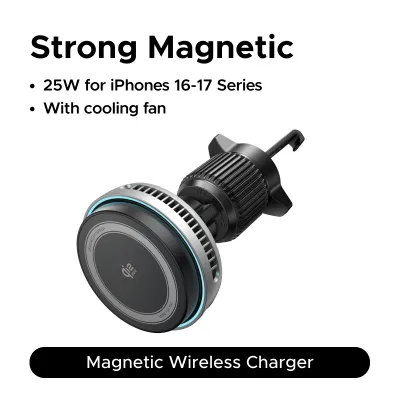
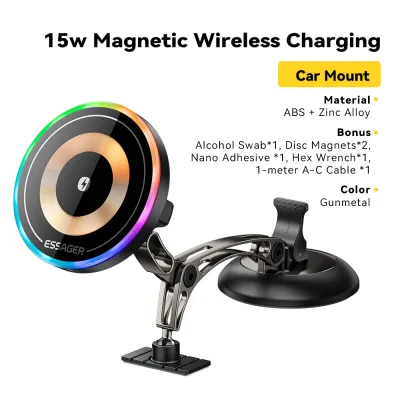
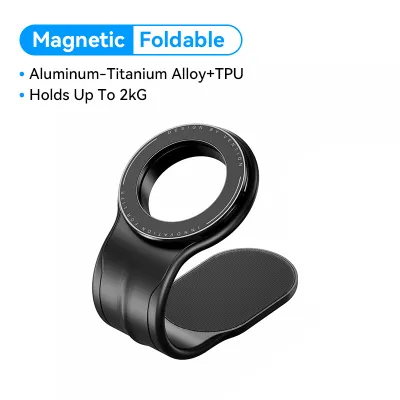
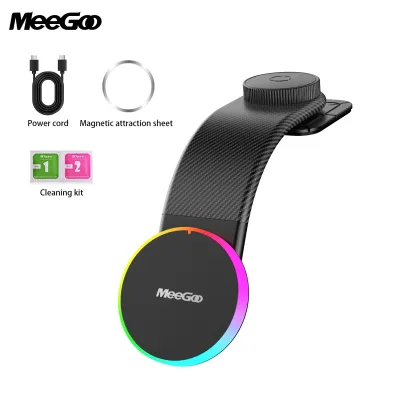
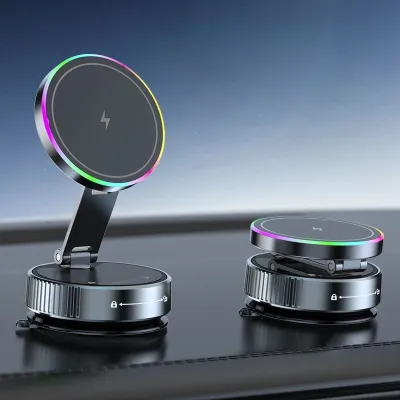
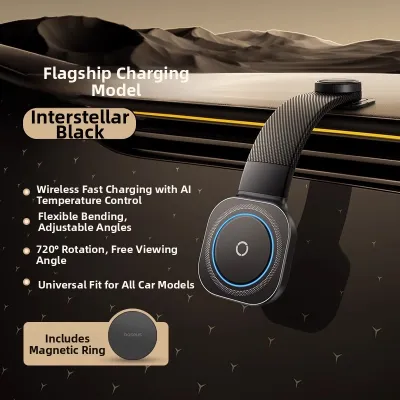
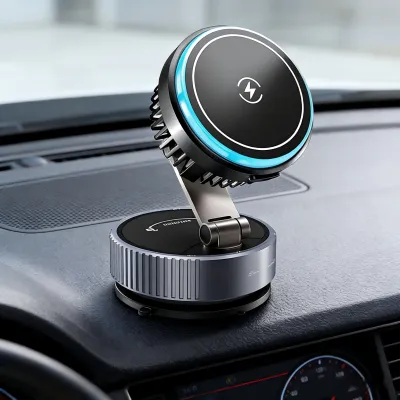
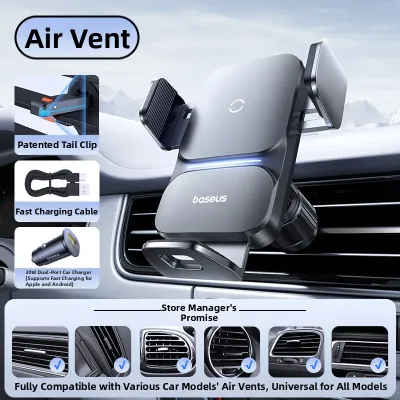
Prices are valid at publication and may change. Please refer to the product page for the latest price.
When shopping for a car phone holder charger, it is crucial to check the product labels and your phone’s technical specifications rather than relying on broad marketing claims. A mount advertised as a 15W wireless charger may not actually charge your specific phone at that speed. Many smartphones limit third-party wireless charging inputs to 7.5W or 10W unless the charger is certified under specific proprietary protocols. Always verify the maximum supported input wattage of your handset to avoid mismatched expectations.
Furthermore, your vehicle’s power source plays a decisive role in determining actual charging speeds. Many built-in USB-A ports in older vehicles are designed primarily for data transfer and only output a meager 2.5W to 5W of power. If you plug a high-power wireless or USB-C mount into one of these legacy ports, the charger will be severely bottlenecked, often failing to keep up with the power drain of active GPS navigation. To get the rated speed from your charger, you will generally need to use a high-output 12V cigarette lighter adapter.
Heat Generation and Thermal Throttling in the Car
Heat is the natural enemy of lithium-ion batteries, and the charging method you choose directly impacts how hot your phone gets. Because electromagnetic induction is less efficient than wired charging, the energy lost during wireless transmission is dissipated as heat right at the contact point between the mount and the back of your phone. This localized heat buildup is trapped between the phone’s glass back and the mount’s charging pad, raising the device’s internal temperature rapidly.

This issue is compounded by the environmental conditions inside a vehicle. In Singapore, cars parked in the open or driven during the heat of the day experience intense cabin warming. If your phone holder is mounted on the windscreen or dashboard, it is also subjected to direct sunlight. When you combine solar radiation, high cabin temperatures, and the heat generated by wireless charging, your smartphone’s internal temperature can quickly exceed its safe operating threshold.
To prevent permanent battery degradation or hardware damage, modern smartphones are programmed with strict thermal protection protocols. When the device detects excessive heat, it triggers thermal throttling. This safety mechanism automatically reduces the charging speed to lower the temperature, and in extreme cases, it may pause charging entirely until the phone cools down. If you are relying on your phone for navigation on a hot afternoon, thermal throttling can leave you with a stagnant or dropping battery percentage despite being mounted on a charger.
To combat this, manufacturers design mounts with different cooling mechanisms. Passive cooling designs rely on ventilation slots, open-backed frames, or aluminum heatsinks to help dissipate heat naturally. Active cooling features, such as small built-in electric fans found in some wireless mounts, actively blow cool air across the back of the phone. While active cooling is significantly more effective at preventing thermal throttling, it adds mechanical complexity, increases the physical bulk of the mount, and requires a stable power supply to run the fan.
Daily Usability, Mount Stability, and Cable Management
Beyond technical performance, the day-to-day usability of your car mount heavily influences your driving experience. Wireless car phone holder chargers offer a convenient drop-and-charge routine. Many modern wireless mounts feature motorized clamps that automatically close when they detect your phone, or magnetic arrays that snap the device instantly into alignment. This allows for effortless, one-handed operation when getting in and out of the vehicle, which is highly practical for drivers making frequent stops.
Wired USB-C setups require a more deliberate physical action. Every time you enter the car, you must manually plug the cable into your phone’s charging port, and unplug it when you arrive. Over time, this repetitive plugging and unplugging can place physical strain on your phone’s USB-C port and the cable connector itself. Additionally, loose cables can create visual clutter on your dashboard, potentially interfering with gear shifters, console controls, or air vents if not properly routed.
Mount stability is another critical factor that depends on your phone’s physical characteristics. Heavy smartphones require robust mounting systems to prevent sagging or vibrating while driving over uneven road surfaces. If you use a magnetic wireless mount, the holding strength depends entirely on the alignment and strength of the magnets. Thick phone cases can weaken this magnetic connection or prevent mechanical clamps from securing a firm grip. When choosing a mount, always verify that its dimensions, weight limits, and mounting mechanism—whether it uses a vent clip, dashboard adhesive, or suction cup—are fully compatible with your vehicle’s interior layout and your phone’s physical profile.
How to Choose the Right Car Phone Holder Charger
Selecting the most appropriate car phone holder charger requires balancing your daily driving habits against your device’s power requirements. There is no universal winner, as the most appropriate choice depends on how you use your vehicle and where you drive.
You should choose a USB-C wired charger if your priority is raw speed and reliability. This setup is highly practical if you regularly take long road trips, rely heavily on power-hungry navigation and media streaming apps simultaneously, or frequently drive in hot climates where thermal throttling is a constant threat. A wired connection ensures your phone receives a steady, high-speed charge without generating excessive heat, keeping your battery topped up even under heavy processing loads.
Conversely, you should choose a wireless car charger if convenience and a clean cabin aesthetic are your primary goals. This option is well-suited for drivers who make frequent short trips around town, where the ease of grabbing the phone without fumbling with cables outweighs the need for rapid charging. It is also a great fit for those who prefer to keep their dashboard free of dangling wires and appreciate the modern look of a motorized or magnetic mount.
Before making a final purchase, perform a few essential compatibility checks. First, verify that your phone case is compatible with wireless charging; it should be thin enough and free of metal components that block induction. Second, consult your vehicle’s documentation to identify the power output of your built-in USB ports. If they are low-output legacy ports, plan to purchase a compatible 12V cigarette lighter adapter that supports Power Delivery (PD) to ensure your chosen mount receives the wattage it needs to operate safely and efficiently.
Frequently Asked Questions (FAQ)
Does a thick or rugged phone case affect wireless car charging speed?
Yes, case thickness directly impacts wireless charging performance. Electromagnetic induction requires the transmitter and receiver coils to be as close as possible. A thick or rugged phone case increases this physical distance, which reduces energy transfer efficiency and causes the charger to generate more heat. To ensure optimal charging speeds, check the mount manufacturer’s specifications for the maximum supported case thickness, which is typically between 3mm and 5mm. Additionally, avoid using cases with integrated metal plates, kickstands, or magnetic rings that are not explicitly certified for wireless charging, as these materials can block the electromagnetic field or cause dangerous overheating.
Can I use a USB-C car charger for fast charging if my car only has older USB-A ports?
Plugging a high-power USB-C mount or cable into an older, built-in USB-A port will generally result in very slow charging speeds. These legacy ports typically output only 5W of power, which is often insufficient to charge a modern smartphone while it is actively running GPS navigation and screen-on tasks. To achieve true fast charging, you should avoid using the car’s built-in USB-A ports. Instead, purchase a dedicated 12V cigarette lighter adapter that features a USB-C Power Delivery (PD) port. This adapter connects directly to your vehicle’s 12V socket and can supply the high wattage required to fast-charge your device safely.
Community discussion
Share your experience or ask a question. Comments are reviewed before publication.