
Finding the right car charger is no longer just about choosing a cable; it is about selecting a system that balances power delivery, mounting stability, and physical convenience. A self-eject car charger—which uses motorized arms or sensors to automatically grip and release your phone—offers a hands-free solution to secure your device while driving. However, there is no single “best” self-eject charger that fits every driver. The ideal choice for your vehicle depends heavily on your car’s electrical output, your phone’s specific fast-charging capabilities, and the physical constraints of your dashboard or air vents.
Choosing between USB-A, USB-C, and wireless self-eject chargers involves navigating distinct trade-offs. USB-A models are highly compatible with older vehicles but offer limited power delivery, which can slow down both charging speeds and the responsiveness of the motorized clamps. USB-C options provide the high wattage required for modern fast-charging protocols, but they demand a robust power source from your vehicle’s 12V socket. Wireless self-eject chargers offer the ultimate cable-free convenience, yet they are highly sensitive to phone alignment, case thickness, and heat buildup. Understanding these differences is essential to selecting a charger that operates reliably without risking damage to your phone or your car’s electrical system.
How Self-Eject Mechanisms Work Across Charger Types
The defining feature of a self-eject charger is its ability to secure and release your phone automatically, a process governed by physical or electronic sensors. Electronic sensors, such as infrared (IR) or electromagnetic proximity sensors, detect your phone as it approaches the cradle. Once the sensor is triggered, an internal electric motor drives a gear system that closes the clamping arms around the device. To release the phone, these chargers typically feature touch-sensitive panels or physical buttons on the side or back of the mount, which cut power to the motor or reverse its direction to open the arms.
Products mentioned in this guide
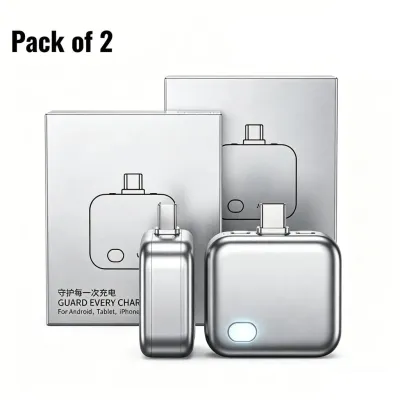
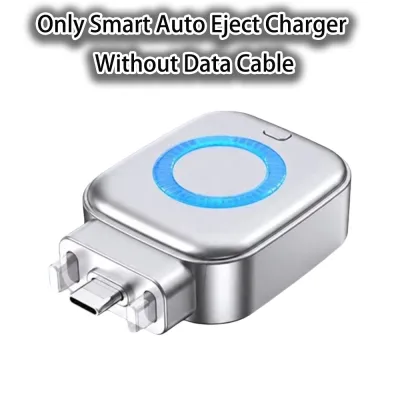
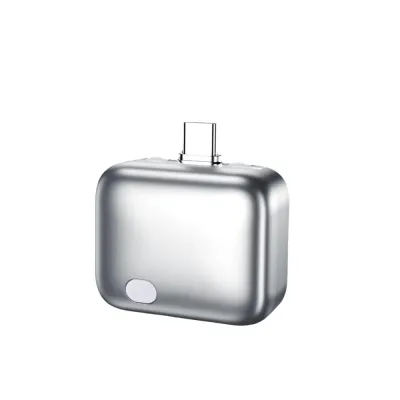
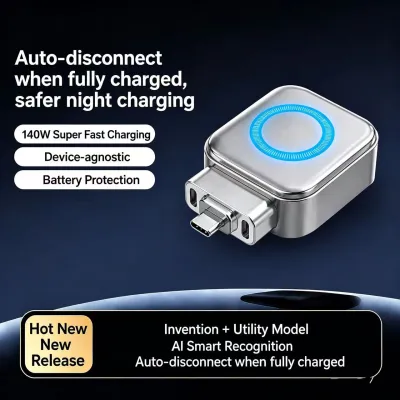
Prices are valid at publication and may change. Please refer to the product page for the latest price.
In contrast, mechanical self-eject systems rely on physical triggers rather than electronic sensors. Gravity-based mounts use the weight of the phone to pull the side arms inward, securing the device mechanically without requiring electrical power for the clamping action. True motorized self-eject chargers, however, require a constant electrical current to operate their internal motors. The speed and grip strength of these motorized clamps are directly influenced by the power standard of the charger. USB-C chargers, which utilize the Power Delivery (PD) standard, can supply a stable voltage to the internal motor, ensuring rapid and firm clamping. USB-A chargers, limited by older power standards, may exhibit slower motor response times, especially when the vehicle’s electrical system experiences voltage fluctuations.
Wireless self-eject chargers introduce an additional layer of mechanical complexity. These devices must align the phone’s internal receiving coil precisely with the charger’s transmitting coil to initiate power transfer. Many advanced wireless self-eject mounts feature motorized alignment systems that automatically adjust the bottom foot of the cradle based on the detected phone model. Once alignment is achieved, the side arms lock into place. This dual-action mechanism—aligning and clamping—requires sophisticated internal circuitry and a reliable power source to prevent the mechanism from stalling or failing to secure the phone properly.
Essential Compatibility Checks for Your Car and Phone
Before purchasing a motorized self-eject charger, you must verify that your vehicle’s electrical system can support the device’s power demands. Most self-eject chargers plug into the vehicle’s 12V auxiliary power outlet (commonly known as the cigarette lighter socket). You should consult your vehicle’s owner’s manual to determine the maximum amperage rating of this socket, which is typically fused at 10A or 15A. Connecting a high-wattage USB-C or wireless fast-charger to an older or degraded 12V socket can overload the circuit, leading to blown fuses or intermittent power delivery that causes the motorized arms to open and close unexpectedly while driving.

Your phone’s physical dimensions and weight also play a critical role in the reliability of a self-eject mechanism. Motorized arms have strict maximum width and thickness limits, which are specified in the manufacturer’s documentation. If you use a rugged, heavy-duty phone case or a case with an integrated kickstand, the overall thickness may exceed the grip capacity of the motorized arms. This can prevent the sensors from registering that the phone is fully seated, causing the arms to repeatedly cycle open and closed, or worse, fail to hold the phone securely over bumps and sharp turns.
Furthermore, wireless self-eject models require strict adherence to wireless charging standards. Most modern smartphones use the Qi wireless charging standard, but you must verify that both your phone and the charger support the same profile (such as Qi2 or standard Qi). Additionally, the thickness and material of your phone case can severely degrade wireless charging efficiency. Cases thicker than 3mm to 5mm, or those containing metal plates, carbon fiber, or magnetic rings not designed for wireless charging, can block the electromagnetic field. This blockage not only stops the charging process but can also cause the charger to overheat, triggering a safety shutdown that disables the motorized eject mechanism.
USB-A vs. USB-C vs. Wireless: A Conditional Comparison
To choose the right self-eject charger, you must weigh the specific advantages and limitations of each charging standard against your daily driving habits and device requirements.
USB-A self-eject chargers are generally the most budget-friendly options, with many models retailing for under S$30. They are highly compatible with older vehicles that only feature standard USB-A ports or older 12V adapters. However, the USB-A standard is limited to lower power outputs, typically capping out at 12W to 18W. This lower wattage means that charging modern, power-hungry smartphones will be relatively slow, especially if you are running navigation apps and streaming music simultaneously. Additionally, the lower power supply can result in slower motor operation for the self-eject clamps, making the mounting and releasing process feel sluggish.
USB-C self-eject chargers represent the modern standard for wired in-car charging. Utilizing the Power Delivery (PD) protocol, USB-C chargers can deliver 30W, 45W, or even higher wattages directly to your device. This allows for rapid charging, capable of bringing a modern smartphone battery from empty to 50% in approximately 30 minutes. The robust power delivery also ensures that the self-eject motor operates at peak performance, providing instant clamping and releasing actions. The primary trade-off is that you must use high-quality, certified USB-C to USB-C cables and ensure your vehicle’s 12V adapter is rated for high-wattage output to prevent electrical bottlenecks.
Wireless self-eject chargers offer the highest level of convenience, eliminating the need to manually plug in a cable every time you enter your vehicle. You simply place your phone in the cradle, and the motorized arms automatically secure and begin charging the device. However, this convenience comes with significant trade-offs. Wireless charging is inherently less efficient than wired charging, with a substantial portion of the electrical energy lost as heat. This heat generation can be problematic in warm climates or when the charger is mounted in direct sunlight on the dashboard. Furthermore, wireless models are highly sensitive to phone placement; even a minor misalignment can reduce charging speeds to a crawl or stop the charging process entirely, which may cause the motorized clamps to release if they lose power.
Mounting, Safety, and Daily Usability Boundaries
The physical installation of your self-eject charger is just as important as its electrical compatibility. Most chargers offer three primary mounting options: air vent clips, dashboard mounts, or windshield suction cups. Air vent mounts keep your phone within easy reach and benefit from the car’s air conditioning system, which helps cool the phone and the charger during operation. However, heavy motorized chargers combined with large smartphones can strain or damage fragile vent slats. Dashboard and windshield mounts offer better visibility but expose the charger and your phone to direct sunlight, which can rapidly elevate temperatures and trigger thermal safety shutdowns.
Heat management is a critical safety consideration for all motorized chargers, particularly wireless models. When a charger detects excessive heat, its internal safety circuitry will throttle the charging speed or shut down completely to protect your phone’s battery. If the charger shuts down, the motorized self-eject mechanism may lose power. High-quality chargers often include a built-in capacitor or a small backup battery that stores enough electrical charge to operate the release mechanism a few times even after the vehicle’s engine is turned off or the main power is cut. Cheap models without this feature may trap your phone in the clamps if the power source is suddenly disconnected.
Operating a motorized charger also requires understanding manual override procedures. If the electronic sensor fails, or if the vehicle’s electrical system loses power while you are driving, you must know how to safely retrieve your phone. You should never attempt to force the motorized arms open manually, as this can strip the plastic gears inside the mechanism and permanently ruin the charger. Instead, look for models that feature a physical release button that operates mechanically, or ensure the device has a reliable capacitor backup that allows the touch sensors to function for several minutes after the car is turned off.
Final Decision Framework: Which Setup Fits Your Drive?
To make your final decision, evaluate your vehicle’s capabilities and your personal charging priorities against the following practical guidelines:
Choose a USB-A self-eject charger if you drive an older vehicle with standard electrical outputs, prioritize a budget-friendly purchase, and do not require rapid charging during short commutes. This setup is highly reliable for basic power needs and offers a straightforward, mechanical-first approach to securing your device.
Opt for a USB-C self-eject charger if you use a modern smartphone that supports fast charging, frequently run power-intensive navigation apps, and demand the fastest possible charging speeds. Ensure that you pair the charger with a high-quality, certified USB-C cable and a 12V adapter capable of delivering the required wattage.
Select a Wireless self-eject charger if you prioritize the convenience of a cable-free dashboard and make frequent short trips where plugging and unplugging a cable is inconvenient. If you choose this route, verify that your phone case is thin enough to allow efficient wireless power transfer and that the charger features a built-in capacitor for power-off release.
Before finalizing your purchase, always check your vehicle’s 12V socket fuse rating to ensure it can handle the charger’s maximum draw. Additionally, measure your phone—including its protective case—against the charger’s maximum physical clamping width to guarantee a secure and reliable fit on every drive.
Frequently Asked Questions (FAQ)
Will a self-eject charger drain my car battery when the engine is off?
Most self-eject chargers draw a negligible amount of standby power to keep their sensors active, but whether this drains your car battery depends entirely on your vehicle’s 12V socket behavior. In many cars, the 12V auxiliary socket cuts power completely when the ignition is turned off, meaning the charger cannot draw any power. However, some vehicles keep the 12V socket live at all times. If your car has an always-on socket, leaving a motorized charger plugged in for several days without running the engine can gradually drain the battery. You should check your vehicle’s manual and unplug the charger if you plan to leave the car parked for an extended period.
Can I use a thick protective case with a motorized wireless charger?
Thick protective cases, especially those exceeding 3mm to 5mm in thickness, generally interfere with motorized wireless chargers. The increased distance between the charger’s transmitting coil and your phone’s receiving coil reduces charging efficiency and can cause excessive heat buildup. Furthermore, cases made of metal, or those featuring metal kickstands, ring holders, or magnetic plates, will block the wireless signal entirely and can trigger foreign object detection (FOD) safety protocols, which disable the charger. For reliable operation, use a thin, non-metallic case or a case specifically certified for wireless charging compatibility.
What happens if the self-eject motor fails while my phone is mounted?
If the self-eject motor fails or loses power while your phone is clamped in the mount, you should first check if the charger has a built-in capacitor or backup battery. Many quality models store enough temporary power to allow you to press the release button and retrieve your phone even after the car is turned off. If there is no backup power and the electronic release does not work, do not attempt to force the clamping arms open by hand, as this will destroy the internal gear mechanism. Instead, try plugging the charger into a different power source, such as a portable power bank, to see if the motor responds, or consult the manufacturer’s troubleshooting guide for manual override instructions.

Community discussion
Share your experience or ask a question. Comments are reviewed before publication.