
Selecting the right retractable car charger is essential for maintaining a clean, organized vehicle cabin while keeping your mobile devices powered on the road. The choice between USB-A, USB-C, and wireless retractable car chargers depends on your device ecosystem, charging speed requirements, and vehicle cabin layout. USB-C is the modern standard for fast charging power-hungry devices, USB-A remains highly compatible with legacy accessories, and wireless chargers offer a cable-free aesthetic for Qi-enabled smartphones. To make the right choice, you must evaluate your device’s maximum input specifications, your vehicle’s 12V accessory socket clearance, and how you prefer to manage clutter on your center console.
Modern drivers rely heavily on navigation apps, music streaming, and hands-free calling, which rapidly drain phone batteries. Traditional loose cables often tangle around the gear shifter or handbrake, creating a safety hazard. Retractable chargers solve this by housing the cable inside a spring-loaded spool or mount, pulling out only the length you need and winding back up with a gentle tug. This keeps your dashboard tidy and ensures that charging cables are always within reach when needed.
Understanding the Three Retractable Car Charger Types
To choose the best retractable car charger for your vehicle, it is important to understand how these three options differ in physical design and functionality. Each type serves a distinct purpose and caters to different generations of mobile technology.
Products mentioned in this guide
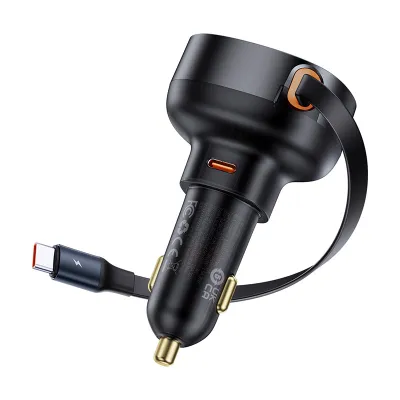
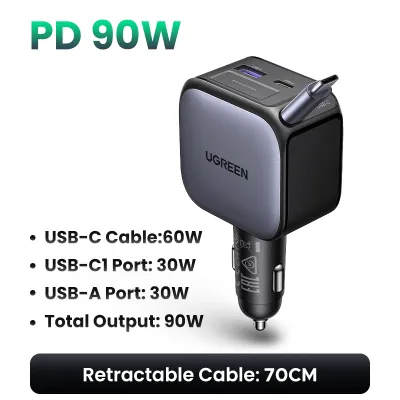
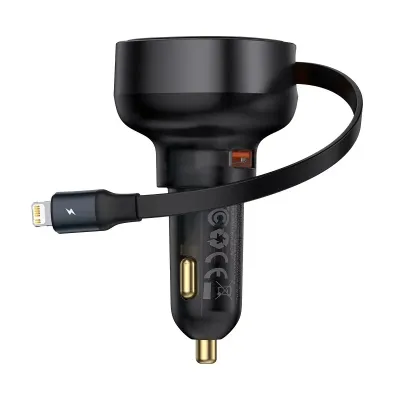
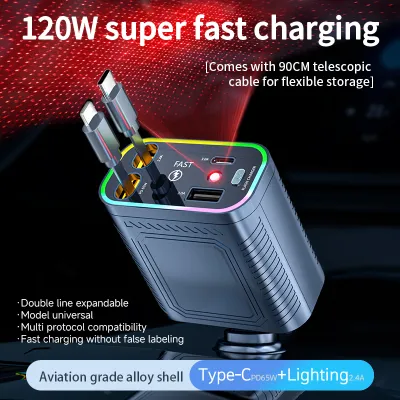
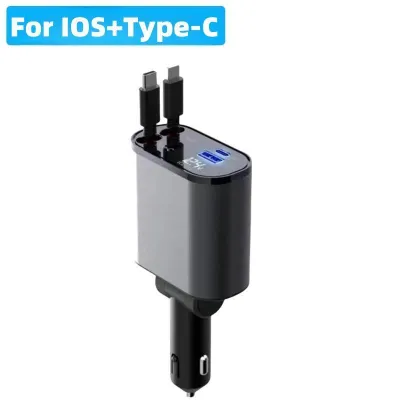
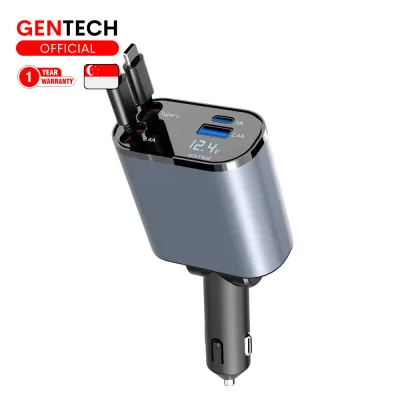
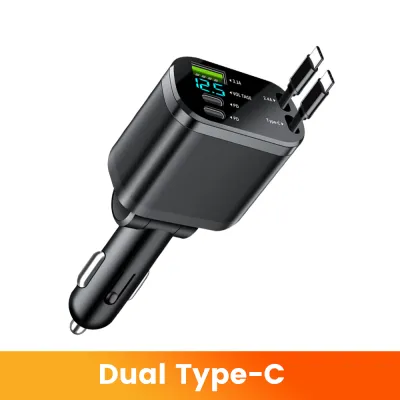
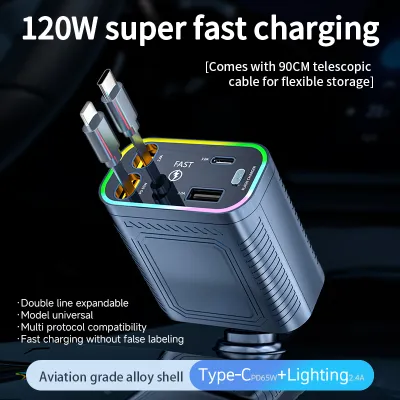
Prices are valid at publication and may change. Please refer to the product page for the latest price.
USB-A retractable chargers utilize the classic, rectangular USB port design that has been standard for decades. These chargers typically feature a built-in cable that pulls out from a central hub plugged directly into your vehicle’s 12V accessory socket. They are highly reliable for older devices and basic car accessories, though they generally offer lower power outputs compared to newer standards.
USB-C retractable chargers feature the modern, smaller, oval-shaped connector that is reversible, meaning there is no “upside down” when plugging it in. These chargers are designed to support advanced power delivery standards, allowing them to charge modern smartphones, tablets, and even some compact laptops at much higher speeds. The retractable mechanism is usually integrated into the plug housing itself, keeping the entire assembly compact.
Wireless retractable chargers combine electromagnetic induction charging with physical cable management. These devices typically function as a phone mount that clips onto your air vent or attaches to the dashboard. The wireless charging pad powers your Qi-compatible phone on contact, while a retractable cable is often built into the mount’s base to power the mount itself or to provide a secondary wired charging option for passengers.
Before making a purchase, buyers must verify the exact connector types, built-in cable configurations, and mounting styles on the product packaging. Some models plug directly into the 12V socket and extend a cable upward, while others mount on the dashboard and run a power cable down to the socket. Ensuring the physical layout matches your car’s interior is crucial for a seamless installation.
Key Comparison Dimensions for Your Daily Drive
Selecting the ideal charger requires looking beyond basic compatibility to evaluate how the device performs during your daily commute or long road trips. Three core dimensions dictate this experience: power delivery potential, physical space management, and device matching. To set realistic expectations, you should always cross-reference your device’s maximum input rating with the charger’s output label.

Charging Speed and Power Delivery
To evaluate charging capabilities accurately, you must check the manufacturer’s specified wattage (W) and voltage/amperage ratings on the product label or manual. These numbers indicate the maximum power the charger can deliver under ideal conditions.
Standard charging typically operates at lower wattages, whereas fast-charging protocols like Power Delivery (PD) or Quick Charge (QC) dynamically adjust voltage and current to fill your battery rapidly. USB-C chargers are generally the only type that fully support high-wattage PD standards, making them the preferred choice for quick top-ups during short drives.
It is important to remember that the actual charging speed is always limited by the lowest specification among the car charger, the internal retractable cable, and the receiving device. If you use a high-wattage charger with a low-capacity retractable cable, or plug it into a phone that does not support fast charging, the system will default to the slowest speed for safety.
Cable Management and Cabin Space
The mechanical design of a retractable charger directly impacts your vehicle’s interior organization and your ability to focus on the road. Traditional loose cables can easily slide under pedals or wrap around controls, posing a safety risk.
Retractable mechanisms differ significantly between models. Spring-loaded cables allow you to pull the cord to your desired length, locking it in place until you give it a quick tug to retract it back into the housing. In contrast, wireless mounts eliminate the phone-side cable entirely, though the mount itself must still be powered by a cable running to the 12V socket.
Before purchasing, advise checking the maximum extended cable length in the product specifications. If you frequently have passengers in the back seat who need to charge their devices, you will need a cable that can comfortably reach the rear seats without being stretched to its absolute limit, which can damage the internal spring mechanism.
Device Compatibility and Convenience
Matching your charger to your specific ecosystem of daily carry devices ensures you do not end up with an unusable accessory. Different devices require different physical connectors and power profiles to function correctly.
USB-A retractable chargers are highly compatible with older smartphones, dashcams, portable GPS units, tire inflators, and basic cabin accessories. These devices do not require high wattage and run perfectly on standard 5V power.
USB-C retractable chargers are essential for modern smartphones, tablets, and laptops that require higher power inputs. If your daily carry includes a modern phone, a USB-C connection ensures you can utilize the device’s fast-charging capabilities.
Wireless charging is highly convenient for Qi-compatible devices, allowing you to mount and charge your phone with one hand. However, wireless charging requires precise physical alignment between the phone’s internal coil and the charging pad. Thick phone cases, magnetic mounts, or metal plates attached to the back of your phone can block the electromagnetic signal or cause excessive heat buildup.
Decision Framework: Which Type Fits Your Needs?
To help you decide which retractable car charger to choose, consider how your daily driving habits and device preferences align with the following profiles.
Choose a USB-A retractable car charger if you primarily charge older devices, basic car accessories, or dashcams that rely on standard power inputs. This option is highly reliable, cost-effective, and perfectly suited for drivers who do not own modern fast-charging smartphones.
Choose a USB-C retractable car charger if you use modern smartphones or tablets and need the fastest possible charging speeds supported by your device’s power delivery protocol. This is the most future-proof option and is ideal for busy professionals who need to maximize battery life during short commutes.
Choose a wireless retractable car charger if your phone supports Qi charging, you prioritize a completely cable-free look for your primary device, and you accept potentially slower charging speeds compared to wired connections. This setup is excellent for drivers who frequently get in and out of the vehicle and want the convenience of magnetic or gravity-based mounting.
Before finalizing your choice, verify if your vehicle’s 12V socket location has physical clearance restrictions. Some retractable chargers have bulky housings that may interfere with nearby cup holders, gear shifters, or dashboard panels. Additionally, consider whether you need to charge multiple devices simultaneously; if so, look for a multi-port model that offers both retractable cables and auxiliary USB ports.
Installation, Safety, and Vehicle Compatibility
Installing a retractable car charger is generally straightforward, but maintaining safety requires understanding your vehicle’s electrical limits. Always consult your vehicle owner’s manual for any specific restrictions on accessory power draw or aftermarket electronic installations.
Before plugging in a new charger, check your vehicle’s 12V accessory socket fuse rating and continuous power behavior. In some vehicles, the 12V socket remains powered even when the engine is turned off and the key is removed. If you leave a charger plugged into an active socket overnight, it can slowly drain your vehicle’s battery, potentially leaving you stranded.
Singapore’s tropical climate means car cabins can reach exceptionally high temperatures when parked in open-air car parks. Avoid exposing the retractable charger to extreme heat and direct sunlight for extended periods, as high temperatures can degrade the internal steel springs and damage sensitive electronic components. If possible, store the charger in the glove box or center console when parked in direct sunlight.
For your safety, stop using the charger immediately if the cable fails to retract properly, shows physical fraying, or if the unit becomes unusually hot during operation. Damaged internal wiring can cause short circuits, which may blow your vehicle’s accessory fuse or damage your connected devices.
Frequently Asked Questions (FAQ)
Can I use a USB-C retractable charger for my older USB-A devices?
A built-in USB-C cable will not physically fit a USB-A device port without a separate adapter. If you have a mix of old and new devices, look for dual-cable retractable chargers that offer both built-in USB-C and USB-A connectors, or verify if the manufacturer supports safe, certified third-party adapters to bridge the connection.
Does the retractable mechanism affect charging speed?
A properly functioning retractable cable from a reputable manufacturer should not significantly reduce charging speed under normal conditions. However, you should check the product specifications for supported wattage to ensure the internal wiring and slip rings meet the requirements of modern fast-charging protocols like Power Delivery.
Why is my wireless retractable charger not charging my phone?
Common causes of wireless charging failure include thick phone cases, metal attachments like pop sockets, misalignment on the charging pad, or insufficient power input from the 12V socket. To resolve this, try removing your phone case, repositioning the phone to the center of the pad, and checking the charger’s indicator lights according to the user manual.

Community discussion
Share your experience or ask a question. Comments are reviewed before publication.