
Selecting the right retractable car charger requires balancing your daily driving habits, the specific power needs of your devices, and your tolerance for dashboard clutter. While a retractable mechanism solves the immediate problem of tangled cords, the connector type you choose—USB-A, USB-C, or wireless—determines how quickly and safely your devices power up during a commute. By understanding the technical limits and physical characteristics of each option, you can select a charger that integrates seamlessly into your vehicle.
Matching the Connector to Your Devices and Driving Habits
To establish a practical decision framework, start by auditing the devices you carry daily. If your primary goal is to keep legacy smartphones, basic dashcams, or older GPS units powered, a USB-A retractable charger is often the most straightforward choice. These units rely on the classic rectangular connector, which remains highly compatible with older accessories but generally caps power delivery at lower levels. It is a reliable option for drivers who only need basic battery maintenance rather than rapid top-ups.
For modern smartphones, tablets, or compact laptops, a USB-C retractable charger is the modern standard. USB-C connectors support advanced Power Delivery (PD) protocols, allowing them to negotiate higher voltages and currents dynamically. This means you can rapidly charge a compatible device during a short thirty-minute drive, making it highly efficient for busy schedules and short urban commutes.
Products mentioned in this guide
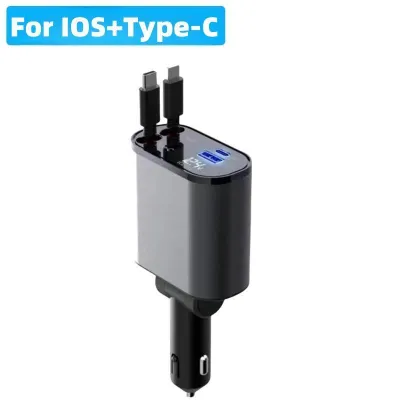
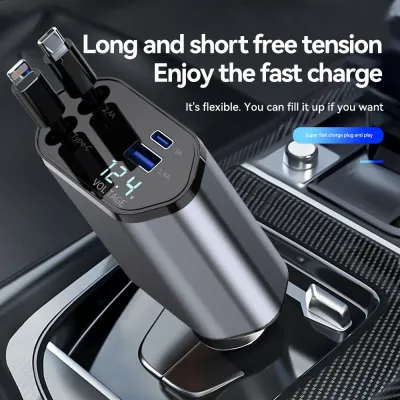
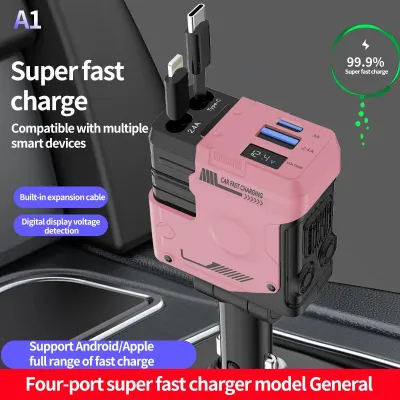
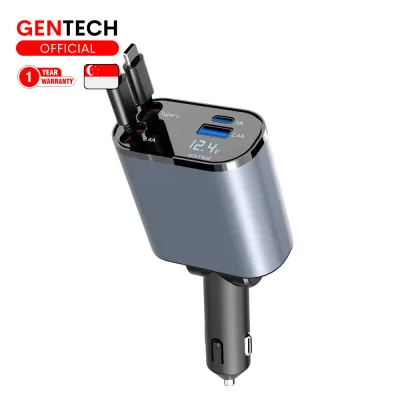
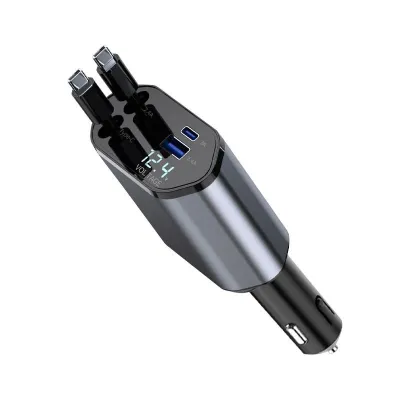
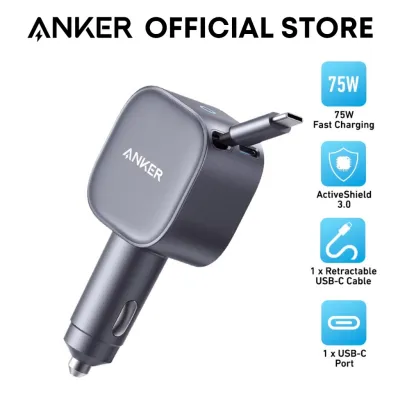
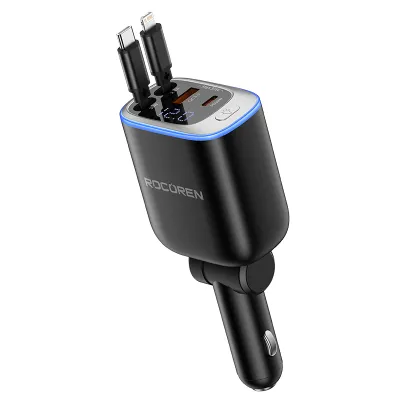
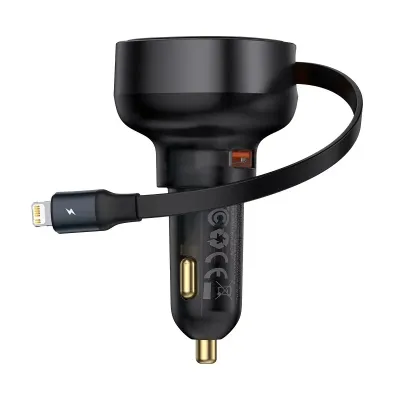
Prices are valid at publication and may change. Please refer to the product page for the latest price.
Wireless retractable chargers offer a different approach to convenience. Instead of plugging a cable directly into your phone, the retractable cable typically powers a dashboard-mounted cradle or pad. This setup is ideal if you frequently enter and exit your vehicle, as it eliminates the repetitive physical wear of plugging and unplugging a cable. However, it requires your device to support wireless charging standards, such as Qi or newer magnetic alignment protocols.
The retractable mechanism itself interacts differently with each type. For wired USB-A and USB-C chargers, the flat, retractable cable is pulled directly from the 12V plug housing to your device. This keeps the center console clean but subjects the cable to constant physical handling. With wireless setups, the retractable cable often runs from the power source to the mount, meaning the cable itself is rarely adjusted once positioned, reducing wear on the retraction spring.
Ultimately, the optimal choice depends on verifying your current device input requirements rather than assuming one universal standard. Check your phone’s manual or settings to see if it supports USB-PD, Qi wireless charging, or proprietary fast-charging standards before deciding on a connector type.
Evaluating Power Delivery and Charging Speed Limits
Evaluating the actual charging speed of a retractable car charger requires looking past marketing buzzwords and examining the technical specifications printed on the product packaging or the charger body itself. Do not assume that a USB-C connector automatically guarantees fast charging. You must verify the specific wattage output, typically designated as PD 18W, PD 30W, or higher, to ensure it matches your device’s maximum input capacity.

For USB-A chargers, power output is generally limited to 12W or 15W per port. While this is sufficient for maintaining a battery level while running navigation apps, it will not provide the rapid power boost that modern fast-charging protocols offer. If you require quick top-ups, verifying that the charger supports dedicated fast-charging standards is essential.
Wireless charging introduces additional efficiency variables. Even advanced wireless charging pads experience energy loss, with a significant portion of the electrical power converted into heat rather than battery charge. This inefficiency is compounded by alignment sensitivity; if your phone is not perfectly centered on the charging coil, the charging speed will drop, or charging may stop entirely. Furthermore, thick protective phone cases, especially those containing metal plates or cardholders, can obstruct the electromagnetic field and further degrade performance.
Before purchasing a high-power retractable charger, you must also verify your vehicle’s electrical capacity. Most car accessory sockets (the 12V cigarette lighter port) are connected to a fuse rated for 10 to 15 amperes. At a standard 12-volt vehicle output, this limits the total power draw to between 120W and 180W. While a single retractable charger is unlikely to exceed this limit, using a multi-port charger to power a laptop, a tablet, and a phone simultaneously can strain the circuit, making it crucial to check your vehicle’s manual.
Assessing Cable Management and Dashboard Footprint
The primary appeal of a retractable car charger is its ability to maintain a clean, organized dashboard footprint. However, the physical design of the retraction mechanism can vary significantly. Some chargers feature a central spool integrated directly into the 12V plug, while others utilize a separate housing that mounts to your air vents or dashboard. You should measure the clearance around your gear shifter and console storage compartments to ensure a bulky plug housing will not obstruct vital vehicle controls.
Cable length and tension are critical usability factors. A cable that is too short will prevent passengers from using their devices comfortably while charging, while excessive tension can pull against your phone’s charging port, potentially damaging the internal port over time. Look for mechanisms that offer multi-stage locking, allowing you to pull the cable to a specific length and lock it in place without constant pulling force.
Because retractable cables must be thin and flat to wind tightly inside their housing, they are inherently more delicate than standard round cables. Regular inspection is necessary to identify physical wear indicators before they lead to electrical failure. Check the cable regularly for fraying near the connector joint, exposed internal wiring, or a loose fit when inserted into your device. If the retraction mechanism begins to jam, slips, or fails to lock, the internal spring or spool may be damaged, indicating that the unit should be replaced.
Balancing convenience with long-term durability means adjusting how you handle the charger. Avoid pulling the cable rapidly or yanking it past its maximum extension limit, as this can snap the internal recoil spring. Gently pulling the cable to release the lock and guiding it back into the housing will significantly extend the lifespan of the internal wiring.
Electrical Safety and Vehicle Integration Checks
Integrating any aftermarket electronic accessory into your vehicle requires careful attention to electrical safety. High-power USB-C chargers and wireless charging pads generate heat during operation. In tropical climates or during hot afternoons, cabin temperatures can rise quickly, compounding this heat generation. Operating a charger under extreme thermal conditions can trigger thermal throttling in both the charger and your phone, reducing charging speeds to protect the battery chemistry.
To prevent damage to your vehicle’s electrical system, always verify that the charger has built-in safety certifications, such as CE, FCC, or local regulatory marks. These certifications ensure the device includes over-current, over-voltage, and short-circuit protection. Never bypass a blown vehicle fuse with a higher-rated fuse to accommodate a high-draw charger, as this can lead to overheating of the vehicle’s wiring harness.
You must establish clear stop conditions for using your retractable car charger. Immediately unplug the device from the 12V socket and consult a qualified automotive professional if you notice a distinct burning plastic or electrical odor, if the charger housing becomes too hot to touch comfortably, if you observe melted plastic or discoloration on the plug, or if your vehicle’s accessory fuse blows repeatedly. Continuing to use a compromised charger poses a risk of electrical shorts or damage to your vehicle’s sensitive electronic control units.
Frequently Asked Questions (FAQ)
Can I use a USB-C retractable charger with an older USB-A car port?
Yes, you can use a physical adapter to connect a USB-C retractable charger to an older USB-A port, but you will not receive the benefits of modern fast charging. USB-C Power Delivery requires a native USB-C connection to negotiate higher wattages. Using an adapter limits the charging speed to the standard output of the USB-A port, which is typically much lower.
Does the retractable mechanism affect charging speed or cause cable damage?
The mechanical spool itself does not directly limit the electrical current flowing through the wire. However, the thin, flat design required for retractable cables makes them more vulnerable to physical wear. Over time, repeated pulling and winding can cause micro-fractures in the internal copper strands, increasing electrical resistance and eventually leading to slower charging speeds or intermittent power delivery.
Is it safe to leave the retractable car charger plugged in when the car is off?
This depends entirely on how your vehicle’s 12V accessory port is wired. In many vehicles, power to the accessory socket is cut automatically when the ignition is turned off. However, some vehicles keep this port constantly powered. If your port remains live, a plugged-in charger—especially one with an active LED light or wireless transmitter—will continue to draw a small amount of standby current, which can drain your car battery over several days of inactivity. You can verify this by checking if the charger’s indicator light remains illuminated after you turn off and lock the vehicle.

Community discussion
Share your experience or ask a question. Comments are reviewed before publication.