
Quick Answer: Which Rear Aero Upgrade Fits Your Needs?
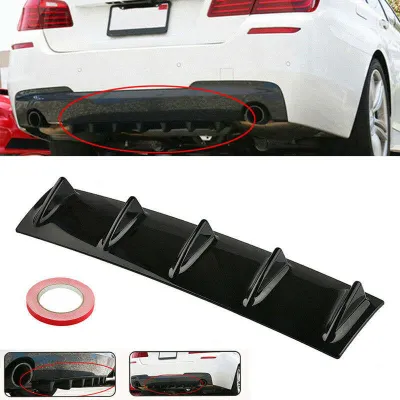
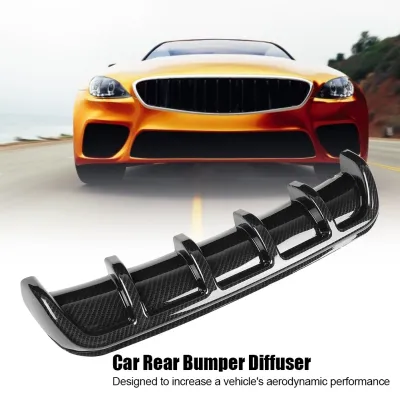
Choosing between a universal diffuser and a model-specific spoiler depends on your budget, vehicle model, and aesthetic goals. A universal diffuser is an excellent choice if you want a budget-friendly, aggressive styling update, drive a less common vehicle with limited aftermarket support, or prefer a modification that can be customized to fit various bumper shapes.
Conversely, a model-specific spoiler is ideal if you require exact, gap-free fitment, paint-matched finishes, and engineered aerodynamic performance tailored to your specific chassis. Before purchasing either component, you must verify your vehicle’s rear bumper geometry, exhaust layout, and safety sensor placement to ensure a secure and legally compliant installation.
Fitment and Compatibility: Universal vs Custom-Fit
Universal diffusers are designed with flat or semi-flexible mounting surfaces intended to accommodate a wide range of vehicle makes and models. Because they are not molded to a specific bumper, they often require physical modifications such as trimming, heat-shaping, or custom brackets to sit flush against your vehicle’s lower valance.
Products mentioned in this guide
Prices are valid at publication and may change. Please refer to the product page for the latest price.

Without these precise adjustments, installing a universal diffuser on a highly curved bumper can result in visible gaps, uneven tension, and weak attachment points. These gaps not only detract from the vehicle’s appearance but can also catch high-speed airflow, creating unwanted drag or risking detachment while driving.
Model-specific spoilers are manufactured using precise 3D scans or original equipment manufacturer (OEM) CAD data. They are engineered to match the exact curvature of your trunk lid or rear bumper valance, ensuring a flush fit without gaps right out of the box.
These custom-fit components typically align with existing factory mounting holes or utilize pre-marked adhesive channels. This precise engineering minimizes the risk of misalignment during installation and ensures the part remains stable under normal driving conditions without requiring extensive modification to your vehicle’s bodywork.
Before selecting any rear aero component, inspect your vehicle’s rear bumper profile. Pay close attention to the curvature of the lower valance, the position of the exhaust tips, and the depth of the underbody tray to determine if a flat universal part can physically sit flush against the surface.
Aesthetics and Aerodynamic Purpose
Visual integration plays a significant role in how an aftermarket modification is perceived. A model-specific spoiler or diffuser is designed to complement the existing design language of your vehicle, making it look like a factory-installed option or a high-end trim level.
Universal diffusers often present a more aggressive, aftermarket aesthetic that may not blend seamlessly with your car’s original lines. Achieving a clean look with a universal part frequently requires additional bodywork, such as sanding, adding body filler, or custom painting to match the vehicle’s color scheme.
From a functional standpoint, true aerodynamic diffusers are engineered to accelerate airflow underneath the car, reducing pressure and creating downforce to improve stability at high speeds. However, many universal “lip” diffusers sold on online marketplaces are purely cosmetic styling pieces that do not undergo wind tunnel testing.
Similarly, model-specific spoilers are often designed with specific aerodynamic profiles to manage the air separation point at the rear of the vehicle. While some are purely cosmetic, reputable manufacturers design custom spoilers to reduce lift or drag for that specific chassis.
If your goal is genuine aerodynamic performance, a generic, unverified universal part is unlikely to provide measurable benefits. For functional upgrades, look for model-specific components backed by manufacturer aerodynamic data and designed for your exact vehicle model.
Installation Effort and Reversibility
Installing a universal diffuser typically demands a higher level of fabrication skill and tool usage. Because there are no pre-determined mounting points, you will often need to drill new holes into your plastic bumper cover or underbody shield, using self-tapping screws, bolts, and heavy-duty washers to secure the part.
Relying solely on double-sided automotive tape for a universal diffuser is generally unsafe due to the high wind resistance and downward force acting on the lower bumper area. A poorly secured diffuser can detach at highway speeds, posing a severe hazard to other road users.
Model-specific spoilers often offer a much simpler and more reversible installation process. Many lip spoilers secure firmly using high-quality double-sided acrylic foam tape without requiring any drilling, allowing you to return the vehicle to its factory state later without leaving permanent damage.
For larger model-specific wings or spoilers that require bolt-on mounting, manufacturers often provide precise templates that align with factory reinforcement points inside the trunk lid. This reduces the guesswork and minimizes the risk of drilling into critical structural areas.
Safety must remain your primary concern during any exterior modification. If your installation plan requires drilling near fuel lines, electrical wiring harnesses, rear parking sensors, or structural crash bars, stop immediately and consult a qualified automotive technician.
In Singapore, vehicle modifications must comply with Land Transport Authority (LTA) guidelines. Any aftermarket spoiler or diffuser must be securely mounted, must not have sharp edges, and must not protrude beyond the physical width or length of the vehicle. Ensuring your installation is robust and compliant is essential for passing periodic vehicle inspections.
Price and Value Comparison
The upfront cost of a universal diffuser is typically much lower than that of a model-specific counterpart. These generic parts are mass-produced using standard molds, making them an attractive option for budget-conscious enthusiasts looking for a quick visual update.
However, the initial purchase price of a universal part can be deceptive once you factor in the hidden costs of installation. If you lack the tools or experience to fabricate custom brackets, paint the raw plastic, or modify your bumper, professional labor fees at a local body shop can quickly exceed the cost of the part itself.
Model-specific spoilers generally carry a higher initial price tag due to the research, development, and low-volume manufacturing required for specific vehicle models. Despite this, they often represent better long-term value because they are frequently sold pre-painted in factory color codes or finished in high-quality carbon fiber.
A pre-painted, custom-fit spoiler saves you the time and expense of visiting a paint shop. When evaluating your budget, compare the total cost of ownership—including paint, mounting hardware, and professional installation fees—rather than looking only at the base price of the component.
How to Verify Compatibility Before You Buy
To avoid purchasing a part that cannot be safely mounted, you must perform several physical checks on your vehicle before placing an order. Start by using a flexible measuring tape to measure the exact width and depth of your rear bumper’s lower valance.
Compare these measurements against the physical dimensions provided by the diffuser manufacturer. Pay close attention to the exhaust cutouts; ensure the spacing and diameter of your exhaust tips align with the openings on the diffuser to prevent the hot exhaust gases from melting the plastic.
Next, cross-reference your vehicle’s exact chassis code, production year, and trim level with the compatibility list of the product. Minor facelift updates or different trim packages can significantly alter the shape of the rear valance, rendering a model-specific part incompatible.
Finally, inspect your rear bumper for integrated safety features. Identify the locations of rear parking sensors, blind-spot radar sensors, backup cameras, and the rear tow hook eyelet to ensure the new aerodynamic component will not block their field of view or access points.
Frequently Asked Questions (FAQ)
Will a universal diffuser block my rear parking sensors?
Yes, a universal diffuser can block or interfere with your rear parking sensors if it extends upward into the sensor mounting zone. Ultrasonic parking sensors rely on a clear line of sight to emit and receive high-frequency sound waves; any obstruction will trigger constant false proximity alarms inside the cabin.
Before purchasing a universal diffuser, map out the exact locations of your bumper sensors. If the diffuser overlaps with these sensors, you must either choose a different design or professionally relocate the sensors. Attempting to cut holes in a universal diffuser to expose the sensors can weaken the plastic structure, void the manufacturer’s warranty, and lead to cracking over time.
Do I need to paint a model-specific spoiler before installing it?
Whether you need to paint a model-specific spoiler depends entirely on the material and the finish option you select at the time of purchase. Manufacturers typically offer these components in several finish states, which are clearly detailed on the product packaging or specification label.
Common Finish States:
- Pre-Painted: These spoilers are finished in factory-matched paint codes and are ready for immediate installation out of the box.
- Primed: These parts are coated in a neutral primer layer, designed to be sanded and painted by a local body shop to match your vehicle's exact paint color.
- Raw or Matte Black: Often made of ABS plastic or polyurethane, these can be installed as-is for a contrast look or painted if desired.
- Carbon Fiber: These components feature a clear, UV-resistant gel coat designed to showcase the carbon weave and do not require painting.
Community discussion
Share your experience or ask a question. Comments are reviewed before publication.