
When riding a motorcycle, staying dry and staying safe are two distinct challenges that require different types of protection. If you own a Hevik raincoat, its protection rating depends entirely on whether you are looking at weatherproofing or impact safety. For weather protection, these garments are rated using hydrostatic head measurements (expressed in millimeters) or Ingress Protection (IPX) standards, which dictate how much water pressure the fabric can withstand before leaking. For impact and abrasion protection, standard raincoats do not carry CE ratings on their own; instead, they must be paired with armored riding jackets that meet European safety standards. To understand exactly what level of protection your specific gear provides, you must locate and decode the technical labels stitched inside the garment.
How to Find and Read Protection Labels on Your Hevik Raincoat
To determine the exact capabilities of your Hevik raincoat, your first step is to locate the manufacturer’s care and specification labels. These are typically stitched into the inner lining of the jacket, often along the lower left side seam or inside an internal pocket. On some models, you may also find a small technical tag near the collar.
Once you locate these labels, look closely for specific certification markings. A genuine motorcycle-specific garment will feature a CE shield logo if it has been certified for road safety. Alongside this logo, you will find alphanumeric codes indicating the specific standards the garment meets. For weatherproofing, look for printed metrics such as a hydrostatic head rating (often written as a number followed by “mm”) or an IPX water resistance rating. If these details are not printed directly on the fabric label, they can be verified by cross-referencing the model number found on the tag with the official product manual or the manufacturer’s technical specifications.
Products mentioned in this guide
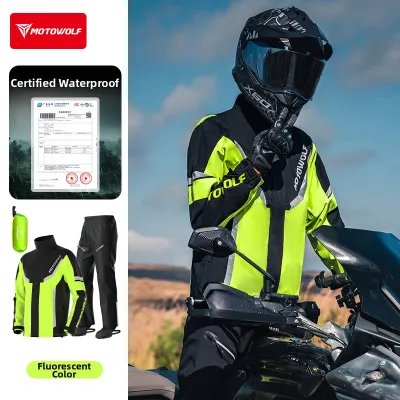
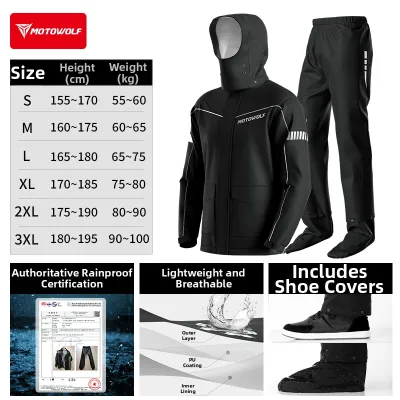
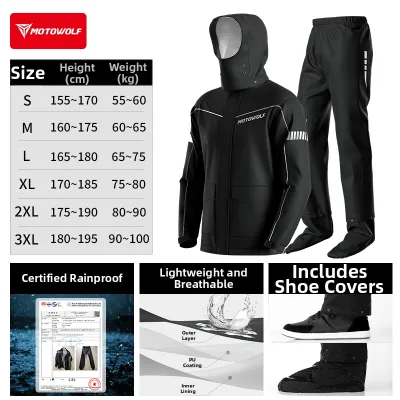
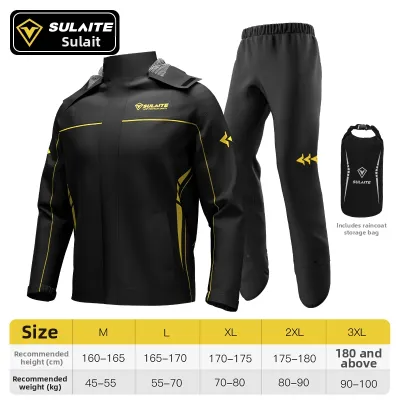
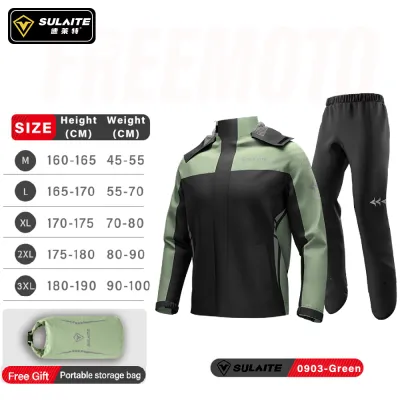
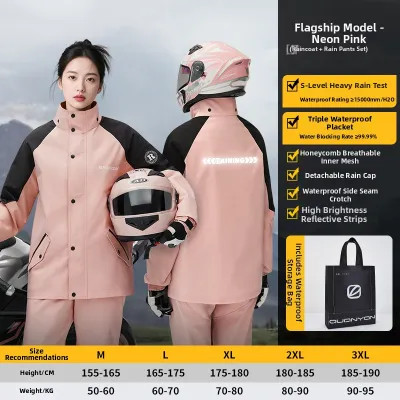
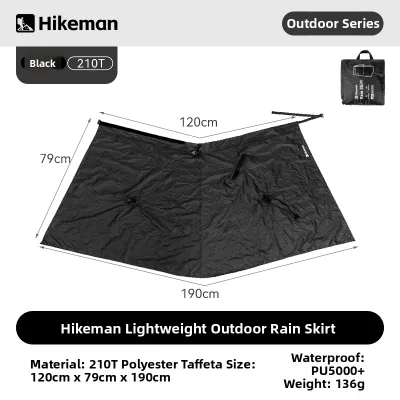
Prices are valid at publication and may change. Please refer to the product page for the latest price.
Decoding Weather Protection: IPX Ratings vs. Hydrostatic Head
Understanding the difference between IPX ratings and hydrostatic head measurements is crucial for riders who frequently face heavy tropical downpours, such as those common during monsoon seasons. An IPX rating measures a garment’s resistance to liquid ingress under standardized test conditions. For example, an IPX5 rating indicates resistance to water jets, while IPX6 protects against more powerful high-pressure streams. However, many motorcycle apparel manufacturers prefer hydrostatic head measurements, which test the fabric’s ability to resist water penetration under physical pressure. A rating of 5,000mm means the fabric can withstand a five-meter column of water before leaking, while a 10,000mm rating offers significantly higher resistance.

When riding at high speeds, wind pressure acts as a force multiplier, pushing rainwater against your jacket with far more energy than a typical rain shower. A raincoat fabric that keeps you dry while walking may quickly fail on the highway because the wind forces water through the microscopic pores of the material. This is why high hydrostatic head ratings are essential for motorcyclists.
However, the fabric’s rating is only one part of the equation. Even the most advanced waterproof membrane will fail if water can seep through the construction points. When inspecting your Hevik raincoat, check the interior seams to ensure they are fully sealed with waterproof tape. Additionally, look for water-resistant zippers protected by storm flaps—fabric barriers that fold over the zipper track to block wind-driven water from penetrating the closure.
Understanding Impact Protection: CE Certification Standards
It is vital to distinguish between weather protection and impact protection. A standard, lightweight raincoat is designed solely to keep you dry; it offers virtually no protection against abrasion or impact if you fall. To understand the safety level of your riding gear, you must look at European CE (Conformité Européenne) certification standards.
The EN 17092 standard classifies motorcycle garments based on their overall protective performance, including abrasion resistance, tear strength, and seam strength. The classifications range from Class C (designed only to hold impact protectors) to Class A (light protection for urban riding), Class AA (balanced protection for touring), and Class AAA (the highest level of protection, typically reserved for racing suits). Most standalone raincoats do not carry an EN 17092 classification because their thin polyester or polyurethane shells are not designed to withstand sliding on asphalt.
For impact protection, the relevant standard is EN 1621, which governs dedicated armor inserts worn at the shoulders, elbows, hips, and back. These protectors are rated as either Level 1 or Level 2. Level 2 armor absorbs more impact energy, transmitting less force to your body during a crash, making it highly recommended for highway riding.
Because many Hevik raincoats are designed as lightweight over-jackets, they lack built-in armor pockets or abrasion-resistant fabrics. Therefore, they do not carry CE impact certifications. To ride safely, these raincoats must be worn as an outer layer over a dedicated, CE-certified riding jacket that contains the necessary impact protectors and high-denier fabrics.
Matching Protection Ratings to Your Riding Conditions
Evaluating your riding conditions will help you decide if your current Hevik raincoat setup is adequate. For short, low-speed urban commutes through city streets, a lightweight waterproof shell worn over your regular clothing might suffice to keep you dry, though it leaves you vulnerable to road rash in an accident. For highway touring or daily commuting on fast expressways, a comprehensive layering strategy is essential. You should wear a highly rated waterproof outer shell over a fully armored, CE-certified riding jacket to ensure you are protected against both the elements and potential falls.
When layering, ensure your raincoat is sized generously enough to fit comfortably over your armored jacket. If the raincoat is too tight, it can compress your impact armor, pulling it out of its correct alignment and reducing its effectiveness. It can also restrict your range of motion, making it harder to react quickly to traffic hazards.
Finally, regularly inspect your gear for signs of degradation. Over time, the waterproof membranes and seam tapes inside your raincoat can crack, peel, or delaminate due to heat, humidity, and friction. If you notice water soaking into the outer fabric rather than beading up and rolling off, or if you feel dampness along the seams during a ride, the garment’s protective capabilities have degraded, and it should be treated or replaced.
Frequently Asked Questions (FAQ)
Can a standalone raincoat replace a dedicated motorcycle riding jacket?
No, a standalone raincoat cannot replace a dedicated riding jacket. Standard raincoats are made from thin, lightweight materials designed exclusively to block wind and rain. They lack the high-tensile strength, abrasion-resistant fibers, and impact-absorbing armor inserts found in certified motorcycle jackets. Wearing only a raincoat leaves you completely unprotected against severe road rash and impact injuries in the event of a slide or collision.
How should I maintain the waterproof coating on my raincoat?
To preserve the weather protection rating of your raincoat, always consult the manufacturer’s care label before cleaning. Generally, you should hand wash the garment or use a gentle machine cycle with a specialized technical fabric wash rather than standard household laundry detergents, which can strip away protective coatings. Avoid fabric softeners, bleach, and high-heat tumble dryers. If water stops beading on the outer surface of the jacket, you can restore its performance by applying an authorized durable water repellent (DWR) spray designed specifically for technical motorcycle apparel.
Community discussion
Share your experience or ask a question. Comments are reviewed before publication.