
Choosing the right windscreen solar film requires looking beyond marketing claims to understand how specific metrics affect your daily drive. Visible Light Transmission (VLT), Infrared (IR) rejection, and VTS (often associated with visible transmission spectrum or total solar metrics) dictate the balance between cabin cooling, glare reduction, and clear visibility. This guide decodes these specifications to help you compare products and select a film that meets both your comfort needs and road safety requirements.
Decoding the Core Solar Film Metrics
Evaluating solar film specifications requires looking at the entire solar spectrum rather than focusing on a single high percentage. Solar energy consists of ultraviolet (UV) rays, visible light, and infrared (IR) radiation, all of which contribute to heat buildup inside your vehicle.
To make an informed decision, you must understand how Visible Light Transmission (VLT), Infrared (IR) Rejection, and Total Solar Energy Rejected (TSER) work in tandem to balance night visibility with daytime thermal protection.
Products mentioned in this guide
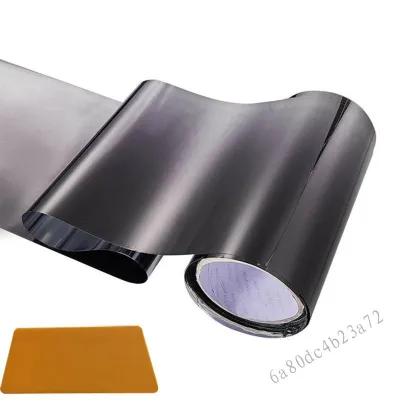
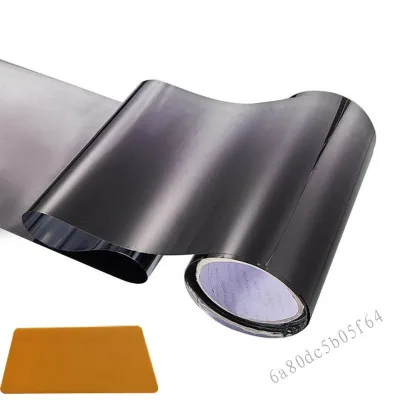
![FUVOYA【Ready Stock】20cm*150cm Solar Film for Car WindscreenTinted In Black Clear Solar Film Anti-UV Sun Shade Car motorcycle accessories[Free Ship&Ready Stock]](https://img.lazcdn.com/g/p/ab3c02bbdb2c397d76d20451258cb8c6.jpg_400x400q80.jpg_.webp)
![[SG FREE ] Solar Film for Car Windscreen 50cm X300cm Tinted In Black Clear Solar Film Anti-UV Sun Shade Car Accessories](https://img.lazcdn.com/g/p/54eaeab881972e443ecd39818b606062.jpg_400x400q80.jpg_.webp)
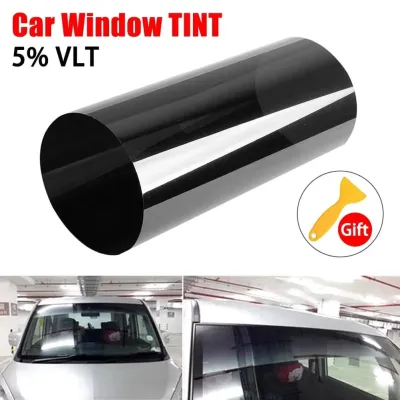
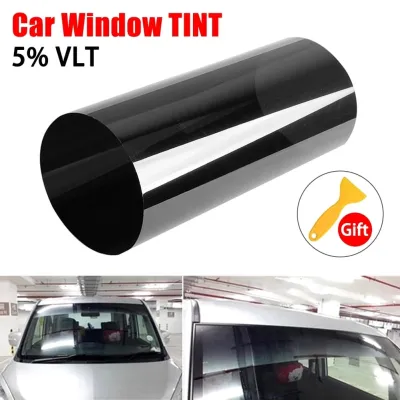
![[SG FREE ] 1 Set 5% Solar Film for Car Windscreen1.5m*20cm / Sun Shade Anti-UV Solar Film for Car Windscreen with Scrap](https://img.lazcdn.com/g/p/08d84521e31ce8836353f6d257e804b0.jpg_400x400q80.jpg_.webp)
Prices are valid at publication and may change. Please refer to the product page for the latest price.
Visible Light Transmission (VLT) and Visibility
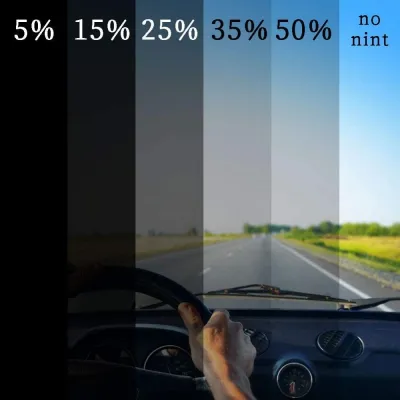
Visible Light Transmission (VLT) measures the percentage of visible light that passes directly through your car’s glass and the applied film. A higher VLT percentage means more light enters the cabin, while a lower VLT percentage indicates a darker tint.
While a lower VLT reduces glare during bright days, it can compromise safety at night, during heavy downpours, or in dimly lit car parks by reducing depth perception and contrast sensitivity.
Remember that the final, real-world VLT is a combined value of the solar film and your vehicle’s factory glass. If you apply a 70% VLT film onto glass that already has a 75% VLT rating, the net VLT drops to around 52.5%, which may fall below legal safety standards.
Infrared (IR) Rejection and Heat Control
Infrared (IR) rejection refers to a film’s ability to block infrared radiation, which is the primary source of the heat felt on your skin. High IR rejection keeps the cabin comfortable and reduces the workload on your air conditioning.
However, some manufacturers measure IR rejection only at a specific, narrow wavelength peak where the film performs best, rather than across the entire infrared spectrum.
Look for specifications detailing total infrared rejection across the entire IR spectrum (typically 780 to 2,500 nanometers). A film boasting a 99% peak IR rejection might only reject 60% of total infrared energy across the full spectrum.
Understanding VTS and Total Solar Performance
Visible Transmission Spectrum (VTS) describes how a film filters different wavelengths of light across the visible spectrum. While VTS helps explain color balance and optical clarity, it must be evaluated alongside UV and infrared metrics to understand overall thermal efficiency.
The most reliable metric for evaluating a windscreen solar film’s heat-rejection capability is Total Solar Energy Rejected (TSER). TSER measures the film’s ability to block all three components of solar energy: ultraviolet light, visible light, and infrared radiation.
Relying solely on high IR rejection or VTS numbers without checking the TSER can lead to unrealistic expectations. A film might claim a 95% IR rejection rate, but if it has a very high VLT and poor UV protection, its overall TSER might only be around 40% to 50%.
Balancing Heat Control with Windscreen Safety and Legal Limits
The front windscreen requires a fundamentally different approach to solar film selection compared to side and rear windows. Because the windscreen is your primary portal for forward vision, maintaining absolute clarity and high light transmission is a critical safety requirement.

In Singapore, the Land Transport Authority (LTA) dictates that the front windscreen and front side windows must maintain a minimum light transmission of 70% VLT. This means that after the film is applied, at least 70% of visible light must pass through the glass.
Choosing a film that pushes or exceeds these legal limits poses safety risks during night driving or sudden tropical downpours. Reduced light transmission impairs your ability to spot pedestrians, cyclists, and road hazards while degrading depth perception.
Beyond VLT percentages, verify the optical clarity of the windscreen solar film before purchase. Low-quality films can cause visual distortion, rainbow patterns when wearing polarized sunglasses, or distracting halos around streetlights, causing eye strain and driver fatigue.
Additionally, modern vehicles often feature Advanced Driver Assistance Systems (ADAS) cameras and rain sensors mounted directly behind the rearview mirror. You must verify that the film’s thickness, material, and mounting position do not interfere with these safety sensors, and consult your vehicle’s documentation to ensure compatibility before proceeding with any installation.
How to Evaluate and Compare Product Specifications
When shopping for a windscreen solar film, look for standardized testing conditions and certified laboratory results rather than relying on peak marketing claims. Reputable manufacturers test their films using internationally recognized standards, such as those from the National Fenestration Rating Council (NFRC), ensuring accurate and comparable figures.
When comparing different brands, prioritize the TSER percentage and the total IR rejection rate over isolated peak performance metrics. A high-quality film maintains a high TSER even with a high VLT, filtering out heat-carrying rays without darkening your view.
To verify these performance claims in person, ask professional installers to demonstrate the film’s capabilities using specialized testing tools. Many workshops use BTU power meters, digital VLT meters, and infrared heat lamps to show you exactly how much heat and light pass through a film sample.
Finally, carefully review the manufacturer’s warranty terms before making your final decision. A premium windscreen solar film should come with a comprehensive warranty covering optical clarity issues, bubbling, peeling, adhesive failure, and color fading. Because installing windscreen film involves working near sensitive dashboard electronics and ADAS sensors, always ensure the work is performed by a qualified professional installer who follows original-vehicle instructions to prevent water damage or sensor misalignment.
Frequently Asked Questions (FAQ)
Does a higher IR rejection rate always mean a cooler car interior?
No, a higher IR rejection rate does not automatically guarantee a cooler car interior. While blocking infrared rays significantly reduces the direct burning sensation of sunlight on your skin, overall cabin temperature is determined by Total Solar Energy Rejected (TSER), which accounts for visible light and UV heat as well. Additionally, heat enters through the vehicle’s metal body panels and uninsulated roof, meaning that even the highest-performing windscreen film cannot completely prevent cabin warming when a car is parked in direct sunlight for extended periods.
Will solar film interfere with my car's GPS, RFID, or mobile signals?
Yes, certain types of solar films can interfere with electronic signals. Traditional metallic films, which use microscopic metal particles to reflect heat, often block or weaken signals used by GPS navigation systems, mobile phones, and electronic toll collection transponders like the local In-vehicle Unit (IU) or On-Board Unit (OBU). To avoid signal disruption, choose advanced ceramic or non-metallic nano-carbon films, which offer excellent heat rejection without metallic interference. Always verify with your installer that the selected film is signal-friendly before installation.
Community discussion
Share your experience or ask a question. Comments are reviewed before publication.