
When preparing for wet-weather riding, choosing the right gear is a matter of both comfort and safety. A Sulaite raincoat primarily provides environmental protection—specifically waterproofing and windproofing—rather than physical crash protection like abrasion resistance or impact absorption. While these garments are highly effective at keeping you dry during sudden tropical downpours, they are not designed to protect your skin and joints from the pavement in the event of an accident unless they are explicitly built with integrated armor or worn over dedicated protective gear.
Understanding exactly what safety ratings your gear possesses ensures you do not mistake a dry ride for a safe one. To ride confidently, you must learn to distinguish between weather-resistant membranes and impact-rated armor systems.
Decoding Protection Ratings for Motorcycle Rain Gear
Motorcycle gear serves two distinct safety functions, and confusing them can lead to dangerous gaps in your road protection. The first category is environmental protection, which shields your body from external elements like rain, wind, and extreme humidity. Materials used in a raincoat are engineered to act as barrier membranes, keeping external moisture out while allowing internal sweat vapor to escape. This keeps you focused and physically comfortable, which indirectly improves safety by reducing rider fatigue.
Products mentioned in this guide
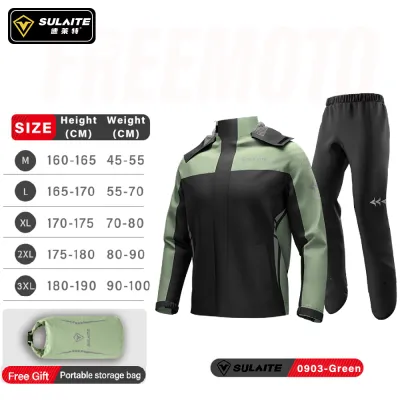
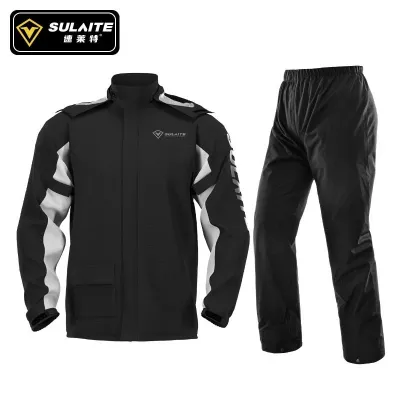
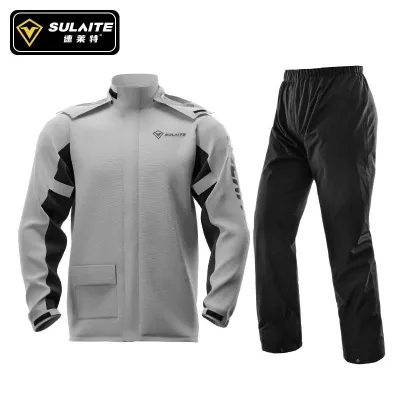
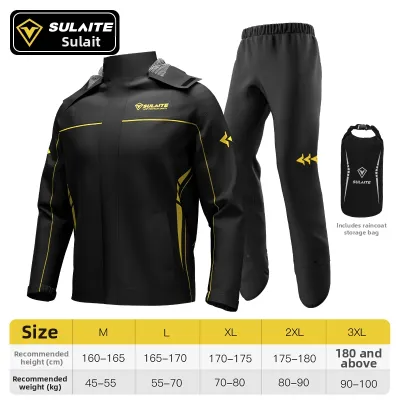
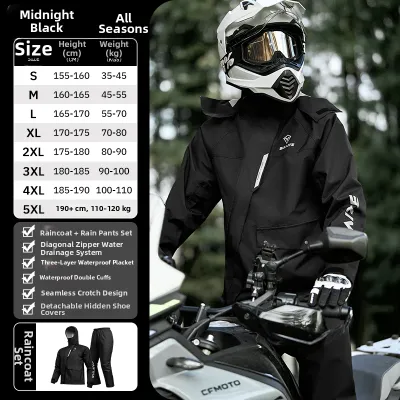
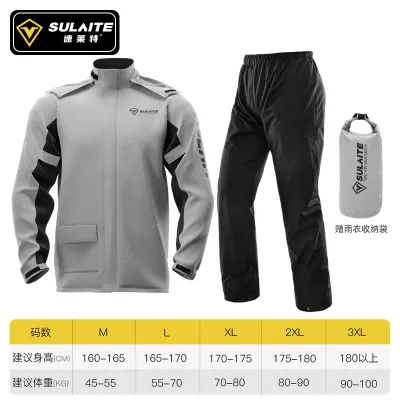
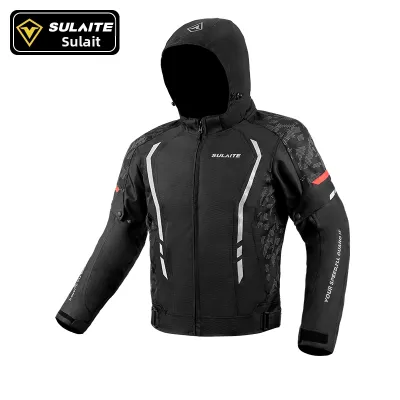
Prices are valid at publication and may change. Please refer to the product page for the latest price.
The second category is physical crash protection, which is designed to mitigate injury during a fall, slide, or collision. This type of protection relies on heavy-duty materials that resist tearing against abrasive asphalt and armor inserts that absorb impact forces.
A high weather protection rating does not equate to crash safety. A jacket can be completely impervious to a torrential storm while offering zero resistance to road rash. When selecting gear, you must identify your primary riding conditions. If you are commuting in heavy rain, a waterproof layer is essential; however, if you are riding at higher speeds where a slide is a distinct risk, you must ensure your setup includes verified physical protection alongside its weatherproofing capabilities.
Verifying Sulaite Raincoat Waterproof and Breathability Specifications
To evaluate the environmental performance of a sulaite raincoat, you must look closely at the manufacturer’s official specifications rather than relying on general assumptions. Waterproofing capability is typically measured using a hydrostatic head test, which determines how many millimeters of water pressure a fabric can withstand before moisture penetrates. When buying or inspecting your gear, check the product hangtags or the manufacturer’s official documentation for this specific millimeter rating.

Different rating tiers correspond to different riding intensities. For example, a rating of 5,000mm is generally sufficient for light showers or short city commutes, while a rating of 10,000mm or higher is recommended for riders facing heavy tropical downpours on open roads. Matching the labeled rating to your typical riding environment prevents unexpected leaks during severe storms.
Equally important in hot, humid climates like Singapore is the breathability rating, usually expressed in grams of water vapor per square meter over a 24-hour period (g/m²/24h). High breathability prevents the interior of the coat from turning into a humid sauna, keeping you dry from your own sweat as well as the rain. Because performance varies significantly across different product lines, always verify the exact specifications of the specific Sulaite model you are considering rather than assuming all raincoats from the brand share the same performance levels.
Abrasion and Impact Protection: What the Membrane Doesn't Cover
While a high-quality waterproof membrane keeps water out, it offers virtually no protection against physical trauma during a motorcycle crash. The thin polyester or nylon fabrics used to create lightweight waterproof layers will instantly melt or tear when subjected to the friction of sliding on asphalt. To protect yourself from road rash, you must look beyond the waterproof membrane and evaluate the outer shell material of your riding gear.
When inspecting your gear, check the inner labels for recognized European safety standards, such as EN 17092, which classifies motorcycle garments from Class A to Class AAA based on their abrasion resistance. Heavy-duty textiles like high-denier cordura or specialized aramid fibers are required to achieve these certifications.
For impact protection, look for CE-certified armor inserts. These are rated under EN 1621-1 for shoulders and elbows, and EN 1621-2 for back protectors.
Before you ride, verify whether your Sulaite raincoat features dedicated, secure interior pockets designed to hold these certified armor pieces. If the raincoat lacks these pockets and is constructed of lightweight material, it is designed strictly as an over-suit. In this scenario, you must wear the raincoat over a separate, fully armored and abrasion-resistant riding jacket to maintain your physical safety on the road.
Evaluating Construction and Seams for Real-World Riding
The overall construction of a raincoat determines whether its rated fabric specifications will actually perform under real-world riding conditions. Even if a fabric has an exceptionally high waterproof rating, water will quickly find its way inside if the seams are not properly sealed. When examining a raincoat, check that the interior seams are fully taped, sealed, or welded to block water from leaking through the tiny holes created by sewing needles.
At highway speeds, wind pressure forces rain against your gear with incredible intensity. Standard zippers will leak almost instantly under these conditions. Look for robust closure systems, such as heavy-duty zippers protected by dual storm flaps that secure with Velcro or snap buttons. Adjustable cuffs and a high, adjustable collar are also essential to prevent water from being driven up your sleeves or down your neck while in a riding position.
The fit of the raincoat must also be carefully evaluated. It should be loose enough to comfortably fit over your standard riding gear and armor without restricting your range of motion, yet snug enough that it does not flap violently in the wind. A flapping jacket is not only distracting but can also cause protective armor underneath to shift out of its proper position. Additionally, ensure the garment features prominent reflective strips or high-visibility panels to keep you visible to other motorists during low-visibility rainstorms.
Maintaining Sulaite Gear to Preserve Protection Levels
To ensure your raincoat continues to meet its original waterproof and breathable ratings over time, proper maintenance is essential. Standard household detergents can be highly abrasive and often leave behind chemical residues that clog the microscopic pores of breathable membranes. Instead, clean your gear using specialized technical washes or mild, non-detergent soaps that preserve the fabric’s specialized coatings. Never use fabric softeners or bleach, as these will permanently damage the waterproof barrier.
Over time, you may notice that rainwater no longer beads up on the surface of the jacket and instead begins to soak into the outer fabric, a condition known as “wetting out.” This indicates that the factory-applied Durable Water Repellent (DWR) coating has worn off.
You can easily restore this protection by applying an approved wash-in or spray-on DWR treatment designed for technical outerwear. Always consult the manufacturer’s care label on your specific garment before applying any heat, such as using a tumble dryer or iron, to activate the water-repellent treatment, as excessive heat can melt synthetic materials or damage seam tape.
Frequently Asked Questions (FAQ)
Can I use a standard Sulaite raincoat for high-speed highway riding?
Standard commuter raincoats are often unsuitable for high-speed highway riding because the intense wind pressure can easily force water through basic zippers, unsealed seams, and loose closures. For highway speeds, you should look for motorcycle-specific designs that feature heavy-duty double storm flaps, fully taped seams, and a high hydrostatic head rating to withstand the driving force of the wind.
Does the Sulaite membrane protect against road rash in a slide?
No, the waterproof membrane or coating itself provides no meaningful protection against road rash or abrasion during a slide. Slide protection depends entirely on the durability of the outer shell material and its physical safety certifications. To stay safe, you must wear the raincoat over a dedicated, abrasion-resistant riding jacket equipped with CE-certified armor.
Community discussion
Share your experience or ask a question. Comments are reviewed before publication.