
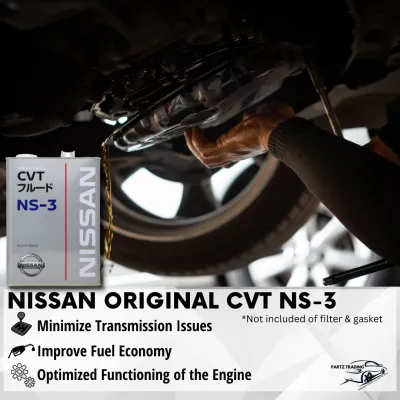
The Nissan NS-3 specification represents the manufacturer’s proprietary standard for continuously variable transmission (CVT) fluid, engineered specifically to meet the demands of modern Nissan CVT systems. Unlike conventional automatic transmissions that rely on gears, a CVT uses a steel belt or chain wrapped around adjustable pulleys to deliver seamless gear ratio transitions.
The NS-3 fluid is formulated to provide the precise level of friction required to prevent this belt or chain from slipping against the smooth metal pulleys, while simultaneously lubricating the internal bearings and hydraulic control systems. Choosing the correct fluid is critical because modern CVTs operate under extreme hydraulic pressures and tight mechanical tolerances.
Using a fluid that does not meet the exact NS-3 specification can lead to immediate performance issues, accelerated component wear, and eventual transmission failure. Understanding what this specification entails helps you make informed maintenance decisions to protect your vehicle’s drivetrain.
Products mentioned in this guide
Prices are valid at publication and may change. Please refer to the product page for the latest price.
What the NS-3 Specification Actually Means
At its core, the NS-3 specification is defined by its unique chemical composition, which is tailored to the operating characteristics of newer Nissan CVT models. The fluid contains highly specialized friction modifiers that balance two opposing requirements: they must allow the hydraulic control valves to move freely while ensuring the steel belt grips the pulleys with absolute reliability.
If the friction coefficient is even slightly off, the belt can slip, causing permanent physical damage to the pulley faces. Thermal stability is another cornerstone of the NS-3 standard. CVTs generate significant internal heat due to constant friction and high-pressure hydraulic operations, especially during prolonged stop-and-go driving in warm climates.
NS-3 fluid is engineered with advanced base oils and oxidation inhibitors that resist thermal breakdown, preventing the formation of sludge and varnish that can clog the transmission’s delicate valve body. When shopping for replacement fluid, you must look closely at the product packaging.
Many aftermarket fluids claim broad compatibility with multiple CVT types, but a generic multi-vehicle label is not a guarantee of performance. To ensure your transmission remains protected, verify that the product label explicitly states compliance with the Nissan NS-3 standard, or opt for the original equipment manufacturer fluid.
NS-3 vs. Older Nissan CVT Fluids
Nissan has introduced several generations of CVT fluids over the years, with NS-2 and NS-3 being the most common. These fluids are formulated for different transmission designs and are generally not interchangeable. Newer CVT models feature narrower fluid passages, higher operating pressures, and different belt materials than their predecessors, requiring the lower viscosity and distinct additive package of NS-3 fluid.

Using an older specification like NS-2 in a transmission designed for NS-3 can result in severe mechanical issues. The higher viscosity of the older fluid can restrict flow through the tight tolerances of a modern CVT, leading to inadequate lubrication, increased operating temperatures, and belt slippage. Conversely, using NS-3 in an older system not designed for it can cause hydraulic pressure drops and transmission shudder.
If you are correcting a low fluid level, you should only top up the system with fluid of the exact same specification currently in the transmission. Mixing different generations of fluid alters the overall viscosity and additive balance, compromising the fluid’s protective qualities. If there is any doubt about what fluid is currently in the system, or if the fluid has been contaminated, a complete system flush and refill is the safest course of action.
How to Verify if NS-3 Is Right for Your Nissan
Before purchasing any transmission fluid or scheduling a service, you must confirm the exact requirements for your specific vehicle model and model year. The primary and most reliable source for this information is your vehicle’s owner’s manual or official maintenance booklet. These documents list the precise fluid specifications, capacities, and recommended service intervals determined by the factory engineers.
You can also look for physical indicators on the vehicle itself. Many Nissan models feature a label on the transmission dipstick, the filler cap, or an under-hood placard that specifies the required fluid type. However, because some modern Nissan CVTs are sealed systems without a traditional dipstick, these physical markers may not always be accessible or present on every model.
If you encounter conflicting information or are unsure of your vehicle’s service history, consult an authorized service center or a qualified professional. Regional variations in vehicle specifications can sometimes affect fluid requirements, and a professional technician can use your vehicle identification number to retrieve the exact factory build data and confirm the correct fluid specification.
Safe Handling and Replacement Guidelines
Servicing a CVT is a highly precise procedure that carries a strict safety boundary. Because the transmission is a critical safety and performance component, any disassembly, fluid exchange, or level adjustment should be performed in accordance with the original vehicle manufacturer’s instructions. If you lack the proper tools, experience, or clean working environment, you should have the service performed by a qualified professional.
Checking the fluid level in a Nissan CVT is not as simple as checking engine oil. The fluid expands significantly as it heats up, meaning the level must be verified at the exact operating temperature specified in the service manual—typically measured using diagnostic software. Checking the fluid when it is too cold or too hot can lead to underfilling or overfilling, both of which can cause foaming, pressure loss, and transmission damage.
Furthermore, modern Nissan CVTs utilize an onboard computer to monitor fluid degradation over time, tracking operating temperatures and load cycles. When the fluid is replaced, this degradation counter must be reset using specialized diagnostic equipment to ensure the transmission control module adjusts its hydraulic pressure calculations correctly. If you notice signs of transmission distress—such as visible leaks, a burnt odor from the fluid, irregular shifting, or slipping—halt all DIY attempts immediately and seek professional diagnostic assistance.
Frequently Asked Questions (FAQ)
Can I mix Nissan NS-3 with other brands of CVT fluid?
Mixing Nissan NS-3 with other brands or generic multi-vehicle CVT fluids is highly discouraged. Different brands use distinct additive packages, and mixing them can cause chemical incompatibility, leading to additive dropout, altered friction characteristics, and reduced wear protection. Additionally, using unapproved or mixed fluids can void your vehicle’s warranty. To maintain transmission reliability, use only fluids that explicitly state they meet or exceed the Nissan NS-3 specification on the product label.
How often should Nissan NS-3 CVT fluid be changed?
The recommended interval for changing NS-3 CVT fluid depends heavily on your driving conditions and is detailed in your vehicle’s official maintenance schedule. Standard driving schedules may suggest long intervals, but severe driving conditions—such as frequent short trips, stop-and-go city traffic, towing, or operating in hot climates like Singapore—will accelerate fluid degradation. Rather than relying on generic online advice, check your owner’s manual for the severe service schedule and have a professional inspect the fluid condition and read the transmission’s electronic degradation counter regularly.
Community discussion
Share your experience or ask a question. Comments are reviewed before publication.