
Mazda ATF FZ is a highly specialized, ultra-low-viscosity automatic transmission fluid engineered specifically for Mazda’s modern Skyactiv-Drive automatic transmissions. Unlike traditional transmission fluids that rely on thicker viscosity profiles to protect internal components, this fluid uses an advanced synthetic formulation to reduce internal friction while maintaining precise hydraulic pressure. Choosing the correct fluid is one of the most critical decisions you can make to preserve the shifting performance and longevity of your vehicle.
Modern automatic transmissions operate under incredibly tight mechanical tolerances. The fluid does not merely lubricate moving parts; it acts as a hydraulic medium that facilitates gear shifts, cools the torque converter, and protects delicate electronic solenoids. Using an incorrect specification can lead to immediate shifting anomalies, increased wear, and potential mechanical failure.
What Is the Mazda ATF FZ Specification?
The “FZ” designation represents a proprietary automatic transmission fluid specification developed by Mazda to complement their Skyactiv-Drive technology. Introduced alongside the Skyactiv engine and transmission lineup, this specification was created to address the unique engineering demands of a transmission that combines the best attributes of conventional automatics, continuously variable transmissions (CVTs), and dual-clutch gearboxes.
Products mentioned in this guide
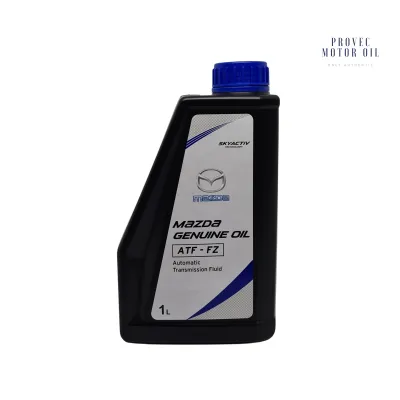
Prices are valid at publication and may change. Please refer to the product page for the latest price.
Skyactiv-Drive transmissions rely heavily on multi-plate lockup clutches to improve fuel economy and provide a direct, manual-like driving feel. Because the torque converter clutch remains locked up during the vast majority of driving, the transmission fluid must possess highly specific frictional properties to prevent clutch slippage and shudder. The FZ specification is tailored precisely to these clutch friction materials.
It is crucial to recognize that the FZ specification is distinct from older Mazda fluid standards. Vehicle owners must always cross-reference their specific vehicle’s owner’s manual to confirm that ATF FZ is the exact required specification for their model and production year. Requirements can vary significantly depending on whether the vehicle features a Skyactiv-Drive system or an older generation transmission.
Key Technical Characteristics of ATF FZ
To understand why the FZ specification is so vital, one must look at its performance characteristics under demanding operating conditions. In a tropical environment like Singapore, where ambient temperatures remain high year-round and traffic congestion is a daily reality, transmission fluid is subjected to severe thermal stress.

First, the fluid must exhibit exceptional low-temperature fluidity alongside high-temperature stability. While “low temperature” in Singapore does not mean freezing winter conditions, it does refer to the initial engine startup phase after the vehicle has rested overnight. The fluid must flow instantly through complex valve bodies to ensure immediate hydraulic response. Conversely, during heavy stop-and-go traffic on major expressways, the fluid must resist thinning out to maintain a robust lubricating film and prevent metal-on-metal contact.
Second, ATF FZ incorporates specialized friction modifiers. These chemical additives are engineered to match the exact friction coefficients of Mazda’s internal clutch packs. This precise formulation ensures smooth torque converter lockup and seamless gear engagement, eliminating the jerky transitions that can occur with generic fluids.
Finally, the specification demands superior oxidation and shear stability. The fluid must resist breaking down when subjected to the high shearing forces generated within the planetary gear sets. This prevents the formation of harmful sludge, varnish, and deposit buildup that can clog delicate hydraulic passages. For exact kinematic viscosity values, flash points, or chemical composition, owners should always consult the product data sheet (PDS) or physical bottle labels of manufacturer-approved fluids.
Mazda ATF FZ vs. Generic Multi-Vehicle ATFs
Many automotive workshops and retail stores stock “universal” or “multi-vehicle” automatic transmission fluids. While these products claim to be compatible with a wide array of vehicle makes and models, using them in a Mazda transmission requiring FZ fluid carries significant risks due to fundamental formulation differences.
Traditional generic fluids, such as older Dexron or Mercon formulations, typically have a much higher baseline viscosity than Mazda ATF FZ. Using a thicker fluid in a transmission designed for an ultra-low-viscosity fluid increases internal drag, which directly translates to poor fuel economy and sluggish performance. Furthermore, the friction profiles of universal fluids are designed as a compromise to work acceptably across many different brands, rather than optimizing for Mazda’s specific clutch materials.
Falling into the “universal” trap can be costly. Even if a product label claims the fluid “meets or exceeds” Mazda FZ standards, without official certification or documented validation, there is no guarantee that the fluid will behave correctly under pressure. Incompatible friction modifiers can cause the torque converter clutch to slip or chatter, leading to a phenomenon known as transmission shudder. Over time, this mismatch can accelerate wear on the clutch plates, eventually requiring a complete and expensive transmission rebuild that can cost thousands of SGD.
Why the Correct FZ Specification Matters for Your Transmission
Using the correct FZ-specified fluid directly influences your daily driving experience, vehicle performance, and overall transmission longevity. The most immediate benefit is shift quality. The highly calibrated Skyactiv-Drive transmission relies on precise hydraulic timing to execute quick, seamless gear changes. The exact viscosity of ATF FZ ensures that hydraulic pressure builds up and releases at the precise millisecond intended by the transmission control module.
Fuel efficiency is another critical factor. Mazda’s Skyactiv philosophy centers on maximizing efficiency throughout the entire drivetrain. The low-viscosity nature of ATF FZ minimizes parasitic energy losses within the transmission. Thicker, non-compliant fluids increase fluid drag, forcing the engine to work harder and consume more fuel to maintain the same speed.
Furthermore, the correct fluid provides essential component protection. Modern transmissions are packed with delicate components, including high-precision linear solenoids and intricate valve body channels. ATF FZ keeps these components clean and properly lubricated, preventing hydraulic starvation and ensuring that shift solenoids do not stick or fail prematurely.
How to Verify and Maintain Your FZ Fluid
Maintaining your transmission fluid requires a proactive approach, especially given the demanding driving conditions in Singapore. Because many modern Mazda vehicles do not feature a traditional transmission dipstick accessible from the engine bay, verifying the fluid level is not always a simple task.
To check the fluid level and condition accurately, the vehicle often needs to be on a level hoist, and the transmission fluid temperature must be monitored within a specific range using a diagnostic scan tool. Because of these technical requirements, it is highly recommended to have the fluid level and condition checked by a qualified automotive professional during regular servicing.
When sourcing replacement fluid, always purchase from authorized dealers or reputable automotive suppliers. Look for the genuine Mazda packaging or high-quality aftermarket fluids that explicitly state “Mazda ATF FZ” or reference the exact OEM part number on the front label. Avoid unbranded or generic fluids sold on online marketplaces that lack verifiable manufacturer specifications.
Regarding service intervals, while some manufacturers claim transmission fluid is a “lifetime” fill under normal operating conditions, actual driving habits often dictate otherwise. Singapore’s hot climate and frequent stop-and-go driving fall squarely under “severe driving conditions” in most manufacturer maintenance schedules. Under these conditions, relying on a lifetime fluid policy is risky. It is advisable to consult your owner’s manual and work with a trusted workshop to establish a sensible replacement interval—often between 40,000 and 60,000 kilometers—to ensure your transmission remains in peak condition.
Frequently Asked Questions (FAQ)
Can I mix Mazda ATF FZ with other transmission fluids?
Mixing Mazda ATF FZ with other transmission fluid specifications, even other Mazda-branded fluids, is highly discouraged. Doing so alters the carefully balanced chemical composition, viscosity, and friction characteristics of the fluid. This dilution can lead to unpredictable shifting behavior, clutch slippage, and accelerated wear. If you suspect your transmission fluid has been contaminated or topped up with an incorrect fluid, seek a professional workshop to perform a complete fluid exchange.
Is Mazda ATF FZ the same as Mazda ATF M-V?
No, Mazda ATF FZ and Mazda ATF M-V are entirely different specifications and are not interchangeable. ATF M-V is a higher-viscosity fluid formulated for older, non-Skyactiv Mazda transmissions, whereas ATF FZ is an ultra-low-viscosity fluid designed specifically for modern Skyactiv-Drive transmissions. Using M-V fluid in a transmission that requires FZ can result in severe shift hesitation, increased fuel consumption, and potential mechanical damage to the transmission’s internal clutch packs. Always verify the exact fluid requirement in your vehicle’s owner’s manual before purchasing or refilling.
Community discussion
Share your experience or ask a question. Comments are reviewed before publication.