
When you press your vehicle’s brake pedal, hydraulic pressure transfers that force directly to the brake calipers to slow you down. The fluid responsible for this critical transfer must withstand extreme heat without boiling, which is where the DOT 4 rating comes in. DOT 4 brake fluid is a specialized, glycol-based hydraulic fluid designed to meet strict safety standards set by transport authorities, ensuring reliable braking performance under demanding driving conditions.
What the DOT 4 Rating Actually Means
The “DOT” in DOT 4 stands for the Department of Transportation, which establishes the baseline performance standards for brake fluids. These standards classify fluids primarily by their chemical base and their boiling points. Because braking generates immense friction and heat, the fluid must remain a liquid to transmit force; if it boils and turns into gas, your brake pedal will feel spongy, and your stopping power will drop dangerously.
Brake fluid performance is measured by two distinct benchmarks: the dry boiling point and the wet boiling point. The dry boiling point refers to the temperature at which fresh, uncontaminated fluid from a sealed container begins to boil. Over time, however, glycol-based fluids naturally absorb moisture from the surrounding air through flexible rubber hoses and seals.
Products mentioned in this guide
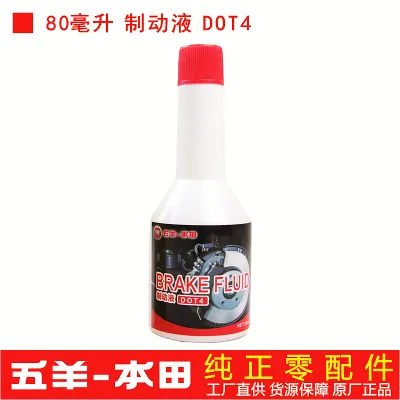
Prices are valid at publication and may change. Please refer to the product page for the latest price.
The wet boiling point represents the fluid’s boiling temperature after it has absorbed a specific percentage of water. Because water boils at a much lower temperature than brake fluid, even a small amount of moisture contamination significantly lowers the overall boiling threshold of your braking system. This is why checking the product label and manufacturer certifications for the exact dry and wet boiling points is essential when selecting a fluid.
Comparing DOT 3, DOT 4, and DOT 5.1 Specifications
Glycol-based brake fluids, including DOT 3, DOT 4, and DOT 5.1, share a similar chemical foundation but differ in their chemical additives and boiling point thresholds. Generally, DOT 4 fluids have higher minimum dry and wet boiling points than DOT 3, making them more resilient under heavy braking loads. DOT 5.1 fluids offer even higher temperature thresholds, often designed for high-performance or heavy-duty applications.

However, a higher DOT number does not automatically make a fluid superior for your specific vehicle. Some braking systems are engineered around the viscosity and seal compatibility of a specific fluid class. For instance, using a fluid with different viscosity characteristics can affect the rapid pressure modulations required by modern anti-lock braking systems (ABS) and electronic stability control (ESC).
Furthermore, you must never confuse glycol-based fluids with silicone-based fluids like DOT 5. Silicone-based DOT 5 fluid is chemically incompatible with glycol-based systems. Mixing them, or even introducing DOT 5 into a system designed for DOT 4, can cause chemical reactions that swell seals, corrode internal components, and lead to complete brake failure.
How to Verify the Correct Fluid for Your Vehicle
Because the braking system is your vehicle’s most critical safety component, you must always verify the exact fluid specification required by your manufacturer before adding or replacing fluid. The easiest place to find this information is on the brake fluid reservoir cap under the hood, where the required DOT rating is usually stamped. You can also find the official specification, along with any specific brand or viscosity requirements, in your vehicle owner’s manual.
Manufacturer instructions and original equipment specifications must always override general aftermarket advice or online recommendations. If you are dealing with a classic car, a modified braking system, or if the markings on your reservoir cap have faded over time, do not guess. Consult the vehicle manufacturer or a qualified professional to confirm the correct fluid type.
If you plan to perform a brake fluid flush or top-up yourself, remember that improper handling can introduce air into the hydraulic lines, compromising your stopping ability. If you are not fully confident in your ability to bleed the brakes safely and correctly, always have the service performed by a certified mechanic.
Maintenance and When to Replace Brake Fluid
Brake fluid does not last forever, and its condition should be monitored regularly as part of your routine vehicle maintenance. One of the simplest ways to check your fluid is by visual inspection. Fresh brake fluid is typically clear with a light amber or yellow tint, while degraded, moisture-contaminated fluid often appears dark, murky, or cloudy.
To get an objective measurement of your fluid’s condition, you can use moisture test strips or electronic testing tools designed to measure water content. If the moisture level exceeds the manufacturer’s recommended limit, the fluid must be flushed and replaced to restore safe boiling thresholds.
Rather than relying on generic time or mileage intervals, always refer to your vehicle’s specific maintenance schedule for fluid replacement. Some manufacturers recommend a complete brake fluid flush every two years, regardless of mileage, while others base it on distance traveled. Adhering to these guidelines helps protect internal hydraulic components from corrosion and ensures your brakes perform reliably when you need them most.
Frequently Asked Questions (FAQ)
Can I Mix DOT 3 and DOT 4 Brake Fluid?
While DOT 3 and DOT 4 are both glycol-based and chemically compatible in an emergency, mixing them is generally not recommended. Adding DOT 3 to a system that requires DOT 4 will lower the overall boiling point of the fluid to the level of the lower-rated fluid, which can compromise safety under heavy braking. Always use the specific fluid rating recommended by your vehicle manufacturer.
Will DOT 4 Brake Fluid Damage Car Paint?
Yes, glycol-based brake fluids like DOT 4 are highly corrosive to automotive finishes. If you spill even a small amount on your vehicle’s bodywork, it can quickly strip the clear coat and paint down to the bare metal. If a spill occurs, immediately flush the area with a large amount of clean water and car wash soap to neutralize and remove the fluid before it can bond with the paint.
Community discussion
Share your experience or ask a question. Comments are reviewed before publication.