
When selecting a replacement glass or an add-on accessory, understanding how a mirror convex design alters your view is essential for safe driving. Convex mirrors use curved glass to bend light, reflecting a wider area than standard flat mirrors. However, this expanded field of view comes with a distinct trade-off: it compresses the scale of reflected images, making objects appear smaller and further away than they actually are.
Choosing the right curvature is a balance between maximizing your peripheral vision and maintaining accurate distance perception. Curvature specifications are typically presented in two ways: the physical radius of the glass curve (measured in millimeters, such as R1200) or the degrees of field-of-view expansion (such as 10°, 15°, or 20°). Selecting the wrong specification can lead to disorienting visual distortion, while the right choice significantly reduces blind spots and improves situational awareness on busy roads.
Understanding Mirror Convex Curvature Ratings and Specifications
To make an informed decision, you must first understand the technical metrics printed on packaging and product documentation. Manufacturers generally describe mirror curvature using either the radius of curvature (the “R” rating) or the field-of-view (FOV) expansion angle. These two metrics approach the same physical characteristic from different angles.
Products mentioned in this guide
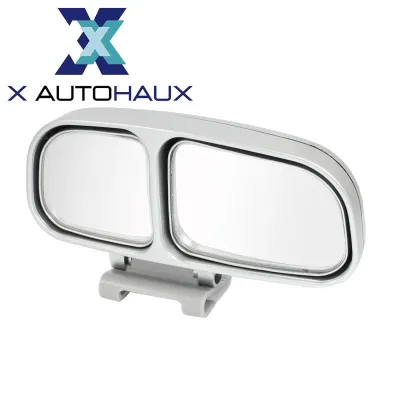
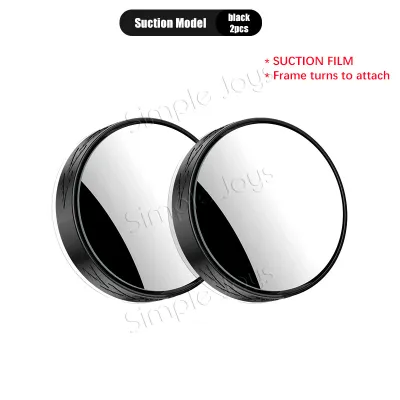
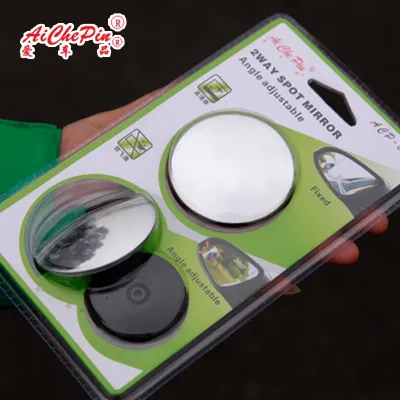
![[SG STOCK]2PCS Blind Spot Mirror Set | Wide Angle Round Convex Rearview Auxiliary Mirrors for Car Reversing & Safety](https://img.lazcdn.com/g/p/b645ffc682f7c80ff3a364723c3a30df.jpg_400x400q80.jpg_.webp)
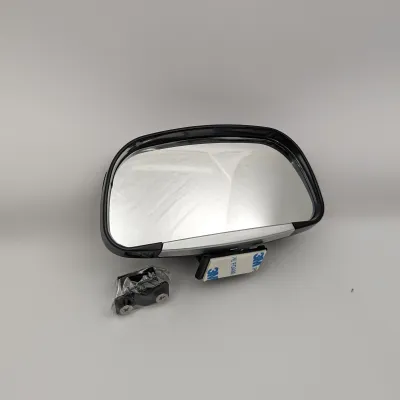
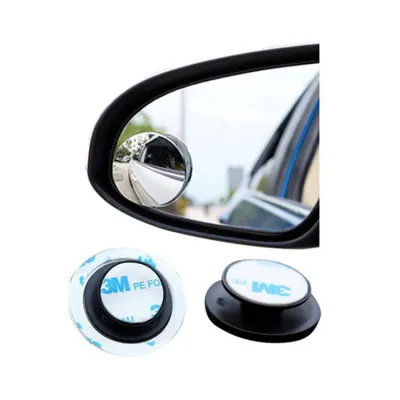

Prices are valid at publication and may change. Please refer to the product page for the latest price.
The radius of curvature, designated by the letter “R” followed by a number in millimeters, represents the radius of the sphere from which the curved glass slice is cut. A smaller R-value indicates a tighter, more aggressive curve. For example, an R800 mirror is cut from a smaller sphere and has a much steeper curve than an R1400 mirror. Conversely, a larger R-value represents a flatter glass surface that behaves more like a standard flat mirror.
Field-of-view expansion, marketed in degrees, measures the additional horizontal angle of visibility gained over a flat mirror. A 10° expansion offers a mild widening of your peripheral view, while a 20° expansion provides a highly panoramic view. It is important to note that as the expansion degree increases, the physical glass must be curved more aggressively, which directly impacts how images are scaled.
Standard flat mirrors reflect light at a true one-to-one ratio, providing highly accurate distance and speed feedback. However, their flat profile severely limits your peripheral vision, leaving large blind spots on both sides of the vehicle. Convex mirrors solve this limitation by curving outward, gathering light from wider angles and channeling it toward your eyes, though this inherently alters image proportions.
How Curvature Affects Field of View and Distance Perception
The primary benefit of increasing mirror curvature is the rapid expansion of your field of view. By bending light inward, a convex surface allows you to see vehicles, cyclists, and pedestrians traveling in your adjacent lanes without requiring extreme head turning. This makes lane changes and merges significantly safer, especially in dense traffic.

However, this visual expansion introduces distance distortion. Because the curved surface compresses a wide area onto a relatively small piece of glass, the objects reflected in the mirror must shrink to fit. This shrinkage triggers the classic warning: “objects in mirror are closer than they appear.” A more aggressive curvature (such as R800 or a 20° expansion) shrinks images drastically, making an approaching car seem hundreds of meters away when it may actually be right next to your rear bumper.
Extreme curvature also introduces edge distortion and can cause visual fatigue. At the outer margins of highly curved glass, light bends at sharp angles, creating a warping or “fish-eye” effect. When you perform quick shoulder checks or glance at your mirrors, your brain must actively process this warped perspective to calculate speeds and distances. Over long drives, this constant cognitive adjustment can lead to eye strain and delayed reaction times.
Choosing the Right Spec for Your Driving Scenario
Your ideal curvature specification depends heavily on your daily driving environment, vehicle type, and which side of the vehicle the mirror is mounted on. There is no single setting that works perfectly for every situation, meaning you must choose based on your primary driving needs.
- City Driving and Urban Commuting: Navigating tight urban areas, such as the busy streets of Singapore, requires constant vigilance against filtering motorcycles, bicycles, and sudden lane mergers. A moderate curvature rating, such as R1200 or a 10° to 15° expansion, is highly effective here. It widens your peripheral vision enough to spot lane-splitting riders without distorting distance so severely that you cannot safely judge gaps in slow-moving traffic.
- Highway and Expressway Cruising: At higher speeds, accurate distance and speed judgment become critical. If your daily commute consists mostly of expressways, flatter mirrors with lower curvature (such as R1400 or R2000) are much safer. These specs keep image compression to a minimum, allowing you to accurately estimate the closing speed of fast-approaching vehicles before changing lanes.
- Towing and Large Vehicles: Vans, trucks, and vehicles towing trailers have massive blind spots that standard glass cannot cover. For these setups, highly curved auxiliary mirrors (R800 or 20° expansion) are often necessary to see past the body of the trailer. However, these should always be used as secondary reference points; your primary mirrors should maintain a milder curvature to preserve accurate distance tracking.
- Driver Side vs. Passenger Side: The physical distance between your eyes and the mirror changes how you perceive the reflection. Because the passenger-side mirror is much further away, it naturally has a narrower field of view, which is why manufacturers equip it with a higher curvature (typically R1000) from the factory. The driver-side mirror sits much closer to you and requires a flatter profile (such as R1400 or a completely flat glass) to ensure you have a reliable, undistorted reference point close to your vehicle.
Safety, Compliance, and Installation Checks
Before purchasing or installing any mirror modifications, you must verify local road safety regulations. In many jurisdictions, including Singapore under Land Transport Authority (LTA) guidelines, there are strict rules regarding driver-side mirror curvature and reflectivity. Modifying your primary driver-side mirror with highly distorted aftermarket glass can render your vehicle non-compliant and compromise your safety on the road.
Replacing an entire factory mirror assembly with aftermarket glass carries technical risks. Modern side mirrors are highly integrated systems containing heating elements, auto-dimming features, and blind-spot monitoring (BSM) sensors. Installing unverified aftermarket glass can disable these safety features or trigger diagnostic error codes on your dashboard. Always consult your vehicle’s owner manual and verify model, year, and interface compatibility before purchasing replacement glass. If your vehicle features integrated electronics, have the replacement performed by a qualified automotive technician.
If you want to reduce blind spots without replacing your factory glass, add-on convex spot mirrors are a highly effective, reversible, and low-risk alternative. These small, stick-on mirrors can be placed directly onto your existing glass. For optimal performance, mount them on the outer lower corner of your side mirrors. This placement maximizes your view of adjacent lanes and low-lying obstacles, like curbs, without blocking your primary line of sight across the main mirror surface.
Frequently Asked Questions (FAQ)
Can I install a convex mirror on the driver's side?
While you can install a convex mirror on the driver’s side, you should proceed with extreme caution. Severe distance distortion on the driver’s side can make passing vehicles appear much further away than they are, leading to dangerous lane-change decisions. Many regions legally mandate flat or very mildly curved glass (such as R1400) on the driver’s side to ensure accurate depth perception. Always check your local vehicle modification laws and prioritize a flat or near-flat profile for the driver’s side to maintain safety.
Do convex mirrors work well in heavy rain?
Convex glass does not inherently repel water, and its curved shape can actually worsen wet-weather visibility. Because a convex mirror compresses the entire image, small rainwater droplets on the glass surface will block and distort a much larger portion of your field of view compared to a flat mirror. To maintain visibility in heavy downpours, verify the product label of an automotive-approved hydrophobic rain repellent and apply it to clean glass. If your vehicle is equipped with heated side mirrors, keeping the heating elements active during rain will help evaporate droplets and clear your view.
Community discussion
Share your experience or ask a question. Comments are reviewed before publication.