
When stepping into a car parked under the hot sun, the sudden wave of heat and the dry smell of baking upholstery are familiar discomforts. A quality sunshade acts as a primary barrier against this intense solar energy, but choosing the right one requires looking past basic marketing terms. Understanding technical specifications like Ultraviolet Protection Factor (UPF) ratings and the science behind reflective coatings is essential to finding a product that actually protects your vehicle.
These specifications represent two distinct lines of defense: blocking harmful radiation that degrades your interior, and reflecting the light that raises cabin temperatures. By learning how these materials interact with sunlight, you can select a sunshade tailored to your daily parking conditions and vehicle dimensions.
Understanding UPF Ratings and UV Protection
The Ultraviolet Protection Factor, or UPF, is a standardized rating system that measures the amount of ultraviolet (UV) radiation a fabric or material blocks. While we often associate UV protection with sunscreen, automotive interiors require similar shielding to prevent dashboard cracking, leather fading, and steering wheel degradation. A sunshade with a certified UPF rating ensures that both UVA and UVB rays are kept from penetrating the cabin glass and reaching sensitive surfaces.
Products mentioned in this guide
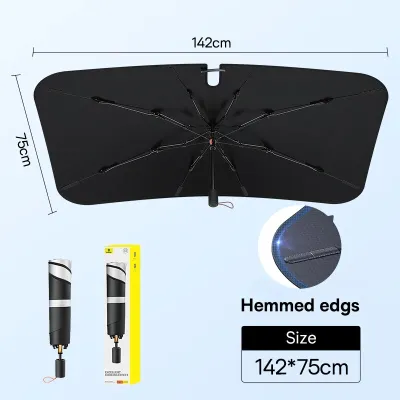
![Car Windshield Sunshade Umbrella UV Protection [ Interior Temperature Reduction Car Foldable Accessories ]](https://img.lazcdn.com/g/p/adff6e9e5f18b905b6f38c84710c1276.jpg_400x400q80.jpg_.webp)
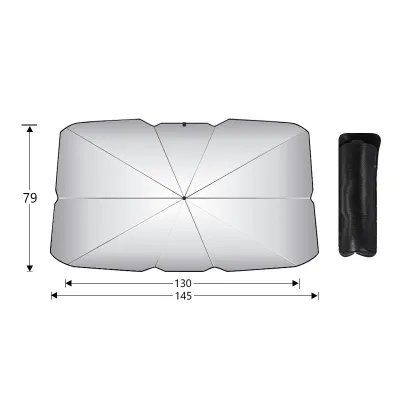
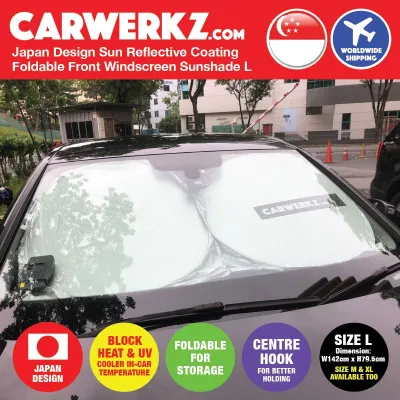
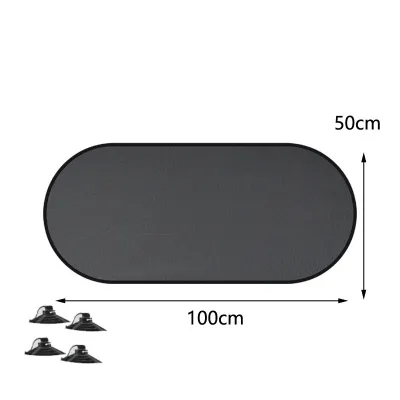
Prices are valid at publication and may change. Please refer to the product page for the latest price.
When shopping for a sunshade, it is important to look for verified testing standards on the product packaging rather than accepting generic “UV-blocking” claims. Reputable manufacturers test their materials according to recognized textile standards, such as ASTM D6603 or equivalent international guidelines. These certifications guarantee that the material has undergone laboratory testing to confirm its actual level of radiation resistance.
However, a common misconception is that a high UPF rating automatically translates to a cooler car interior. In reality, UPF specifically measures the blockage of ultraviolet light, which represents only a small portion of the solar spectrum. Infrared light and visible light are the primary drivers of cabin heat buildup. Therefore, while a high-UPF fabric will protect your dashboard from sun damage, it must be paired with other thermal technologies to keep the air temperature down.
Evaluating Reflective Coatings for Heat Reduction
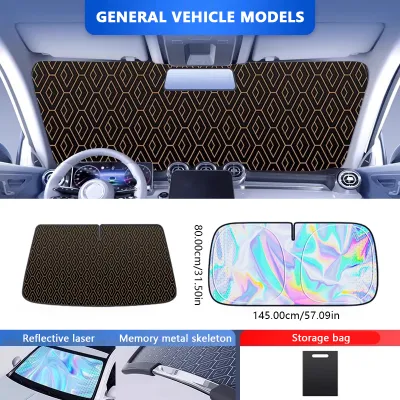
To combat the infrared and visible light that heats up your car, sunshades utilize reflective coatings or metallic outer layers. These surfaces, often made of aluminum foil, metalized polyester, or specialized silver-coated fabrics, work by bouncing solar radiation back through the windshield before it can be absorbed by the dark surfaces of your interior. This process of reflecting radiant energy is the most effective way to limit initial heat transfer into the cabin.

For these reflective coatings to work efficiently, the shiny, metallic layer must always face outward toward the sun. If installed backward, the shade may actually absorb heat and radiate it directly into the vehicle. Additionally, the physical condition of this reflective layer plays a major role in its long-term performance; deep creases, scratches, or peeling sections reduce the surface area capable of reflecting light, allowing more solar energy to penetrate the cabin.
It is also helpful to understand that reflectivity and insulation are two different mechanisms. Reflective coatings manage radiant heat by bouncing light away, but they do not stop the heat that has already bypassed the outer layer from warming the air. To address this conductive heat, high-performance sunshades incorporate a middle insulation layer, such as closed-cell foam or bubble wrap, which acts as a thermal barrier to slow down heat transfer.
Comparing Sunshade Materials and Structural Build
Choosing the right sunshade involves balancing thermal performance with daily usability and storage convenience. Multi-layer bubble foil sunshades are highly effective because they combine a reflective outer layer with an insulating air-pocket core. These shades are typically rigid and fold like an accordion, offering excellent heat resistance but requiring more storage space in your back seat or boot.
In contrast, foldable nylon or polyester mesh shades prioritize compact storage and quick deployment. These shades use a flexible wire frame that allows them to twist and fold into a small circle, easily fitting into seatback pockets or door bins. While they are highly convenient for quick stops, their physical construction generally offers less thermal insulation compared to thick, multi-layer alternatives.
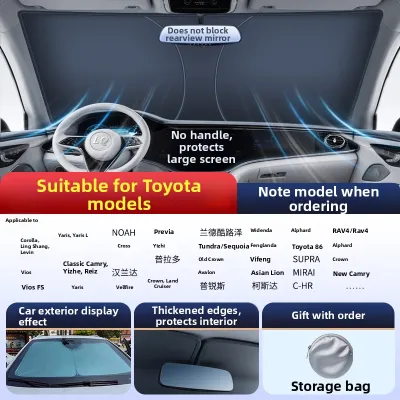
Regardless of the material you choose, structural integrity is key to ensuring the shade remains effective over time. Look for sunshades with sturdy, high-tensile wire frames and reinforced, double-stitched edges that prevent sagging. A sagging sunshade creates gaps around the rearview mirror and the edges of the windshield, allowing direct sunlight to bypass the barrier and heat up the dashboard. Always measure your windshield’s height and width, and consult your vehicle’s documentation to ensure a snug, edge-to-edge fit.
Choosing the Right Specs for Your Parking Routine
Your daily parking habits should dictate the specific sunshade technology you prioritize. If your vehicle is regularly parked outdoors for long hours in open-air car parks, investing in a heavy-duty, multi-layer reflective shade is highly recommended. The combination of a highly reflective outer coating and a thick insulating core will provide the maximum possible defense against both UV damage and extreme heat buildup.
For drivers who primarily park in shaded structures, multi-story car parks, or only make short stops during the day, a lightweight, foldable fabric shade with a verified UPF rating is often the more practical choice. These shades are fast to set up and pack away, providing sufficient UV protection to keep your interior materials safe without the bulk of a heavy thermal barrier.
Finally, always prioritize safety and local regulations when using interior accessories. In Singapore, as in many regions, it is illegal to have any obstruction on your windshield or front side windows while the vehicle is in motion. Ensure that your sunshade is completely folded and securely stored in the cabin before starting your engine, preventing it from sliding under the pedals or blocking your view of the road.
Frequently Asked Questions (FAQ)
Do darker sunshade fabrics block more heat than lighter ones?
No, darker fabrics do not block more heat; in fact, they absorb more solar radiation and can transfer that heat directly into your cabin. For effective temperature control, look for sunshades with highly reflective, silver, or light-colored outward-facing layers, which bounce heat away rather than absorbing it.
Can I leave a reflective sunshade on the windshield while driving?
No, you must never leave a sunshade on the windshield or front side windows while driving. All sunshades must be completely removed and safely stored in the cabin before operating the vehicle to maintain full visibility and comply with traffic safety laws.
Community discussion
Share your experience or ask a question. Comments are reviewed before publication.