
A 170-degree viewing angle on a dash cam captures a broad, sweeping perspective of the road ahead, including adjacent lanes, immediate sidewalks, and merging traffic. It offers a practical balance between wide lateral coverage and acceptable edge distortion. This makes it a popular choice for drivers looking to document side-impact incidents or sudden lane intrusions. However, understanding how this angle translates to real-world footage requires looking beyond the marketing numbers to see how it behaves on the road.
What a 170-Degree Field of View Actually Covers
When evaluating dash cam specifications, the field of view (FOV) is one of the most critical metrics. However, manufacturers almost always measure this angle diagonally rather than horizontally. An advertised 170-degree diagonal FOV typically translates to a horizontal coverage of roughly 130 to 140 degrees. This distinction is vital because it is the horizontal span that determines how much of the lanes to your left and right are actually recorded.
With a true 170-degree diagonal lens mounted near your rearview mirror, the camera can easily capture three to four lanes of traffic on a wide road. This coverage is wide enough to document vehicles traveling in your immediate blind spots as they begin to pull alongside your front doors. It also captures pedestrians stepping off the curb at intersections and cyclists riding along the edge of the roadway.
Products mentioned in this guide
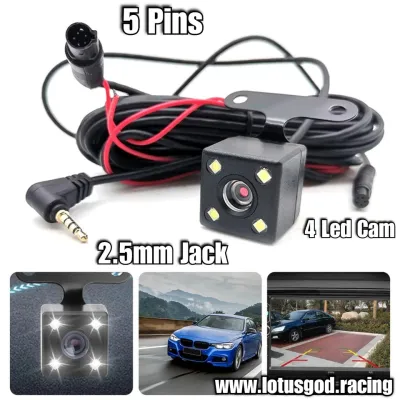
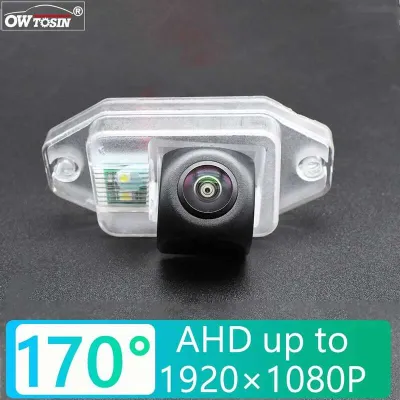
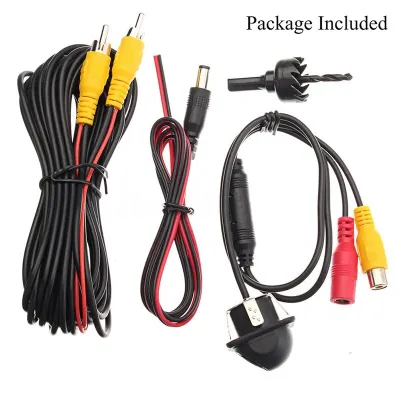
![[SG FREE ] 170° Car Rear View Backup Reverse Parking Camera IR Night Vision Waterproof](https://img.lazcdn.com/g/p/1ed9798f6aa9809559d6966d607ecaa8.jpg_400x400q80.jpg_.webp)
Prices are valid at publication and may change. Please refer to the product page for the latest price.
Despite this expansive view, physical blind spots still remain. A single front-facing camera, no matter how wide its lens, cannot capture events occurring behind the B-pillar of your vehicle. Incidents involving rear-end collisions or side-swipes near the rear quarter panels will fall outside the camera’s line of sight. To achieve complete coverage, drivers must combine a wide-angle front camera with a dedicated rear-facing unit.
How 170 Degrees Compares to Narrower and Wider Angles
Choosing the right viewing angle involves a direct trade-off between peripheral coverage and image detail. Standard lenses with a narrower 120-degree to 140-degree field of view concentrate their pixels on a much smaller physical area. This concentration results in sharper details at a distance, making it significantly easier to read license plates of vehicles directly ahead. However, these narrower lenses are more likely to miss the critical moments of a side-impact collision or an aggressive merge.

On the other end of the spectrum, ultra-wide lenses claiming 180 degrees or more offer maximum lateral coverage but introduce severe optical distortion. This distortion, commonly known as the “fisheye” effect, causes straight lines to bend dramatically near the edges of the frame. It also compresses the center of the image, making vehicles directly in front of you appear much further away than they actually are, which severely compromises detail.
A 170-degree lens sits at the upper limit of practical single-lens coverage. To manage the inherent distortion of such a wide angle, high-quality dash cams employ software-based distortion correction. This technology digitally flattens the curved edges of the video before saving the file. While this makes the footage look more natural, the digital stretching can still result in a slight loss of sharpness near the outer edges of the frame.
Evaluating 170-Degree Coverage for Different Driving Scenarios
In dense urban environments, such as navigating busy city streets or tight multi-storey carparks in Singapore, a wide-angle lens is highly beneficial. These areas are filled with unpredictable hazards, including motorcyclists filtering through traffic, delivery riders, and pedestrians crossing at unexpected points. A 170-degree lens provides the necessary visual context to prove who had the right of way in complex, close-quarter situations.
On fast-moving expressways, however, the limitations of a wide angle become more apparent. Because the camera’s resolution is spread across a wide arc, objects directly ahead appear smaller. If a vehicle cuts you off at high speed and continues forward, capturing a clear reading of its license plate becomes difficult unless the vehicle is very close to your front bumper. For highway driving, distance clarity is often more valuable than extreme side coverage.
For parking protection, a wide-angle lens offers excellent monitoring capabilities. When parked in tight spaces, the camera can record activity occurring on either side of your front bumper, such as another vehicle scraping your car while turning. However, because the camera remains stationary, it still cannot document impacts to the rear doors or trunk unless paired with a secondary rear camera.
Crucial Specs to Pair with a Wide Viewing Angle
To ensure a 170-degree lens produces usable footage rather than a wide, blurry image, it must be paired with the right supporting hardware. First and foremost is sensor resolution. A standard 1080p Full HD resolution is often insufficient for wide-angle lenses because the pixels are stretched too thin across the frame. Opting for a camera with 2K (1440p) or 4K (2160p) resolution is highly recommended to maintain sharpness across the entire field of view.
The camera’s image sensor and light-processing capabilities are equally important. Wide-angle lenses capture a vast amount of environmental light, which can include a bright sky and a dark road surface simultaneously. Without High Dynamic Range (HDR) or Wide Dynamic Range (WDR) technology, the camera may overexpose the sky, leaving the road and surrounding vehicles in deep shadow. A high-quality sensor ensures balanced exposure even in challenging lighting conditions, such as driving through tunnels or underpasses.
Finally, proper installation is critical to maximizing the effective field of view. The camera should be mounted high on the windshield, ideally directly behind or next to the rearview mirror. This position minimizes the amount of car hood captured in the frame and reduces dashboard reflections. Adjusting the lens so that the horizon sits roughly in the middle of the screen helps the camera’s auto-exposure sensor calculate the correct lighting balance for the road ahead.
Frequently Asked Questions (FAQ)
Does a wider viewing angle always guarantee better dash cam footage?
No, a wider viewing angle does not guarantee better footage. While a wider lens captures more of the sides, it also introduces optical distortion and reduces the clarity of distant objects. A balanced angle paired with high resolution and quality image processing often provides more usable evidence than an ultra-wide lens that produces distorted, blurry images.
Can a 170-degree dash cam clearly read the license plate of the car directly in front?
It depends heavily on the camera’s resolution and the distance to the vehicle. Because a 170-degree lens spreads its pixels across a wide area, the car directly in front will appear further away than it actually is. To read license plates clearly, you generally need a high-resolution sensor, such as 2K or 4K, and the vehicle must be relatively close to your front bumper.
Community discussion
Share your experience or ask a question. Comments are reviewed before publication.