
Quick Answer: Which Paint Protection Is Right for You?
When deciding how to protect your car’s paintwork in Singapore, the choice between traditional turtle wax and a modern ceramic coating comes down to balancing your budget, your parking environment, and how much time you want to spend on maintenance. There is no single “best” option; rather, each solution serves a distinct lifestyle and vehicle ownership pattern.
Traditional or synthetic waxes, such as those from the Turtle Wax range, are highly accessible, cost-effective, and perfect for DIY enthusiasts who enjoy hands-on car care on weekends. These products provide a beautiful gloss and reliable short-term protection but require regular reapplication to withstand the elements. Conversely, ceramic coatings represent a long-term, high-performance investment. They are ideal for owners seeking maximum protection against harsh outdoor elements with minimal ongoing effort, and who are willing to pay an upfront premium for professional application. By evaluating how you use your car, where you park, and your willingness to perform manual maintenance, you can easily identify which paint protection method aligns with your needs.
Understanding the Basics: Turtle Wax vs. Ceramic Coating Bonding
To make an informed choice, it is essential to understand how these two protective options interact with your car’s paint on a physical and chemical level. While both shield your clear coat from environmental damage, their bonding mechanisms, durability, and physical characteristics are fundamentally different.
Products mentioned in this guide
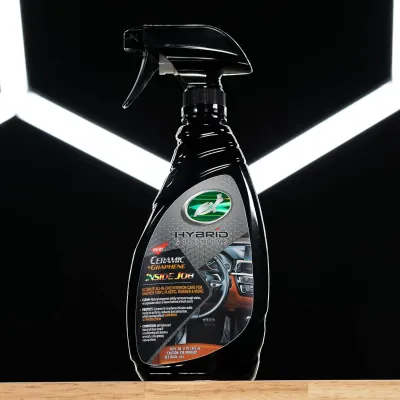
Prices are valid at publication and may change. Please refer to the product page for the latest price.

Traditional car waxes, whether formulated with natural carnauba or synthetic polymers, act as a physical sacrificial barrier. When you apply wax to your car’s exterior, the product fills microscopic pores and imperfections in the clear coat. Once buffed, it leaves behind a smooth, highly reflective surface that enhances paint depth and causes water to bead. However, this layer merely sits on top of the paintwork. Because there is no chemical reaction between the wax and the clear coat, the bond is purely physical and temporary. Over time, exposure to heat, friction, road grime, and car wash detergents will gradually wear this sacrificial layer away, requiring regular reapplication.
In contrast, a ceramic coating is a liquid polymer typically formulated with silicon dioxide (SiO2). When applied to a clean, bare clear coat, the ceramic coating does not simply sit on the surface; it undergoes a chemical reaction that creates a covalent bond with the factory paint. As the liquid cures, it transforms into a semi-permanent, ultra-thin, and incredibly dense glass-like layer that becomes an extension of the paint itself. This bonded structural layer is significantly harder and more durable than any wax. It cannot be washed away by water or standard detergents, and it provides a highly resilient barrier that resists degradation from heat, chemicals, and environmental contaminants far more effectively than any topical wax layer.
Climate Durability: Surviving Singapore's Heat and Monsoons
Singapore’s tropical climate presents a unique set of challenges for automotive paintwork. The combination of intense, year-round UV radiation, high relative humidity, and sudden, heavy monsoon downpours creates a highly corrosive environment that can rapidly degrade unprotected clear coats.
Traditional and synthetic waxes are highly susceptible to thermal degradation. In Singapore, a car parked in direct sunlight can experience surface temperatures exceeding 60 degrees Celsius. Under this intense heat, natural carnauba waxes begin to soften and break down rapidly. Furthermore, the frequent, heavy rainstorms characteristic of local monsoon seasons physically erode the temporary wax layer. If your vehicle is parked daily in an open-air HDB carpark, fully exposed to the elements, a high-quality wax layer may only last between four to eight weeks before wearing away. Even if you park in a sheltered condominium basement, the high ambient humidity can slow down the curing process of DIY waxes during application, reducing their overall durability.
Ceramic coatings, by comparison, are engineered to withstand extreme temperatures and environmental hazards. The chemical bond formed by a ceramic coating is highly stable and does not degrade under intense UV exposure, preventing the paint underneath from oxidizing, fading, or losing its luster. Additionally, the exceptional hydrophobic properties of ceramic coatings mean that rainwater, road spray, and atmospheric pollution slide off the surface with ease. This significantly reduces the risk of water spotting—a common issue in Singapore where rain often mixes with airborne dust and industrial fallout.
Furthermore, ceramic coatings provide superior protection against localized chemical etching. In Singapore’s leafy residential estates, cars are frequently parked under rain trees, exposing them to highly acidic bird droppings and sticky tree sap. If left untreated on a waxed surface, these contaminants can eat through the wax and etch into the clear coat within hours. A ceramic coating’s chemical resistance provides a vital buffer, giving you a much wider window of time to wash off these contaminants before they cause permanent damage to your vehicle’s paintwork.
Cost and Maintenance: Turtle Wax DIY Effort vs. Professional Ceramic Coating
When comparing turtle wax to ceramic coatings, the financial commitment and the time you must dedicate to maintenance are major deciding factors. Both options carry distinct upfront costs and long-term maintenance requirements that appeal to different types of car owners.
From an upfront financial perspective, traditional and synthetic waxes are exceptionally budget-friendly. A single bottle or tub of Turtle Wax, along with a set of microfiber towels and foam applicator pads, falls into a very low price band. This minimal initial investment makes waxing highly attractive for budget-conscious drivers or those who view car detailing as an enjoyable weekend hobby. However, the true cost of a wax-based maintenance routine is measured in time and physical labor. To keep your car protected year-round in Singapore, you must commit to washing, prepping, and reapplying the wax every one to two months. This repetitive physical effort can become a significant chore for busy individuals.
On the other hand, a professional ceramic coating represents a substantial upfront capital investment, placing it in a much higher price band. This premium cost is primarily driven by the extensive labor required before the coating is even applied. Professional detailers must perform multi-stage paint correction—including chemical decontamination, clay bar treatment, and machine polishing—to ensure the paint is completely free of swirl marks, scratches, and oxidation. Applying the coating itself requires a climate-controlled, dust-free environment and specialized training to ensure an even, flawless finish.
While the initial cost of a ceramic coating is high, it significantly reduces the time and effort required for ongoing maintenance over the vehicle’s lifespan. A ceramic-coated car does not require regular waxing or polishing. Because the surface is highly hydrophobic and smooth, dirt and road grime struggle to cling to the paint, making routine washes incredibly fast and simple. However, ceramic coatings are not entirely maintenance-free. To preserve the coating’s hydrophobic properties and prevent premature degradation, you must avoid automated petrol station car washes, which use harsh nylon brushes and highly alkaline recycled water that can scratch and wear down the coating. Instead, you must wash the vehicle by hand using pH-neutral car shampoos and occasionally apply a dedicated ceramic booster spray to maintain the coating’s performance.
Application and Safety: Preparation and DIY Risks
Before purchasing any paint protection product, it is vital to understand the application process, the level of preparation required, and the potential risks involved. Always check the applied product’s label and your vehicle manufacturer’s care instructions before starting any detailing work. If instructions conflict, or if you are unsure of your paint’s condition, stop and consult a qualified professional detailer.
Applying a traditional or synthetic wax like Turtle Wax is a highly forgiving, low-risk DIY task. The process is straightforward: after washing and drying the car, you apply a thin, even layer of wax using a foam applicator, let it haze over for a few minutes, and then buff it off with a clean microfiber towel. If you apply too much product, leave it on too long, or accidentally get it on non-painted plastic trim, the mistake is easily reversible. You can use a dedicated wax-safe cleaner or a mild clay bar to remove the excess without any risk of permanently damaging your vehicle’s clear coat. This makes wax an excellent choice for beginners and casual DIYers.
Ceramic coatings, however, carry a much higher level of risk and require meticulous preparation. Because a ceramic coating chemically bonds to the paint and cures into a hard, transparent layer, it will lock in any underlying defects. If your paint has swirl marks, light scratches, water spots, or oxidation, applying a ceramic coating directly over them will make those imperfections permanent and highly visible. Therefore, machine polishing and paint correction are mandatory steps prior to application.
Furthermore, applying the ceramic coating itself demands extreme precision. The product must be applied in small sections, allowed to flash (evaporate slightly), and then carefully leveled and buffed. If you fail to buff away the excess product in time, it will cure into “high spots”—unsightly, dark, or iridescent patches that look like oil slick stains. Once a ceramic coating has fully cured, these high spots cannot be washed or wiped away; they can only be removed by physically compounding or wet-sanding the paint, which risks thinning your clear coat. Unless you have a covered, dust-free garage, specialized lighting, and experience with machine polishers, attempting to apply a professional-grade ceramic coating at home in Singapore is highly discouraged.
Decision Framework: Which Should You Choose?
To help you finalize your decision, let us look at a structured framework that matches your specific driving habits, budget, and lifestyle to the most suitable paint protection method.
Choose Turtle Wax (or similar waxes) if:
- You enjoy spending your weekends performing hands-on DIY car care and find the process of detailing therapeutic.
- Your vehicle is primarily parked in sheltered, indoor environments, such as a condominium basement or a multi-storey HDB carpark, which minimizes exposure to direct UV rays and heavy rain.
- You want to keep your upfront costs as low as possible and prefer a highly economical, flexible solution.
- You do not mind dedicating a few hours every one to two months to wash, prep, and reapply paint protection.
Choose Ceramic Coating if:
- You want the absolute best long-term protection for your vehicle's paintwork and are willing to pay a premium for it.
- Your car is frequently parked outdoors in open-air carparks, leaving it exposed to intense tropical sunlight, heavy monsoons, bird droppings, and tree sap.
- You prefer a low-maintenance ownership experience where routine washing is quick, easy, and does not require regular waxing or polishing.
- You are buying a brand-new vehicle and want to preserve its factory-fresh gloss and resale value from day one.
Verify first if:
- Your car's clear coat is already failing, peeling, heavily oxidized, or severely scratched. Neither wax nor ceramic coating can repair structural paint damage. If your paint exhibits white, chalky patches of oxidation or peeling clear coat, applying these products will not restore the finish. In these situations, you must consult a professional automotive body shop for a respray or professional paint restoration before applying any form of paint protection.
Frequently Asked Questions (FAQ)
Can I apply ceramic coating over existing car wax?
No, you cannot apply a ceramic coating directly over an existing layer of car wax or paint sealant. Ceramic coatings must form a direct chemical bond with the bare clear coat of your vehicle’s paintwork to cure properly and remain durable. If you apply a ceramic coating over wax, the coating will bond to the temporary wax layer instead of the paint. As the wax naturally degrades and washes away over the following weeks, the ceramic coating will peel off with it, resulting in premature product failure. Before applying any ceramic coating, you must completely strip away all existing waxes, glazes, and sealants using a dedicated wax-stripping car wash shampoo, followed by a thorough wipe-down with an isopropyl alcohol (IPA) prep spray.
Does ceramic coating make my car completely scratch-proof?
No, ceramic coatings do not make your car completely scratch-proof. While ceramic coatings create a hard, protective glass-like layer over your clear coat that offers excellent resistance to light wash marring, swirl marks, chemical etching, and environmental contaminants, they are not thick or flexible enough to absorb high-velocity physical impacts. Your car will still remain susceptible to rock chips, deep key scratches, shopping trolley dings, and improper washing techniques (such as using dirty sponges or abrasive cloths). If your primary concern is protecting your vehicle from physical impacts, stone chips, and road debris, you should consider installing paint protection film (PPF), which is a thick, self-healing polyurethane barrier designed specifically for impact resistance.
Community discussion
Share your experience or ask a question. Comments are reviewed before publication.