
Quick Answer: Hybrid Sealant vs Traditional Wax
Choosing between a modern hybrid spray sealant and a traditional carnauba paste or liquid wax is not about finding a universal winner. Instead, it is a choice between two distinct chemical approaches designed for different user priorities, environmental conditions, and maintenance habits.
Hybrid sealants, which often combine synthetic polymers with ceramic ingredients like silicon dioxide (SiO2), are engineered to prioritize long-term durability, chemical resistance, and intense water-beading properties. Traditional carnauba waxes, derived from natural palm leaves, focus primarily on delivering a deep, warm, and reflective gloss that enhances the natural depth of the vehicle’s paintwork.
The right option depends on your specific circumstances. If your vehicle is a daily driver exposed to harsh tropical sunlight, heavy downpours, and outdoor parking, a hybrid sealant generally offers more practical defense. If you own a show car, park in a sheltered garage, and enjoy the therapeutic process of hand-buffing your vehicle to a mirror-like finish, traditional wax remains a compelling choice. Always verify specific product claims by reviewing the manufacturer’s technical labels and instructions.
Products mentioned in this guide
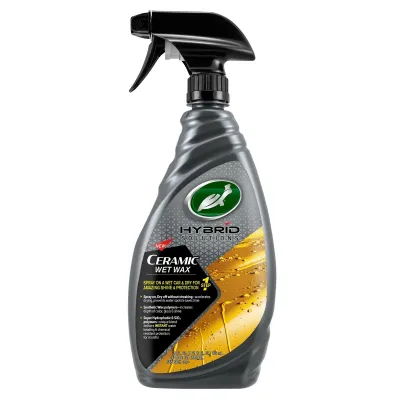
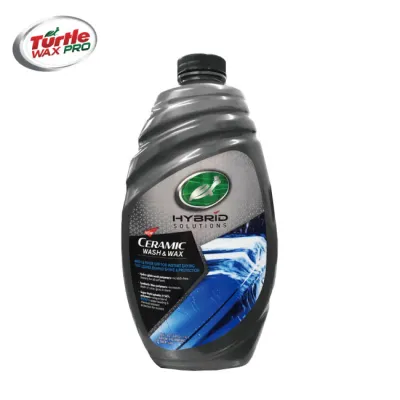
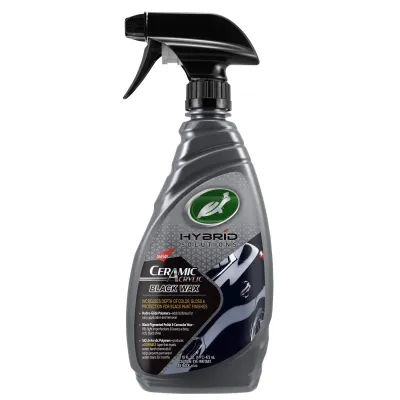
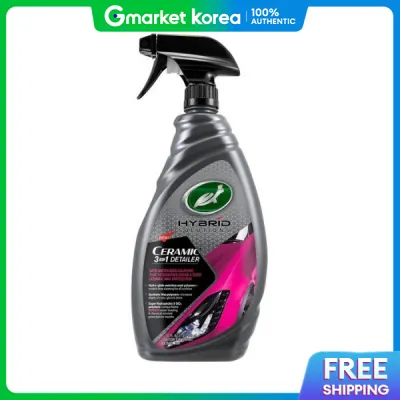
Prices are valid at publication and may change. Please refer to the product page for the latest price.
Understanding the Core Formulation Differences
To make an informed decision, you must understand what happens at the molecular level when these products are applied to your car’s clear coat.

Traditional carnauba waxes rely on natural organic compounds. Carnauba wax is a hard, natural substance that must be blended with solvents and oils to make it pliable enough for automotive application. When you apply a paste or liquid carnauba wax, these solvents evaporate, leaving behind a physical layer of wax that sits on top of the paint. This layer fills in microscopic imperfections in the clear coat, creating a flat surface that reflects light evenly to produce that signature warm, wet-look shine. However, because it is an organic wax, its melting point is relatively low, and it is highly susceptible to degradation from heat, detergents, and environmental acids.
In contrast, hybrid spray sealants represent a significant shift in chemical engineering. These formulations combine synthetic polymers with inorganic ceramic compounds, most notably silicon dioxide (SiO2). Instead of simply sitting on top of the paint, the synthetic polymers in a hybrid sealant are designed to cross-link and chemically bond with the clear coat. This bonding process creates a highly stable, microscopic barrier that is far more resilient than organic wax. The inclusion of SiO2 particles increases the surface tension of the cured layer, which is what causes water to bead up and slide off the surface so aggressively.
Because formulations vary widely between brands and product lines, it is essential to check the technical data sheets or product labels of the specific bottle you purchase. Some hybrid products are designed as pure sealants, while others are all-in-one formulations that include light polishing agents or a small amount of carnauba wax to mimic the traditional warm gloss while maintaining synthetic durability.
Evaluating Paint Protection and Durability
When evaluating how well a product protects your vehicle, durability is often the primary metric. In a demanding climate characterized by intense UV radiation, high humidity, and frequent rain, the protective layer on your paint is constantly under siege.
Hybrid sealants typically offer significantly longer protection intervals than traditional waxes. While a high-quality carnauba paste wax might provide protection for a few weeks to a couple of months under ideal conditions, a properly applied hybrid spray sealant can often maintain its protective qualities for several months. This extended lifespan is due to the synthetic polymers’ resistance to high temperatures and chemical degradation. While tropical heat can cause natural carnauba wax to soften and break down rapidly, synthetic bonds remain stable even under direct, midday sun.
Chemical resistance is another critical factor. Your vehicle’s paint is regularly exposed to acidic contaminants such as bird droppings, tree sap, and industrial fallout, as well as alkaline road grime and harsh car wash soaps. Traditional carnauba wax offers limited resistance to strong chemicals; a single wash with a high-pH soap can strip the wax layer entirely. Hybrid sealants, thanks to their ceramic and synthetic structure, are much more resilient against chemical attacks, giving you a wider window of safety to wash off contaminants before they etch into your clear coat.
To evaluate the state of your paint’s protection, you can perform a simple water behavior test. Spray clean water onto a clean, dry panel. If the water beads into tight, tall droplets that roll off the surface easily when the vehicle is tilted or driven, the protective layer is active. If the water flatly pools or sheets slowly across the panel, the protection has degraded, and it is time to reapply. Remember that actual durability is highly dependent on how thoroughly you prepare the paint surface before application, as contaminants on the clear coat will prevent any sealant or wax from bonding correctly.
Ease of Application and Time Investment
The physical effort and time required for application are major deciding factors for many car owners. Traditional paste or liquid waxes require a methodical, multi-step process that can be physically demanding.
Applying a traditional paste wax involves using a foam applicator pad to spread a thin, even layer over the paintwork, usually working one panel at a time. You must then wait for the wax to dry to a hazy finish—a process that can take anywhere from five to fifteen minutes depending on ambient temperature and humidity. Once hazed, the wax must be buffed off using a clean microfiber towel. This buffing process requires significant physical effort, especially if the wax was applied too thickly or left to cure for too long, which can make it incredibly difficult to remove.
Hybrid spray sealants, on the other hand, are designed for speed and convenience. The typical application method is a spray-on, wipe-off process. You lightly mist the product onto a clean paint panel, spread it evenly with a microfiber towel, and then immediately buff it to a high shine with a second, dry microfiber towel. There is usually no need to wait for the product to haze, which slashes the total detailing time by more than half.
However, hybrid sealants carry their own risk of user error, particularly in the form of streaking or high spots. Because these products contain active synthetic polymers and ceramic ingredients that bond quickly, applying too much product or working on a hot panel in direct sunlight can cause the sealant to cure unevenly. These high spots appear as dark, cloudy patches or oily streaks that can be difficult to buff out once fully cured. To avoid this, always work in a shaded, cool area, use the product sparingly, and keep a damp microfiber towel on hand to quickly level out any uneven areas before they dry.
Calculating Cost and Value Per Application
To understand the true financial impact of your choice, you must look beyond the initial retail price of the bottle or tin. A comprehensive cost-of-ownership calculation should factor in the product’s coverage, longevity, and the necessary preparation materials.
At first glance, a bottle of hybrid spray sealant and a tin of traditional paste wax may appear similarly priced, often ranging from S$20 to S$50 at local automotive retailers. However, the cost per application tells a different story. A single tin of high-quality paste wax can last for dozens of applications because you only need an incredibly thin layer to cover the vehicle. A bottle of spray sealant, while faster to apply, tends to be consumed more quickly per vehicle because users naturally spray more product than is strictly necessary.
However, when you factor in durability, the value proposition shifts. Because a hybrid sealant typically lasts several times longer than a traditional wax, you will need to apply it far less frequently. This means you use less product over the course of a year, reducing your overall consumption and saving you hours of labor.
Additionally, you must consider the cost of preparation materials. To get the best performance out of either product, your paint must be thoroughly cleaned. This requires investing in high-quality microfiber towels, a clay bar kit to remove embedded contaminants, and a surface preparation spray (such as an isopropyl alcohol mix) to strip away old waxes and oils. Because hybrid sealants rely on chemical bonding, these prep steps are absolutely essential; applying a hybrid sealant over a dirty or oily surface will severely compromise its durability, destroying its value advantage. Check current retail prices on official brand websites or authorized local automotive retailers to build an accurate budget for your detailing kit.
How to Choose the Right Wax for Your Vehicle
Making the final decision comes down to aligning a product’s characteristics with your lifestyle, detailing goals, and vehicle storage conditions.
Choose a hybrid spray sealant if:
- You want long-lasting paint protection with minimal maintenance.
- Your vehicle is parked outdoors, exposed to daily sun, rain, and environmental contaminants.
- You prefer a fast, straightforward application process that can be completed in under half an hour.
- You appreciate extreme water-beading performance that makes washing and drying your car much easier.
Choose a traditional paste or liquid wax if:
- You prioritize a deep, warm, three-dimensional gloss over long-term durability.
- Your vehicle is primarily a weekend cruiser or is parked in a sheltered, indoor garage.
- You genuinely enjoy the hands-on, traditional process of hand-waxing your car and find it satisfying.
- You are working on older paintwork or classic cars where a modern ceramic-infused product might not match the aesthetic or paint type.
Before applying any new product, always verify the condition of your vehicle’s clear coat. If your paint has existing ceramic coatings or professional paint protection films (PPF), check with the manufacturer or installer to ensure that your chosen wax or sealant is compatible and will not interfere with the underlying protection.
Frequently Asked Questions (FAQ)
Can I apply a hybrid spray sealant over traditional carnauba wax?
It is generally not recommended to apply a hybrid spray sealant directly over a fresh layer of traditional carnauba wax. Hybrid sealants rely on direct chemical bonding with the vehicle’s clear coat to achieve their promised durability and protection. If you apply a hybrid sealant over a layer of carnauba wax, the sealant will bond to the temporary wax layer rather than the paint itself. As the underlying carnauba wax naturally degrades and washes away over the following weeks, the hybrid sealant on top of it will wash away as well, severely shortening its lifespan. If you wish to combine both products, the general rule of detailing is to apply the synthetic hybrid sealant first as your base protective layer, allow it to cure fully according to the manufacturer’s instructions, and then apply the traditional carnauba wax on top to add a warm gloss.
How do I know when it is time to reapply the wax or sealant?
You can determine when your paint protection has degraded by performing three simple checks. First, conduct a water behavior test: spray water onto the clean panels of your vehicle. If the water fails to form tight, round beads and instead pools in large, flat sheets, the protective layer has worn off. Second, perform a visual inspection after washing. Look for a loss of depth and gloss in the paint, or notice if water spots and road grime are becoming harder to wash off. Finally, perform a tactile check. After washing and drying your car, gently slide the back of your hand across the paintwork. If the surface feels rough, dry, or grabby rather than slick and smooth, the wax or sealant has degraded, and environmental contaminants have begun to adhere to the clear coat, signaling that it is time for a thorough decontamination and reapplication.

Community discussion
Share your experience or ask a question. Comments are reviewed before publication.