
Choosing between modern ceramic-infused formulas and traditional carnauba waxes comes down to balancing your available preparation time, desired durability, and the specific visual finish you want for your vehicle. While traditional waxes offer a classic, warm gloss with a straightforward application process, ceramic-infused spray coatings leverage silicon dioxide (SiO2) technology to deliver extended protection and intense water-beading. Understanding how these two distinct protective barriers interact with your car’s clear coat will help you select the most efficient method for your maintenance routine and local driving conditions.
Understanding the Core Differences
Traditional car wax has been the standard for automotive paint protection for decades. Carnauba wax, harvested from the Brazilian palm tree, is prized for its natural water-repellent properties. Manufacturers blend this natural wax with synthetic polymers and solvents to make it pliable enough for automotive application. When applied to a vehicle, the solvents evaporate, leaving behind a hardened, sacrificial layer that fills in microscopic valleys in the clear coat. This physical barrier absorbs environmental wear, but because it does not chemically bond, it remains highly sensitive to heat and friction.
On the other side of the spectrum, modern DIY ceramic sprays and hybrid liquid waxes represent a significant shift in chemical engineering. These products utilize silicon dioxide (SiO2) or titanium dioxide (TiO2) nanoparticles as their active ingredients. When applied to a clean clear coat, these nanoparticles establish a chemical bond with the paint surface, essentially becoming an ultra-thin, hardened extension of the clear coat itself. This molecular bond is far more stable than the physical adhesion of traditional wax, allowing the protection to withstand higher temperatures and stronger cleaning agents.
Products mentioned in this guide
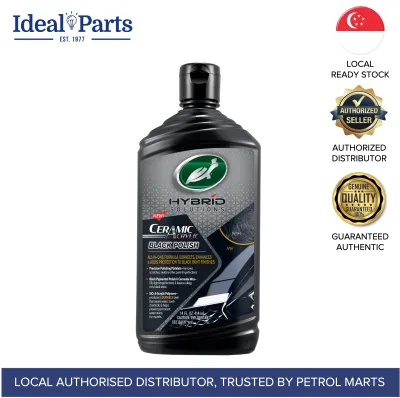
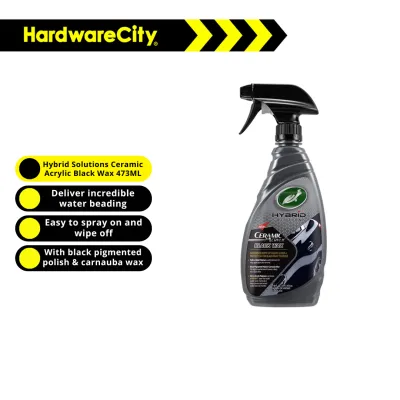
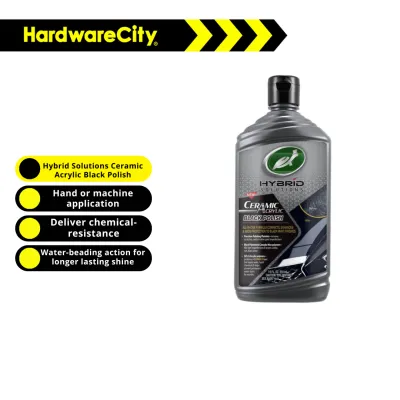
Prices are valid at publication and may change. Please refer to the product page for the latest price.
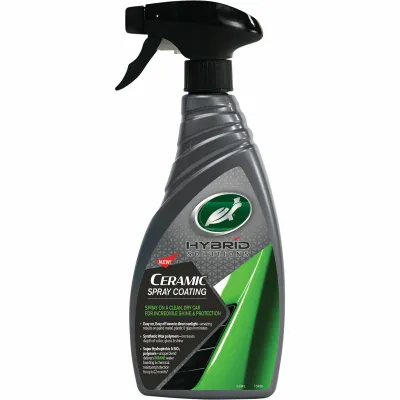
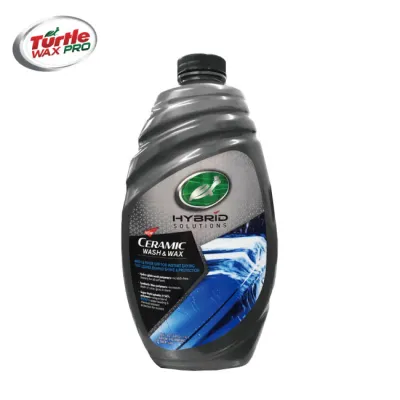
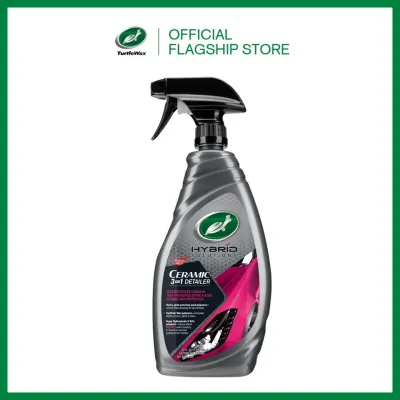
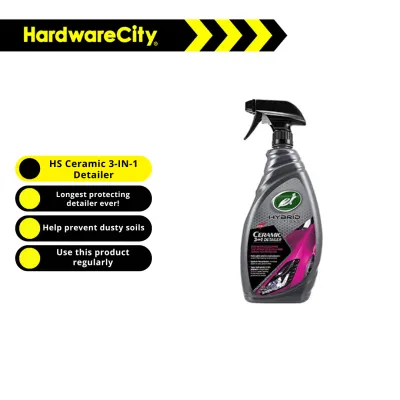
It is crucial for car owners to understand that consumer-grade ceramic sprays, such as those in the “Turtle Wax Hybrid Solutions” line, are distinct from professional-grade ceramic coatings. Professional coatings are highly concentrated liquids that require meticulous paint correction, a completely dust-free environment, and precise application techniques to prevent permanent high spots. Consumer-grade ceramic sprays are engineered to offer a user-friendly compromise, delivering many of the hydrophobic benefits of SiO2 in a spray-on, wipe-off format that can be safely applied in a home driveway.
Durability and Protection Levels
The durability of any paint protection product is directly tied to its chemical resilience. Traditional carnauba waxes are highly susceptible to environmental degradation. High ambient temperatures, intense sunlight, and repeated exposure to road grime will break down the wax layer relatively quickly. Under typical driving conditions, a high-quality carnauba wax may only last between four to eight weeks before the water-beading performance begins to fade, signaling that the paint is once again exposed to the elements.

Synthetic sealants and hybrid waxes offer a step up in longevity, but they still fall short of ceramic-infused products. Ceramic sprays create a highly durable shield that is exceptionally resistant to environmental hazards. The SiO2 structure is chemically inert, meaning it does not easily react with acidic substances like bird droppings, bug splatter, or acid rain. This chemical resistance prevents these common contaminants from etching into your clear coat as quickly, giving you a wider window of time to wash them off safely.
While product labels for ceramic sprays often claim several months of protection, you should treat these figures as maximum estimates under ideal conditions. Real-world durability is influenced by where you park, how often you drive, and the local climate. For instance, vehicles parked outdoors under intense tropical sun or exposed to heavy coastal salt air will require more frequent maintenance. To monitor the health of your protective layer, observe how water behaves on the paint during a wash; if water stops sheeting or beading cleanly, it is time to prepare the surface for a fresh application.
Application Process and Effort
Applying a ceramic spray requires a significantly higher level of surface preparation than applying a traditional wax. Because ceramic products form a semi-permanent bond with the clear coat, any dirt, road grime, or oxidation left on the paint will be locked beneath the protective layer. Before applying a ceramic spray, you must thoroughly wash, clay-bar, and chemically decontaminate the paint to remove embedded iron particles. If the paint has swirl marks or scratches, a machine polish is highly recommended to correct these defects before sealing them in.
Traditional wax is much more forgiving during application. While clean paint is still necessary, traditional wax does not chemically bond in the same way, meaning minor surface contaminants will not prevent it from adhering or ruin the finish. The application itself is a simple wipe-on, let-haze, and buff-off process. Ceramic sprays, on the other hand, require careful attention to flash times—the brief window where the product begins to bond and must be buffed clear—and specific curing times. You must also apply these products out of direct sunlight and within the manufacturer’s recommended temperature and humidity ranges to prevent uneven “high spots” or streaking.
Applying ceramic products over contaminated, oxidized, or failing paint is highly discouraged. Doing so can lock in imperfections, make the paint look dull, and significantly reduce the durability of the coating. If your clear coat is already peeling or showing signs of severe UV damage, neither wax nor ceramic spray will restore it, and you should consult a professional refinisher instead.
Visual Finish and Maintenance
The visual difference between these two protective methods is a matter of personal taste. Traditional carnauba wax is legendary for its ability to create a warm, deep, and wet-looking shine. It excels at filling in micro-scratches, which softens the light reflecting off the paint and gives the vehicle a smooth, classic appearance. This characteristic makes traditional wax a favorite for classic cars, show vehicles, and darker paint colors like deep black or metallic blue.
Ceramic coatings, by contrast, produce a very sharp, glassy, and highly reflective gloss. The SiO2 layer acts like an extra layer of glass over your clear coat, making the paint look incredibly bright and highlighting the sharp body lines of modern vehicles. This finish is highly reflective rather than deep, giving the car a clean, clinical, and modern look that stands out under bright streetlights or direct sunlight.
Maintenance is where ceramic coatings truly shine. The extreme hydrophobic properties of SiO2 cause water to bead up into tight droplets and roll off the surface, taking loose dirt and dust with it. This self-cleaning effect means your car stays cleaner for longer and is much easier to wash. When you do wash the vehicle, you must use a pH-neutral car shampoo that does not contain added waxes or gloss enhancers, as these additives can clog the ceramic pores and diminish its hydrophobic performance. Always use the two-bucket wash method and high-quality microfiber drying towels to prevent introducing new scratches to the protected surface.
Cost and Value Evaluation
Evaluating the true cost of vehicle protection requires looking beyond the initial purchase price of the product. A standard bottle of DIY ceramic spray or a tin of traditional wax can be found at similar price points on local ecommerce platforms or automotive specialty shops in Singapore. However, the total cost of ownership is shaped by the required preparation tools and the frequency of application over a twelve-month period.
For a traditional wax routine, your primary expenses are the wax itself and a set of clean microfiber cloths. Because you must reapply the wax every few weeks or months, you will consume the product faster, but the upfront tool investment remains low. For a ceramic spray application, you must factor in the cost of prep materials, including clay bars, iron decontaminators, and isopropyl alcohol surface prep sprays. While these prep steps increase the initial cost, the longer durability of ceramic coatings means you use less product over the year, potentially balancing out the overall investment over time.
How to Choose the Right Protection for Your Vehicle
To decide which protection method fits your lifestyle, consider your vehicle’s condition, your detailing habits, and how much time you want to spend on maintenance.
Choose Traditional Wax if:
- You prefer a warm, deep, and liquid-like glow on darker paint colors.
- You enjoy spending time detailing your vehicle every few weeks as a hobby.
- Your vehicle is an older model or has softer paint where a ceramic bond might be less effective or unnecessary.
- You want a simple, low-risk application process that does not require extensive paint decontamination or machine polishing.
Choose Turtle Wax Ceramic (DIY Spray) if:
- You want long-lasting protection that keeps your vehicle cleaner between washes.
- You prefer a highly reflective, glass-like gloss that accentuates modern body lines.
- You want to make your routine washing and drying process much faster and easier due to extreme water-beading.
- You are willing to dedicate a weekend to thorough paint preparation, including claying, decontaminating, and potentially polishing the surface.
Verify First if:
- Your vehicle has heavy oxidation, deep scratches, or an existing failing clear coat. Neither traditional wax nor ceramic spray can repair damaged paint or failing clear coats. In these situations, you must seek professional paint correction or a respray before applying any protective product, as applying coatings over damaged paint will only lock in the defects and lead to premature product failure.
Frequently Asked Questions (FAQ)
Can I apply traditional wax over a ceramic coating?
Applying a traditional wax over a ceramic coating is generally not recommended. While some enthusiasts attempt this to achieve a warmer shine, the wax layer will cover the ceramic surface, effectively masking its high-performance hydrophobic and self-cleaning properties. Instead of water sheeting off quickly, the surface will behave like a waxed surface, which attracts more dust and road grime. For daily drivers, layering these products is redundant and counterproductive.
How do I safely remove old ceramic spray before reapplying?
To safely remove a degraded or uneven DIY ceramic spray, you should avoid harsh household cleaners or abrasive kitchen pads, which can permanently scratch your clear coat and damage rubber trim. Instead, use a dedicated automotive surface prep spray or a properly diluted isopropyl alcohol solution to strip light residue. For stubborn or fully cured ceramic layers, a light hand polish using a mild finishing compound and a microfiber applicator pad will safely lift the old coating without harming the underlying paint.

Community discussion
Share your experience or ask a question. Comments are reviewed before publication.