
Choosing between a modern ceramic spray and a traditional car wax comes down to a balance of durability, application effort, and the specific aesthetic finish you want for your vehicle. While traditional carnauba waxes have been the standard for decades, offering a deep, warm glow, ceramic spray coatings leverage synthetic silicon dioxide (SiO2) chemistry to provide a harder, longer-lasting barrier against environmental contaminants. For car owners navigating tropical climates with intense sun exposure and sudden downpours, understanding how these two technologies interact with your car’s clear coat is essential for maintaining its paint health.
Understanding Protection Technology and Ingredient Differences
To make an informed choice, you must first look at the active ingredients listed on the product labels. Traditional car waxes typically rely on natural carnauba wax, harvested from the leaves of the Brazilian palm tree, or synthetic polymers designed to mimic natural waxes. In contrast, modern ceramic sprays feature silicon dioxide (SiO2) or advanced ceramic polymers as their primary active ingredients. These chemical formulations represent two entirely different approaches to paint protection.
The way these products interact with your vehicle’s clear coat is fundamentally different. Traditional wax sits on top of the paint surface as a physical, sacrificial layer. It fills in minor microscopic imperfections to create a flat surface, but it does not form a chemical bond with the paint. Ceramic sprays, however, are engineered to establish a semi-permanent chemical bond with the clear coat. The nano-sized SiO2 particles penetrate the microscopic pores of the paint, curing into a rigid, glass-like crystalline structure that becomes an extension of the clear coat itself.
Products mentioned in this guide
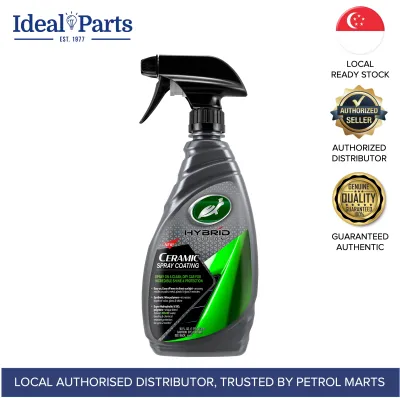
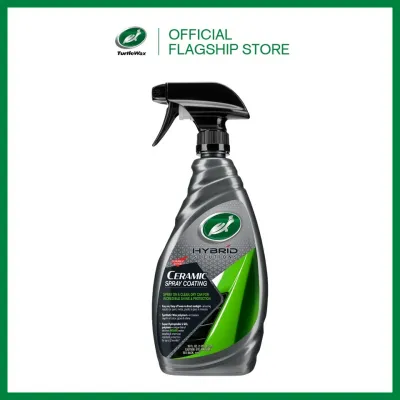
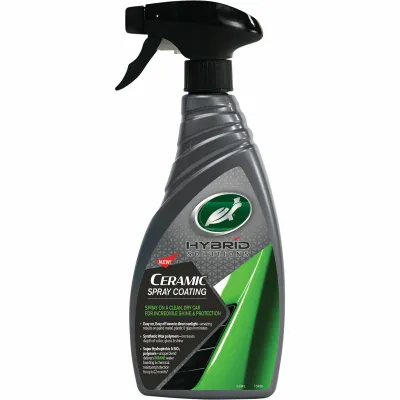
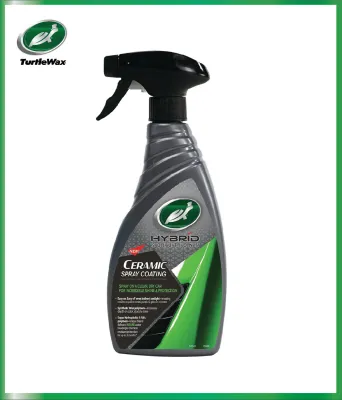
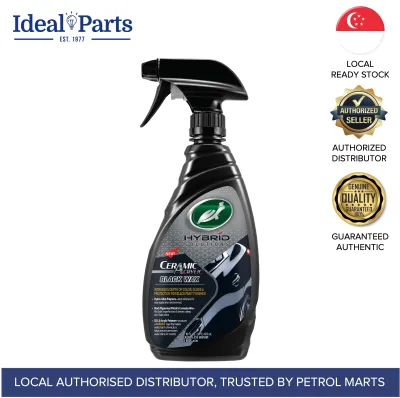
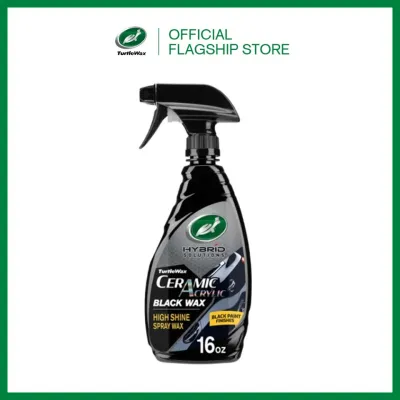
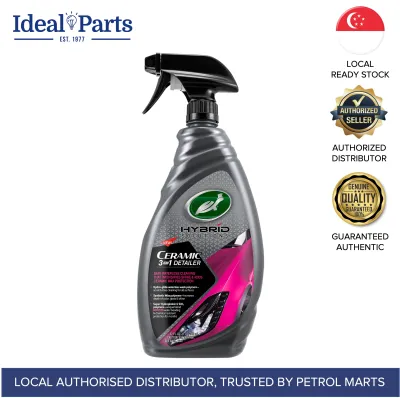
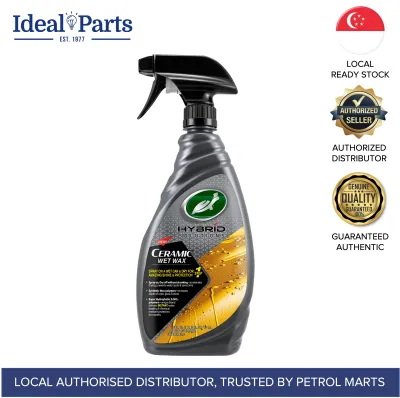
Prices are valid at publication and may change. Please refer to the product page for the latest price.
These distinct bonding mechanisms result in noticeable visual and tactile differences. A traditional carnauba wax is highly regarded for its warm, deep, “wet-look” shine, which tends to enrich darker paint colors by absorbing and bending light. Ceramic sprays deliver a highly reflective, sharp, glass-like gloss that emphasizes the sharp lines of modern vehicle designs. Tactilely, a freshly waxed car has a smooth, velvety feel, whereas a ceramic-coated surface feels exceptionally slick, allowing water and light debris to slide off with minimal resistance.
Comparing Application Effort and Environmental Requirements
Achieving the promised performance of either product depends heavily on proper surface preparation. Before applying a ceramic spray, the paint must be completely free of old waxes, oils, road grime, and embedded contaminants. This preparation typically requires a thorough wash, followed by clay bar treatment and an isopropyl alcohol (IPA) wipe-down to ensure the SiO2 polymers can bond directly to the bare clear coat. Traditional wax is slightly more forgiving of minor surface oils, but applying it over a dirty or contaminated surface will still severely compromise its longevity and finish.

The physical application process highlights a major shift in modern detailing convenience. Traditional paste or liquid waxes require you to apply the product evenly with an applicator pad, wait for it to dry to a hazy finish, and then buff it off using significant physical effort. This “wax-on, wax-off” method can be physically demanding and time-consuming, often taking several hours for a complete vehicle. Ceramic sprays simplify this into a straightforward spray-and-wipe routine. You simply mist the product onto a panel, spread it evenly with a clean microfiber towel, and immediately buff it dry with a second, dry microfiber towel.
However, environmental conditions play a critical role in how these products cure. Traditional waxes are sensitive to direct sunlight and hot body panels, which can cause the wax to dry too quickly, making it extremely difficult to buff off without scratching the paint. Ceramic sprays are even more sensitive to environmental factors during their initial curing phase. You must apply them in a shaded, dust-free environment, and they typically require a curing period of 12 to 24 hours during which the vehicle must remain completely dry. In a humid, tropical environment like Singapore, finding a sheltered multi-storey car park or private garage is crucial to prevent sudden rain showers from ruining the uncured ceramic layer.
Evaluating Durability Claims and Maintenance Signals
When evaluating durability, it is important to separate manufacturer claims from real-world performance. Under ideal laboratory conditions, ceramic sprays are often rated to last anywhere from six months to a year, while traditional waxes generally claim a lifespan of two to three months. In practice, environmental stressors such as intense ultraviolet (UV) radiation, high humidity, road salt, and industrial fallout will accelerate the degradation of both protective layers, meaning actual longevity is often shorter.
Your routine maintenance habits also dictate how long these protective barriers remain effective. Traditional wax is highly sensitive to heat and chemical exposure; using automated drive-through car washes with harsh, highly alkaline detergents can strip a fresh coat of wax in a single wash. Ceramic sprays offer much higher chemical resistance, allowing them to withstand stronger detergents and environmental acids. However, even ceramic coatings will degrade prematurely if subjected to abrasive dirt, automatic brush washes, or improper hand-washing techniques that introduce micro-scratches.
Monitoring physical signals on your car’s paint will tell you exactly when it is time to reapply protection. The most reliable indicator is water behavior on a clean, wet panel. Fresh ceramic protection exhibits extreme hydrophobic properties, causing water to bead into tight, round droplets that roll off the surface at low speeds. As the protection wears down, these beads will flatten and eventually turn into slow-moving sheets of water. A loss of surface slickness and an increase in dirt adhesion are secondary signs that the protective barrier has degraded and requires replenishment.
Calculating Long-Term Value and Reapplication Costs
To determine the true cost of paint protection, you must look beyond the initial retail price of the bottle or tub. A high-quality traditional paste wax might cost between S$15 and S$30, while a premium ceramic spray typically ranges from S$20 to S$40. While the ceramic spray has a higher upfront cost, a single bottle goes a very long way because only a light mist is required per panel. Traditional waxes, especially liquid variants, are often applied too thickly by beginners, leading to wasted product and fewer applications per container.
The frequency of reapplication is the primary driver of long-term value. If you choose traditional wax, you may need to reapply it four to six times a year to maintain continuous protection against tropical elements. This frequent schedule increases both your product consumption and the time you spend detailing. A ceramic spray, requiring reapplication only once or twice a year, significantly reduces the labor hours and product volume needed over a twelve-month period, making it a highly cost-effective option for busy car owners.
You must also factor in the hidden costs of supporting detailing supplies. Ceramic sprays require high-quality, plush microfiber towels for application and buffing. Because cured SiO2 polymers can harden inside the microfiber fibers, these towels often cannot be safely reused on paint and must be demoted to engine bay or wheel cleaning duties. Additionally, maintaining a ceramic coating requires investing in pH-neutral car shampoos and occasional ceramic booster sprays to keep the hydrophobic properties active, whereas traditional wax maintenance is less demanding on specialized chemical aftercare.
Decision Framework: Which Protection Should You Choose?
Selecting the right product depends on your lifestyle, available facilities, and aesthetic goals. You should choose a ceramic spray if you want to minimize maintenance frequency, prefer a fast spray-and-wipe application, and have access to a covered parking space or garage where the vehicle can cure undisturbed for a full day. This technology is ideal for daily drivers exposed to harsh sun and rain, where long-term chemical resistance and self-cleaning properties are highly valued.
Conversely, traditional wax remains an excellent choice if you enjoy the hands-on, therapeutic process of detailing your car on weekends and prefer a warm, deep gloss over a glassy reflection. It is also a safer option if you must apply paint protection outdoors in direct sunlight or lack a dry, sheltered space for a ceramic product to cure. Traditional wax is highly forgiving and easily corrected if you make an application mistake, such as leaving the product on too long before buffing.
Before applying either product, always inspect your vehicle’s clear coat and consult the manufacturer’s guidelines, especially if your car has a matte paint finish, a vinyl wrap, or paint protection film (PPF). Some ceramic sprays contain solvents that may not be compatible with certain vinyl adhesives or matte clear coats. Furthermore, keep in mind that neither product will fix existing paint defects; swirl marks, light scratches, and oxidation must be corrected with a polish before sealing the surface, as applying a ceramic spray will lock those imperfections beneath a highly reflective, durable barrier.
Frequently Asked Questions (FAQ)
Can I apply ceramic spray directly over traditional wax?
Applying a ceramic spray directly over an existing layer of traditional wax is not recommended. Ceramic sprays rely on synthetic SiO2 polymers that must form a direct chemical bond with the clean, bare clear coat of your vehicle. If a layer of carnauba or synthetic wax is already present, it acts as a physical barrier that prevents the ceramic polymers from bonding properly. This results in poor adhesion, causing the ceramic spray to wash off quickly during your next wash. If you want to transition from wax to a ceramic spray, you should first strip the old wax using a dedicated wax-stripping shampoo or a diluted isopropyl alcohol wipe.
How do I physically test if the protection has worn off?
The most effective way to test your paint protection is to perform a water test on a freshly washed, clean panel. Spray clean water onto the hood or doors using a hose with a gentle shower setting. If the water immediately forms tight, uniform beads that slide off the panel easily, your protective layer is still active. If the water pools into large, flat sheets or clings to the surface without moving, the protection has worn off. You can also test surface slickness by gently sliding a clean microfiber towel across the dry paint; if you feel noticeable resistance or drag, the protective barrier has likely degraded.
Community discussion
Share your experience or ask a question. Comments are reviewed before publication.