
Toyota transmission oil specification codes like WS, T-IV, and LC indicate the precise chemical composition, viscosity, and friction profile engineered for specific gearbox designs. These alphanumeric codes are not interchangeable; using the wrong one can cause severe shifting issues, torque converter shudder, and long-term mechanical damage.
Whether you drive a hybrid or a conventional automatic vehicle, matching the exact fluid specification listed in your owner’s manual is essential for maintaining smooth gear transitions and protecting your transmission’s internal components.
Why Toyota Transmission Fluid Specifications Matter
Automatic transmission fluid (ATF) is often misunderstood as a simple lubricant. In reality, it serves as a highly advanced hydraulic medium, a thermal coolant, and a precise friction modifier all at once. Inside your transmission, hydraulic pressure from the fluid is what physically engages clutch packs and shifts gears, making the fluid’s physical properties critical to the entire operation.
Products mentioned in this guide
![[JWEAUTO] TOYOTA AUTO TRANSMISSION TYPE T-IV GEAR BOX OIL FLUID ATF](https://img.lazcdn.com/g/p/fcbde917a32bc143b66ebe0cc8c65c01.jpg_400x400q80.jpg_.webp)
![[JWEAUTO] TOYOTA GENUINE CVT TRANSMISSION FLUID TC](https://img.lazcdn.com/g/p/2384ddfcea6fd0b790e4dfb908731fa6.jpg_400x400q80.jpg_.webp)
Prices are valid at publication and may change. Please refer to the product page for the latest price.
Toyota engineers design specific clutch materials, band linings, and hydraulic control valves to operate with exact fluid friction characteristics. A fluid that is too slippery can cause the internal clutches to slip, generating excessive heat and accelerating wear. Conversely, a fluid with insufficient slip can cause harsh, jerky gear changes that stress the entire drivetrain.
Using an incorrect specification can lead to immediate driveability issues, such as torque converter shudder, delayed engagement, or severe internal transmission damage. Because transmission fluid replacement and level checks involve complex hydraulic systems, safety boundaries must be respected. Always consult your vehicle’s original manufacturer instructions before performing any fluid service, and consider seeking qualified professional installation at a certified workshop to ensure the work is done safely and correctly.
Decoding Common Toyota Transmission Fluid Codes
Understanding what each code represents helps demystify the options available on the market and ensures you select the correct product for your specific model year and transmission type.

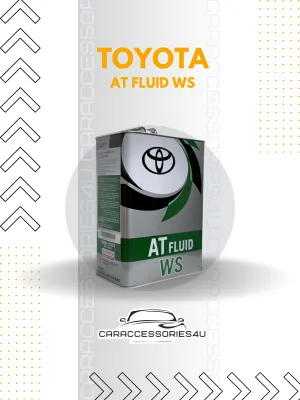
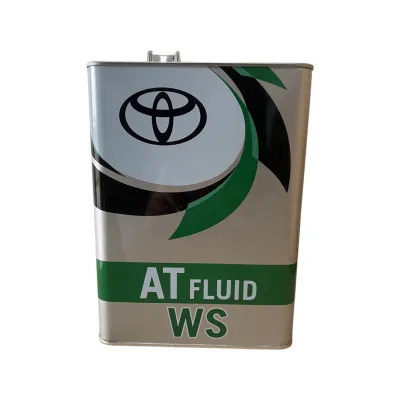
Toyota WS (World Standard)
Toyota WS, short for World Standard, is a low-viscosity fluid designed primarily to reduce internal fluid drag within modern automatic transmissions. By lowering the resistance the transmission parts face as they move through the fluid, WS helps improve overall fuel efficiency and reduces energy loss.
Introduced in the mid-2000s, WS is the standard factory-fill fluid for the vast majority of modern conventional automatic transmissions across Toyota’s global lineup. Its specific friction modifier package is tailored precisely for the clutch packs used in WS-designated gearboxes, ensuring consistent shifting performance across a wide operating temperature range.
Because of its low-viscosity design, WS is highly sensitive to contamination and thermal breakdown. It is engineered to maintain its protective properties under normal driving conditions, but it requires a compatible gearbox designed for thinner fluids to prevent premature wear on gears and bearings.
Toyota T-IV (Type IV)
Toyota T-IV (Type IV) is an older specification formulated for automatic transmissions that require specific, higher-friction characteristics for smooth clutch engagement. Unlike the newer WS fluid, T-IV is a higher-viscosity lubricant designed to match the larger clearances and different hydraulic pressures of older gearbox designs.
This specification is typically found in Toyota models manufactured before the widespread adoption of WS fluid. The thicker film strength of T-IV is necessary to cushion the gears and maintain proper hydraulic pressure in these older systems.
Using T-IV in a system that calls for it is critical because modern low-viscosity fluids do not provide the necessary viscous resistance or friction profiles these older gearboxes require. It requires strict adherence to the original specification to avoid slipping clutches and shifting lag.
Toyota LC and Specialized CVT/Hybrid Codes
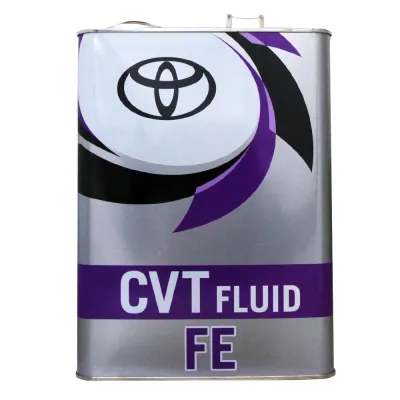
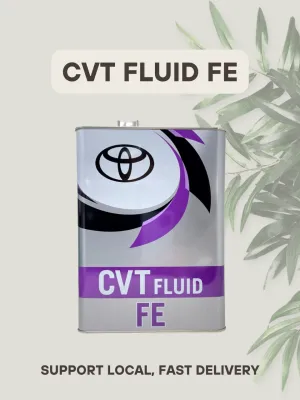
For vehicles equipped with continuously variable transmissions (CVTs) or hybrid drivetrains, Toyota utilizes specialized fluid codes such as CVTF TC, CVTF FE, or LC variants. These fluids are engineered for entirely different mechanical environments than conventional stepped automatic transmissions.
In a CVT, the fluid must provide high metal-on-metal friction between the steel belt and the pulleys to prevent slipping, while simultaneously lubricating the bearings. Hybrid transmissions, on the other hand, often integrate electric motor-generators directly into the transaxle, requiring fluids with excellent electrical insulation properties and specialized cooling capabilities.
Because their chemical profiles and physical demands are completely different, these specialized fluids are strictly non-interchangeable with standard WS or T-IV fluids. Using a conventional automatic transmission fluid in a CVT or hybrid transaxle can cause immediate, catastrophic transmission failure.
The Risks of Substituting or Mixing Toyota Fluids
A common misconception among car owners is that newer transmission fluids are backward compatible with older specifications. However, the myth that a lower-viscosity fluid like WS can universally replace an older, thicker fluid like T-IV is false and can lead to costly repairs.
If you put WS into a transmission designed for T-IV, the thinner fluid may fail to maintain adequate hydraulic pressure, leading to clutch slippage, harsh shifting, and accelerated wear on internal components. Conversely, putting T-IV into a WS transmission can restrict fluid flow through narrow hydraulic passages, causing slow shifts and overheating.
Backward compatibility only applies if explicitly stated in the vehicle’s official owner’s manual or an authorized manufacturer service bulletin for your specific model year. Without this official confirmation, you should assume that different specifications cannot be substituted.
Furthermore, mixing different fluid specifications—or mixing OEM fluid with unverified aftermarket “multi-vehicle” alternatives—is highly discouraged. Mixing alters the carefully balanced chemical additive packages, which can lead to fluid foaming, accelerated oxidation, and unpredictable friction characteristics during gear changes.
How to Verify the Correct Fluid for Your Vehicle
To protect your vehicle’s drivetrain, you must verify the exact fluid requirement before purchasing any product or scheduling a service. The ultimate authority for this information is always the “Specifications” or “Maintenance” section of your vehicle’s owner’s manual.
In many Toyota models, you can also find the required fluid code stamped directly onto the transmission dipstick handle or on the filler cap under the hood. If your vehicle does not have a dipstick, which is common in modern sealed WS systems, the specification will be noted in the manual or on a label near the transmission fill plug.
When purchasing fluid, match the manual’s exact code with the product label, and avoid relying solely on generic “multi-vehicle” ATF claims. While some aftermarket fluids claim broad compatibility, they may not perfectly replicate the friction coefficients required by Toyota’s proprietary clutch materials.
In Singapore’s consistent tropical climate, your transmission is subjected to high ambient temperatures and prolonged stop-start traffic. This driving pattern creates significant thermal stress, making adherence to the manufacturer’s precise chemical and friction specification far more critical than attempting to adjust viscosity grades for local weather. Using the exact OEM-specified fluid ensures the transmission can handle the heat and stop-start wear without breaking down prematurely.
Community discussion
Share your experience or ask a question. Comments are reviewed before publication.