
The Toyota Sienta is celebrated for its clever packaging and family-friendly utility, but its unique cabin layout often leaves drivers searching for better ways to manage daily clutter. Because the Sienta features a distinctive walk-through cabin design or a highly contoured center console depending on the generation and trim, finding aftermarket storage accessories that fit seamlessly can be a challenge. Standard, off-the-shelf organizers often slide around, block essential controls, or fail to match the specific curves of the dashboard and floor area. This guide focuses on helping you navigate the unique layout of your Sienta, evaluate materials that withstand local climate conditions, and verify fitment before purchasing, ensuring your interior remains tidy, functional, and safe.
Identifying Your Toyota Sienta's Console Layout and Generation
Before browsing online marketplaces or local automotive accessory shops, you must identify the exact generation and trim level of your Toyota Sienta. The Sienta has undergone significant design changes across its production years, and an organizer designed for one generation will not fit another. The second-generation Sienta (XP170), which was widely popular from 2015 to 2022, features a dashboard-mounted gear shifter. This design leaves a completely open walk-through space between the driver and front passenger seats. Owners of this generation often look for floor-mounted console boxes or gap fillers specifically designed to sit securely on the flat floor section without sliding during sudden stops.
In contrast, the third-generation Sienta (XP210), introduced around 2022, features a more integrated center console design. Depending on whether you drive the petrol or hybrid variant, and whether it is a dealer-spec or parallel-import model, the console configuration can vary. Some trims feature a low-profile tray between the seats, while others come with a more pronounced armrest console. Furthermore, hybrid models often have hybrid battery cooling vents located near the base of the front seats. It is absolutely critical that any aftermarket floor organizer or console box does not block these vents, as restricted airflow can lead to battery overheating and system errors.
Products mentioned in this guide
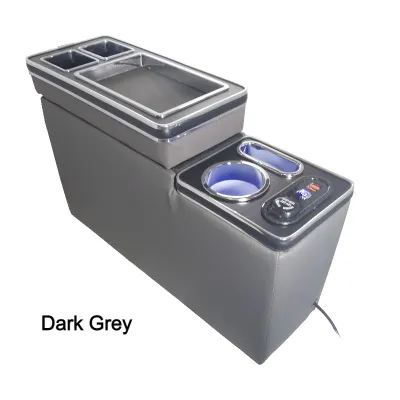
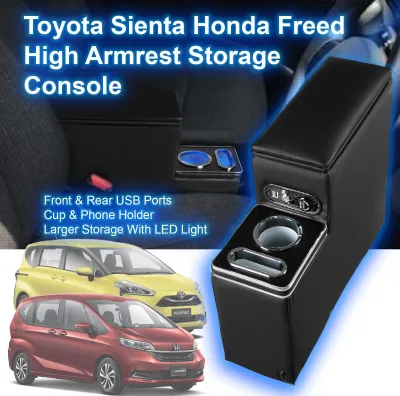
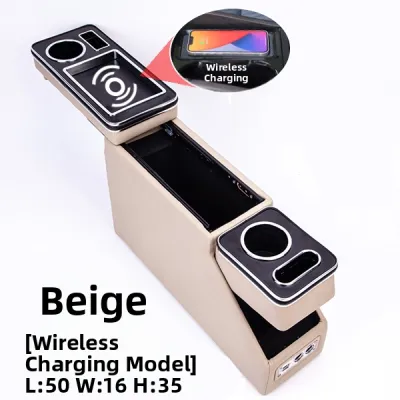
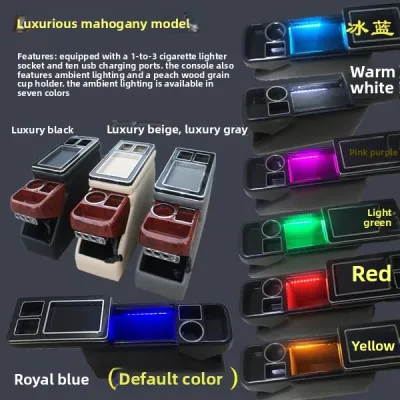
Prices are valid at publication and may change. Please refer to the product page for the latest price.
To ensure baseline compatibility, locate the factory features in your vehicle before making a purchase. Take note of the shapes of your cup holders, the exact positions of the USB-C or USB-A charging ports, the location of the wireless charging pad if equipped, and the placement of the electronic parking brake (EPB) and automatic brake hold buttons. Some aftermarket trays are designed to sit directly inside the factory console cavity, but they may block access to these ports or buttons if they are not molded precisely for your specific trim. Always consult your owner’s manual to check for baseline interior dimensions and to identify any existing factory trays that can be removed or upgraded.
What to Look for in a Sienta Console Organizer
When selecting an aftermarket console organizer for your Sienta, material durability should be your primary consideration. The cabin of a vehicle parked outdoors can reach extremely high temperatures under direct sunlight. Cheap, low-grade plastics can warp, become brittle, or emit unpleasant chemical odors when exposed to intense heat over time. Look for organizers made from high-quality Acrylonitrile Butadiene Styrene (ABS) plastic or high-density polypropylene. These materials offer excellent structural integrity, impact resistance, and thermal stability, ensuring the organizer retains its shape and does not degrade under the sun.

Noise reduction is another crucial factor that directly impacts your driving comfort. A loose plastic tray sitting inside a plastic console will inevitably rattle when you drive over speed bumps, uneven road surfaces, or during cornering. To prevent this irritating noise, choose organizers that come with custom-fit, non-slip rubber bases, silicone inserts, or flocked linings. These soft inserts cushion your items—such as coins, keys, and sunglasses—preventing them from sliding around and making noise. Additionally, removable silicone mats make cleaning much easier, as you can simply lift them out to wash away dust, lint, or sticky residue.
Finally, the design of the organizer must not obstruct any vital vehicle controls or safety features. A poorly designed tray might sit too close to the gear shifter, preventing you from smoothly shifting into Park or Reverse. It could also block the hinge of the center armrest, making it difficult to open or close the storage compartment. Ensure that the organizer does not cover the emergency hazard light button, climate control dials, or any dashboard-mounted switches. A well-engineered accessory should feel like a natural extension of the Sienta’s original interior, providing convenient storage without compromising the usability of the vehicle’s factory controls.
Matching Organizer Types to Your Storage Needs
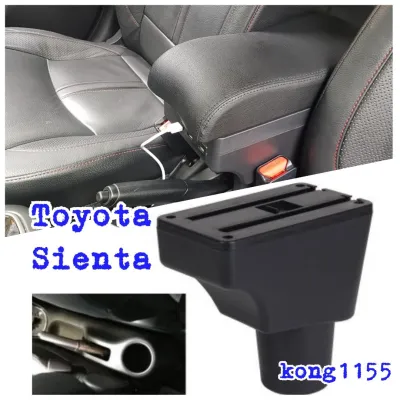
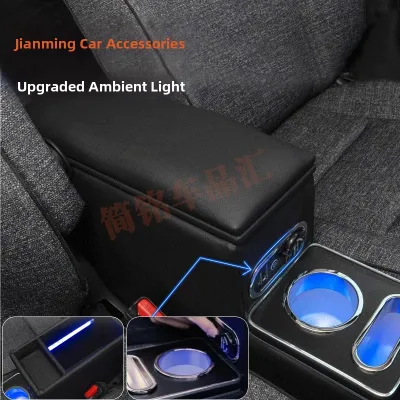
To tackle the specific clutter pain points in your Sienta, you should match the type of organizer to the items you carry daily. If your Sienta is equipped with a deep center armrest storage bin, you have likely experienced the frustration of small items getting lost at the bottom. An armrest interior divider or drop-in tray is the ideal solution for this issue. These trays sit flush on the upper lip of the storage bin, creating a dual-layer system. You can store larger, less frequently used items like tissue boxes or owner’s manuals in the lower compartment, while keeping daily essentials like parking cards, coins, and charging cables easily accessible in the upper tray.
For managing beverages and small personal items, cup holder inserts, coasters, and expanders are highly effective. The Sienta’s factory cup holders are designed to accommodate standard-sized bottles, but smaller cans or local take-away cups may wobble or spill. A silicone cup holder insert can snuggly grip smaller containers, preventing spills during sudden braking. If you frequently carry larger water bottles, a cup holder expander with adjustable base tabs can secure these larger containers without tipping over. Additionally, placing washable silicone coasters at the bottom of your cup holders prevents condensation from pooling and makes cleaning up sticky spills a simple task.
Console gap fillers and seat-console catch boxes are excellent for preventing the dreaded “under-seat drop.” The narrow gap between the front seats and the center console is a notorious trap for smartphones, keys, loose change, and sunglasses. A flexible gap filler, often made of soft polyurethane foam or wrapped in synthetic leather, slides directly over the seat belt buckle and fills this void. Alternatively, a seat-console catch box provides a slim, extra pocket in that same space, turning a useless gap into a convenient storage slot for your phone or parking tickets while keeping them within arm’s reach.
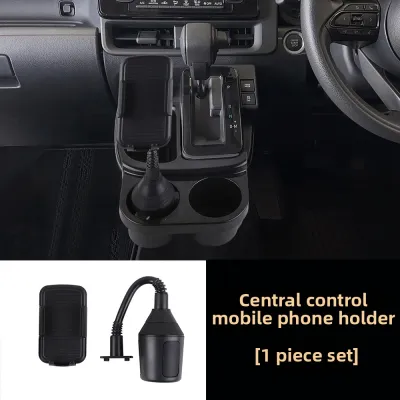
If you rely heavily on your phone for navigation, consider an integrated phone mount or a dashboard-edge tray. The Sienta’s dashboard layout offers several flat surfaces where custom-molded trays can be installed. These trays sit securely on the dashboard edge, providing a dedicated, non-slip spot for your phone, sunglasses, or toll cards. When choosing a phone mount or dashboard tray, ensure it positions your device within your natural line of sight without blocking your view of the road or obstructing the passenger-side airbag deployment area.
Measuring for Fitment and Avoiding Safety Hazards
To avoid the hassle of returning ill-fitting accessories, take precise measurements of your Sienta’s console before making a purchase. Modern vehicle consoles are rarely perfectly rectangular; they often feature tapered edges, curved walls, and varying depths. Use a flexible measuring tape to record the width, depth, and length of the storage cavity or floor space where you plan to place the organizer. Compare these measurements carefully with the dimensions provided by the product manufacturer. If a listing does not provide exact dimensions, contact the seller to verify them rather than relying solely on generic compatibility claims.
Safety must always be your top priority when installing any aftermarket interior accessory. Once you place an organizer in your Sienta, perform a thorough physical check of all surrounding controls. Move the gear lever through its entire range of motion—from Park, through Reverse and Neutral, to Drive—to ensure there is absolutely no physical interference. Check that the electronic parking brake switch and the automatic brake hold button can be easily and fully operated without your fingers hitting the edge of the organizer. If an accessory restricts your access to these critical controls even slightly, remove it immediately.
Avoid using permanent adhesives, strong glues, or aggressive double-sided tapes to secure organizers to your dashboard or console. The intense heat inside a parked car can cause these adhesives to melt, leaving a sticky, unsightly residue that is incredibly difficult to remove without damaging the soft-touch plastics or synthetic leather trim of your Sienta. Instead, rely on friction-fit designs, non-slip silicone backing, or high-quality, automotive-grade removable tapes that are specifically formulated to hold securely without causing permanent damage to interior surfaces upon removal.
Furthermore, you must verify that the organizer does not intrude into any safety deployment zones. Refer to your owner’s manual to identify the exact locations of the front passenger airbags, knee airbags, and side curtain airbags. Never place dashboard-edge trays, phone mounts, or heavy organizers in a position where they could interfere with the rapid deployment of these safety systems. A loose object placed on top of an airbag cover can become a dangerous projectile in the event of a collision, posing a severe risk to you and your passengers.
Evaluating Listings and Verifying Fitment Before You Buy
When shopping on e-commerce platforms or browsing local automotive accessory shops, a systematic approach will help you find a high-quality product that fits perfectly. Always read the product descriptions with extreme care. Look for explicit mentions of the Sienta model years (such as “Fits Sienta 2016-2021” or “Compatible with Sienta 2023+”), facelift versions, and specific trim levels. Be wary of listings that use generic terms like “Universal Fit for Toyota” without specifying the Sienta, as these products are highly unlikely to match the unique contours of your vehicle’s interior.
User reviews are an invaluable resource for identifying potential issues before you spend your money. Look for reviews from other Sienta owners, and pay close attention to any recurring complaints. If multiple buyers mention that a tray rattles, warps under the sun, blocks the USB ports, or requires force to fit into the console, these are clear red flags. Conversely, positive reviews that highlight a perfect fit, high-quality ABS plastic, and effective anti-rattle mats provide confidence in the product’s design and manufacturing quality.
Before finalizing your purchase, verify the return policy of the seller, especially when ordering from overseas vendors or third-party marketplace sellers. Because minor trim variations can exist between different Sienta models—particularly between official dealer imports and parallel-import units—there is always a small risk that a custom-fit part may not align perfectly. A flexible return policy ensures that you can return or exchange the item without hassle if you encounter unexpected fitment issues during installation.
Finally, compare prices in S$ against the complexity and build quality of the organizer. While basic plastic trays may cost between S$10 and S$20, more complex organizers featuring custom-molded compartments, integrated wireless charging, or premium flocked linings typically range from S$25 to S$50. For any electrical accessories or integrated wireless chargers, ensure they comply with local safety standards and do not overload your vehicle’s 12V socket or USB ports. Investing a bit more in a well-reviewed, high-quality organizer ensures long-term durability, safety, and a much cleaner look for your Toyota Sienta’s interior.
Frequently Asked Questions (FAQ)
Will a universal console organizer fit my Toyota Sienta?
In most cases, a universal console organizer will not provide a satisfactory fit in a Toyota Sienta. Modern vehicles, including the Sienta, feature highly customized interior layouts with irregular shapes, tapered edges, and integrated electronic components. A universal flat tray or box will rarely sit flush within the Sienta’s contoured console cavities, leading to gaps, sliding, and annoying rattles while driving.
Using a poorly fitting universal organizer also poses safety risks. If a floor-mounted box or gap filler slides around during sudden braking or sharp turns, it can slide under the pedals or interfere with the gear shifter and electronic parking brake. To ensure both safety and a clean, factory-like appearance, it is highly recommended to invest in custom-molded organizers designed specifically for your Sienta’s exact generation and trim level.
How do I clean and maintain my aftermarket console organizer?
To keep your aftermarket console organizer looking new and to protect your Sienta’s original interior, use mild, non-abrasive cleaning methods. For organizers made of ABS plastic or polypropylene, wipe them down regularly with a soft microfiber cloth dampened with water and a mild dish soap or a dedicated automotive interior cleaner. Avoid using harsh chemicals, bleach, or alcohol-based solvents, as these can degrade the plastic, cause discoloration, or ruin the finish of flocked linings.
If your organizer includes removable silicone or rubber anti-slip mats, take them out periodically to clean them separately. You can wash these mats under running water with mild soap to remove dust, lint, and sticky drink residue, allowing them to air dry completely before placing them back. Additionally, make it a habit to remove the entire organizer every few months to clean the underlying factory console. This prevents dust, crumbs, and trapped moisture from accumulating underneath, which could otherwise cause odors or damage the vehicle’s original plastic surfaces over time.
Community discussion
Share your experience or ask a question. Comments are reviewed before publication.