
Finding a center console storage organizer that fits the Toyota Noah without blocking the gear shift requires a clear understanding of your vehicle’s specific cabin layout. Because this popular multi-purpose vehicle (MPV) has gone through several design evolutions, a generic organizer can easily obstruct the gear lever, block essential control buttons, or interfere with your driving comfort. The most effective solutions are those designed specifically for your Noah’s chassis generation, such as custom-molded drop-in trays for the armrest compartment or low-profile console boxes that sit securely on the floor. By selecting an organizer that respects the physical path of the gear shifter and the placement of electronic controls, you can significantly increase your cabin’s storage capacity while maintaining a safe, ergonomic driving environment.
Understanding Your Toyota Noah's Console Layout
The Toyota Noah is celebrated for its spacious, family-friendly interior, but its center console configuration is far from uniform across different model years. To choose an organizer that fits seamlessly, you must first identify your vehicle’s generation and specific trim level. The third-generation Noah (R80, produced from 2014 to 2021) and the fourth-generation Noah (R90, introduced in 2022) feature distinct dashboard and console architectures that directly impact where you can place aftermarket accessories.
In many R80 models, particularly the petrol variants, the gear shifter is mounted on the lower center dashboard, leaving an open walk-through space between the driver and front passenger seats. Some owners choose to place a freestanding floor console box in this gap. However, if your R80 is a hybrid variant, this space is often occupied by a fixed factory console that houses the hybrid system battery or additional storage compartments. For these hybrid models, any aftermarket organizer must sit within or on top of the existing console rather than replacing it.
Products mentioned in this guide
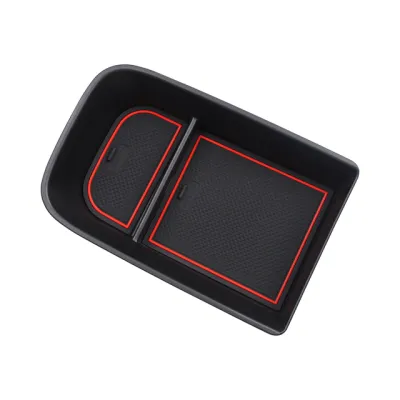
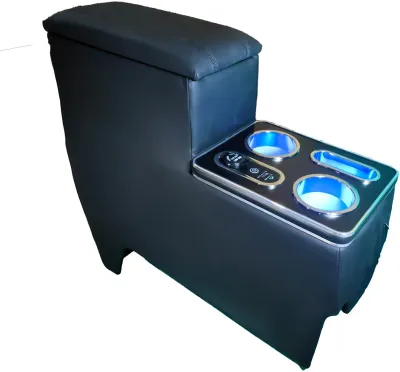
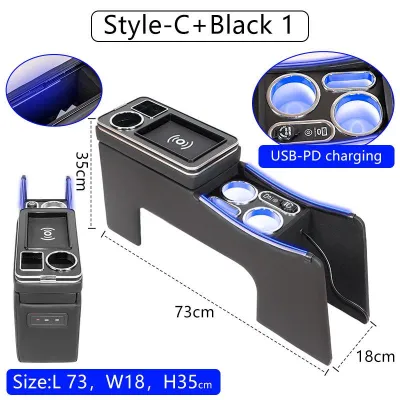
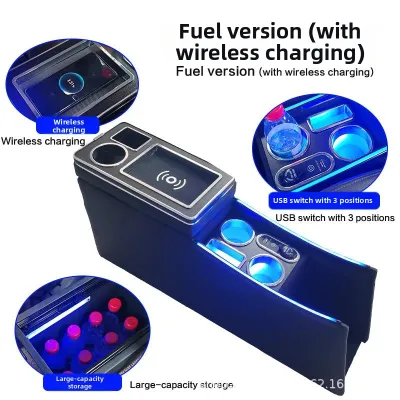
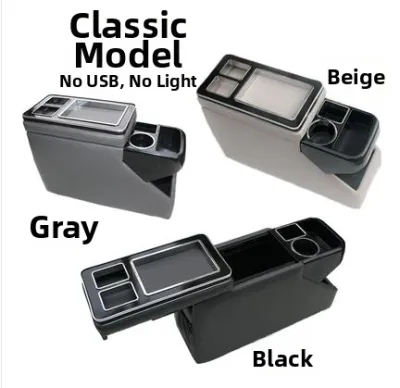
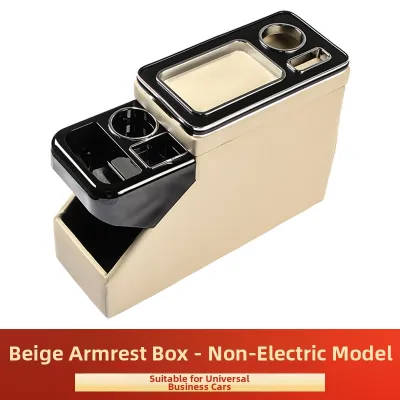
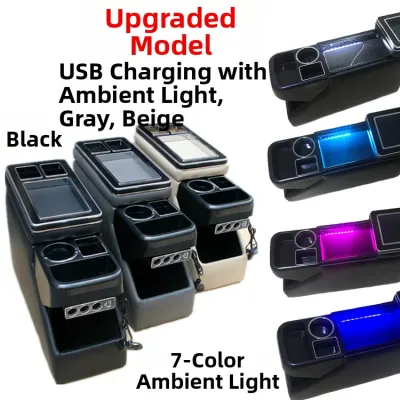
Prices are valid at publication and may change. Please refer to the product page for the latest price.
The R90 generation introduces a more integrated center console design. Depending on whether you drive the petrol or hybrid version, the console may feature a high bridge layout or a more traditional low-profile tunnel. The gear shifter in the R90 is positioned closer to the driver’s natural hand rest position, making clearance a critical factor. Additionally, modern Noah trims are packed with electronic controls located right next to the shifter, including the electronic parking brake (EPB) switch, the Automatic Brake Hold button, and drive mode selectors.
Before purchasing any organizer, you must also inspect your vehicle’s specific trim level, such as the X, G, V, or the sportier Si and S-Z trims. Premium trims often come equipped with larger factory-installed console boxes, integrated armrests, or rear passenger USB charging ports located at the back of the console. Always verify your chassis code—such as ZWR80, ZRR80, MZRA90, or ZWR90—to establish a precise baseline for compatibility.
Types of Console Organizers and Gear Shift Clearance
Aftermarket storage solutions for the Toyota Noah come in several distinct designs, each offering different trade-offs in terms of storage capacity, ease of access, and physical footprint. Understanding how these categories interact with your vehicle’s interior geometry is essential for keeping the gear shift area clear. The goal is to expand your storage options without creating physical or visual obstructions in the driver’s cockpit.

When evaluating these options, consider how the organizer mounts to the vehicle. Some designs rely on friction fits, others use adhesive backing, and some are designed to drop directly into existing cavities. The mounting style determines not only how stable the organizer will be during sudden stops but also whether it can be easily removed for cleaning or vehicle servicing.
Drop-In Console Trays and Armrest Dividers
Drop-in console trays are designed to sit inside the deep factory armrest compartment, dividing a single large cavity into organized, multi-level storage. These trays typically feature dedicated slots for coins, smartphones, cards, and sunglasses, keeping frequently used items within easy reach. Because they are completely contained within the armrest box, they have zero impact on the external gear shift area or dashboard controls.
When choosing a drop-in tray, you must verify that its depth and hinge clearance match your specific armrest lid. A tray that is even slightly too tall will prevent the armrest from latching securely, which can cause the lid to rattle or pop open while driving. Additionally, check if your factory console box contains integrated USB ports or 12V power sockets; a well-designed tray should feature precise cutouts that allow you to route charging cables without pinching them or blocking access to the ports.
Seat Gap Fillers and Side Catchers
Seat gap fillers, often called side catchers, are narrow storage pockets designed to slide into the space between the front seats and the center console. These organizers are highly effective for holding slim items like smartphones, parking cards, and wallets, keeping them from slipping into the hard-to-reach gap under the seats. Because they reside entirely to the side of the console, they leave the top surface and the gear shifter completely unobstructed.
However, the Toyota Noah’s seats are designed to slide and fold to accommodate various passenger and cargo configurations. If you choose seat gap fillers, you must ensure they are not so thick that they compress the seat cushions excessively or interfere with the manual seat adjustment levers or power seat switches. Furthermore, if your Noah features seat-mounted side airbags or integrated seat ventilation, the gap filler must not block these safety and comfort features.
Cup Holder Inserts and Dash-Mounted Trays
Cup holder inserts and dash-mounted trays utilize the existing molded spaces on the dashboard or the center console to add extra compartments. For the Toyota Noah, which features convenient pull-out cup holders near the air vents and molded holders in the console, these inserts can help secure smaller items like keys or hand sanitizers. They are generally safe from the shifter path as long as they do not extend too far upward.
Dash-mounted trays that attach near the gear lever require the most caution. While they offer highly visible storage for mobile phones, they can easily interfere with your hand movement when shifting between Park, Reverse, and Drive. If you are considering a dash-mounted accessory, verify that its physical boundaries do not overlap with the natural arc of your hand as you operate the shifter, and ensure it does not block your view of the climate control display or the infotainment screen.
Key Measurements and Compatibility Checks Before Buying
To avoid the hassle of returning an incompatible accessory, you should perform a few quick measurements and physical checks in your Toyota Noah before making a purchase. Because aftermarket listings often use generic terms like “fits most MPVs,” taking your own measurements is the most reliable way to guarantee a perfect fit. Grab a soft measuring tape and spend a few minutes in your vehicle’s cabin to establish your limits.
First, measure the usable width, length, and depth of the area where you plan to install the organizer. If you are looking at a floor-mounted console box for a walk-through space, measure the distance between the inner edges of the driver and passenger seat cushions, making sure to account for any seat adjustment rails that might protrude. If you are measuring an internal console compartment, measure the internal dimensions at both the top lip and the bottom floor, as these compartments often taper downward.
Next, test the full range of motion of your gear shifter to map out its operational boundary. Sit in the driver’s seat with the parking brake engaged, turn the vehicle’s ignition to the accessory position, and move the shifter through every position from Park down to the lowest gear or manual mode. Use a temporary placeholder, such as a folded cardboard box or a block of foam cut to the dimensions of the prospective organizer, and place it in the target area. This physical simulation will immediately reveal if your hand or the shifter itself will collide with the organizer during gear changes.
Do not forget to check the ergonomic clearance for both the driver and the front passenger. Rest your elbow on the armrest as you normally would while driving and ensure that any added organizer height or side pocket does not force your arm into an unnatural angle, which can cause muscle fatigue during long drives. Finally, when browsing online marketplaces, look for product listings that explicitly state compatibility with your exact Noah chassis code (such as R80 or R90) and model year, rather than relying on generic “Toyota” compatibility claims.
Installation Safety and Driving Ergonomics
Installing an interior accessory should never come at the expense of driving safety or vehicle ergonomics. A poorly placed or unsecured console organizer can quickly become a hazard in an emergency situation. When setting up your new storage solution, prioritize clear visibility and unobstructed access to all primary vehicle controls.
No accessory should ever block your line of sight to the instrument cluster, the infotainment screen, or the climate control panel. If an organizer or phone mount forces you to tilt your head or take your eyes off the road for longer than a brief glance, it is positioned incorrectly. Additionally, ensure that the organizer does not cover or restrict access to critical safety controls, such as the hazard light button, the electronic parking brake, or the passenger airbag status indicators.
Be extremely cautious when using strong adhesives, double-sided tapes, or mounting screws to secure organizers to the dashboard or console. The Noah’s interior features soft-touch plastics and synthetic leather materials that can be easily torn, stained, or permanently damaged by harsh chemical adhesives. Furthermore, never mount any accessory on or near designated airbag deployment zones, including the steering wheel hub, the passenger-side dashboard, or the sides of the front seats where side airbags are housed. Refer to your Toyota Noah owner’s manual to identify the exact locations of all SRS airbags before installing any semi-permanent fixtures.
Finally, ensure that all items stored within the organizer are properly secured. Loose coins, heavy metal pens, or unsecured water bottles can easily fly out of an open tray during sudden braking or a sharp turn. If these items fall into the driver’s footwell, they can slide under the brake pedal, preventing you from stopping the vehicle safely. Choose organizers with non-slip rubber mats or deep compartments that keep your belongings firmly in place, and regularly inspect the organizer to ensure it remains tightly secured to its mounting point.
Where to Source and Verify Fitment
Finding a high-quality console organizer that fits your Toyota Noah involves navigating a wide variety of aftermarket options on ecommerce platforms and at local automotive accessory shops. To narrow down your search effectively, always use your vehicle’s specific chassis code—such as R80 or R90—as your primary search term rather than the generic model name. This helps filter out parts designed for other Toyota models like the Voxy, Esquire, or Alphard, which, despite sharing some platform elements, often have different interior dimensions.
When shopping on online marketplaces, pay close attention to user reviews that include real-world photos. Look for reviews from buyers who drive right-hand drive (RHD) models, as the console layout and shifter orientation can sometimes differ from left-hand drive variants sold in other global markets. These photos provide invaluable insight into how the organizer actually fits in the cabin, the quality of the plastics or fabrics used, and whether the color matches the factory interior trim.
It is also wise to purchase from sellers who offer clear, hassle-free return policies. Even with precise measurements, you may find that the physical organizer interferes with your driving comfort or does not sit as securely as expected. Prioritize sellers who provide detailed dimensional diagrams in their listings, and do not hesitate to message the seller directly to confirm compatibility with your specific model year and trim level before finalizing your purchase.
Frequently Asked Questions (FAQ)
Can I use a universal console organizer in my Toyota Noah?
While universal console organizers are widely available and often budget-friendly, they are generally not recommended for the Toyota Noah. Universal designs are built to fit a broad range of vehicles, meaning they do not account for the Noah’s specific shifter path, the unique contour of its dashboard, or the placement of the electronic parking brake and drive mode buttons. A universal organizer is highly likely to slide around during transit, potentially jamming the gear lever or blocking access to critical controls when you need them most. Investing in a model-specific organizer ensures a secure fit and preserves the vehicle’s ergonomics.
Will a console organizer affect my car's warranty?
In most cases, using a non-invasive, drop-in console organizer or a seat gap filler will not affect your Toyota Noah’s factory warranty. These accessories do not alter the vehicle’s mechanical, structural, or electrical systems, and they can be easily removed without leaving a trace. However, if you choose to install an organizer that requires drilling into the console, splicing into the vehicle’s electrical wiring for integrated USB ports, or using permanent adhesives that damage the interior trim, any subsequent damage to the cabin materials or electrical systems will likely not be covered under warranty. Always opt for non-destructive mounting methods to keep your warranty fully intact.
Community discussion
Share your experience or ask a question. Comments are reviewed before publication.