
Quick Answer: Front vs. Side Sunshades for the Hiace
Choosing between a front windshield sunshade and side window covers for your Toyota Hiace depends on whether your primary goal is overall cabin temperature reduction or passenger comfort and privacy. Because the front windshield is the largest glass panel on the vehicle, a front windshield sunshade is the single most effective tool for blocking solar heat and protecting the dashboard from UV damage. Side window covers, on the other hand, excel at reducing lateral glare, protecting rear passengers from direct sunlight, and providing interior privacy.
For drivers operating in Singapore’s intense, year-round tropical climate, utilizing both options in tandem provides the ultimate thermal defense. However, if you must choose just one to start, the front windshield sunshade delivers the most substantial reduction in cabin heat buildup and prevents long-term interior wear.
Why the Toyota Hiace Needs Dedicated Sun Protection
The Toyota Hiace is engineered with utility in mind, featuring an expansive front windshield and large, upright side windows designed to maximize driver visibility and spatial awareness. While this design is highly functional for navigating tight urban streets, it creates a massive greenhouse effect when parked or driven under direct sunlight. The sheer volume of glass allows solar radiation to penetrate the cabin easily, rapidly heating up the air and interior surfaces.
Products mentioned in this guide
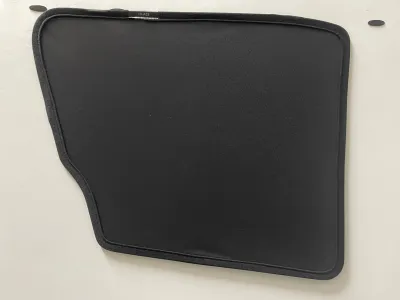
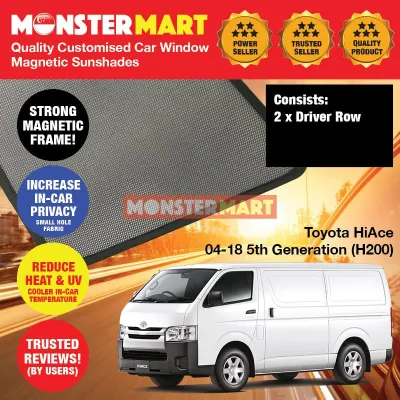
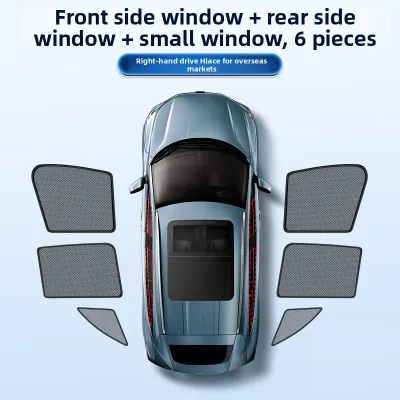
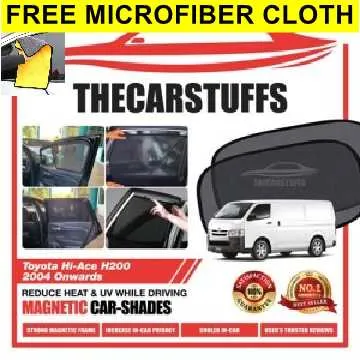
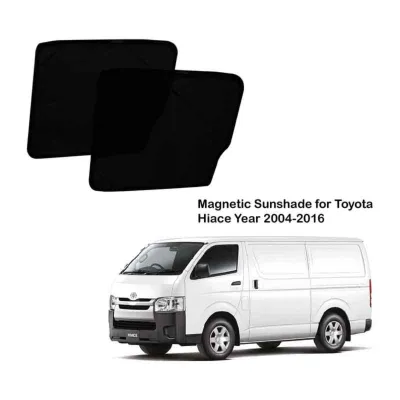
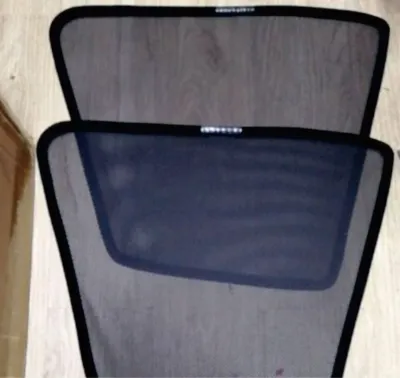
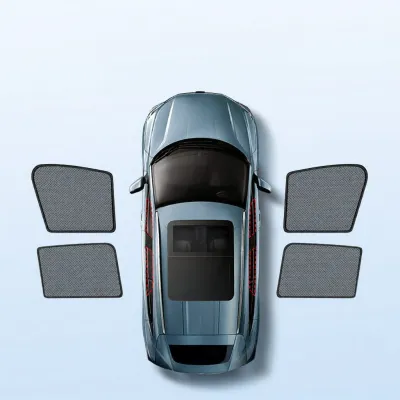
Prices are valid at publication and may change. Please refer to the product page for the latest price.

In Singapore, where high humidity and near-constant sunlight drive ambient temperatures up, an unprotected Hiace cabin can quickly become an oven. This heat forces the vehicle’s air-conditioning system to work significantly harder, which can increase fuel consumption and wear on the cooling components. Furthermore, prolonged exposure to intense ultraviolet (UV) rays accelerates the degradation of dashboard plastics, steering wheel materials, and seat upholstery, making dedicated sun protection a practical necessity for preserving both vehicle value and passenger comfort.
Front Windshield Sunshades: Heat Rejection and Dashboard Protection
Thermal Performance and Interior Protection
The front windshield of the Toyota Hiace represents the most vulnerable thermal point of the vehicle’s cabin. Because of its size and angle, it allows high levels of infrared (IR) radiation—the primary component of solar heat—to enter and settle directly onto the dashboard and steering wheel. A high-quality front windshield sunshade acts as a physical barrier, reflecting this radiation back through the glass before it can be absorbed by the interior materials.
This reflective action dramatically lowers the surface temperature of the dashboard, preventing the cabin air from heating up excessively while the vehicle is parked. Additionally, blocking UV rays prevents the chemical breakdown of plastics, which often manifests as fading, cracking, or the release of sticky plasticizers that leave a greasy film on the inside of the glass. When shopping, it is crucial to verify the manufacturer’s specified UV and IR rejection rates on the product label to ensure the material provides genuine thermal protection rather than simply blocking visible light.
Design Types and Cabin Storage
When selecting a front sunshade, you will generally choose between custom-fit rigid or folding panels and universal roll-up or umbrella-style designs. Custom-fit options are highly recommended for the Toyota Hiace because the windshield dimensions vary significantly between generations, such as the cab-over H200 and the semi-bonnet H300 models. A custom-fit shade ensures complete edge-to-edge coverage, preventing hot air from leaking around the sides of the visor.
However, storing these large accessories in a commercial van requires some planning. While the Hiace offers a spacious cabin, a rigid, custom-fit folding shade can be awkward to handle when passengers are present. Drivers often find success storing folded shades vertically behind the driver’s seat, flat in the overhead cabin shelf (if equipped), or secured in the rear cargo area. Umbrella-style shades fold down compactly like a standard personal umbrella, making them easier to store in door pockets, though they may not offer the same structural durability or precise edge coverage as a rigid custom-fit panel.
Side Window Covers: Passenger Comfort and UV Blocking
Glare Reduction and Passenger Privacy
While the front windshield shade handles the bulk of the vehicle’s heat load, side window covers are indispensable for managing the lateral environment of the Hiace. Side windows are the primary source of direct glare for passengers, which can cause eye strain, skin discomfort, and difficulty viewing mobile or navigation screens. This is a particularly important consideration for commercial passenger transport, shuttle services, or families traveling with young children.
Beyond comfort, side window covers offer a high degree of privacy. For commercial operators carrying expensive tools, equipment, or parcel deliveries, dark or opaque side shades obscure the view into the cargo hold, reducing the risk of opportunistic theft when parked in industrial estates or public parking lots. When selecting side covers, check the product packaging for optical clarity and UV-blocking ratings to ensure passengers can still see out safely while remaining protected from harmful radiation.
Mounting Styles and Door Clearance
Side window shades are available in several mounting styles, including magnetic frames, suction cups, static cling films, and retractable roller blinds. Magnetic shades, which snap directly onto the exposed metal frame of the window, are highly popular because they can be installed and removed in seconds without leaving residue. Static cling films and suction cups offer budget-friendly alternatives but can lose adhesion over time due to humidity and dust buildup.
For Toyota Hiace owners, a critical physical factor is the operation of the sliding doors. The clearance between the sliding door’s inner panel and the vehicle’s body is exceptionally tight when the door is opened. If you install bulky, rigid, or poorly fitted side window shades, they can easily catch on the rubber weather stripping or the exterior body panel as the door slides back. This can damage the shade, tear the door seals, or jam the sliding mechanism. To prevent this, opt for flexible, low-profile magnetic meshes or custom-fit shades designed specifically to sit flush within the window frame of your exact Hiace model.
Front vs. Side Sunshades: Feature Comparison
To help you decide which option or combination best suits your daily driving routine, the following table compares the key characteristics of front windshield sunshades and side window covers.
| Feature | Front Windshield Sunshade | Side Window Covers |
|---|---|---|
| Primary Function | Maximum heat rejection and cabin cooling | Glare reduction, passenger comfort, and privacy |
| Interior Protection Focus | Dashboard, steering wheel, and front seats | Rear upholstery, cargo, and passenger skin |
| Installation Effort | Daily manual setup and removal when parking | Semi-permanent or quick magnetic attachment |
| Storage Requirements | High (requires space for large folded panels) | Low (can remain on windows or fold flat) |
| Impact on Cabin Temp. | High (blocks the largest solar entry point) | Moderate (blocks lateral heat and low-angle sun) |
| Typical Price Range | S$20 – S$50 (model-dependent) | S$25 – S$60 (per set, model-dependent) |
While both options are highly effective, they serve different operational roles. The front windshield shade is a highly active tool that you set up and take down every time you park, whereas side window covers are often semi-permanent fixtures that remain in place during transit to protect passengers and cargo. If you choose to use semi-permanent side covers, always ensure they do not obstruct the driver’s view of the side mirrors, in accordance with local road safety guidelines.
How to Choose the Right Setup for Your Driving Needs
To determine the best investment for your Toyota Hiace, evaluate your typical driving patterns, passenger requirements, and parking situations.
Choose a Front Windshield Sunshade if:
- Frequent Outdoor Parking: You regularly park in open-air car parks, industrial zones, or loading bays under direct sunlight.
- Rapid Cooling Needs: Your primary goal is to lower the initial cabin temperature quickly so the air conditioning can cool the front cabin efficiently.
- Interior Preservation: You want to prevent the dashboard, instrument cluster, and steering wheel from cracking or fading over time.
Choose Side Window Covers if:
- Passenger Comfort: You regularly transport passengers, such as school children, commuters, or tour groups, who require protection from side glare.
- Cargo Security: You use the Hiace as a commercial delivery vehicle and need to conceal tools or cargo from public view.
- Low-Angle Sun Protection: You frequently drive during the early morning or late afternoon when the sun is low on the horizon, casting direct light through the side glass.
Choose Both if:
- Premium Transport Services: You operate a premium passenger transport service where maintaining a cool, private, and comfortable cabin is a priority.
- Maximum Efficiency: You want to achieve the maximum possible thermal efficiency and minimize fuel consumption related to heavy air-conditioning use in Singapore's climate.
Before making any purchase, it is vital to verify your specific Toyota Hiace generation and body configuration. The window dimensions of a fifth-generation Hiace (H200, produced up to 2019) are completely different from the sixth-generation Hiace (H300, introduced in 2019). Furthermore, variations in wheelbase (standard vs. long wheelbase) and roof height (standard vs. high roof) mean that a shade designed for one trim will not fit another. Always check your vehicle log card or manufacturer documentation to confirm your exact model specifications before ordering custom-fit accessories.
Safe Installation and Local Compliance Tips
When installing any window accessory on your Toyota Hiace, safety and legal compliance must be your top priorities. In Singapore, the Land Transport Authority (LTA) enforces strict regulations regarding window visibility to ensure drivers have an unobstructed view of the road and surrounding traffic. Any removable front windshield sunshade must be completely taken down and stored securely before the vehicle is put in motion. Driving with a front shade in place, even partially, is extremely dangerous and illegal.
For the side windows, if you use magnetic mesh covers or static cling shades while driving, they must not block the driver’s line of sight to the side mirrors. LTA guidelines require a minimum level of light transmission for vehicle glass: the front windshield and front side windows must allow at least 70% of light to pass through, while rear side windows must allow at least 25%. If your side shades are too dark or opaque, they should only be used when the vehicle is parked.
To ensure secure installation and prevent suction-cup or static-cling shades from falling off while driving, always clean the glass thoroughly beforehand. Use a high-quality automotive glass cleaner and a clean microfiber cloth according to the product label instructions to remove any dust, grease, or moisture. This simple step ensures maximum adhesion and prevents the distraction of a falling shade while navigating busy roads.
Frequently Asked Questions (FAQ)
Can I use a generic sunshade for my Toyota Hiace?
While generic, rectangular wire-ring shades are widely available, they rarely provide adequate coverage for a Toyota Hiace. The Hiace features an exceptionally wide and tall windshield compared to standard passenger cars. A generic shade will often leave large gaps around the edges, allowing solar heat to bypass the barrier and heat up the cabin. To get the best thermal protection, opt for a custom-fit shade designed specifically for your Hiace’s model year and body style.
Do side window sunshades interfere with the Hiace sliding doors?
They can if they are poorly designed or too thick. The sliding doors on the Toyota Hiace operate with very tight tolerances against the vehicle’s body. Thick, rigid plastic shades or poorly fitted suction-cup frames can catch on the rubber weather seals or scratch the paintwork when the door slides open. To avoid mechanical interference and potential damage, choose low-profile, flexible magnetic mesh shades that fit precisely within the window recess.
Community discussion
Share your experience or ask a question. Comments are reviewed before publication.