
The “FE” designation in Toyota CVT fluid stands for Fuel Economy. This label identifies a low-viscosity transmission fluid specifically engineered to minimize internal fluid drag and friction within modern continuously variable transmissions (CVTs). By reducing the resistance the transmission components encounter while moving through the fluid, this formulation helps the vehicle operate more efficiently and conserve fuel.
However, this lower-viscosity profile is not a universal solution for every Toyota vehicle. Toyota engineered “FE” fluid specifically for newer CVT designs that feature tighter internal tolerances and distinct hydraulic requirements. Because of these design differences, “FE” fluids are not backward-compatible with older transmissions that require higher-viscosity fluids, such as Toyota’s older CVT Fluid TC specification.
Why the Correct CVT Fluid Specification Matters
Unlike traditional automatic transmissions that use geared planetary sets, a CVT relies on a steel belt or chain riding between two adjustable pulleys to change gear ratios continuously. This design requires a highly specialized fluid that provides a precise balance of lubrication and friction. The fluid must protect metal-on-metal contact points while simultaneously providing enough traction to keep the belt or chain from slipping against the smooth pulley surfaces.
Products mentioned in this guide
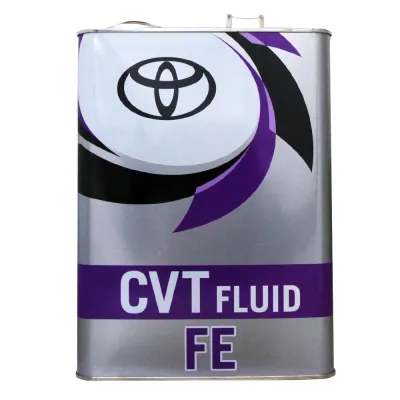
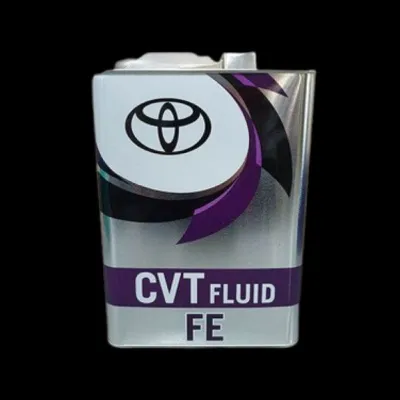
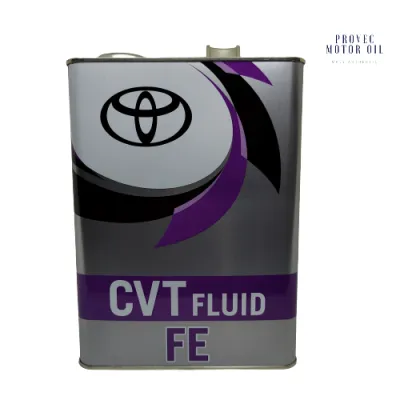
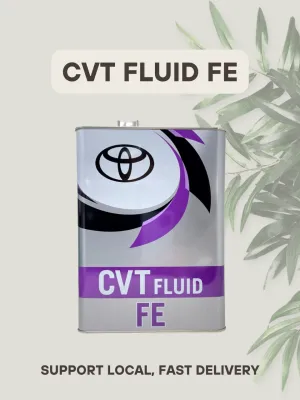
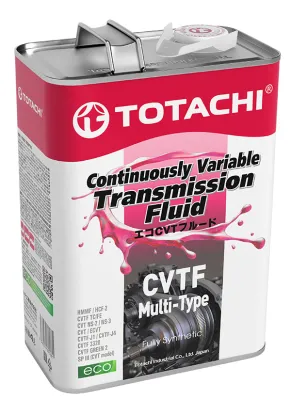
Prices are valid at publication and may change. Please refer to the product page for the latest price.
Using a fluid with the incorrect viscosity or an incompatible friction modifier package can disrupt this delicate balance. If the fluid is too thin or lacks the necessary additives, the belt may slip, leading to transmission shudder, localized overheating, or premature wear of the internal components. Conversely, a fluid that is too thick can increase drag, reducing fuel efficiency and causing sluggish performance.
Furthermore, modern CVT valve bodies and electronic solenoids are calibrated to operate within highly specific fluid flow rates and pressure ranges. The low-viscosity profile of “FE” fluid is critical for maintaining the correct hydraulic pressure required to adjust the pulleys smoothly. Introducing a fluid with different flow characteristics can cause delayed shifts, erratic pressure fluctuations, and eventual hydraulic system issues.
How to Verify If Your Vehicle Requires FE Fluid
Determining whether your vehicle requires “FE” fluid involves verifying the manufacturer’s official specifications rather than relying on general assumptions. The primary source of this information is your vehicle’s Owner’s Manual. Navigate to the maintenance, specifications, or fluid capacities section, where the manufacturer lists the exact transmission fluid standard required for your specific model year and engine configuration.

In some vehicles, you can find physical indicators directly on the transmission assembly. If your vehicle is equipped with a transmission dipstick, the required fluid type—such as “CVT FE”—is often stamped directly onto the plastic handle or the metal blade. For sealed transmissions without a dipstick, the specification may be printed on the transmission fill plug, a label near the filler neck, or an under-hood emissions and maintenance placard.
Avoid relying solely on general automotive retail databases, online forums, or generic aftermarket cross-reference charts. These resources can sometimes overlook subtle model-year transitions or regional drivetrain variations, leading to incorrect recommendations. Always cross-reference any aftermarket fluid claims against the official requirements stated in your vehicle’s documentation.
If your owner’s manual is missing, or if the physical markings on your vehicle are illegible, consult a certified Toyota service center. A service advisor can look up your vehicle’s exact build specifications using your Vehicle Identification Number (VIN) to confirm the correct fluid standard before any maintenance is performed.
Risks of Using the Wrong CVT Fluid and What to Do
Operating a CVT with the incorrect fluid specification can manifest in several observable drivability issues. You may notice a distinct shuddering or jerking sensation during acceleration, delayed engagement when shifting from Park to Drive or Reverse, or unusual whining and humming noises from the engine bay. These symptoms indicate that the fluid is not maintaining the proper friction or hydraulic pressure required by the system.
If you experience severe transmission slipping, sudden loss of acceleration, or if the transmission warning light illuminates on your dashboard, stop driving the vehicle as soon as it is safe to do so. Continuing to drive a CVT with slipping components can cause severe internal damage within a short distance, often requiring a complete transmission replacement.
If you discover that the wrong fluid has been added to your transmission, a simple top-up or partial drain will not resolve the issue. Correcting a fluid mismatch requires a complete fluid exchange or flush to remove the incorrect fluid from the torque converter, cooler lines, and valve body. This procedure should be performed by a qualified professional who can evacuate the system and refill it with the correct specification.
Frequently Asked Questions (FAQ)
Can I mix Toyota CVT Fluid FE with older CVT fluid types?
No, you should not mix Toyota CVT Fluid FE with older fluid types like CVT Fluid TC. Mixing different specifications alters the viscosity and chemical properties of the fluid, preventing it from performing as designed. If you need to top up your transmission, always use the exact specification required by your vehicle; if a different fluid has been introduced, arrange for a professional system flush and refill.
Is Toyota CVT Fluid FE the same as standard ATF?
No, Toyota CVT Fluid FE is distinct from standard Automatic Transmission Fluid (ATF). Standard ATF is formulated for the wet clutch packs and planetary gears found in traditional stepped-automatic transmissions. Using standard ATF in a Toyota CVT will result in severe belt slippage, overheating, and rapid mechanical wear due to incompatible friction characteristics and viscosity levels.
Community discussion
Share your experience or ask a question. Comments are reviewed before publication.