
Choosing the right automatic transmission fluid (ATF) for your Toyota is not a matter of upgrading to the newest or most expensive formula on the shelf. Toyota ATF specifications—namely Type T-III, Type T-IV, and World Standard (WS)—are distinct engineering standards established for specific transmission designs. Each fluid is formulated with a precise viscosity, chemical stability, and friction modifier package tailored to the internal clearances, clutch plate materials, and hydraulic pump pressures of a particular gearbox generation.
Using a newer fluid like WS in an older transmission designed for T-IV or T-III will not improve performance; instead, it can cause severe internal slippage and mechanical damage. The golden rule of transmission maintenance is to use only the exact fluid specification designated by the vehicle manufacturer. The most reliable way to identify this required standard is by consulting your vehicle’s owner’s manual or inspecting the transmission dipstick under the hood.
Toyota ATF Type T-III: Characteristics and Legacy Applications
Toyota ATF Type T-III is a legacy fluid specification designed primarily for vehicles manufactured during the 1990s and early 2000s. During this era, automatic transmissions typically featured four-speed or early five-speed gearboxes with wider internal tolerances and different hydraulic pressure requirements compared to modern systems. Type T-III was engineered to provide the specific film thickness and shear stability necessary to protect these older mechanical components under continuous operating loads.
Products mentioned in this guide
Prices are valid at publication and may change. Please refer to the product page for the latest price.
The viscosity profile of Type T-III is relatively high, which is essential for maintaining hydraulic pressure and preventing fluid bypass within the wider clearances of older valve bodies. It also contains a specific additive package designed to interact compatibly with the paper-based or early composite clutch friction materials common in legacy Toyota gearboxes.
While modern synthetic fluids often claim to cover older specifications, Type T-III remains a strict requirement for specific classic and legacy models still operating on the road. You do not need to analyze the complex chemical compound structure of the fluid; your primary task is simply to check your vehicle’s official documentation to verify if Type T-III is explicitly mandated.
Toyota ATF Type T-IV: Friction Modifiers and Shift Quality
Introduced to support the transition to more advanced five-speed and early six-speed automatic transmissions in the early to mid-2000s, Toyota ATF Type T-IV represents a significant evolution in fluid engineering. As engine power outputs increased and transmissions became more compact, gearboxes were subjected to higher thermal loads and greater torsional stress. To counter these challenges, Type T-IV was formulated with a highly specialized friction modifier package.

These friction modifiers are chemical additives that control the precise slip-to-grip transition of the transmission’s internal clutch packs. In Singapore’s typical stop-and-go driving conditions, where frequent gear changes generate substantial localized heat, the thermal stability of Type T-IV helps prevent transmission shudder—a distinct vibration felt when the torque converter clutch engages. The fluid ensures that clutch engagement remains smooth, predictable, and quiet across a wide temperature range.
Because Type T-IV has a different viscosity index and friction coefficient than both its predecessor (T-III) and successor (WS), substituting it incorrectly can alter the shift timing and feel. Using the correct Type T-IV fluid in a compatible gearbox is critical to maintaining the original shift calibration and preventing premature wear on the clutch friction linings.
Toyota ATF WS (World Standard): Low Viscosity and Fuel Efficiency
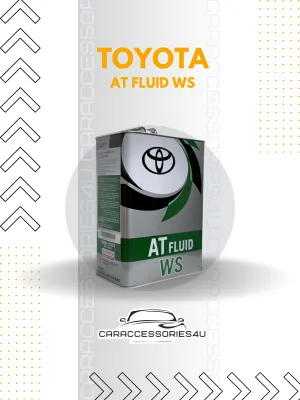
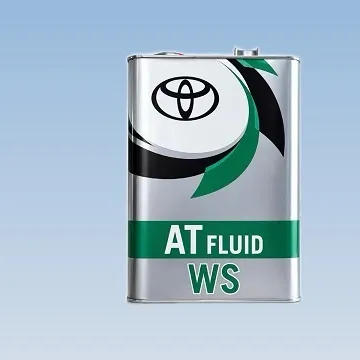
Toyota ATF WS, which stands for “World Standard,” is the modern fluid specification introduced for six-speed, eight-speed, and multi-stage hybrid transaxles. Developed to help automotive manufacturers meet increasingly stringent global emissions standards and fuel economy targets, WS represents a departure from traditional high-viscosity fluids.
The defining characteristic of Toyota ATF WS is its exceptionally low viscosity. Thinner fluid reduces internal fluid drag—often referred to as churning losses—as the gears spin through the oil bath inside the transmission case. This reduction in parasitic drag allows more engine power to reach the drive wheels, directly improving fuel efficiency. Additionally, the lower viscosity allows the fluid to flow more rapidly during cold starts, ensuring immediate hydraulic pressure and lubrication to critical components even before the vehicle reaches its optimal operating temperature.
However, this low-viscosity design involves a critical engineering trade-off. Because WS is much thinner than older fluids, it provides a thinner physical oil film between moving metal parts. To prevent metal-on-metal contact, transmissions designed for WS are built with incredibly tight internal clearances, high-precision manufacturing tolerances, and specialized clutch materials capable of operating with less fluid cushioning.
Consequently, WS cannot safely be used as a replacement in older transmissions designed for T-IV or T-III. In an older gearbox, the thin WS fluid can fail to maintain sufficient oil film strength under high loads, leading to rapid hydraulic pressure loss, severe clutch slippage, and accelerated mechanical wear of the planetary gear sets.
The Dangers of Mixing or Substituting Toyota ATF Types
A common and highly damaging misconception among vehicle owners is that newer transmission fluids are backward compatible with older systems. In the case of Toyota ATF specifications, this assumption is false. Pouring low-viscosity WS fluid into a transmission designed for the thicker T-IV or T-III standards will compromise the hydraulic pressure required to actuate the clutches, potentially leading to catastrophic internal failure.
Equally hazardous is the practice of mixing different fluid specifications or topping up your transmission with generic multi-vehicle fluids. Each Toyota ATF specification relies on a carefully balanced chemical balance of friction modifiers, anti-wear agents, and detergents. Mixing different fluids alters these friction characteristics, which can cause the transmission clutches to either slip excessively or grab too aggressively. This imbalance manifests as harsh shifting, transmission shudder, gear hunting, or complete clutch pack burnout.
While many aftermarket brands market universal automatic transmission fluids claiming to meet all Toyota specifications simultaneously, these products are often compromises designed to fit a broad average. For optimal performance, safety, and component longevity, using the exact OEM-specified fluid is the most reliable approach.
If you suspect the wrong fluid has been added to your transmission, or if you cannot source the exact specification required, the safest course of action is to avoid driving the vehicle. Operating a transmission with incorrect or mixed fluid can cause rapid, irreversible damage to the valve body and clutch plates. In such scenarios, consult a qualified professional to perform a complete transmission fluid flush using the correct specification.
How to Verify the Correct ATF for Your Vehicle
To prevent costly transmission damage, always verify the exact fluid specification required for your vehicle before purchasing any ATF or performing maintenance.
First, consult your vehicle’s owner’s manual. Navigate to the “Specifications,” “Vehicle Maintenance,” or “Capacities” section. This document remains the primary, most authoritative source of truth for your specific model, engine, and transmission combination.
Second, inspect the transmission dipstick if your vehicle is equipped with one. Many Toyota models feature a metal dipstick under the hood with the required fluid type (such as “WS” or “Type T-IV”) clearly stamped or printed directly onto the metal blade or plastic handle. Note that many modern Toyota vehicles feature sealed transmissions without a dipstick, which makes relying on official documentation even more critical.
Third, if your owner’s manual is missing or if your vehicle has undergone a transmission replacement in the past, contact an authorized Toyota service center or dealership. Provide them with your vehicle’s unique Vehicle Identification Number (VIN) so they can cross-reference the exact factory build specifications of your gearbox.
Avoid relying solely on automated online parts lookup tools or generic automotive forums. These databases can contain indexing errors or fail to account for regional model variations, which can lead to purchasing the wrong fluid and risking severe mechanical damage.
Community discussion
Share your experience or ask a question. Comments are reviewed before publication.