
To keep your vehicle’s paint looking pristine, you cannot rely on a single, one-size-fits-all cloth. Selecting the correct microfiber car towel for each specific detailing stage—washing, drying, and polishing—is the single most effective way to prevent unsightly swirl marks, fine scratches, and paint marring. For contact washing, a deep-pile chenille wash mitt is the safest choice to lift and suspend dirt away from the clear coat. When it comes to drying, a specialized twisted loop or waffle weave towel absorbs high volumes of water rapidly with minimal friction. For polishing, buffing, and removing wax residue, an edgeless, high-quality plush or short-pile microfiber towel ensures a clean, streak-free finish without scratching delicate automotive surfaces.
Understanding these distinctions helps you match the fabric’s physical properties to the vulnerability of your car’s exterior. Different tasks subject the paint to varying levels of friction and pressure, making specific weaves and weights necessary. By choosing task-specific tools, you safeguard your vehicle’s clear coat and elevate the overall quality of your detailing results.
Why Using the Wrong Microfiber Towel Damages Car Paint
Modern automotive clear coats are remarkably thin and sensitive to physical abrasion. When you wipe a vehicle with an incorrect or low-quality cloth, tiny dirt particles, road grit, and dust become trapped between the flat surface of the fabric and the paint. Instead of absorbing these contaminants, a flat or stiff cloth drags them across the surface under pressure, acting like ultra-fine sandpaper. This abrasive action creates microscopic scratches, commonly known as swirl marks, which dull the paint’s reflection and ruin its depth under direct sunlight.
Products mentioned in this guide
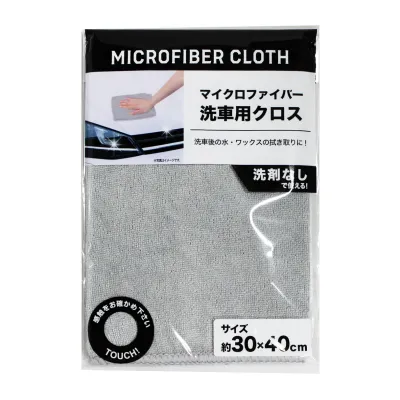
![Lec Microfiber Cloth Towel For Polishing Glass Window Mirror 30X40CM [Bundle Of 3]](https://img.lazcdn.com/g/p/446bf6bcb77bb665b9c97be3b6357e30.jpg_400x400q80.jpg_.webp)
Prices are valid at publication and may change. Please refer to the product page for the latest price.
The difference lies in the engineering of the fibers. Automotive-grade microfiber is manufactured with split fibers, creating microscopic channels that actively pull dust and moisture away from the surface and lock them deep within the weave. General household microfiber cloths, by contrast, are often made with unsplit fibers or lower-quality polyester blends designed for durable scrubbing rather than delicate paint care. These household varieties frequently feature stiff, heat-sealed edges and coarse stitching that can easily slice through soft clear coats.
To maintain paint safety during detailing, you must evaluate three primary physical characteristics: pile height, weave structure, and edge design. Pile height determines how far away from the paint a trapped dirt particle is held during a wipe. The weave structure governs how the towel behaves under load—whether it glides smoothly or grabs the surface. Lastly, the edge design ensures that the boundary of the towel, which often receives the highest localized finger pressure, does not introduce hard materials that can scratch the finish.
Choosing the Right Microfiber Towel for Washing
The contact wash is the most high-risk phase of car detailing because you are physically moving soapy water over a layer of abrasive road grime. Selecting the right washing medium determines whether that grime is safely lifted or ground directly back into the clear coat.

Microfiber Wash Mitts vs. Flat Towels
Microfiber wash mitts are specifically engineered to handle the heavy lifting of the initial contact wash. Unlike a standard flat towel, which offers a limited, flat contact patch that quickly saturates with dirt, a wash mitt features a deep, three-dimensional pile that allows contaminants to migrate deep into the fibers, away from the paint surface. The mitt design also allows you to wear the washing tool, reducing hand fatigue and preventing the accidental drops that occur with loose towels. When a loose towel hits the ground, it immediately picks up grit and must be discarded; a mitt provides a secure grip that minimizes this risk.
Flat microfiber towels, while useful for secondary tasks, lack the physical depth required to safely navigate heavily soiled lower body panels. When pressed against the paint, a flat towel compresses the dirt against the clear coat, forcing the particles to scrape along the surface. A wash mitt, particularly one with a thick inner foam core, holds a large reservoir of soapy water, providing continuous lubrication that helps the tool glide effortlessly over the panels.
Ideal Pile and Blend for Washing
For the safest contact wash, look for wash mitts featuring a chenille or deep-pile microfiber structure. Chenille mitts are characterized by distinct, finger-like strands of microfiber woven together, which dramatically increase the surface area and create deep recesses to trap large dirt particles. This structure ensures that even if you miss a spot during rinsing, the dirt is safely suspended within the “fingers” rather than being dragged across the paint.
The material blend is equally critical for ensuring softness and water retention. High-quality detailing microfibers typically feature a blend of polyester and polyamide, often in an 80/20 or 70/30 ratio. Polyamide provides the towel with its soft, absorbent, and elastic properties, while polyester provides structure and durability. For washing, a 70/30 blend is highly recommended because the higher polyamide content allows the mitt to hold more soapy water, maximizing lubrication between the mitt and the paint.
To further minimize friction, always employ the two-bucket method: one bucket filled with soapy water and another filled with clean water and a grit guard to rinse the mitt after cleaning each panel. If you must use flat microfiber towels for washing, fold them into quarters to create eight clean faces, flipping to a fresh side with every pass to prevent reintroducing trapped dirt to the paint.
Selecting the Best Microfiber Towel for Drying
Once your car is clean, removing the remaining water quickly and safely is essential to prevent water spots, especially in warm climates where mineral-rich tap water can dry rapidly on hot panels. The ideal drying towel must absorb massive amounts of water while minimizing drag.
Twisted Loop and Waffle Weave Towels
Twisted loop towels represent the pinnacle of modern drying technology. In this design, the microfiber loops are twisted together and left uncut, creating long, dense strands that maximize surface area. This configuration utilizes capillary action to pull water off the vehicle’s surface and deep into the core of the towel, allowing you to dry an entire mid-sized vehicle in a single pass without needing to wring the towel out. Because the loops are twisted and lay flat, they glide over the paint with virtually zero surface tension, drastically reducing the risk of friction-induced marring.
Waffle weave towels are another highly effective option, characterized by a distinct grid-like pattern that resembles a kitchen waffle. The raised ridges of the waffle pattern collect water as the towel passes over the surface, while the recessed valleys channel the moisture away from the paint. While waffle weave towels generally hold less total water than heavy twisted loop designs, they are exceptionally lightweight, easy to wring out, and highly effective for glass and tight door jambs where precision is required.
High GSM Plush Drying Towels
Grams per Square Meter (GSM) is the standard measurement of a microfiber towel’s density and weight. Towels with a high GSM—typically between 600 and 1200—are incredibly thick, plush, and luxurious to the touch. These heavy-duty plush towels are excellent for final buffing and absorbing residual moisture from intricate body lines, as their deep pile easily swallows up any stray water droplets.
However, high GSM plush towels come with specific trade-offs when used for primary drying. As these towels absorb water, they become extremely heavy and cumbersome to handle, which can lead to accidental drops or uneven hand pressure. Furthermore, a heavy, saturated plush towel can create a vacuum effect against the paint, increasing drag and the potential for marring if the surface is not perfectly clean or adequately lubricated.
To mitigate this risk, always use a dedicated drying aid or quick detailer spray during the drying process. Lightly misting the wet panels with a drying aid before wiping introduces a thin layer of synthetic lubrication, allowing the heavy plush towel to glide smoothly while leaving behind a streak-free, glossy finish.
Picking the Ideal Microfiber Car Towel for Polishing and Buffing
Polishing and buffing represent the final stages of paint correction and protection, where you remove compound residues, polishes, waxes, or ceramic sealants. Because the paint is completely clean and often highly polished at this stage, it is at its most vulnerable to scratching.
Ultra-Plush vs. Short-Pile Buffing Towels
Choosing between an ultra-plush towel and a short-pile towel depends entirely on the specific product you are removing. Ultra-plush towels (typically 500 to 600 GSM) feature long, soft fibers that are ideal for the final wipe-down of quick detailers, spray waxes, or delicate spray sealants. The long fibers gently glide over the surface, buffing the product to a high gloss while collecting any remaining dust or light residue without applying excessive pressure.
Conversely, removing stubborn, dried paste waxes or sticky polishing compounds requires a short-pile or low-lint towel (typically 300 to 350 GSM). Short-pile towels have tight, dense loops that provide the necessary “bite” to break the surface tension of cured wax or sticky compound residues. An ultra-plush towel would simply glide over these heavy residues without leveling them, leading to uneven smearing and product build-up. Using a short-pile towel allows you to cleanly slice through the residue, leaving a perfectly leveled, optically clear layer of protection.
Edgeless and Silk-Banded Designs
The edges of a microfiber towel are often the most common source of paint damage during intense buffing. Traditional towels feature edges that are finished with polyester thread or overlock stitching, which can become stiff and abrasive over time, especially after multiple wash cycles. When you apply localized pressure with your fingers to buff away a stubborn wax residue, these hard stitched edges can easily carve fine scratches directly into your clear coat.
To prevent this, professional detailers rely exclusively on edgeless or silk-banded designs. Edgeless towels are laser-cut or ultrasonically cut, leaving a soft, raw microfiber edge that cannot scratch the paint regardless of how much pressure is applied. Silk-banded towels feature a soft silk or microfiber binding stitched around the perimeter, covering any hard threads and providing a cushioned barrier. For any delicate polishing or buffing task, using an edgeless or silk-banded microfiber car towel is a mandatory safety measure to preserve your hard work.
Towel Care and Cross-Task Compatibility
To protect your investment and ensure your vehicle’s paint remains scratch-free, you must establish a strict system of towel management and maintenance. Using the same towel for multiple distinct tasks is a recipe for paint damage.
- Cross-Compatibility: Never use the same towel for different detailing tasks. A towel used to wipe down greasy door jambs, engine bays, or brake-dust-heavy wheels must never touch your vehicle's delicate exterior paint. Cross-contamination is a major hazard; polishing compounds contain abrasive particles that, if transferred to a washing or drying towel, can severely scratch the paint during subsequent washes. Color-code your towels by task—for example, blue for drying, yellow for polishing, and green for dirty utility areas—to ensure they are never mixed up.
- Washing Instructions: Microfiber requires specialized laundering to preserve its split-fiber structure and absorbency. Always wash your microfiber towels separately from cotton items, as cotton sheds lint that will permanently clog the microfiber channels. Use a dedicated liquid microfiber restorer or a mild, dye-free, scent-free liquid detergent. Never use powder detergents, fabric softeners, or bleach; fabric softeners coat the fibers in a chemical film that destroys their absorbency and causes streaking, while bleach degrades the polyamide fibers over time. Wash in warm water to release trapped oils and compounds, and tumble dry on a low-heat or air-fluff setting, as high heat will melt the delicate polyester tips, turning the soft towel into a scratchy, paint-damaging rag.
- Inspection: Before every detailing session, thoroughly inspect each towel. Run your hand over the surface to check for embedded twigs, leaf particles, or dried compound crusts that did not wash out. If a towel feels stiff, scratchy, or contains debris that cannot be easily plucked out, immediately demote it to low-risk tasks like cleaning exhaust tips, engine bays, or undercarriages.
Frequently Asked Questions (FAQ)
What is the best GSM for a general-purpose car microfiber towel?
For general-purpose detailing tasks, such as cleaning interior dashboards, wiping down door jambs, or cleaning glass, a mid-range towel with a GSM of 300 to 400 is ideal. This weight strikes a perfect balance between softness and scrubbing power, allowing it to conform to tight interior crevices while remaining durable enough to handle light dirt and dust. However, for specialized tasks like heavy drying or delicate paint buffing, you should transition to task-specific towels with higher GSMs or specialized weaves.
Can I use household microfiber cloths for car detailing?
You should avoid using cheap household microfiber cloths on your car’s exterior paint. Household cloths are typically made with a lower-quality, unsplit fiber blend and feature hard, stitched edges that can easily scratch delicate automotive clear coats. They also tend to shed lint heavily, leaving behind unsightly fibers on your paint and glass. While they are acceptable for cleaning dirty engine bays, wheel wells, or undercarriages, always invest in dedicated, edgeless, automotive-grade microfiber towels for any contact with painted surfaces.
How often should I replace my microfiber car towels?
The lifespan of a microfiber towel depends heavily on how frequently it is used and how well it is maintained. Generally, a high-quality towel can withstand dozens of wash cycles before showing signs of degradation. You should replace or demote your towels when they lose their absorbency, feel stiff or rough to the touch, or begin to fray and shed lint. When a towel is no longer safe for delicate paint, demote it to interior, wheel, or engine bay cleaning rather than throwing it away.
Community discussion
Share your experience or ask a question. Comments are reviewed before publication.