
Quick Answer: Which Model Y Spoiler Is Right for You?
Deciding between an Original Equipment Manufacturer (OEM) Tesla Model Y spoiler and an aftermarket alternative comes down to a clear trade-off between guaranteed factory integration and financial flexibility. The OEM spoiler, crafted from lightweight matte carbon fiber, offers flawless contour matching, verified aerodynamic performance, and zero risk to your vehicle’s factory warranty. It is the ideal choice if you prioritize a seamless, high-quality ownership experience and want professional installation backed directly by Tesla Singapore.
Conversely, aftermarket spoilers are highly attractive if you want to customize your Model Y’s aesthetic on a budget or prefer a more aggressive styling cue, such as a gloss carbon finish or a pronounced duckbill design. However, choosing an aftermarket route requires you to accept minor risks regarding mold tolerances, paint matching, and adhesive longevity under local weather conditions. You must also take extra care to verify that any third-party modification complies with local road safety guidelines and does not interfere with the vehicle’s rear-facing sensors.
Fit and Finish: Factory Precision vs Aftermarket Variability
Achieving a clean, factory-installed look requires a spoiler that matches the complex, curved sheet metal of the Model Y’s rear liftgate. Tesla’s OEM spoiler is manufactured using the brand’s proprietary computer-aided design (CAD) data. This ensures that the mounting surface of the spoiler mirrors the exact curvature of the trunk lid down to the millimeter. The result is a flush fitment with zero gap tolerances along the edges, preventing dirt, moisture, and road grime from accumulating underneath the adhesive bond.
Products mentioned in this guide
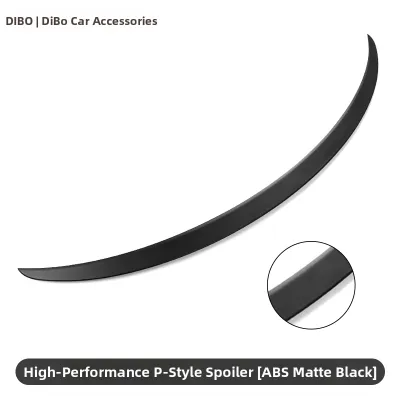
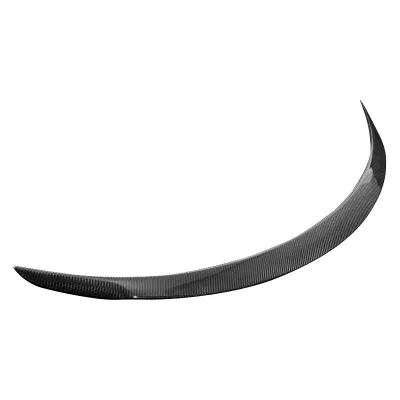
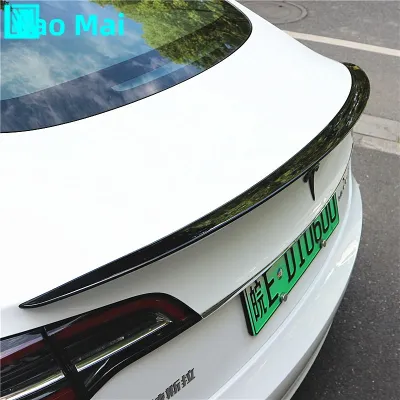
Prices are valid at publication and may change. Please refer to the product page for the latest price.

Aftermarket manufacturers do not have access to official CAD schematics and must rely on reverse-engineering physical vehicles using 3D scanners. While modern 3D scanning is highly advanced, minor structural deviations can occur during the mold-making and manufacturing processes. Even a tiny deviation of one or two millimeters can prevent the spoiler from sitting completely flat against the trunk lid. This physical tension can cause the ends of an aftermarket spoiler to lift over time, creating unsightly gaps that compromise both aesthetics and structural security.
Surface finishes also present a significant point of comparison. The OEM spoiler features a consistent, high-grade matte carbon fiber weave that perfectly matches other factory performance accents. Aftermarket options offer a much wider array of finishes, including gloss carbon fiber, forged carbon, matte black ABS plastic, and color-matched painted options. If you opt for a painted aftermarket spoiler, matching Tesla’s multi-coat paint formulas—such as Pearl White Multi-Coat or Ultra Red—is notoriously difficult, often resulting in subtle color mismatches that become highly visible under direct Singapore sunlight.
Aerodynamics and Range: How Spoilers Affect EV Efficiency
Electric vehicles are exceptionally sensitive to aerodynamic drag, as any disruption in airflow directly impacts driving range. The fastback crossover shape of the Model Y is engineered to minimize air resistance, but the steep angle of the rear hatch naturally creates a zone of low-pressure, turbulent air behind the vehicle. A rear spoiler’s primary functional role is to manage this airflow separation, cleanly directing air off the trailing edge to reduce the size of the turbulent wake.
Tesla’s OEM spoiler was wind-tunnel tested specifically for the Model Y’s aerodynamic profile. By optimizing the air separation point, it maintains the vehicle’s low drag coefficient and can even provide minor drag reduction at highway speeds. For drivers who frequently travel on expressways or drive up the North-South Highway, this engineered precision ensures the accessory does not penalize your watt-hour per kilometer (Wh/km) efficiency.
Aftermarket spoilers, by contrast, are often designed with a primary focus on visual aggression rather than fluid dynamics. An overly tall wing or an improperly angled duckbill can act as an unintended air brake, generating excessive downforce at the expense of significant aerodynamic drag. This added resistance can noticeably degrade your real-world range, particularly at speeds above 80 km/h. When shopping for aftermarket alternatives, it is highly recommended to seek out established brands that provide Computational Fluid Dynamics (CFD) simulation data or documented range testing, rather than relying solely on aesthetic marketing claims.
Material Durability in Singapore's Tropical Climate
Singapore’s equatorial climate serves as a punishing testing ground for exterior automotive accessories. With intense UV radiation, daily ambient temperatures frequently exceeding 32°C, and sudden, torrential downpours, materials are subjected to severe thermal expansion and environmental stress. Choosing a spoiler made from inferior materials can lead to rapid fading, warping, or structural failure within a year of installation.
Understanding the differences between common spoiler materials is essential for long-term satisfaction:
- Dry Carbon Fiber: The premium standard used in OEM and high-end aftermarket spoilers. Pre-impregnated with resin and cured under high pressure, it is exceptionally strong, lightweight, and highly resistant to thermal expansion.
- Wet Carbon Fiber: Common in mid-tier aftermarket options. It involves hand-applying resin over carbon sheets, making it heavier and more susceptible to yellowing or delaminating under Singapore's intense UV rays.
- ABS Plastic: A durable, impact-resistant thermoplastic used for painted or matte black spoilers. High-quality, UV-stabilized ABS holds up well, but cheaper variants can become brittle over time.
- Fiberglass (FRP): Rigid but more prone to cracking under physical impact or extreme temperature fluctuations.
The clear coat applied to the spoiler is your primary defense against the elements. Lower-grade aftermarket spoilers often use cheap clear coats that degrade rapidly under the tropical sun, leading to a hazy, oxidized appearance. To protect an aftermarket carbon fiber purchase, applying a high-quality ceramic coating or a dedicated paint protection film (PPF) immediately after installation is highly recommended to shield the resin from UV damage.
Equally critical is the adhesive used to secure the spoiler. Most spoilers rely on double-sided acrylic foam tape, such as 3M VHB. In Singapore, the surface temperature of a dark-colored car parked in direct sunlight can easily exceed 60°C. This extreme heat can soften low-quality adhesives, causing the spoiler to lift or detach entirely at expressway speeds. Meticulous surface preparation—including thorough decontamination, an isopropyl alcohol wipe, and the application of an adhesive promoter—is mandatory to ensure the tape forms a permanent, heat-resistant bond with the vehicle’s clear coat.
Installation Risks, Tesla Warranty, and LTA Compliance
Modifying your Model Y’s exterior involves legal, financial, and safety boundaries that must be carefully evaluated before purchasing or installing any accessory.
Tesla Warranty Implications
Installing an OEM spoiler through an authorized Tesla Service Centre ensures that your vehicle’s factory warranty remains completely unaffected. If you choose an aftermarket option, the warranty implications depend heavily on the installation method. Adhesive-only installations are generally low-risk, as they do not permanently alter the vehicle’s structure. However, if an aftermarket spoiler detaches and damages the rear glass, paintwork, or causes an accident, Tesla will not cover the resulting repair costs.
Drilling into the rear hatch to mount a spoiler poses a severe warranty risk. It breaches factory anti-corrosion coatings, exposing steel to rust in Singapore’s high humidity. It also risks damaging internal wiring for cameras, latches, or rear glass heating elements. Any damage from drilling will void the warranty on those systems. Always check Tesla’s official guidelines before proceeding with any invasive installation.
LTA Regulations in Singapore
The Land Transport Authority (LTA) maintains strict guidelines regarding vehicle modifications to ensure road safety for all users. According to LTA standards, any aftermarket body kit, including spoilers, must meet the following criteria:
- No sharp edges or corners that could injure pedestrians.
- Must not protrude beyond the vehicle's width or length.
- Must not obstruct the driver's rearward vision.
- Must not obscure any vehicle lighting, especially the high-mount stop lamp.
Before purchasing an aggressive “GT-style” wing or a large duckbill spoiler, owners must verify that the design complies with these regulations. Non-compliant modifications can result in failing the mandatory periodic vehicle inspection or receiving fines during routine LTA enforcement checks.
Safety and Installation Boundaries
Because a detached spoiler can become a lethal projectile on the East Coast Parkway (ECP) or Pan Island Expressway (PIE), ensuring a secure installation is a critical safety boundary. If you are not confident in executing the meticulous surface preparation required for adhesive bonding, or if your chosen spoiler requires mechanical fasteners, you should seek professional installation from a qualified automotive workshop. Never attempt to modify or splice into the vehicle’s electrical wiring (for example, to integrate an aftermarket spoiler with an active brake light) without professional oversight, as this can disrupt the Model Y’s sensitive low-voltage electrical architecture.
Cost and Value: Looking Beyond the Sticker Price
When evaluating the financial aspect of this upgrade, it is easy to fall into the trap of comparing only the upfront purchase prices. A deeper look reveals several hidden costs that can narrow the price gap between OEM and aftermarket options.
The official Tesla OEM carbon fiber spoiler, purchased and installed through Tesla Singapore, represents a premium investment. This price, typically positioned in the higher tier of exterior accessories (often ranging from S$800 to S$1,200 including professional installation), includes the physical carbon fiber part, the specialized adhesive template, and professional labor backed by a factory warranty.
Aftermarket spoilers can be found online for as little as S$100 to S$400. However, Singaporean buyers must factor in the following additional expenses:
- International Shipping: Spoilers are long, awkwardly shaped items. Shipping to Singapore can add S$50 to S$150.
- Import Taxes: Goods imported into Singapore are subject to Goods and Services Tax (GST), calculated on the Cost, Insurance, and Freight (CIF) value.
- Consumables: Safe DIY installs require isopropyl alcohol, painter's tape, and adhesive promoters (like 3M Primer 94), adding S$20 to S$50.
- Professional Painting: Unpainted or wet carbon spoilers may require professional clear-coating or paint-matching, costing S$150 to S$300.
In Singapore’s highly regulated car market, vehicles with clean, unmodified, or strictly OEM-plus configurations tend to retain their value better and appeal to a wider pool of buyers on the secondhand market. An aggressive aftermarket spoiler may deter future buyers or require professional removal—which carries its own cost and risk of paint damage—before you can sell or scrap the vehicle.
Final Verdict: How to Choose Your Model Y Spoiler
To make the best decision for your Tesla Model Y, evaluate your priorities against the following practical guidelines:
- Choose the OEM Spoiler if: You want a guaranteed, stress-free ownership experience. This is the optimal route if you prioritize perfect fitment out of the box, wish to keep your vehicle's factory warranty completely untarnished, value scientifically tested aerodynamic efficiency, and prefer the classic, understated elegance of matte carbon fiber installed by certified technicians.
- Choose an Aftermarket Spoiler if: You are working within a strict budget or want to give your Model Y a highly customized, distinctive look that stands out from the crowd. This path is suitable if you are willing to spend time researching reputable manufacturers, verifying material quality (such as opting for dry carbon over wet carbon), and performing a meticulous installation process—or paying a professional workshop to do so.
- Verify First if: You are considering a design that deviates significantly from the factory shape. Always check LTA guidelines regarding exterior dimensions and rear visibility, and consult with a reputable local installer if the product documentation mentions drilling, custom adhesives, or wiring modifications.
Frequently Asked Questions (FAQ)
Does adding a spoiler actually increase the Model Y's range?
While an engineered spoiler like the OEM option can marginally reduce drag at highway speeds (above 90 km/h), the real-world range impact is minimal for daily driving. In Singapore’s stop-and-start urban traffic, aerodynamic benefits are negligible. View a spoiler primarily as an aesthetic upgrade rather than a method to extend battery range.
Can I install a Tesla Model Y spoiler myself using double-sided tape?
Yes, a DIY installation is feasible using high-quality double-sided automotive tape (like 3M VHB) if you follow a strict preparation protocol. The mounting surface must be entirely free of wax, ceramic coatings, and dirt. Clean the area with isopropyl alcohol, apply an adhesive promoter, and use painter’s tape for alignment guides. Once applied, maintain firm, even pressure for several minutes, and avoid washing the car or driving in heavy rain for 24 to 48 hours to allow the bond to cure.
Will an aftermarket spoiler trigger the Model Y's sentry mode or cameras?
A standard lip or duckbill spoiler will not interfere with Sentry Mode or the rear-facing Autopilot cameras, as these cameras are positioned lower down near the license plate pocket or on the side fenders. However, if you install an exceptionally large, high-mounted aftermarket wing, it could potentially enter the upper field of view of the rear camera or create physical vibrations at high speeds that the vehicle’s sensors might interpret as an external disturbance. Always verify that any aftermarket spoiler you choose does not physically overhang or cast shadows over the rear camera lens.
Community discussion
Share your experience or ask a question. Comments are reviewed before publication.