
Selecting the right full-surround floor mats for a Tesla Model 3 requires looking beyond generic marketing claims of a “perfect fit.” While many aftermarket brands promise complete coverage, the actual precision of these mats depends heavily on your vehicle’s specific model year, drive configuration, and manufacturing tolerances. Because the Model 3 has undergone subtle structural floor pan updates over its production lifecycle, a mat designed for an older model may pinch, slide, or fail to cover critical areas in a newer variant. Furthermore, drivers must pay close attention to steering configuration, as mats designed for left-hand drive (LHD) markets will not fit the right-hand drive (RHD) footwells found in Singapore. This guide establishes clear evaluation standards, highlights critical fitment variables across different Model 3 generations, and provides a practical verification checklist to help you compare brand specifications and secure a safe, high-coverage solution.
Defining True Full-Surround Coverage
Standard flat floor mats only protect the horizontal footwell surfaces, leaving the vertical carpeted walls exposed to dirt, moisture, and friction. In contrast, a genuine full-surround floor mat is engineered to wrap up the sides of the footwell, creating a protective barrier that shields the vehicle’s interior fabric. For the Tesla Model 3, true full-surround coverage must address several highly specific zones.
In the driver’s footwell, the mat must seamlessly integrate with the dead pedal on the far side without leaving exposed carpet gaps where dirt can accumulate. The contouring around the footrest must remain flush to prevent the driver’s heel from catching on loose edges. Along the sides, the mat should extend upward to cover the lower portion of the center console wall and the outer doorsill carpets.
Products mentioned in this guide
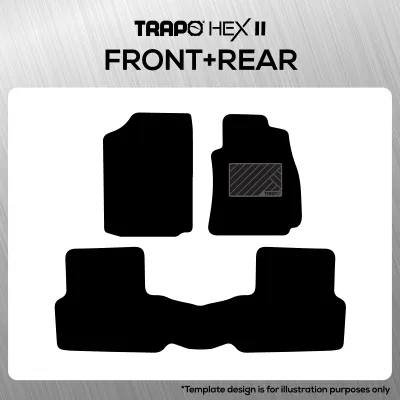
Prices are valid at publication and may change. Please refer to the product page for the latest price.
In the rear cabin, a true full-surround system must provide continuous coverage across the entire floor, including the central floor hump. It must extend far enough forward to tuck neatly under the front seats, protecting the carpet around the seat adjustment rails without obstructing their movement. While standard “3D” or “5D” marketing terms are often used interchangeably, a genuine full-surround construction is distinguished by its high vertical walls, molded corner seams, and precise edge-to-edge tension that keeps the vertical panels upright over extended use.
Critical Fitment Variables by Model Year
The Tesla Model 3 floor pan has undergone several structural modifications since its initial global launch, making model-year verification a critical step before purchasing any interior accessory. A common mistake is assuming that a single “Model 3” product listing covers all vehicles.

The first major structural division exists between the pre-2021 models and the 2021–2023 refreshed versions. During the 2021 refresh, Tesla modified the center console design and adjusted the front seat rail anchor points. These changes altered the floor contours slightly, meaning mats designed for a 2019 Model 3 may bunch up or leave gaps when installed in a 2022 model.
The introduction of the “Highland” update (2024 and newer models) brought even more significant changes to the cabin interior. The floor pan, seat base structures, and pedal clearances were redesigned, rendering older mat designs completely incompatible. When shopping for full-surround mats, you must verify that the manufacturer explicitly lists compatibility for your exact model year range (e.g., 2017–2020, 2021–2023, or 2024+).
Additionally, because Singapore utilizes right-hand drive vehicles, you must confirm that the mat set is specifically manufactured for RHD configurations. Installing an LHD mat set in an RHD vehicle is a severe safety hazard, as the pedal cutouts and dead pedal contours will be reversed, potentially trapping the accelerator or brake pedal. Always check the product specifications or consult the manufacturer to ensure the RHD layout is fully supported.
Material Construction and Edge Retention
The durability and safety of a full-surround mat depend heavily on its material composition. The two most common constructions are rigid multi-layer thermoplastic shells and flexible single-layer Thermoplastic Elastomer (TPE) compounds. Each material behaves differently under the high-temperature conditions typical of vehicles parked outdoors in tropical climates.
Rigid multi-layer mats often feature a textured top layer, a cushioned middle foam layer, and a semi-rigid backing. This structure allows the mat to maintain its high vertical walls and three-dimensional shape without sagging. However, lower-quality multi-layer mats can suffer from edge curling or delamination over time, especially when exposed to intense cabin heat. Once the edges curl away from the footwell walls, they can catch on shoes or block the path of the pedals.
Flexible TPE mats are injection-molded as a single solid piece. TPE offers excellent resistance to wear, chemicals, and temperature fluctuations, making it highly durable and easy to clean. Because TPE is more pliable, it relies on precise engineering to maintain its vertical wall structure. If the TPE formulation is too soft, the side walls may sag inward over time, reducing coverage and allowing debris to slip behind the mat.
To prevent the mat from shifting during driving, look for robust retention systems. The mat must feature precise cutouts that lock directly into the factory floor retention clips. Additionally, the underside should have an anti-slip texture or specialized fiber backing that grips the factory carpet without damaging the fibers.
Verification Checklist for Brand Claims
When comparing different full-surround mat brands on an online marketplace or specialist retailer site, it is easy to get lost in generic marketing promises. To make an objective decision, you should build a comparison matrix to evaluate each product against verifiable specifications.
First, examine the physical retention mechanisms. Does the brand utilize the factory floor anchors, or does it rely solely on friction? A secure mechanical lock is essential for the driver’s side mat. Second, check the specified height of the vertical walls. True full-surround mats should have side walls extending at least 5 to 10 centimeters up the footwell sides to contain spills and dirt effectively.
Next, review the manufacturer’s warranty and return policy. A reputable brand should offer a clear fitment guarantee, allowing you to return or exchange the mats if they do not align perfectly with your Model 3’s floor pan. Be cautious of listings with vague sizing descriptions, such as “universal fit for Model 3,” or those that do not specify the compatible model years or drive side (LHD vs. RHD).
Finally, inspect the product images and user manuals for physical edge reinforcement. High-quality mats often feature reinforced piping or thickened borders along the top edges to prevent sagging and curling. If a product listing lacks detailed photos of the pedal area or the rear seat rail clearances, treat it as a red flag and request clarification from the seller before purchasing.
Decision Framework: Matching Mats to Your Priorities
Choosing the right full-surround mat ultimately depends on your daily usage patterns, aesthetic preferences, and budget. By aligning your specific needs with the strengths of each material type, you can select a product that provides long-term satisfaction.
If your primary goal is maximum spill containment and heavy-duty protection—perhaps because you frequently transport family members, carry wet gear, or park in dusty areas—a rigid multi-layer mat with deep channels is highly suitable. These mats act like a solid tray, holding liquid spills and preventing them from soaking into the underlying carpet. They also tend to offer a more premium, fabric-like appearance that complements the minimalist interior of the Model 3.
If you prefer a low-profile, utilitarian aesthetic that is exceptionally easy to clean, a flexible TPE mat is the ideal choice. TPE mats can be quickly removed, hosed down, dried, and reinstalled within minutes. Their rubber-like texture provides excellent grip underfoot, even when wet, making them highly practical for daily commuting in rainy weather.
Before finalizing your purchase, consider any aftermarket modifications in your vehicle. If you have installed aftermarket seat covers with thick bottom straps, under-seat storage drawers, or modified pedal covers, these additions may alter the available clearance. Measure these areas carefully and compare them with the mat’s dimensions to ensure a seamless installation.
Frequently Asked Questions (FAQ)
Do full-surround mats interfere with the Tesla Model 3 accelerator or brake pedals?
Safety is the most critical factor when installing any aftermarket floor mat. If a full-surround mat is poorly designed, incorrectly installed, or not rated for your specific model year, it can shift forward and obstruct the pedals. This can lead to dangerous situations where the accelerator becomes trapped or the brake pedal cannot be fully depressed.
To prevent this, you must ensure the mat is securely locked into the factory floor retention clips. After installing the driver’s side mat, perform a physical clearance check before driving. With the vehicle turned completely off, manually depress both the accelerator and brake pedals through their full range of motion. Verify that there is a clear gap between the pedals and the edge of the mat at all points. If you feel any friction, catching, or resistance, remove the mat immediately and do not drive the vehicle until the issue is resolved or a compatible mat is sourced.
Are rear-seat full-surround mats necessary for the Model 3?
Whether you need full-surround protection in the rear cabin depends on how you use your Tesla Model 3. If you rarely carry passengers in the back seat, standard flat liners or even the factory carpet mats may provide sufficient protection, saving you installation effort and cost.
However, if you frequently transport children, pets, or multiple passengers, rear full-surround mats are highly beneficial. The rear floor of the Model 3 features a prominent central hump and exposed carpet areas directly beneath the front seats that are highly vulnerable to scuffs and spills. Furthermore, the rear HVAC vents are located close to the floor, making it important to choose a mat that does not block airflow. If you decide that full rear coverage is unnecessary for your lifestyle, a hybrid approach—using a high-quality full-surround mat for the driver’s footwell and simpler flat liners for the rear—can be a practical and cost-effective compromise.
Community discussion
Share your experience or ask a question. Comments are reviewed before publication.