
A dedicated Taichi raincoat is designed primarily as a weather barrier to keep you dry during wet weather rides. It does not provide impact or abrasion protection on its own. To ensure your safety on the road, you must understand whether your specific garment is a pure rain over-suit or a fully armored, waterproof riding jacket. Assuming any waterproof motorcycle garment automatically offers crash protection is a common mistake that can leave you highly vulnerable in an accident.
In tropical climates where heavy downpours and high humidity are common, managing both wet weather and road safety requires a clear understanding of your gear’s capabilities. A lightweight outer shell might keep the rain off your clothes, but it cannot absorb the force of an impact or resist the friction of sliding on asphalt. Evaluating your gear’s specifications and construction is the only way to ensure you are adequately protected.
Identifying Your Taichi Gear: Pure Rain Suit vs. Armored Jacket
To determine what level of protection your gear offers, you must first categorize the garment. A pure rain suit is typically lightweight, highly packable, and designed to be worn over your regular riding gear. These suits are constructed from thin, waterproof materials like nylon or polyester with sealed seams, but they lack internal pockets for armor inserts. They are engineered solely to block wind and water from reaching your inner layers.
Products mentioned in this guide
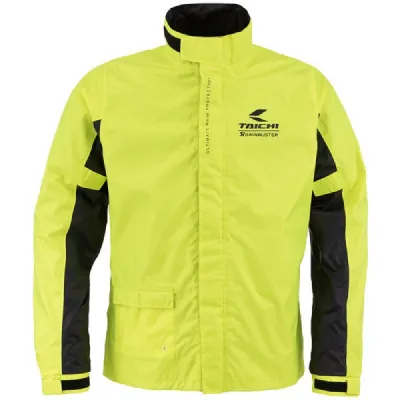
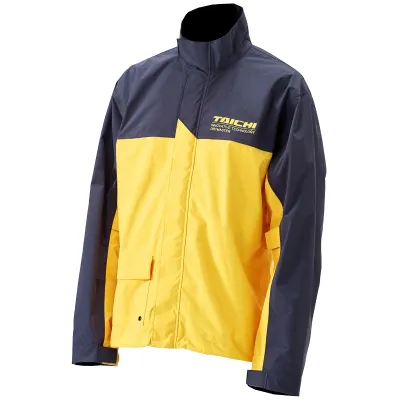
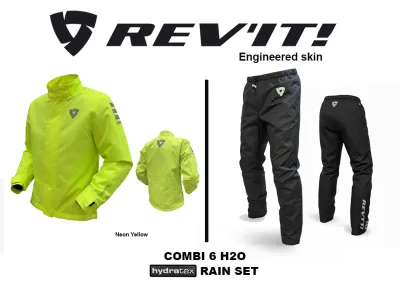
![🇸🇬 [In Stock]High Quality Raincoat Motorcycle Three Layer PVC Premium [Jacket + Pants] Outdoor Bike raincoat bicycle Jacket](https://img.lazcdn.com/g/p/3251d5e0141403f927ffef1fa2c123e1.jpg_400x400q80.jpg_.webp)
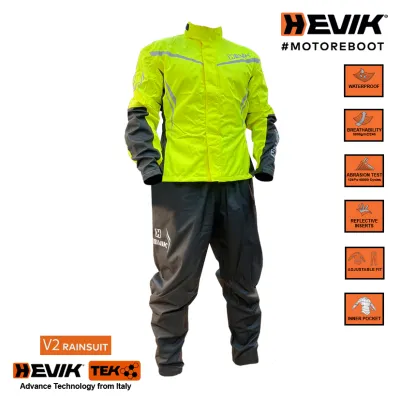
Prices are valid at publication and may change. Please refer to the product page for the latest price.
Conversely, a waterproof riding jacket is a heavy-duty piece of protective equipment. It features built-in pockets at the elbows, shoulders, and back to house impact-absorbing armor. The outer shell of an armored jacket is also made from high-denier, abrasion-resistant textiles designed to withstand sliding friction on asphalt. You can easily distinguish between the two by checking for the presence of armor pockets, the thickness of the material, and the overall cut of the garment, which is typically much looser in a pure rain suit to accommodate underlying gear.
Decoding Protection and Weather Specs on Taichi Labels
Understanding the labels on your Taichi gear is the most reliable way to verify its protective capabilities. For impact protection, inspect the inner lining of the garment for CE (Conformité Européenne) markings. Protective riding jackets will have labels indicating compliance with standards such as EN 1621-1 for shoulder and elbow protectors, or EN 1621-2 for back protectors. These markings confirm that the armor has been tested to absorb specific levels of impact force.

Additionally, look for a garment classification label under the EN 17092 standard, which rates the overall abrasion and tear resistance of the jacket from Class A to Class AAA. If your garment is a pure rain over-suit, you will not find these impact or abrasion ratings on the care labels. Instead, the specifications will focus entirely on weatherproofing, listing hydrostatic head ratings (often measured in millimeters, such as 10,000mm or 20,000mm) and moisture vapor transmission rates for breathability. Always separate these weatherproofing metrics from physical safety standards when evaluating your gear.
Waterproof Ratings vs. Impact Protection: Avoiding the Safety Gap
It is critical to recognize that a high waterproof rating does not translate to slide or impact resistance. A garment can keep you perfectly dry in a tropical downpour, yet offer virtually zero protection if you slide across the pavement. Thin waterproof membranes and lightweight nylon shells are engineered to block wind and water, but they have very low melting points and minimal tensile strength.
In a fall, the friction generated by sliding on asphalt can quickly melt or shred these thin materials, leading to severe road rash. Relying solely on a rain over-suit without wearing armored gear underneath creates a dangerous safety gap. True rider safety requires a combination of impact absorption to protect your joints and abrasion resistance to protect your skin, neither of which can be provided by a simple waterproof layer.
Layering Strategies for Weather and Crash Protection
Implementing a proper layering strategy is essential for balancing weather protection, impact safety, and comfort. If you use a dedicated, non-armored rain suit, it must always be worn as the outermost layer over your standard armored riding jacket. When purchasing a rain suit for this purpose, ensure it is sized correctly to fit comfortably over your bulky protective gear without compressing the armor or restricting your range of motion.
In hot and humid climates, managing heat and moisture buildup is a major challenge when layering waterproof gear. Look for rain suits with built-in ventilation flaps or breathable membranes to help regulate temperature. Before setting off, perform a quick mobility check: sit on your motorcycle, reach for the handlebars, and ensure that the outer rain layer does not pull your elbow or shoulder armor out of its correct protective alignment.
Frequently Asked Questions (FAQ)
Can I add aftermarket armor to a standard Taichi rain over-suit?
No, you should not attempt to add armor to a standard rain over-suit. These garments are not constructed with the internal pockets or secure fastening systems required to hold protective pads in place. If you place loose armor inside a rain suit, the pads will shift instantly during a fall, leaving your joints completely exposed to impact. For proper protection, armor must be held securely against your body, either through a dedicated armored riding jacket or an under-armor shirt worn beneath the rain shell.
Does reapplying waterproof spray affect the jacket's abrasion resistance?
Reapplying a Durable Water Repellent (DWR) spray to your jacket does not affect its structural abrasion resistance. DWR treatments work at a microscopic level on the surface of the fabric to prevent water droplets from soaking into the outer fibers, but they do not alter the physical strength, denier, or weave of the underlying textile. To maintain both the weatherproofing and the structural integrity of your gear, always consult the manufacturer’s care label for approved washing, drying, and reproofing instructions.
Community discussion
Share your experience or ask a question. Comments are reviewed before publication.