
Choosing between a synthetic chamois cloth and a microfiber drying towel depends on your washing habits, paint protection priorities, and willingness to maintain the tools. Synthetic chamois offers rapid water absorption and easy wringing, but requires careful storage to prevent hardening and potential scratching. Microfiber towels provide superior dirt-trapping capabilities and enhanced paint safety, though they demand strict washing routines and more physical effort to wring out when saturated.
For car owners washing their vehicles at home—whether in a spacious driveway or a shared multi-storey car park wash bay in Singapore—the drying phase is critical. The tropical climate and high humidity mean water can evaporate quickly under the sun, leaving behind unsightly mineral spots if the vehicle is not dried promptly. Selecting the right tool ensures you can clear water efficiently without introducing fine scratches or swirl marks to your clear coat.
Material Structure and Drying Mechanics
To understand how these tools perform, it is essential to examine their physical construction. A synthetic chamois cloth is typically made from polyvinyl alcohol (PVA) or polyurethane. This material features a highly uniform, open-cell pore structure that acts like a dense, flat sponge. When wet, the PVA material becomes highly pliable and creates a strong capillary suction at the surface level. This allows the chamois to pull water off the vehicle’s paintwork in sheets, holding the liquid within its internal cell matrix until it is physically wrung out.
Products mentioned in this guide
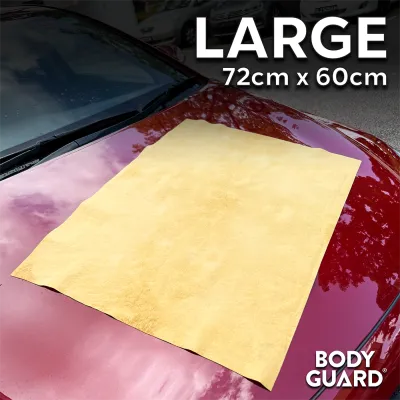
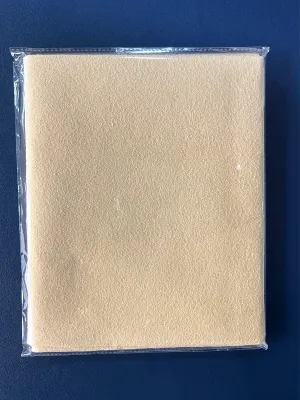
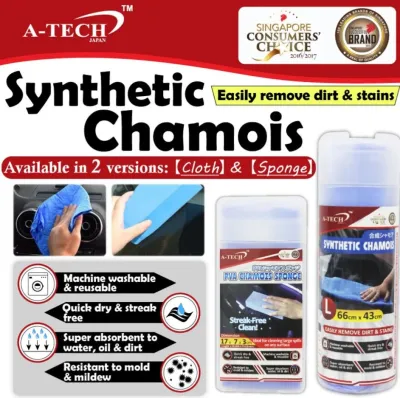
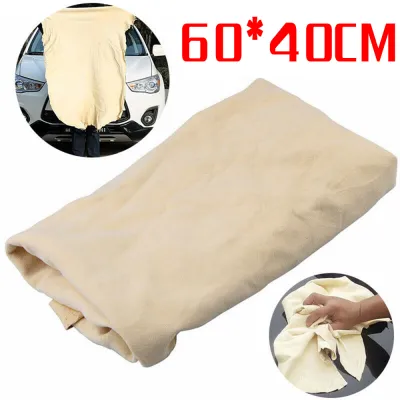
Prices are valid at publication and may change. Please refer to the product page for the latest price.
In contrast, a microfiber drying towel is constructed from a split-fiber blend of polyester and polyamide. During manufacturing, these synthetic fibers are split to create microscopic channels along each strand. This split-fiber structure relies on capillary action to draw water deep into the core of the fabric. Instead of scraping water off the surface, the individual fibers grab and lift water droplets, trapping them within the weave of the towel.
When gliding over water beads on a clear coat, these two materials behave very differently. A synthetic chamois functions similarly to a squeegee, shearing the water off the surface in a single pass. A microfiber towel acts more like a high-capacity blotter, absorbing water as the soft fibers sweep across the paint.
It is important to note that material names alone do not guarantee performance. When shopping for these tools, readers should verify product labels for specific blend ratios, such as an 80/20 or 70/30 polyester-to-polyamide ratio for microfiber, or specific density ratings. High-quality construction details are crucial for ensuring the material performs as expected over time.
Paint Safety and Scratch Risk Evaluation
The primary concern during any drying process is preventing damage to the vehicle’s clear coat. Synthetic chamois cloths have a flat, smooth surface with virtually no pile. While this flat surface is excellent for clearing water, it presents a significant risk if any dirt or grit remains on the paint after the wash phase. Because there is nowhere for the debris to go, any trapped particles are pressed directly against the paint and dragged across the surface, creating fine scratches, marring, or swirl marks.

Furthermore, a synthetic chamois can exhibit a “drag” or sticking effect if the cloth begins to dry out during use. This increased friction can pull at the clear coat and make the drying process physically difficult, while also increasing the likelihood of micro-marring.
Microfiber towels offer a much safer alternative for delicate paint finishes. The deep, plush pile of a microfiber towel provides a safe haven for stray dirt particles. If any dust or grit remains on the vehicle after rinsing, the split fibers lift the contamination away from the paint surface, trapping it deep within the weave where it cannot scratch the clear coat.
Regardless of the drying tool you choose, lubrication plays a critical role in reducing friction. Applying a dedicated drying aid or quick detailer spray to the wet paint before drying provides a thin protective barrier. This lubrication helps both synthetic chamois and microfiber towels glide effortlessly over the surface, minimizing the risk of friction-induced damage.
Always check manufacturer specifications for explicit paint-safe claims before purchasing. If you notice a towel or chamois has become contaminated with embedded grit, or if it feels rough and abrasive to the touch, stop using it immediately to protect your vehicle’s finish.
Absorbency, Wringing, and Physical Effort
When drying a full-sized vehicle at home, the physical effort and efficiency of your tools can make a substantial difference in your detailing routine. Synthetic chamois cloths and microfiber towels handle water capacity and saturation in fundamentally different ways. A synthetic chamois has a lower absolute water capacity than a large, plush microfiber towel, meaning it saturates much faster. However, it is incredibly easy to wring out to a nearly dry state, allowing you to dry an entire vehicle using a single cloth.
On the other hand, a large-format microfiber drying towel can absorb a massive volume of water before reaching saturation. The trade-off comes when the towel finally becomes full. A heavy, fully saturated microfiber towel is bulky and requires significant physical strength to wring out by hand. Many home detailers find it easier to simply switch to a second or third dry towel rather than attempting to wring out a heavy microfiber cloth mid-wash.
Maneuverability is another key factor to consider. Microfiber towels are highly flexible and conform easily to complex vehicle geometries, such as tight crevices, side mirrors, door jambs, and intricate front grilles. A synthetic chamois can feel stiff and clumsy when navigating these tight areas, making it much better suited for large, flat panels like hoods, roofs, and trunks.
Ultimately, using a synthetic chamois means you can complete the job with one compact tool that you wring out repeatedly. If you opt for microfiber, you should plan to have multiple towels on hand to avoid working with a heavy, waterlogged cloth that can no longer absorb moisture effectively.
Cleaning, Storage, and Long-Term Maintenance
The longevity and safety of your drying tools depend heavily on how you clean and store them after each use. Microfiber towels require a strict washing routine to maintain their performance. They must be washed with mild liquid detergents or dedicated microfiber washes, and you must never use fabric softeners or bleach. Fabric softeners coat the split fibers, clogging the microscopic channels and completely destroying the towel’s absorbency. Additionally, microfiber should be washed separately from cotton towels and other laundry to prevent cotton lint from embedding itself in the synthetic fibers.
Synthetic chamois cloths require an entirely different maintenance approach. Unlike microfiber, a synthetic chamois must never be allowed to dry out completely. If left to dry in the open air, PVA materials become extremely stiff, brittle, and prone to cracking or tearing. To prevent this, you must store the chamois slightly damp inside its original plastic storage tube.
However, storing a damp cloth in a sealed container presents its own challenges, particularly in warm, humid environments like Singapore. If the chamois is stored too wet, it can quickly become a breeding ground for mold, mildew, and unpleasant odors. You must find a balance by wringing the cloth out thoroughly before placing it in its tube, and occasionally washing it with a mild disinfectant if odors develop.
Regularly inspect your drying tools for visual and tactile signs of degradation. Look for stiffening of the fibers, tearing, edge fraying, or a permanent loss of absorbency. To prevent cross-contamination, always dedicate specific towels or chamois pieces for lower body panels, door jambs, and wheels, keeping your premium drying tools reserved exclusively for the delicate upper paintwork.
Decision Framework: Matching the Tool to Your Routine
To choose the right drying tool for your home detailing setup, consider how your priorities align with the characteristics of each material. Whether you invest S$15 in a high-quality synthetic chamois or S$35 in a premium plush microfiber towel, proper care is essential to protect your vehicle’s finish.
You should choose a synthetic chamois cloth if you prioritize:
- Rapid water removal on large, flat vehicle panels.
- A tool that is highly compact and easy to store.
- The convenience of using a single tool that can be quickly wrung out and reused indefinitely during a single wash session.
- A disciplined maintenance routine where you will reliably store the cloth damp in its protective tube.
You should choose a microfiber drying towel if you prioritize:
- Maximum protection against swirl marks and micro-scratches on delicate clear coats.
- The ability to safely trap any residual dirt or dust left behind after washing.
- Excellent maneuverability around complex body lines, mirrors, and grilles.
- A simple laundry routine where you can machine-wash and dry your towels after use.
It is important to recognize that neither tool will perform safely if you attempt to dry a heavily soiled car without performing a thorough pre-wash and contact wash first. Dragging any drying tool over road grime, mud, or abrasive dust will inevitably damage your paintwork.
Before making your final purchase, verify your vehicle’s specific requirements. If your car has a delicate aftermarket clear coat, a custom wrap, or a professional ceramic coating, check the manufacturer’s guidelines to ensure your chosen drying tool is compatible and will not void any warranties or degrade the finish.
Frequently Asked Questions (FAQ)
Can I use a synthetic chamois cloth on a ceramic-coated car?
While ceramic coatings provide exceptional hydrophobic properties that make water slide off easily, they do not make your vehicle’s paint immune to friction-induced marring. Using a synthetic chamois on a ceramic-coated car carries a risk of scratching if any microscopic contaminants remain on the surface. If you choose to use a synthetic chamois, always check the coating manufacturer’s maintenance guidelines first. It is highly recommended to apply a dedicated drying aid or ceramic maintenance spray to provide the necessary lubrication and minimize friction during the drying process.
How many microfiber drying towels do I need for a standard sedan?
The number of microfiber towels required depends on several variables, including the dimensions of the towels, their pile height (measured in GSM, or grams per square meter), and the overall surface area of your vehicle. For a standard sedan, a practical approach is to start with two large, high-quality drying towels (such as 60×90 cm towels with a high GSM rating). Use the first towel to absorb the bulk of the standing water, and follow up with the second towel to clear any remaining streaks. Additionally, you should keep a separate, smaller microfiber towel dedicated specifically to door jambs, wheels, and glass to prevent cross-contamination.
Community discussion
Share your experience or ask a question. Comments are reviewed before publication.