
A Sulaite raincoat’s protection rating primarily indicates its ability to resist water penetration and allow moisture vapor to escape, though some specialized models may also incorporate physical impact or abrasion protection. Because these specifications vary significantly across different product lines, manufacturing years, and designs, there is no single universal rating for every garment bearing the brand name. To understand what your specific gear can handle, you must look at the technical ratings printed on its inner labels or packaging and translate those metrics into real-world riding limits. Knowing these limits is a fundamental step in managing your comfort, focus, and physical safety when navigating wet roads.
Decoding Waterproof and Breathability Specifications
Waterproof performance in motorcycle rain gear is typically measured using a hydrostatic head test, which is expressed in millimeters (mm). This rating represents the height of a water column that a fabric can support before water begins to seep through the material. For instance, a fabric rated at 10,000 mm can withstand a ten-meter column of water pressure, making it highly resistant to heavy downpours and the added pressure of wind pushing rain against your body at speed. When evaluating your gear, a higher millimeter rating generally indicates a greater capacity to keep you dry during prolonged exposure to intense storms.
Equally important is the breathability rating, which is often measured in grams of water vapor per square meter of fabric over a 24-hour period (g/m²/24h). As you ride, your body naturally generates heat and sweat, even in cooler rain. If this moisture cannot escape, it condenses on the inside of the raincoat, leaving you damp, clammy, and cold from the inside out. A highly breathable membrane allows microscopic sweat vapor molecules to pass through to the outside while preventing much larger liquid water droplets from entering.
Products mentioned in this guide
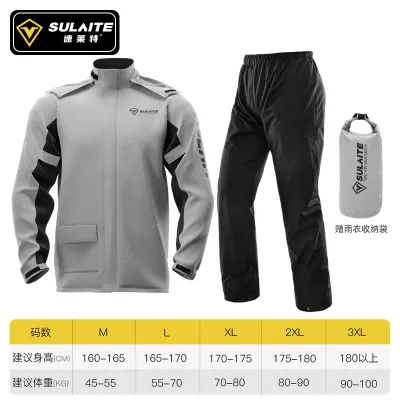
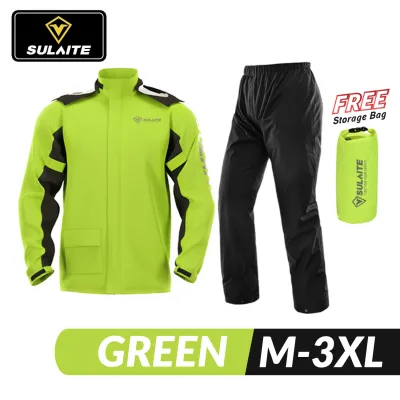
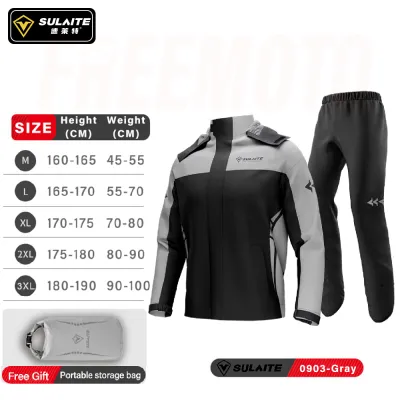
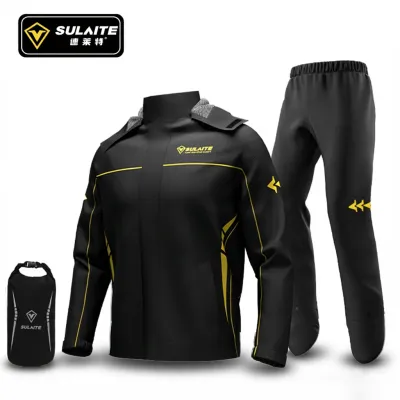
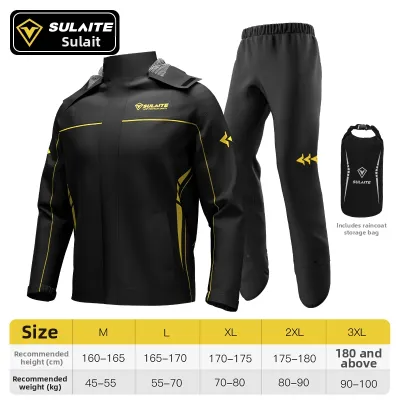
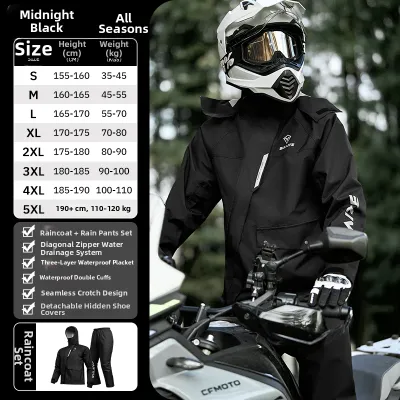
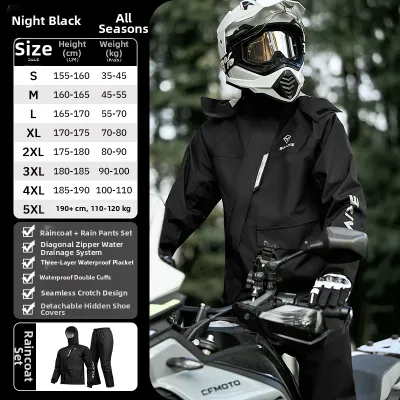
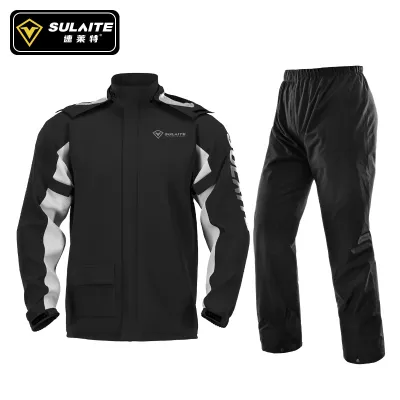
Prices are valid at publication and may change. Please refer to the product page for the latest price.
However, even the most advanced waterproof and breathable fabrics will fail if the garment’s construction is compromised. Water is highly opportunistic and will quickly find its way through the tiny needle holes created during the stitching process. This is why you must verify that your raincoat features fully taped or heat-sealed seams along every joint. Without these protective seals, high fabric ratings are rendered ineffective, as water under pressure will inevitably leak through the unprotected stitch lines.
How These Specs Translate to Wet-Weather Riding Safety
Staying dry on a motorcycle is not merely a matter of personal comfort; it is a critical safety requirement. When water penetrates your riding gear, wind chill rapidly lowers your core body temperature, which can lead to mild hypothermia. This drop in temperature slows your physical reaction times, stiffens your muscles, and degrades your mental focus, making it much harder to react quickly to sudden hazards on slippery roads. By maintaining a dry, warm microclimate inside your gear, you preserve the physical dexterity and mental alertness needed to ride safely.

Visibility is another major safety factor during wet-weather riding, as heavy rain and road spray drastically reduce how well other motorists can see you. Most dedicated motorcycle raincoats incorporate high-visibility fluorescent colors and strategically placed reflective detailing. These elements are designed to catch and bounce back the headlights of surrounding vehicles, ensuring you remain visible in low-light, high-spray conditions. When choosing or inspecting your gear, prioritize designs that feature these reflective elements on the shoulders, back, and sleeves.
It is vital to remember that while a high-quality raincoat protects your body from the elements, it does nothing to alter road physics. A waterproof jacket cannot prevent your motorcycle tires from hydroplaning, nor can it improve your traction on wet asphalt or painted road markings. Your safety strategy must combine reliable weather protection with adjusted riding habits, such as reducing your speed, increasing your following distance, and avoiding sudden braking or cornering maneuvers.
Identifying Impact and Abrasion Protection Levels
To ensure you are fully protected on the road, you must distinguish between a simple weather shield and a garment designed to protect you during a fall. Many standard raincoats are constructed solely from lightweight polyester or nylon with a waterproof coating. While these materials are excellent at blocking wind and rain, they offer virtually no resistance to abrasion or impact if you slide across the asphalt. Wearing a non-abrasion-rated raincoat without underlying protective gear leaves you highly vulnerable to severe road rash and impact injuries.
To determine if your garment offers physical crash protection, inspect the internal tags for recognized CE (Conformité Européenne) certification labels. Dedicated motorcycle riding jackets that offer protection will typically feature a CE rating under standard EN 17092, which classifies the garment’s overall abrasion and tear resistance. Additionally, look for specific armor ratings (such as EN 1621-1) on removable protectors located at the elbows, shoulders, and back. If your raincoat lacks these specific labels, it should be treated strictly as an outer weather barrier.
The safest approach for highway speeds or daily commuting is to use a dual-layer system. This involves wearing a dedicated, armored riding jacket constructed from heavy-duty textile or leather as your primary defense against impacts and road abrasion. You can then layer a lightweight, waterproof over-jacket on top to block the rain. This configuration ensures that you do not have to compromise on physical crash protection in order to stay dry.
Verifying and Maintaining Your Gear's Protection Level
To confirm the exact capabilities of your equipment, locate the manufacturer’s specification tags, which are usually sewn into the inner lining or pocket seams. These tags often list the specific fabric composition, waterproof ratings, and care instructions. If the tags have faded or are missing, you can cross-reference the model name with the official product manual or the manufacturer’s website to verify its technical specifications. Avoid relying on unverified claims from third-party sellers on online marketplaces.
Over time, the protective qualities of any raincoat will naturally degrade due to wear, dirt, UV exposure, and improper storage. Perform regular visual and tactile checks to assess the condition of the inner waterproof membrane. Look for signs of delamination, where the inner lining begins to separate from the outer fabric, or flaking coatings that leave white dust inside the jacket. Another common sign of wear is “wetting out,” which occurs when the outer fabric absorbs water rather than allowing it to bead up and roll off.
If you discover that critical seams have begun to unravel, the taped backing has peeled away, or the main zippers are leaking water, it is time to take action. While minor outer fabric wetting can sometimes be restored with specialized wash-in or spray-on water-repellent treatments, compromised seams and failing membranes cannot be easily repaired. In these cases, you should stop using the gear as a primary weather barrier and consult the manufacturer or replace the garment to ensure your safety on the road is not compromised.
Frequently Asked Questions (FAQ)
Can I wear a Sulaite raincoat over my armored riding jacket?
Yes, you can wear a raincoat over your armored jacket, but you must ensure the sizing is correct to accommodate the bulk of the underlying armor. If the raincoat is too tight, it will compress your protective gear, restrict your range of motion, and potentially damage the waterproof membrane or seams under tension. Additionally, check that the raincoat’s collar, cuffs, and hem can be adjusted to seal tightly over your base jacket, preventing wind and water from blowing up the sleeves or down the neck.
How do I know if the waterproof rating is enough for heavy downpours?
For heavy, sustained downpours, look for a hydrostatic head rating of at least 10,000 mm, as the pressure of wind-driven rain at riding speeds can easily force water through lower-rated fabrics. Beyond the fabric rating itself, pay close attention to the garment’s construction details. Features such as double storm flaps over the main zipper, high collars with adjustable closures, and waterproof pocket seals are essential to prevent water from bypassing the fabric entirely during intense storms.
Community discussion
Share your experience or ask a question. Comments are reviewed before publication.