
Selecting the ideal bumper guard for your Subaru Forester in Singapore requires balancing aesthetic preferences, parking protection, and strict local regulatory compliance. Because the Forester is a popular family SUV frequently navigated through tight multi-storey car parks and busy urban streets, its bumpers are highly susceptible to minor scrapes, shopping trolley dings, and parking mishaps. However, finding the right guard is not just about picking an appealing design; it involves verifying compatibility with your specific Forester generation, ensuring the accessory does not interfere with advanced safety systems like Subaru EyeSight, and confirming compliance with Land Transport Authority (LTA) guidelines.
To make an informed decision, you must evaluate how different styles alter your vehicle’s dimensions, how various materials withstand Singapore’s tropical climate, and where to source these components reliably. This guide outlines the essential factors to consider before purchasing a bumper guard, helping you protect your vehicle’s exterior while maintaining its safety features and resale value.
Choosing the Right Bumper Guard Style for Your Forester
Bumper guards for the Subaru Forester come in several distinct configurations, each designed to address specific driving environments and protection needs. The most common styles include front bumper guards, rear bumper step protectors, and full-set corner guards. Understanding how these styles function in both urban and highway scenarios is the first step in selecting the right accessory for your vehicle.
Products mentioned in this guide
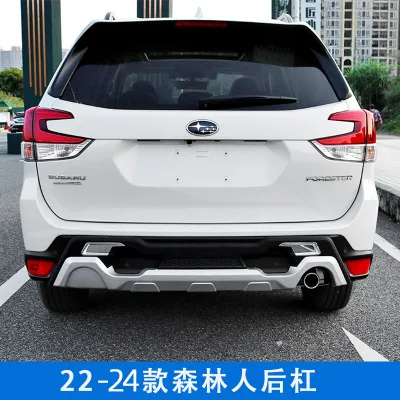
Prices are valid at publication and may change. Please refer to the product page for the latest price.
For drivers who primarily navigate Singapore’s dense urban areas, rear bumper step guards and low-profile corner protectors are highly practical. Tight parallel parking spaces and high-traffic loading zones increase the risk of low-speed rear-end nudges or scratches from loading luggage and groceries. A rear bumper step guard, typically made of textured plastic or stainless steel, covers the upper lip of the rear bumper, shielding the paintwork from scrapes during daily use.
Front bumper guards, such as low-profile skid plates or light-duty nudge bars, are often favored by drivers who occasionally take their Forester on light off-road trails or want a more rugged, adventurous aesthetic. However, traditional heavy-duty tubular bull bars are generally unsuitable and often illegal for road use in Singapore due to pedestrian safety regulations. Instead, low-profile front guards that contour closely to the factory bumper offer a balanced solution, providing mild protection against road debris and low-lying obstacles without significantly altering the vehicle’s silhouette.
When evaluating different styles, it is crucial to assess how they interact with your Forester’s factory ground clearance, approach angles, and departure angles. A bulky front guard that hangs too low can scrape against steep ramps in multi-storey car parks or speed bumps, leading to costly damage to both the accessory and the vehicle’s mounting points. Opting for a design that preserves the Forester’s generous ground clearance ensures you maintain the SUV’s practical driving dynamics.
Critical Compatibility and Fitment Checks Before Buying
Before purchasing any bumper guard, verifying exact vehicle compatibility is paramount. The Subaru Forester has evolved through multiple generations—including the third-generation SH, fourth-generation SJ, fifth-generation SK, and the sixth-generation SL—with each generation undergoing mid-cycle facelifts that alter the bumper contours, grille designs, and mounting locations. A bumper guard designed for a pre-facelift model will rarely fit a post-facelift version, even within the same model year.

You must identify your Forester’s exact model year, trim level (such as the i-L, i-S, or e-Boxer hybrid), and country specification. Hybrid models or specific trim packages may feature different underbody shielding, active grille shutters, or exhaust configurations that can obstruct the mounting brackets of aftermarket bumper guards. Always consult the manufacturer’s compatibility matrix or verify the part number against your vehicle’s chassis number before finalizing a purchase.
Another critical consideration is the integration of advanced driver assistance systems (ADAS). Modern Subaru Foresters are equipped with the EyeSight driver assist technology, which relies on stereo cameras mounted near the rearview mirror to monitor the road ahead. While the cameras are positioned high on the windshield, any front bumper guard that protrudes significantly upward can enter the cameras’ field of view or alter the vehicle’s pitch, potentially causing system errors or unexpected braking interventions.
Furthermore, you must ensure the guard does not block other factory sensors and safety components. This includes the front grille radar sensors used for adaptive cruise control, the front camera lens, active grille shutters that regulate engine temperature, and the factory tow hook mounting points. A properly designed bumper guard will feature precise cutouts or low-profile dimensions that keep these critical areas completely unobstructed, preserving both the safety and utility of your Forester.
Evaluating Materials and Build Quality for Local Conditions
The material composition of a bumper guard directly influences its durability, weight, impact resistance, and longevity under local environmental conditions. The most common materials utilized in aftermarket guards are stainless steel, aluminum alloys, ABS plastic, and polyurethane. Each material presents distinct trade-offs that you must weigh against your specific driving habits and budget.
Stainless steel is highly valued for its structural strength and robust protection against physical impacts. However, it is also the heaviest option, which can add unnecessary weight to the front or rear of your vehicle, potentially affecting fuel efficiency and suspension wear over time. Aluminum alloys offer a lighter alternative, providing moderate impact resistance and excellent corrosion resistance without the weight penalty of steel, making them an excellent choice for maintaining optimal vehicle dynamics.
For urban protection against minor scuffs and parking lot dings, high-impact ABS plastic and polyurethane are highly effective and cost-efficient. These materials are lightweight, flexible, and capable of absorbing minor impacts without denting or transferring excessive force to the vehicle’s chassis. Polyurethane, in particular, is highly resilient and can flex under pressure before returning to its original shape, making it ideal for low-profile bumper corner protectors.
Singapore’s tropical climate—characterized by high humidity, intense UV radiation, and frequent heavy downpours—demands careful evaluation of the guard’s finish. Polished stainless steel can develop tea-staining or surface rust if not regularly cleaned, while low-quality powder coatings on steel guards can crack, trap moisture, and lead to severe corrosion underneath. When choosing plastic or polyurethane guards, verify that the manufacturer specifies the use of UV-stabilized materials to prevent fading, chalking, or cracking under prolonged exposure to intense sunlight.
Sourcing Options and Verifying Local Availability
Sourcing a bumper guard for your Subaru Forester in Singapore involves navigating several purchasing channels, each with its own set of advantages and limitations. The primary options include authorized Subaru dealerships, specialized automotive aftermarket workshops, and general online marketplaces.
Authorized dealerships occasionally offer official Subaru accessories, such as rear bumper step guards or cargo step panels. While these parts are guaranteed to fit perfectly and maintain your vehicle’s factory warranty, they are typically more expensive and offer limited styling variety compared to aftermarket alternatives. For drivers seeking a seamless, factory-approved look with professional installation, this remains the most straightforward route.
Specialized automotive aftermarket workshops, particularly those located in industrial hubs like Ubi, Toh Guan, or Sin Ming, offer a wider selection of third-party bumper guards and protective accessories. These workshops often have experienced technicians who can recommend compatible styles, verify fitment on-site, and perform the installation safely. Purchasing through a local workshop also provides the benefit of immediate recourse, local warranty support, and professional advice if any fitment issues arise post-installation.
Alternatively, general online marketplaces and international ecommerce platforms offer a vast array of aftermarket bumper guards, often at lower price points. However, importing these bulky items directly carries significant risks. Shipping costs can be exceptionally high due to the size and weight of the packages, and there is a higher likelihood of receiving a part that does not match your Forester’s specific regional trim or facelift contours. If you choose to import, carefully review the seller’s return policy, verify customer reviews with photos of identical vehicle models, and ensure you have a reliable local workshop willing to install customer-supplied parts.
Installation Requirements and Safety Boundaries
Installing a bumper guard is a modification that directly affects your vehicle’s structural integrity, safety systems, and road legality. While some low-profile adhesive protectors can be applied as a simple DIY project, any guard that requires mechanical mounting to the vehicle’s chassis or bumper reinforcement beam demands professional installation.
Professional installation is critical for ensuring that the guard does not interfere with the vehicle’s crumple zones or airbag deployment sensors. Bumper guards that are rigidly mounted to the chassis using improper brackets can alter how crash energy is transferred during a collision, potentially delaying airbag deployment or causing more severe structural damage to the vehicle than a standard bumper would absorb. A qualified technician will ensure that all mounting hardware is torqued to manufacturer specifications and aligned with factory crumple zones.
Additionally, any modification to the front or rear bumpers may necessitate the recalibration of your Forester’s parking sensors, blind-spot detection systems, or reverse cameras. If a bumper guard slightly alters the angle or field of view of these sensors, it can trigger false proximity alerts or fail to detect obstacles entirely. Professional workshops equipped with diagnostic tools can perform the necessary sensor checks and recalibrations to ensure all driver assistance systems function correctly.
You should establish clear stop conditions when attempting any DIY installation. If the installation instructions require drilling into the vehicle’s frame, modifying structural bumper beams, or splicing into the electrical wiring harness for integrated lighting, stop immediately and consult a qualified automotive professional. Prioritizing safety and professional expertise over a DIY approach ensures your Forester remains safe, reliable, and compliant with local road safety standards.
Frequently Asked Questions (FAQ)
Will a bumper guard affect my Forester's parking sensors?
Yes, a bumper guard can affect your Subaru Forester’s parking sensors if it is not designed with precise clearances. The Forester utilizes ultrasonic sensors embedded in the front and rear bumpers to detect nearby obstacles. If a bumper guard protrudes into the sensor’s conical detection zone, it can trigger continuous false alarms or block the sensor’s ability to detect actual hazards. When selecting a guard, look for models specifically engineered with cutouts or low-profile designs that clear the factory sensor locations. After installation, always perform a controlled test in a safe environment to verify that all parking sensors and reverse cameras continue to provide accurate proximity warnings.
Do I need to declare a bumper guard to my car insurance in Singapore?
In Singapore, it is highly recommended to declare any aftermarket vehicle modification, including bumper guards, to your motor insurance provider. Under Land Transport Authority (LTA) guidelines, cosmetic accessories that do not alter the vehicle’s structural integrity or dimensions beyond permissible limits are generally allowed, but insurance companies operate under their own disclosure policies. Failing to declare an aftermarket accessory can lead to disputes or the denial of a claim in the event of an accident, especially if the guard is deemed to have exacerbated the damage or affected safety systems. Contact your insurer to confirm if the specific bumper guard requires an official declaration to maintain your coverage validity.
Community discussion
Share your experience or ask a question. Comments are reviewed before publication.