
Choosing the right blind spot mirror depends entirely on the physical characteristics of your existing side mirrors and your vehicle’s integrated features. Stick-on mirrors offer a universal, low-profile solution for flat or slightly curved glass, while clip-on variants rely on the mirror housing’s edge for a secure, non-adhesive fit. Frameless replacements provide a factory-like aesthetic but require exact model compatibility. Before selecting a type, you must verify your mirror’s shape, housing lip depth, and the presence of integrated sensors or cameras to ensure the new mirror enhances visibility without obstructing critical safety systems.
Understanding the Three Main Blind Spot Mirror Designs
To make an informed decision, you must first understand how these three common designs differ in their physical construction and mounting mechanisms. Each design addresses the blind spot problem through a distinct structural approach, impacting how they attach to your vehicle and how they alter your field of view.
Stick-on mirrors are the most common aftermarket solution available. These compact accessories feature an adhesive backing—typically a high-strength double-sided tape—applied directly to the surface of your existing side mirror glass. They are usually convex, meaning the glass curves slightly outward to compress a wider angle of view into a smaller surface area. Because they sit directly on the glass, they have a very low profile and do not extend past the original boundaries of your vehicle’s mirror housing.
Products mentioned in this guide
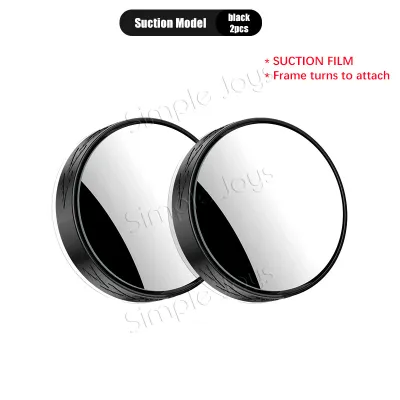
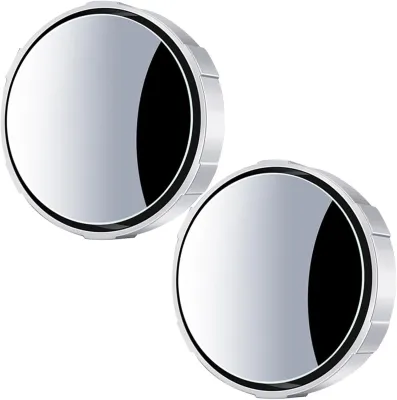
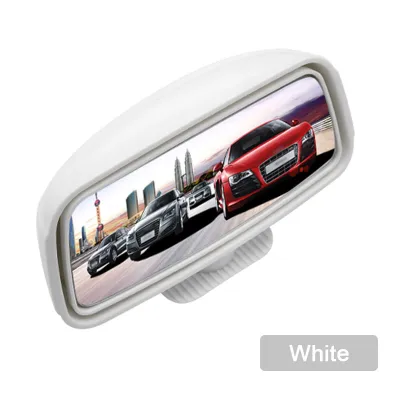
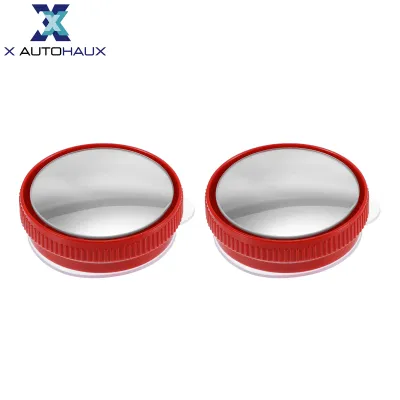
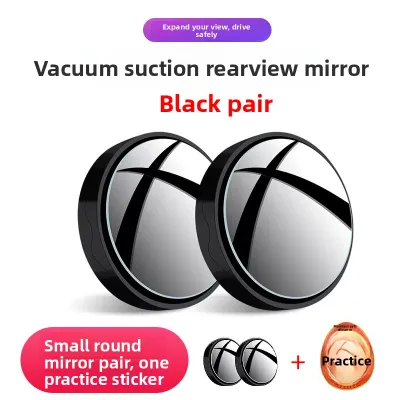
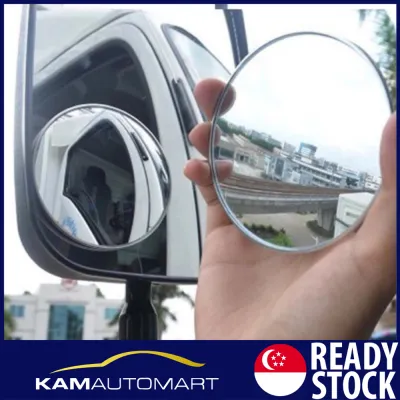
Prices are valid at publication and may change. Please refer to the product page for the latest price.
Clip-on mirrors take a mechanical approach to installation. Instead of sticking to the glass, these mirrors utilize adjustable brackets, clamps, or tension clips that hook onto the outer plastic housing or the rim of the side mirror assembly. The auxiliary mirror glass is then positioned either above, below, or to the side of your main mirror. This design keeps your original mirror glass completely clear of obstructions, but it does add physical bulk to the exterior of your vehicle.
Frameless mirrors represent a more integrated, modern design philosophy. These can either be complete replacement glass panels that swap out your factory mirror glass or ultra-thin, edge-to-edge overlays that cover the entire original surface. By eliminating the thick plastic bezel or frame found on traditional stick-on mirrors, frameless designs maximize the reflective surface area while maintaining a clean, factory-installed appearance. They are highly specialized and must be sourced to match the exact dimensions of your vehicle’s specific make and model.
Key Compatibility Checks for Your Existing Side Mirrors
Before purchasing any blind spot mirror, you must perform a series of physical checks on your vehicle’s existing side mirrors. Aftermarket accessories are not universally compatible with every housing shape or glass type, and choosing the wrong style can lead to poor adhesion, vibration, or physical interference.

First, measure the shape and dimensions of your mirror glass. Take note of whether your side mirrors are round, oval, rectangular, or swept back in an aerodynamic shape. If you are considering a stick-on mirror, you need to identify a flat or minimally curved zone on the glass surface where the adhesive pad can make full contact. Placing a stick-on mirror on a highly curved section of glass can create air gaps beneath the adhesive, leading to premature failure and loss of the accessory while driving.
Second, examine the housing lip depth and edge thickness of your side mirror assembly. This step is critical if you are planning to use a clip-on mirror. Clip-on brackets require a distinct, sturdy lip on the outer plastic housing to clamp onto securely. Many modern vehicles feature seamless, aerodynamic mirror housings where the outer shell curves smoothly inward to meet the glass, leaving no exposed edge or lip. If your vehicle has this flush design, a clip-on mirror will not have a secure anchoring point and cannot be safely installed.
Third, evaluate the curvature of your existing mirror glass. Standard driver-side mirrors are typically flat to provide an accurate representation of distance, while passenger-side mirrors are often slightly convex to widen the field of view. The degree of curvature affects how aftermarket mirrors interact with the glass. For stick-on options, a flat surface provides the most stable bond. For frameless overlays, the curvature of the aftermarket glass must match the curvature of your factory glass perfectly to prevent optical distortion and ensure proper fitment.
Finally, identify any integrated electronic features embedded within or behind your side mirror glass. Modern vehicles frequently incorporate turn signal indicators, heating elements, auto-dimming sensors, or active blind-spot monitoring warning lights directly into the mirror glass. You must ensure that any aftermarket mirror you install does not cover these components. Blocking a blind-spot warning light or an auto-dimming sensor defeats the purpose of your vehicle’s active safety systems, while placing adhesive over heating elements can affect thermal transfer or damage the heating grid during removal.
Stick-On vs Clip-On vs Frameless: Feature and Trade-Off Comparison
Each mounting style comes with distinct trade-offs regarding visibility, durability, and aesthetics. Understanding these differences allows you to balance your visual preferences with the practical realities of daily driving and vehicle maintenance.
Field of view and optical distortion vary significantly between the three designs. Convex stick-on mirrors excel at revealing vehicles in your immediate blind spot, but their curved glass inherently distorts distance, making objects appear much farther away than they actually are. Clip-on mirrors often feature larger, flatter glass surfaces that provide a more natural perspective, but their offset mounting position can alter your spatial awareness of the vehicle’s outer edges. Frameless mirrors offer the most balanced compromise, maximizing the usable reflective area without adding bulky borders that block your primary view.
Environmental factors play a major role in the long-term durability of stick-on mirrors. In regions with high humidity, intense sunlight, and frequent heavy rainfall—such as Singapore—the adhesive backing on stick-on mirrors is subjected to constant thermal expansion and moisture exposure. Over time, these conditions can degrade the adhesive bond, potentially causing the mirror to fall off. To mitigate this, you must strictly follow the manufacturer’s specifications regarding adhesive application temperatures and curing times, and regularly inspect the bond strength.
Mechanical stability is the primary concern for clip-on mirrors. Because they rely on mechanical tension to stay attached to the mirror housing, they are highly susceptible to wind resistance and road vibrations. If the clip tension is not perfectly adjusted, or if the brackets do not match the contours of your housing, the mirror may vibrate excessively at highway speeds. This vibration blurs the reflected image, making it difficult to quickly judge traffic conditions. Regular checks and manual adjustments of the mounting hardware are required to maintain stability.
Aesthetic integration is where frameless mirrors hold a clear advantage. They blend seamlessly with the vehicle’s original design, avoiding the “add-on” look associated with stick-on and clip-on variants. However, this aesthetic appeal comes at the cost of convenience. While stick-on and clip-on mirrors are largely universal and can be easily transferred to another vehicle, frameless replacements are highly model-specific. Sourcing a frameless mirror requires precise verification of your vehicle’s make, model, and year, and they cannot be easily adapted to other cars.
How to Choose the Right Mounting Style for Your Vehicle
Selecting the right blind spot mirror requires a systematic approach that matches your vehicle’s physical characteristics with your driving habits. By using a conditional decision framework, you can narrow down the options to the style that offers the best balance of safety and compatibility.
You should choose a stick-on mirror if you are looking for a quick, universal, and cost-effective solution. This style is ideal for vehicles with large, flat side mirrors that have ample unused surface area, particularly in the upper outer or lower outer corners. It is also a suitable choice if your vehicle’s mirror housing lacks a defined lip for clips, provided the glass does not contain active warning lights or sensors that would be obstructed by the adhesive pad.
You should choose a clip-on mirror if you want to avoid leaving adhesive residue on your factory glass or if you frequently drive different vehicles, such as rental cars or fleet vehicles. This style is highly practical if your side mirror housing features a pronounced, sturdy plastic lip that can accommodate clamping brackets. It allows you to position the auxiliary mirror outside the main glass area, preserving 100% of your original field of view.
You should choose a frameless mirror if you prioritize a clean, factory-installed appearance and are willing to spend the time sourcing an exact, model-specific match. This option is best suited for drivers who want to maintain the vehicle’s original design lines while upgrading their visibility. It is particularly effective for modern sedans and SUVs where a bulky aftermarket accessory would detract from the vehicle’s styling.
Before making any final purchase, you must verify the clearance and compatibility of your vehicle’s specific mirror assembly. If your side mirrors feature complex aerodynamic shapes, integrated 360-degree cameras mounted on the underside of the housing, or active blind-spot monitoring sensors, you must ensure the aftermarket mirror does not interfere with these systems. Always refer to your vehicle’s owner’s manual to identify the exact locations of these sensors before installing any accessory.
Installation and Safety Boundaries to Verify Before Driving
Proper installation is critical to ensure your blind spot mirror remains secure and functions safely under all driving conditions. Failing to follow correct installation procedures can result in the mirror detaching at high speeds, creating a hazard for you and other road users.
For adhesive-based stick-on mirrors, thorough surface preparation is essential. Begin by cleaning the target area of the side mirror glass with isopropyl alcohol or a dedicated glass cleaner that leaves no residue. Avoid using household glass cleaners that contain waxes or silicone, as these will prevent the adhesive from bonding properly. Once the glass is completely dry, apply the adhesive pad to the mirror, press firmly for at least thirty seconds, and allow the bond to cure according to the manufacturer’s specified time frame before exposing the vehicle to moisture or high speeds.
For clip-on mirrors, you must perform a physical securement check before every journey. Ensure all mounting brackets, screws, or tension clips are tightened securely against the mirror housing. Gently wiggle the auxiliary mirror assembly to verify that there is no play or looseness. If you notice any rattling or movement, do not drive the vehicle; instead, re-adjust the clips or add protective rubber spacers to improve the grip and prevent damage to your vehicle’s paint or plastic housing.
Safety boundaries must be respected to maintain road legality and overall driving safety. The aftermarket mirror must be positioned so that it does not obstruct your primary view of traffic or block your ability to see the edges of your own vehicle. Furthermore, the accessory must not interfere with the physical movement of the motorized mirror glass. If the blind spot mirror contacts the housing when you attempt to adjust your side mirrors, it can strain the internal adjustment motors and cause mechanical damage.
If your vehicle’s side mirrors contain integrated cameras, heating elements, auto-dimming wiring, or complex driver-assist sensors, you must exercise extreme caution. If you are unsure about how an aftermarket mirror will affect these systems, or if the installation requires disassembling any part of the mirror housing, stop immediately. Consult your vehicle manufacturer or a qualified automotive professional to ensure the modification is safe and does not void your vehicle’s warranty or compromise its active safety features.
Community discussion
Share your experience or ask a question. Comments are reviewed before publication.